[1982 GS750T] Pilot Screw Adjustment and Vacuum Sync Confusion...

Collapse
X
 
  • Time
  • Show
Clear All
new posts
  • SamLack99
    Forum Mentor
    Past Site Supporter
    Super Site Supporter
    • May 2023
    • 110
    • Dawlish, Devon, UK

    #1

    [1982 GS750T] Pilot Screw Adjustment and Vacuum Sync Confusion...

    Hi all,

    I've been busy confusing myself with information overload.

    And I'm hoping you can help me to find a clear path through it.

    I followed:

    John Bloemer's - Carburetor Clean & Repair Pictorial
    Ed Ness's - CV Carburetor Rebuild Tutorial

    Kudos and gratitude to you both.

    My carbs are now cleaned, checked, bench sync'd and float levels are validated and correct.

    I even had a go at Zinc Plating the bits that rusted...
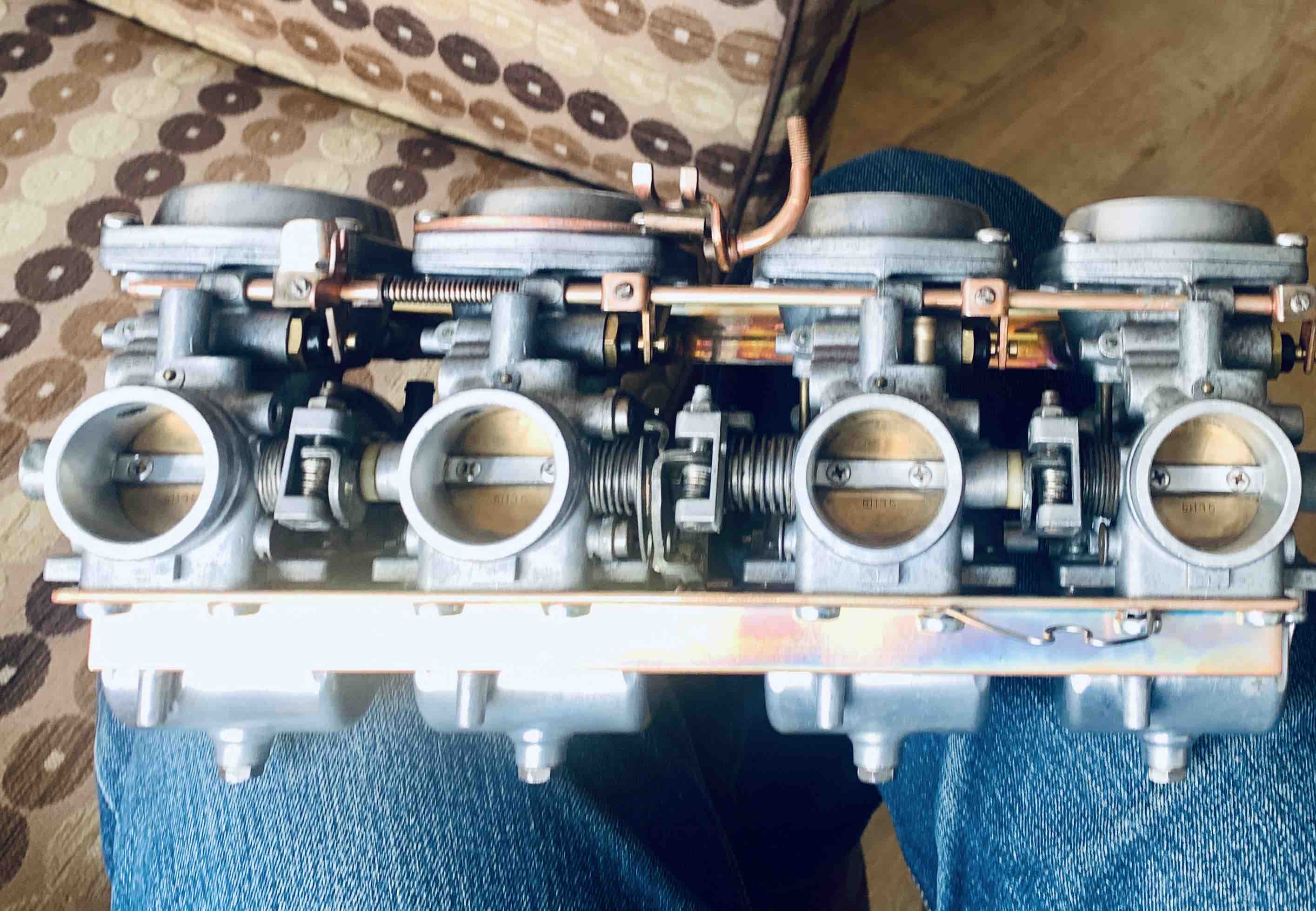


    My confusion is with regards adjusting the pilot screws and vacuuming syncing the carbs on the bike.

    Which do I do first?

    I've currently managed to filter my overload down to the following information:

    From - Mikuni BS-CV Carburetor Rebuild Tutorial :
    • Fine tune the carbs (engine fully warmed up and idling) by adjust the pilot screws in roughly equal amounts until the highest idle speed is achieved. If the engine speed doesn’t respond to this tweak, leave them at 2.5 turns.
    • If the engine stumbles just off idle, try opening the pilot screws another 1⁄2 turn and try again. The maximum number of open turns is four, otherwise you should get larger pilot jets.

    And:

    From Synchronize Carbs Using Morgan Carbtune PDF Carb-balance.pdf (page 4):

    "You also see the idle mixture screw with the cap removed. Use the “highest idle method” to adjust these screws."

    Visiting the link in the PDF takes me here:


    Highest Idle method

    Adjusting Idle Mixture, Using the Highest RPM Method
    (by Mr. psyguy)
    1. Take off the tank, set up some form of remote fuel supply.
    2. Set the idle mixture screws at 2 turns out.
    3. Warm up the engine and let it run.
    4. Adjust the idle to approx. 900 rpm.
    5. SLOWLY turn the screw at carb #1 in - at some point, the rpm are going to start dropping and the engine won't run as smoothly.
    6. Start turning the screw back out until you get the highest rpm and a smoother sound from the engine.
    7. At some point, turning the screw out further won't make any difference (and even further out may again take away the smoothness and the rpm).
    8. You want your screw turned IN as much as possible without affecting the rpm/smoothness.
    9. Re-adjust the idle to 900 rpm.
    10. Stop the engine to let it cool down a bit or place a big fan in front of the engine and do this while the outside air is cooler (morning/winter).
    11. Proceed with carb #2.
    12. Repeat steps 4 through 10, as necessary, for all carburetors.
    13. When complete, re-adjust the idle knob for the correct rpm as per your factory manual (usually 1050 rpm +/-100 rpm). In any case, do not idle below 900 rpm as this may result in insufficient oil flow.

    SO...

    ...Can someone with experience please confirm the following sequence:
    1. Fit the clean carbs to my bike
    2. Proceed with the Highest Idle method
    3. Follow with the Synchronize Carbs Using Morgan Carbtune PDF?

    Does that sound like a solid plan?

    Thank you.

    PS: I don't have a Colourtune - sparkplug with a view =)
  • SamLack99
    Forum Mentor
    Past Site Supporter
    Super Site Supporter
    • May 2023
    • 110
    • Dawlish, Devon, UK

    #2
    I think I might have answered my own question.

    ON page 45 of the Clymer Manual:


    Carburetor Adjustments

    Note: Carburetors on models manufactured after January 1, 1978, are flow tested and preset at the factory for maximum performance within regulations set by the EPA. Under no circumstances should the carburetors be modified or the air screws adjusted. Heavy fines are imposed for such violations.

    All other tune-up procedures must be carried out before carburetors can be adjusted effectively.
    1. Start and warm up engine. Turn throttle stop screw until the engine idles between 1,000 and 1,200 rpm.
    2. ON models manufactured before January 1, 1978, perform the following:
    a) Screw in air screws on each carburetor until it bottoms out. Be careful not to overtighten and damage the screw. Back each screw out 1 1/4 turns. This is the basic setting.
    b) Gradually adjust each air screw for maximum engine rpm. This should be between 1 and 2 turns open.
    c.) Reset idle speed to 1,000 to 1,200 rpm.
    The next section is carburetor balancing (synchronization) using a manometer.

    Because the cap covering the airscrew has been removed (for cleaning purposes), I'm going to follow the instructions as if I had pre January 1st 1978 carbs.

    But starting from two turns out.

    So I'm going to follow this order to refit my clean carbs:

    1. Set idle to 1000 - 1200 rpm
    2. Highest idle
    3. Vacuum Sync using Morgan Carbtune.

    That's my plan...

    ...I'll let you know how it goes.

    Comment

    • Nessism
      Forum LongTimer
      GSResource Superstar
      Past Site Supporter
      Super Site Supporter
      • Mar 2006
      • 35828
      • Torrance, CA

      #3
      Experiment some, and come back and tell us your results. My guess, the vacuum won't change from pilot screw adjustment. Regarding the sync rpm, I lift the rpm a little before doing sync. And put a fan in front of the engine.
      Ed

      To measure is to know.

      Mikuni O-ring Kits For Sale...https://www.thegsresources.com/_foru...ts#post1703182

      Top Newbie Mistakes thread...http://www.thegsresources.com/_forum...d.php?t=171846

      Carb rebuild tutorial...https://gsarchive.bwringer.com/mtsac...d_Tutorial.pdf

      KZ750E Rebuild Thread...http://www.thegsresources.com/_forum...0-Resurrection

      Comment

      • SamLack99
        Forum Mentor
        Past Site Supporter
        Super Site Supporter
        • May 2023
        • 110
        • Dawlish, Devon, UK

        #4
        Originally posted by Nessism
        Experiment some, and come back and tell us your results. My guess, the vacuum won't change from pilot screw adjustment. Regarding the sync rpm, I lift the rpm a little before doing sync. And put a fan in front of the engine.
        Thanks Nessim.

        Still trying to find a definitive answer to the question:

        Vacuum sync carbs THEN adjust air/fuel screws?
        Adjust air/fuel screws THEN Vacuum sync carbs?

        Or:

        Adjust air/fuel idle mix and vacuum sync carbs at the same time?

        i.e. Best idle on carb #3
        Then Best idle on carb #2 and sync to carb 3
        Then Best idle on carb #1 and sync to carb 2
        Then Best idle on carb #4 and sync to carb 3

        Tomorrow (all being well) I will try doing air/fuel idle mix and vacuum sync at the same time.

        And let you know how it goes =)

        Comment

        • SamLack99
          Forum Mentor
          Past Site Supporter
          Super Site Supporter
          • May 2023
          • 110
          • Dawlish, Devon, UK

          #5
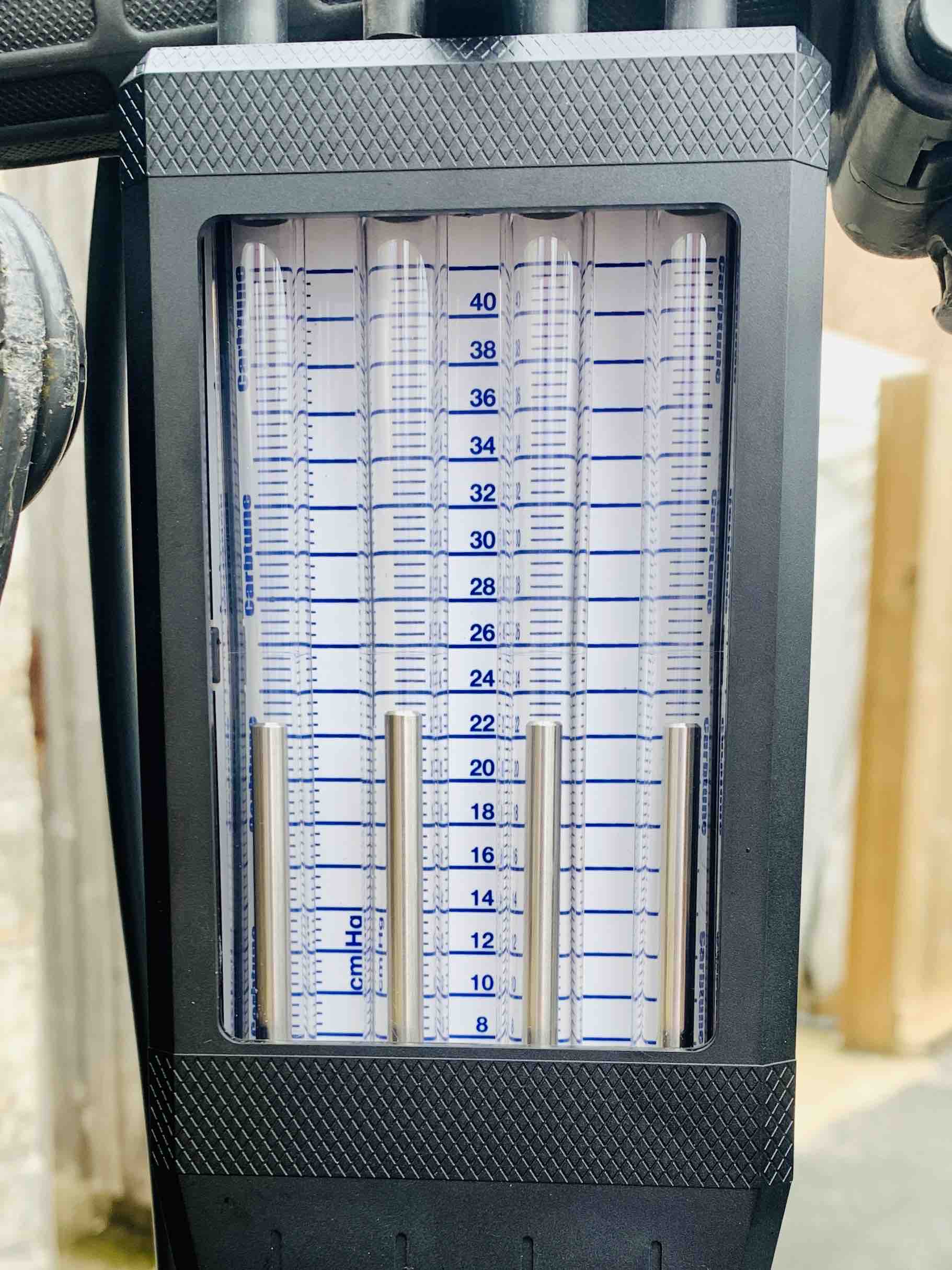
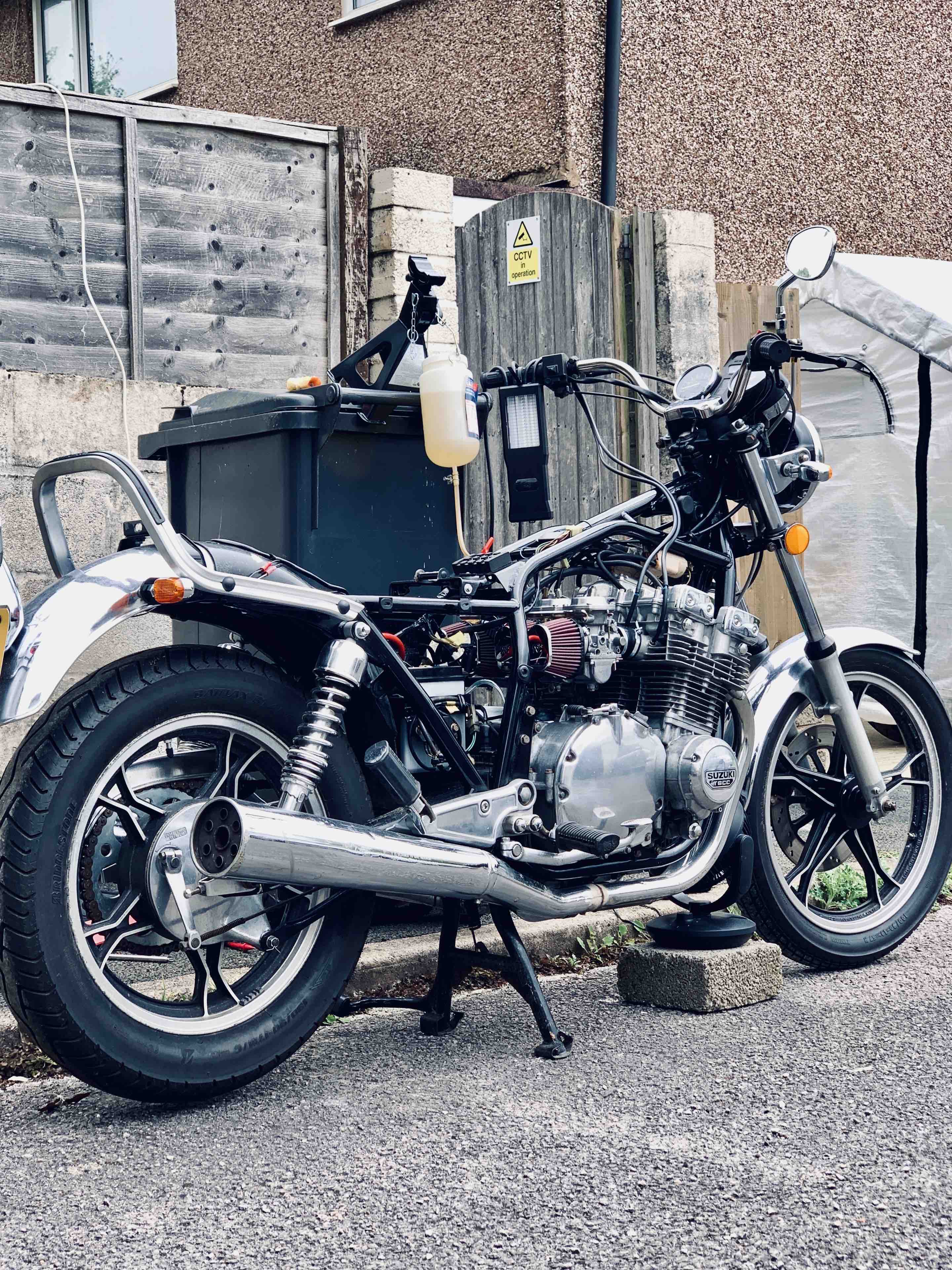
          Here’s my set-up.


          And here’s the process I followed.
          1. Set up petrol IV feed
          2. Block vacuum pipe.
          3. Start bike.
          4. Quickly adjust idle speed adjustment knob to compensate for bench sync.
          5. Wait until engine is warm enough to run without choke.
          6. Set highest RPM for air/fuel screws
          7. Sweet spot today = 3 turns out
          8. Let bike cool down (fan used slightly better than nothing)
          9. Set up Carbtune for vacuum syncing.
          10. Set idle speed adjustment knob so idle is 2000 RPM.
          11. Sync carb 2 to carb 3.
          12. Sync carb 1 to carb 2
          13. Sync carb 4 to carb 3

          Sounds easy in theory. In practice? Woo-wee! Maybe it’s easier with the special tool (long screwdriver with hex socket in the bottom. Using a screw driver and spanner resulted in getting the carbs balanced, then everything went sideways when trying to tighten down the lock nut.

          In the end, good enough was good enough.

          Here’s my final score.


          Unfortunately rain stopped play. It’s too wet to put Suzy's petrol tank back on and go for a test ride.

          Hopefully tomorrow.

          Comment

          • SamLack99
            Forum Mentor
            Past Site Supporter
            Super Site Supporter
            • May 2023
            • 110
            • Dawlish, Devon, UK

            #6
            Boo!

            From idle to 1/4 throttle, Suzy is a dream. She pulls like a train. Handles like a modern bike. No lurching, no struggling. Just effortless.

            A dream of a bike.

            But then, as I try to continue accelerating from 1/4 throttle onwards, she bogs, loses power, struggles. If I keep the throttle turning, she sometimes gets through, and then it's like being strapped to a rocket.

            Guess it's time to look at reducing the thickness of the ring on top of the needles...

            I'll start a new post to share my adventures...

            Comment

            • dgates1
              Forum Mentor
              Past Site Supporter
              Super Site Supporter
              • Jun 2024
              • 380
              • Arlington, TX

              #7
              With the air filter pods it's going to be too lean. That's why your idle mixture screws have to be 3 turns out.
              - David
              80 GS850GL, 82 GS1100G
              Arlington, TX
              https://visitedstatesmap.com/image/ARMNMTNDSDTXsm.jpg

              Comment

              • SamLack99
                Forum Mentor
                Past Site Supporter
                Super Site Supporter
                • May 2023
                • 110
                • Dawlish, Devon, UK

                #8
                Originally posted by dgates1
                With the air filter pods it's going to be too lean. That's why your idle mixture screws have to be 3 turns out.
                I'd hoped fitting air correctors at the 4 O'clock position would have solved this. I've taken 10 percent of the needle ring thickness off and will test again tomorrow.

                Comment

                • Steve
                  GS Whisperer
                  • Jun 2005
                  • 35932
                  • southwest oHIo

                  #9
                  I prefer a sligtly modified sequence.

                  Set mixture screws between 2 and 2 1/2 turns out from LIGHTLY seated
                  Warm the bike
                  Do the carb sync
                  Fine tune the mixtures.

                  Since turning the mixture screws will temporarily reduce the power from that cylinder, it's good to start with all cylinders pulling somewhat equally.
                  I leave the vacuum gauges connected while doing the mixture tuning. It's easy to see a drop in vacuum, but you should see it on ALL cylinders, due to the engine slowing down
                  It's also easier to see whether you need to fine-tune the sync before you disconnect them.

                  A tip to richen up your needles: you have a thick plastic washer at the top of the circlip and a thin metal washer below it. Swap the two washers. That will raise the needle about the equvalent of 1.5 notches, if your needles had notches.

                  .
                  sigpic
                  mine: 2000 Honda GoldWing GL1500SE and 1980 GS850G'K' "Junior"
                  hers: 1982 GS850GL - "Angel" and 1969 Suzuki T250 Scrambler
                  #1 son: 1986 Yamaha Venture Royale 1300 and 1982 GS650GL "Rat Bagger"
                  #2 son: 1980 GS1000G
                  Family Portrait
                  Siblings and Spouses
                  Mom's first ride
                  Want a copy of my valve adjust spreadsheet for your 2-valve per cylinder engine? Send me an e-mail request (not a PM)
                  (Click on my username in the upper-left corner for e-mail info.)

                  Comment

                  • SamLack99
                    Forum Mentor
                    Past Site Supporter
                    Super Site Supporter
                    • May 2023
                    • 110
                    • Dawlish, Devon, UK

                    #10
                    Originally posted by Steve

                    A tip to richen up your needles: you have a thick plastic washer at the top of the circlip and a thin metal washer below it. Swap the two washers. That will raise the needle about the equvalent of 1.5 notches, if your needles had notches.

                    .
                    That right there is genius. I WISH I'd thought of that before spending two days reducing the plastic washer down in 10% increments.

                    Still, it has given me plenty of practice taking the fuel tank on and off =)


                    Thanks Steve.

                    Comment

                    • rphillips
                      Forum Guru
                      Past Site Supporter
                      Super Site Supporter
                      • Jun 2005
                      • 7742
                      • Norene TN

                      #11
                      I remember, back in the day, Radio Shack had a pack of washers, same ID & OD as that plastic shim. We'd just stack those washers up & down to get the height we wanted. Worked great.
                      1983 GS1100E, 1983 CB1100F, 1991 GSX1100G, 1996 Kaw. ZL600 Eliminator, 1999 Bandit 1200S, 2005 Bandit 1200S, 2000 Kaw. ZRX 1100

                      Comment

                      Working...