1981 gs1000g

Collapse
X
 
  • Time
  • Show
Clear All
new posts
  • Barberossi
    • Feb 2026

    #1

    1981 gs1000g

    Morning. I bought this bike a few months ago.Was a deceased estate. Rebuilt carbs,valve clearances and the like to get it roadworthy. All fine.
    The thing is the battery keeps going flat after a few days going to work 45 minutes away.
    Replaced the battery and fuses, checked the earth etc all seems fine.
    Im at a loss. I don?t know weather to replace the stator/regulator or both.
  • Guest

    #2
    Originally posted by Barberossi
    Morning. I bought this bike a few months ago.Was a deceased estate. Rebuilt carbs,valve clearances and the like to get it roadworthy. All fine.
    The thing is the battery keeps going flat after a few days going to work 45 minutes away.
    Replaced the battery and fuses, checked the earth etc all seems fine.
    Im at a loss. I don?t know weather to replace the stator/regulator or both.
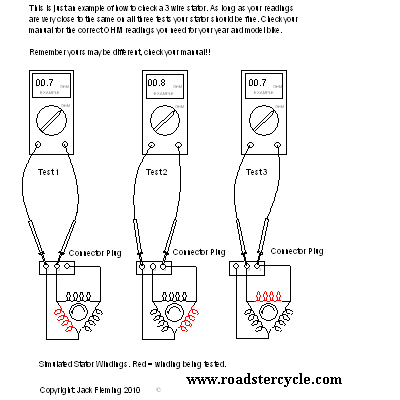
    Best way to find out is test them. Use as multimeter set on AC voltage and test the stator. You was to see what the voltage is from checking the three wires that come from the stator. 1-2, 1-3, 2-3. It should increase as you increase the rpm. It should read around 75 VAC at 4-5,000 rpm. If you get that or close at all three combinations, it's good. You'll want to perform a continuity or ohm, test just the way you did for AC voltage, but without the engine running. The example below shows the hm test and what I mean by a combination of the three wires. 1-2, 1-3 and 2-3. If both tests are good then it's your Reg/Rec. There are tests for that also, but the regulator and rectifiers are in one unit, so even if the rectifier is working the regulator may not be sending the voltage to the battery. Your meter would need to have a diode test option to test the rectifier.

    If not, then it more than likely has a short and that can be checked by a continuity or ohm test from each wire and the frame or ground source. If it is grounding it will sound.

    Comment

    • Nessism
      Forum LongTimer
      GSResource Superstar
      Past Site Supporter
      Super Site Supporter
      • Mar 2006
      • 35788
      • Torrance, CA

      #3
      Charging system problems are the most common this side of gummed up carbs. Problem you will have in terms of people providing input though is that the title of this thread does not describe the problem.

      You may want to search out Posplyer's quick test guide. He's our resident charging system expert. A no-load AC voltage check as detailed by rick is a decent test and all but it's inconclusive.
      Ed

      To measure is to know.

      Mikuni O-ring Kits For Sale...https://www.thegsresources.com/_foru...ts#post1703182

      Top Newbie Mistakes thread...http://www.thegsresources.com/_forum...d.php?t=171846

      Carb rebuild tutorial...https://gsarchive.bwringer.com/mtsac...d_Tutorial.pdf

      KZ750E Rebuild Thread...http://www.thegsresources.com/_forum...0-Resurrection

      Comment

      • Guest

        #4
        Originally posted by Nessism
        Charging system problems are the most common this side of gummed up carbs. Problem you will have in terms of people providing input though is that the title of this thread does not describe the problem.

        You may want to search out Posplyer's quick test guide. He's our resident charging system expert. A no-load AC voltage check as detailed by rick is a decent test and all but it's inconclusive.
        It's the first place to start. If your not getting the proper AC voltage from the stator, then it doesn't matter what is happening upstream.

        Comment

        • tom203
          Forum Guru
          Past Site Supporter
          • Aug 2010
          • 8925
          • Norway,Maine

          #5
          "Best way to find out is test them. Use as multimeter set on AC voltage and test the stator. You was to see what the voltage is from checking the three wires that come from the stator. 1-2, 1-3, 2-3. It should increase as you increase the rpm. It should read around 75 VAC at 4-5,000 rpm. If you get that or close at all three combinations, it's good."

          Maybe good, but while you're doing the running AC test, on same meter scale put one meter probe on a stator lead and other probe on good bike ground....you want to see very low (or zero) ac reading - this indicates whether the stator is grounding out on itself. The ohm test is very inconclusive.
          1981 gs650L

          "We are all born ignorant, but you have to work hard to stay stupid" Ben Franklin

          Comment

          • Barberossi

            #6
            Thankyou kindly will try that.

            Comment

            • Guest

              #7
              Originally posted by tom203
              "Best way to find out is test them. Use as multimeter set on AC voltage and test the stator. You was to see what the voltage is from checking the three wires that come from the stator. 1-2, 1-3, 2-3. It should increase as you increase the rpm. It should read around 75 VAC at 4-5,000 rpm. If you get that or close at all three combinations, it's good."

              Maybe good, but while you're doing the running AC test, on same meter scale put one meter probe on a stator lead and other probe on good bike ground....you want to see very low (or zero) ac reading - this indicates whether the stator is grounding out on itself. The ohm test is very inconclusive.
              I prefer a continuity test, but not all meters have that capacity.

              Comment

              • Barberossi

                #8
                Cheers mate

                Comment

                Working...