• Required reading for all forum users!!!

    Welcome!
    Register to access the full functionality of the GSResources forum. Until you register and activate your account you will not have full forum access, nor will you be able to post or reply to messages.

    A note to new registrants...
    All new forum registrations must be activated via email before you have full access to the forum.

    A Special Note about Email accounts!
    DO NOT SIGN UP USING hotmail, outlook, gmx, sbcglobal, att, bellsouth or email.com. They delete our forum signup emails.

    A note to old forum members...
    I receive numerous requests from people who can no longer log in because their accounts were deleted. As mentioned in the forum FAQ, user accounts are deleted if you haven't logged in for the past 6 months. If you can't log in, then create a new forum account. If you don't get an error message, then check your email account for an activation message. If you get a message stating that the email address is already in use, then your account still exists so follow the instructions in the forum FAQ for resetting your password.

    Have you forgotten your password or have a new email address? Then read the forum FAQ for details on how to reset it.

    Any email requests for "can't log in anymore" problems or "lost my password" problems will be deleted. Read the forum FAQ and follow the instructions there - that's what we have one for...

  • Returning Visitors

    If you are a returning visitor who never received your confirmation email, then odds are your email provider is blockinig emails from our server. The only thing that can be done to get around this is you will have to try creating another forum account using an email address from another domain.

    If you are a returning visitor to the forum and can't log in using your old forum name and password but used to be able to then chances are your account is deleted. Purges of the databases are done regularly. You will have to create a new forum account and you should be all set.

Wire Gauge

  • Thread starter Thread starter Flyboy
  • Start date Start date
F

Flyboy

Guest
This is one for the electrical gurus on the board.
I am looking at possibly rebuilding a brand new harness for Jennifer, my '81 GS1000G, can someone please give me some indication of the gauge of wire used in the original, it looks like it could be 14 gauge (2mm) but maybe thinner, I can not find the spec anywhere in the factory manual or any of the wiring diagrams, I have searched and turn up nothing, but I know I have seen it mentioned somewhere here before, Jim, Steve, Ed, Dale...you can jump in any time.

Secondly, is it worth going with one gauge heavier to help keep heat down, or is that not neccassary and will just lead to an overly bulky harness.
Your thoughts much appriciated.
 
I remember reading about harness sizes on here as well, but I can tell you that it makes almost no sense to increase the harness size. Even at 14 gauge, the loss across your longest run is still only a fraction of a percent, and the going rate for going with a fatter wire is usually somewhere over 3%-5% loss. Going to 12 gauge might cut your loss in half, but half of a small number is still just a small number. I would just keep it as-is.
 
On my GS most of the wires are 18 gauge, including the stator to the R/R. I found a very few 20 gauge wires. A few (power wires, such as to the starter) are 14 gauge.
For critical wires, such as power to the coils and aftermarket horns, I replace the 18 gauge with 16 gauge. I do limit these, as they do make the harness much larger in diameter.
You "normally" want to limit your power loss for these wires to 2% or less. There are on-line calculators for wire gauge & loss vs. length.
 
Last edited:
If you have access to some 22759/16 (airplane wire) I would use that. The jacket (insulation) is tefzel and is much smaller, tougher, and lighter than regular automotive style wire.

18 gauge - up to 10 amps
16 gauge - up to 15 amps
14 gauge - up to 20 amps
12 gauge - up to 25 amps

Anything over that and I would use an 8 gauge cable which is actually not that big. Battery cables and the starter cable.

Also get some good terminals and a good crimpper. Look for PDIG terminals. Your Avionics guy will have all this stuff.
 
Last edited:
On my GS most of the wires are 18 gauge, including the stator to the R/R. I found a very few 20 gauge wires. A few (power wires, such as to the starter) are 14 gauge.
For critical wires, such as power to the coils and aftermarket horns, I replace the 18 gauge with 16 gauge. I do limit these, as they do make the harness much larger in diameter.
You "normally" want to limit your power loss for these wires to 2% or less. There are on-line calculators for wire gauge & loss vs. length.
The critical wires are the two leading from R/R output to harness (or battery if you go direct) and ground- these should be 14 gage wire to handle the 15 to 20 amp output comfortably.
 
If you have access to some 22759/16 (airplane wire) I would use that. The jacket (insulation) is tefzel and is much smaller, tougher, and lighter than regular automotive style wire.

Also get some good terminals and a good crimpper. Look for PDIG terminals. Your Avionics guy will have all this stuff.

Yes on the MIL spec "airplane wire". Much thinner diameter insulation, yet very tough.

Regarding making a harness in general, I wouldn't do it. Too much work and the plugs wont match the various components that attach in (unless you can find them somewhere. Is that possible?). I totally rebuilt the harness in my first 1000S, converting a harness from a 1000GL. It was a fun project, but not one that I recommend for everyone.
 
Thanks for the info guys, very informative, yes Dave, I didn't even think about dropping in next door at the avionics guys for stock, I agree the airplane wire is far superior, problem is, its all white, how you guys work your way through those looms, only you know. But maybe connectors...mmm :rolleyes:
Ed, I hear you, but it really is something I want to do, things electrical have always been my nemisis, I need to do this to slay the dragon, so to speak.
I also want to replace all the 30 year old connectors with new, and thought it would be a good idea to uprade them at the same time.
I am putting a lot of effort, time and money into trying to bring the bike back to "as new" if not better condition, and the last thing I want to do is go and chuck a tatty 30 year old harness on it, hope you understand.
So can anyone tell me what gauge wire was used in the original harness, except for the high load carrying bits of course?
 
So can anyone tell me what gauge wire was used in the original harness, except for the high load carrying bits of course?
I can when I get home...

off hand like KAK, I'm thinking 18 Ga wire
 
So can anyone tell me what gauge wire was used in the original harness, except for the high load carrying bits of course?
Koolaid_kid already answered that.
well1.gif

On my GS most of the wires are 18 gauge, including the stator to the R/R. I found a very few 20 gauge wires. A few (power wires, such as to the starter) are 14 gauge.
I think he missed the mark with the starter wire, though, that should be 8 gauge, not 14. :oops:

Bonanzedave gave you a good answer, too.
well1.gif

18 gauge - up to 10 amps
16 gauge - up to 15 amps
14 gauge - up to 20 amps
12 gauge - up to 25 amps

Anything over that and I would use an 8 gauge cable which is actually not that big. Battery cables and the starter cable.

You mentioned something about going to a larger wire "to keep the heat down". Keep in mind that the heat in the wiring is only if you try to draw more current than the wire will handle. Under normal operating circumstances, the wires in the stock harness are just fine. MOST of the heat-related problems we see are in the connections, not the wire itself.

If you want new connectors, try Vintage Connectionis and Eastern Beaver. I have used Eastern Beaver connectors for many projects (some were even on the bike :D ) and just received three fuse boxes for my next round of projects.

Another bit of "fun" you are going to have is matching the colors. I have seen sources for various colors of wire, including the striped stuff, but can't remember where.

.
 
For wire identification how about just using different colors of permanent markers and using different numbers of bands on the ends to id the wires? Even colored heat shrink insulation in different combinations.
 
If you have access to some 22759/16 (airplane wire) I would use that. The jacket (insulation) is tefzel and is much smaller, tougher, and lighter than regular automotive style wire.

18 gauge - up to 10 amps
16 gauge - up to 15 amps
14 gauge - up to 20 amps
12 gauge - up to 25 amps

Anything over that and I would use an 8 gauge cable which is actually not that big. Battery cables and the starter cable.

Also get some good terminals and a good crimpper. Look for PDIG terminals. Your Avionics guy will have all this stuff.
Length is a critical factor in calculating gauge required. For example, I go straight from my R/R to my battery (fused, of course). That wire is very short so I used 12 gauge wire. I also used an on-line calculator to estimate the power loss over the length, and 12 gauge was overkill. But I had it laying around so I used it.
 
Last edited:
MIL Spec wire is available in various colors. It's true that aircraft guys often use white for everything, but that doesn't mean the wire isn't available in different colors.
 
Thanks guys, Steve, I missed that crucial bit of info from Koolaid Kid, thanks KK, Daves table is handy and been saved for future reference, but useless to me now, as I have no idea how many amps are pulled by what.:confused:
Steve, ya going to wear out your boots with all that foot tapping :lol:
Or is that just habit from rowing through the gears on the Wing to keep up with the GS' -----------------> hat, coat, door ;)

Steve, these guys seem to have all the colours under the sun at a fair price, wheather I ship from the U.K or the U.S is pretty here nor there I guess.

http://www.vehicle-wiring-products.eu/VWP-onlinestore/home/homepage.php

Thanks Hampshirehog.;)

Going to have a chat to the avionics guys next door to our office as soon as I get back to work on Monday about those wires Ed.
 
If you can get white mil-spec wire from your avionics shop see if they have a laser wire marker. I know our back shop has one and although it's no longer used on aircraft wire they may also have an old heat stamper.
 
I think he (KK) missed the mark with the starter wire, though, that should be 8 gauge, not 14. :oops:.
Mea culpa. That is about the only wire I have not touched, so I should not have attempted to answer that one. Sigh.
 
Steve, ya going to wear out your boots with all that foot tapping :lol:
Or is that just habit from rowing through the gears on the Wing to keep up with the GS' -----------------> hat, coat, door ;)
Oh, I manage to keep up OK. :p

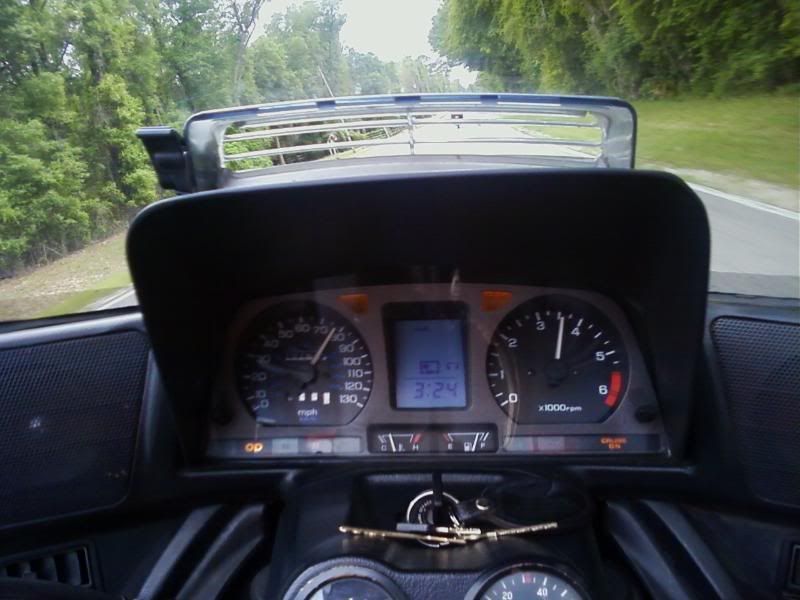
Here is a shot coming out of what passes for a "curve" while dpep was showing me around part of Flori-duh:
About half-way through the "curve", I decided to get a picture of it. By the time my phone locked into picture mode,
we were starting to straighten out, but you can see that we are coming out of the "curve" on the high side of 75. :D
(With one hand on the bars and the other holding a cell phone. :eek:)

0417001523-1.jpg


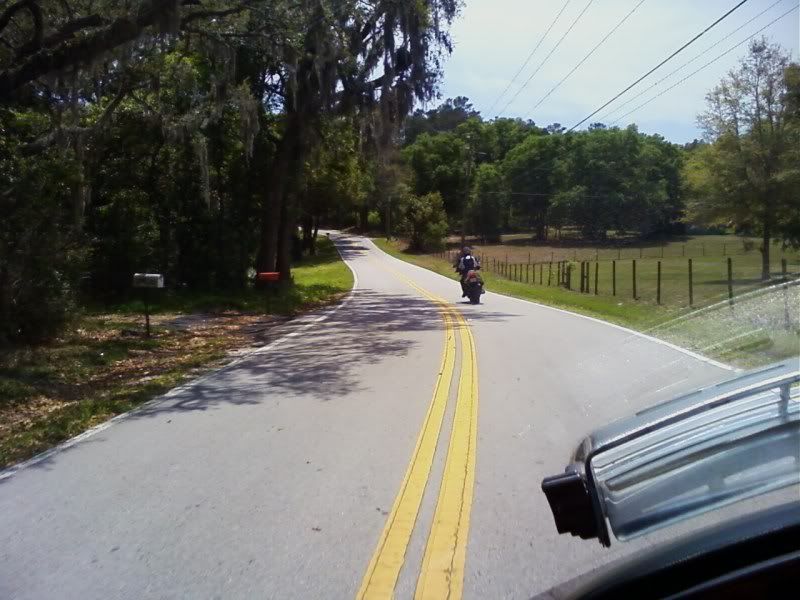
And this one? Not much of a curve, we must have been moving to need this much lean. :-\\\

0410001359.jpg
 
Another bit of "fun" you are going to have is matching the colors. I have seen sources for various colors of wire, including the striped stuff, but can't remember where.

.

z1enterprises has color coded (striped even) wire that is similar to stock.
 
Ordered my wire from this place today. Great on the phone and they have a lot of cool stuff when you look at their products on the site. Had to stay focused on what little wire I needed and not get a bunch of other stuff that I thought was cool.

http://www.riwire.com/
 
A handy source of color coded wire is from a self-serve auto wrecker. I stop by every couple of years and buy a wiring harness from a car which provides many choices of wires.
 
Back
Top