• Required reading for all forum users!!!

    Welcome!
    Register to access the full functionality of the GSResources forum. Until you register and activate your account you will not have full forum access, nor will you be able to post or reply to messages.

    A note to new registrants...
    All new forum registrations must be activated via email before you have full access to the forum.

    A Special Note about Email accounts!
    DO NOT SIGN UP USING hotmail, outlook, gmx, sbcglobal, att, bellsouth or email.com. They delete our forum signup emails.

    A note to old forum members...
    I receive numerous requests from people who can no longer log in because their accounts were deleted. As mentioned in the forum FAQ, user accounts are deleted if you haven't logged in for the past 6 months. If you can't log in, then create a new forum account. If you don't get an error message, then check your email account for an activation message. If you get a message stating that the email address is already in use, then your account still exists so follow the instructions in the forum FAQ for resetting your password.

    Have you forgotten your password or have a new email address? Then read the forum FAQ for details on how to reset it.

    Any email requests for "can't log in anymore" problems or "lost my password" problems will be deleted. Read the forum FAQ and follow the instructions there - that's what we have one for...

  • Returning Visitors

    If you are a returning visitor who never received your confirmation email, then odds are your email provider is blockinig emails from our server. The only thing that can be done to get around this is you will have to try creating another forum account using an email address from another domain.

    If you are a returning visitor to the forum and can't log in using your old forum name and password but used to be able to then chances are your account is deleted. Purges of the databases are done regularly. You will have to create a new forum account and you should be all set.

750 Katana Resurrection

Got a spare 17" Eneki rear for the 750. It's marked "MT" which as far as I know is 'motorcycle tubeless' Of course being early 80s and not being specifically marked as tubeless it has the right rim profile but won't take a tubeless valve stem.

t4fgGMQ0UZi6XfSs6OUkJRLTuvv0R1dqTsXxenCzDCkT-R3v9uAnm8edCyqKQxrNEqX0n_YIM83Tk_VRLCECifIaA9C_6KEth4cGYlwUo1odOZDMaRVz_lM5PVgIwbHhAd5Pkx31UA=s0


Counterbored a face for the valve stem seal. And used the metal valve stem face with some grinding paste to remove the cutter chatter marks.
 
bctxwj-inu2Wkdd6f4ywOGNSlBr_QBN5rgg4aP_mqW7uwpKCsh9tCfPoGpkmMtuhMnZq6QW3nOaTjMadscsCMwsJ1d9QD6AbTjD4_piZ3nN5cN_KhBT1Lcan-j10eTb0QmjJG12qIA=s0


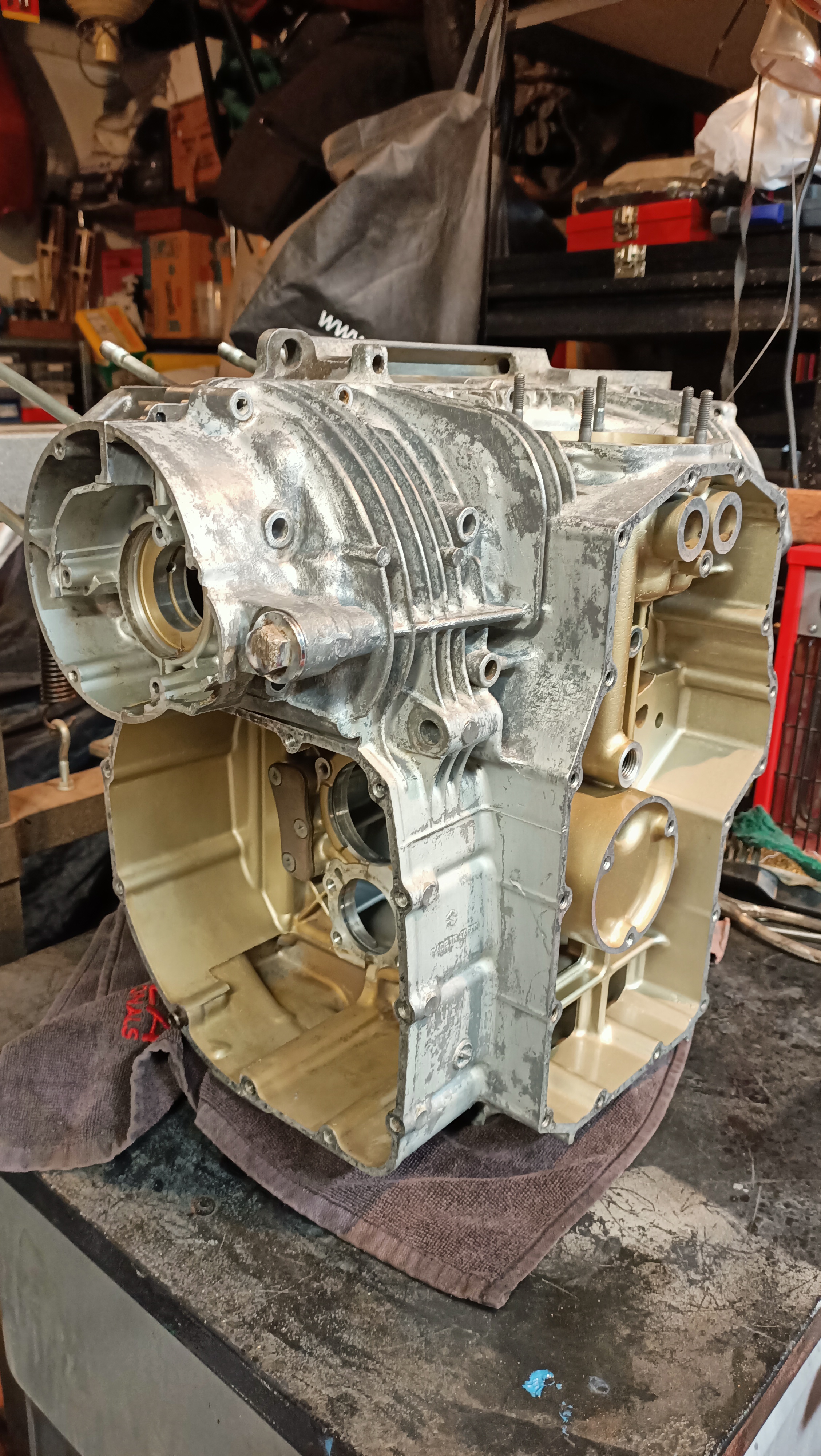
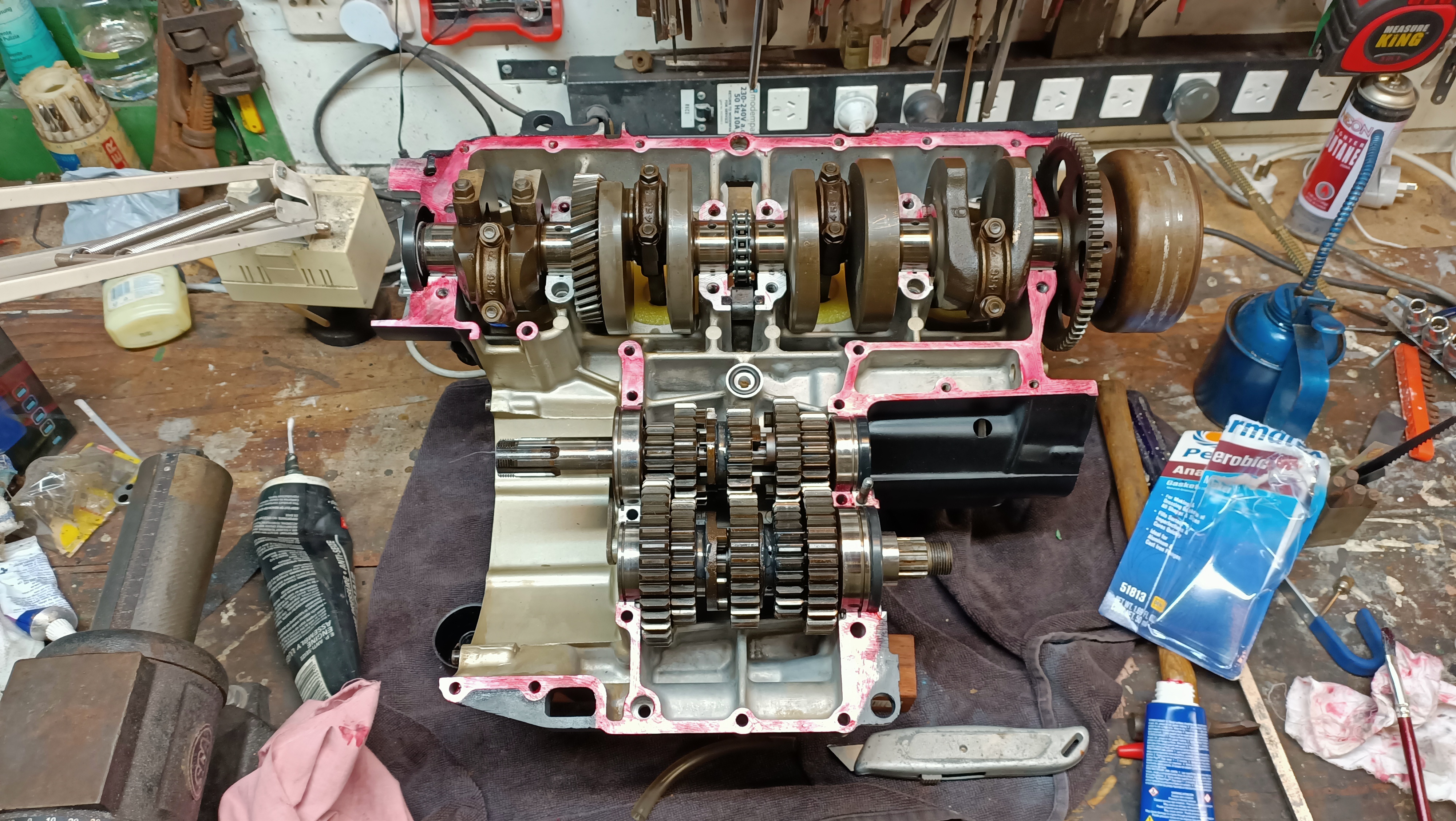
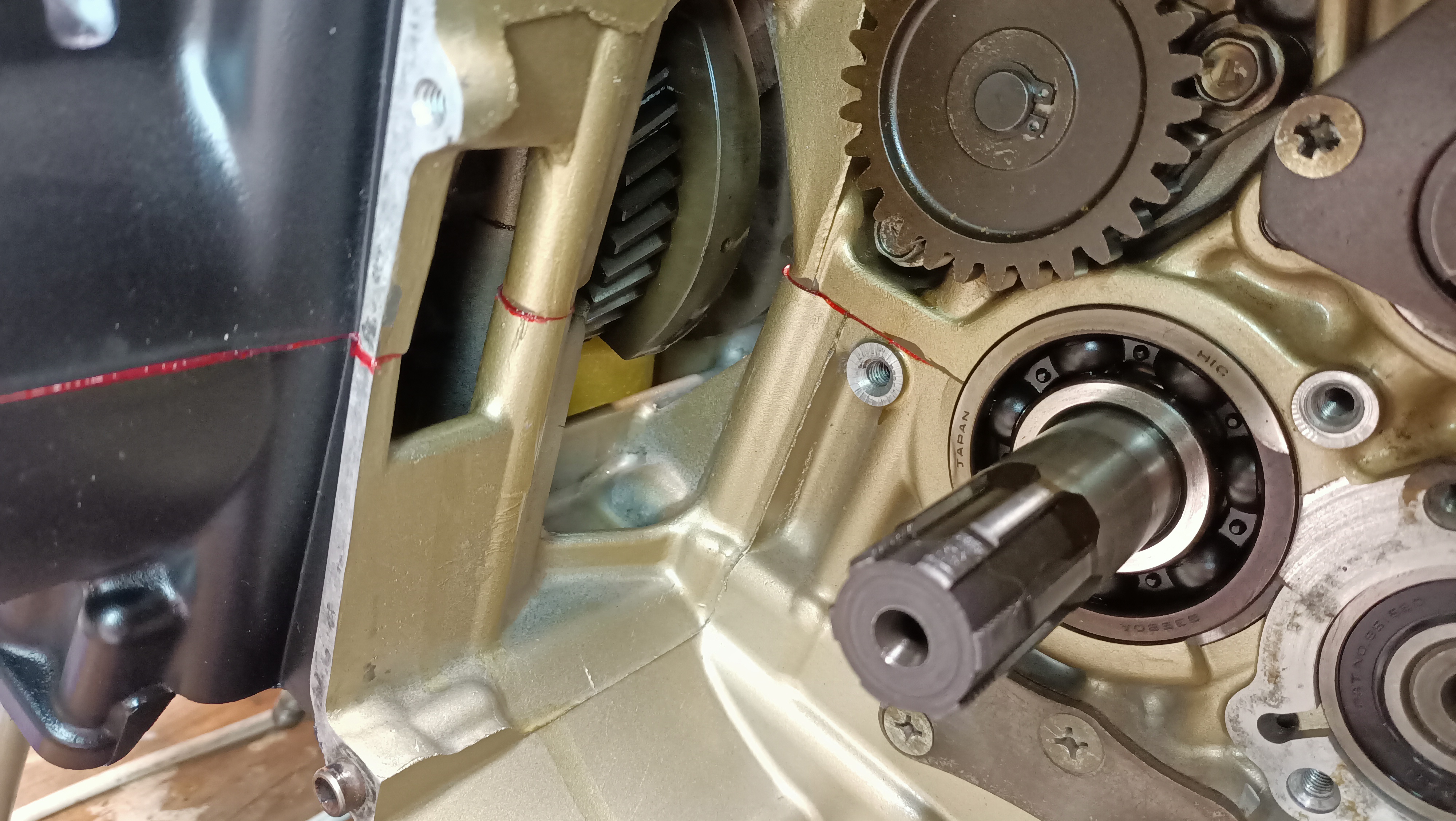
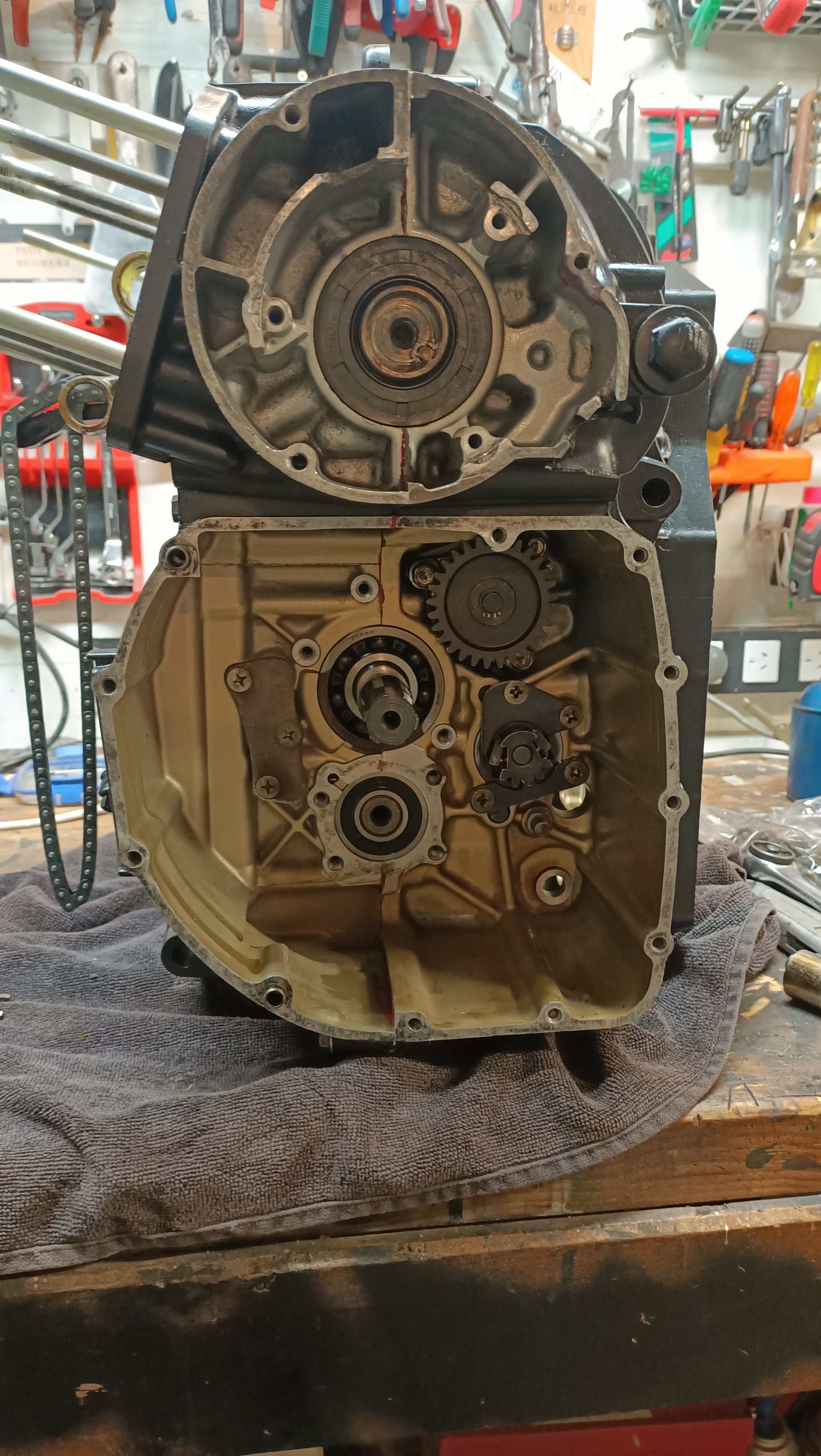
Cases split. The rotor/fly wheel wasn't coming off with heat and some pretty heavy slams with a slide hammer. As there's no oil seal or anything to replace, I'll just leave it in place.

So clean, measure, paint and reassemble.
 
Looks good. I was there a few weeks ago installing a new output shaft.

Yeah, it is looking good, Crank journals look pristine and lightest of wear marks on the shell bearings. Gear teeth show next to no wear, selector forks ditto. Looks like the cases have never been split. Given the ham-fisted work on the top-end, I needed to have a look to quell any doubts and I'm really pleased at the condition of the bottom-end and gearbox. I'll check all the bearings, give everything a clean and paint the cases, and start the reassembly. What was the issue with your output shaft BB?
 
Some progress while recovering from Covid. The inside of the engine was pretty dirty with firm sludge remaining where the particulates have settled out of the oil as it sat cold for the last 10+ years.

0-xFLQtL6XLhTSGfpKqZRfQ4Kgjo-1Ju-FfXUUeYduDAK-lWF7gzsVSLIdyOGUPwhhdUjY6g8KzCb1TSTmzlxkBGxAwq6tfVEfbh1Pj_hZODx-M5YD9kKWSNwwkm1VjOMzoFe7nDtA=s0

dBvBwatjiWqm_BfeE8GcUhhj3repYhN3JH3TSkIb3tbceaACGZOKNXosXtDJtehwd7IXoacMJuRpV266RasHUofsyFNhc8HfkjJY-Itknpe_emkVbUeYGcWhupY4yKd8_BQMfbZVag=s0


So I spent a couple of days cleaning the cases inside and removing lose paint, oxide and residual dirt.

28hhJQj5FnzdCvaq8utz4iYtxxyjfBLxuJc2jpTvdgeLs6voljynSq2l6zjzCJW0Tli-3_KiKzsW7y19UbFgKGQ66lGYF501Hi09yrgczg_W6EwhffqoUBC8ionkXG2wSaCyCm9YfQ=s0


u22Uv4odKSMR9KJ0XDq0SEjuxKYw_PueMZDevvCCVaotlQivxAjike0uQZocSeTnPeVWoyrz4I-DMxLkQ9rZSN65E42rZAVRk5VcldPUGQx1B69yUDzYEL1Iu6GLDimjD2W2nwXPFA=s0


Reassembled the empty cases, masked up, grease and wax remover, primer grey and the semi-gloss black engine enamel.

V3OLd14M_28Ttfm4ye9zgnuN0Bw5J9IDsMGvIVeqZirze8p5wgzjBLafE1CRu3DWlz0jFyUZoC7Mc3FSj7WCBvUwjpIqNNcASRHJ8ALCaeBYcJQFBctfK5-mLCtjRWa9x_zpB14QfQ=s0

JDOfeax6cqpuzd7pwaNHBjyZNPJErJFoYccog1RN7kqgKwHmC_DEq9V7Y-XSpNDtEdHN_vDF7ZI2UogT5Ucc6pq_GJSxWDcEFH2TRc9tj1fdC7bvNrqYr205f92gciqtnlOYf5C24w=s0


GtMLPkk79b2ydxe5bTDeUmaP27LEF40N4kH1s8_F-zN-iZV6Cp13gq98T_RbsveGQbS6ZEXT_uozIkXADTQvEF7T3ZM7fSv0E9-O_mugAQ2_29Avzmj19F4xjwjqgpUSAvnCOK9KzQ=s0
 
Finally got some garage time. Time to reassemble the bottom bottom end.
​​​​​​
x91OIcgOGzNfRBh3F4nCF1mgijFwrwcB28ws0Tu3z4hbdWkqpcvvcwogDz8Wzu_q8hceWjYg7NMp0kn6pkRYDuPO0HSLHYWTj5ppWc2xmbJb0sIzIbRKaz7mPimtEuMBqyT55J0aRA=s0

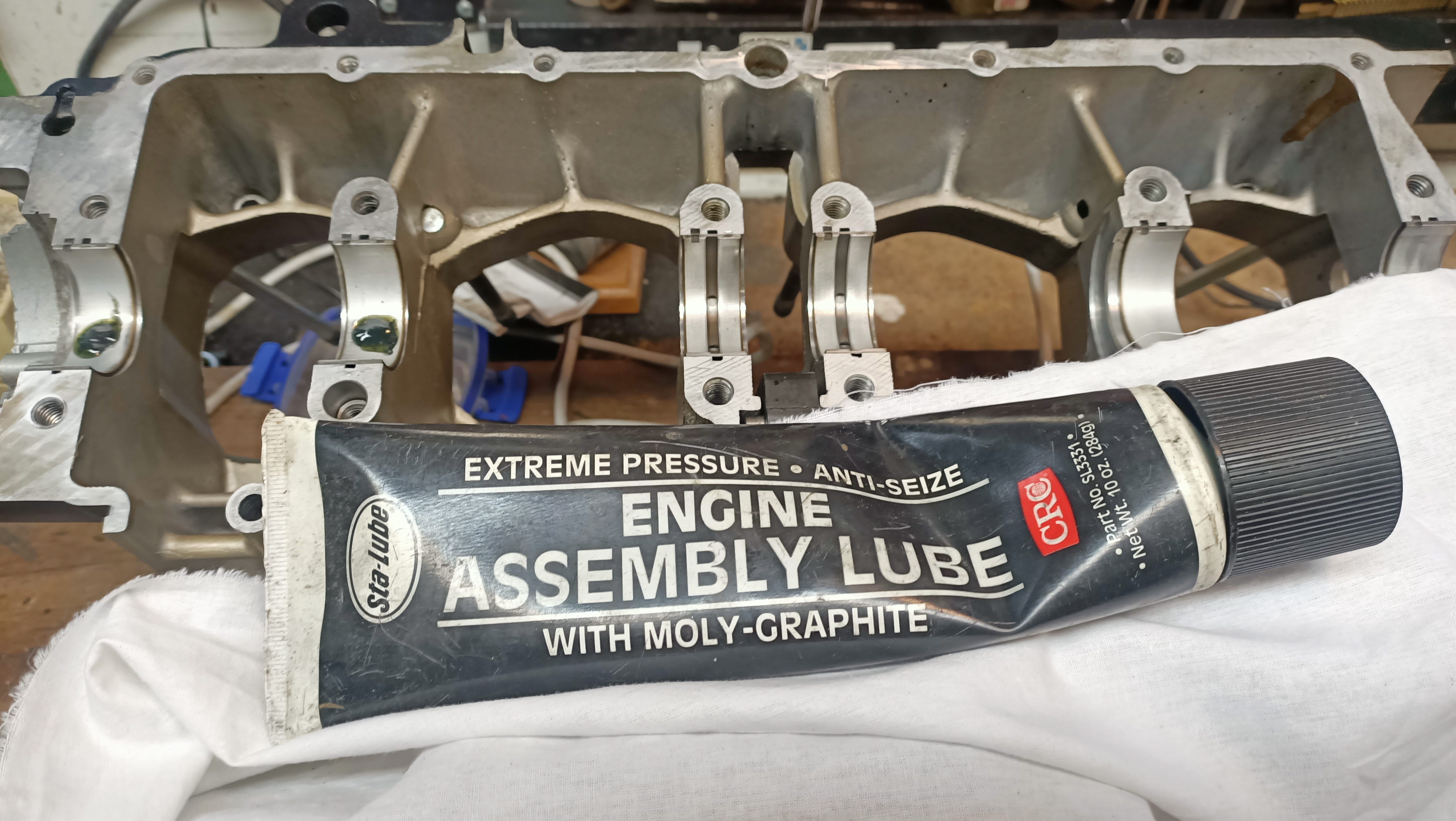
Assembly lube (moly) for the crank bearings.

BaV04TS-MwIjCIbmBX9bs7cnXb5ym-3AE3ULpAagOyn5u2gC-fa21eIQPBgq0ekDN1c8wwJo3pooSfu8hJ8HAuBeaVuzhGo7fujAI2JuHl7teAauz8-50TszC2pI2MS8KVCdRxS8Kw=s0

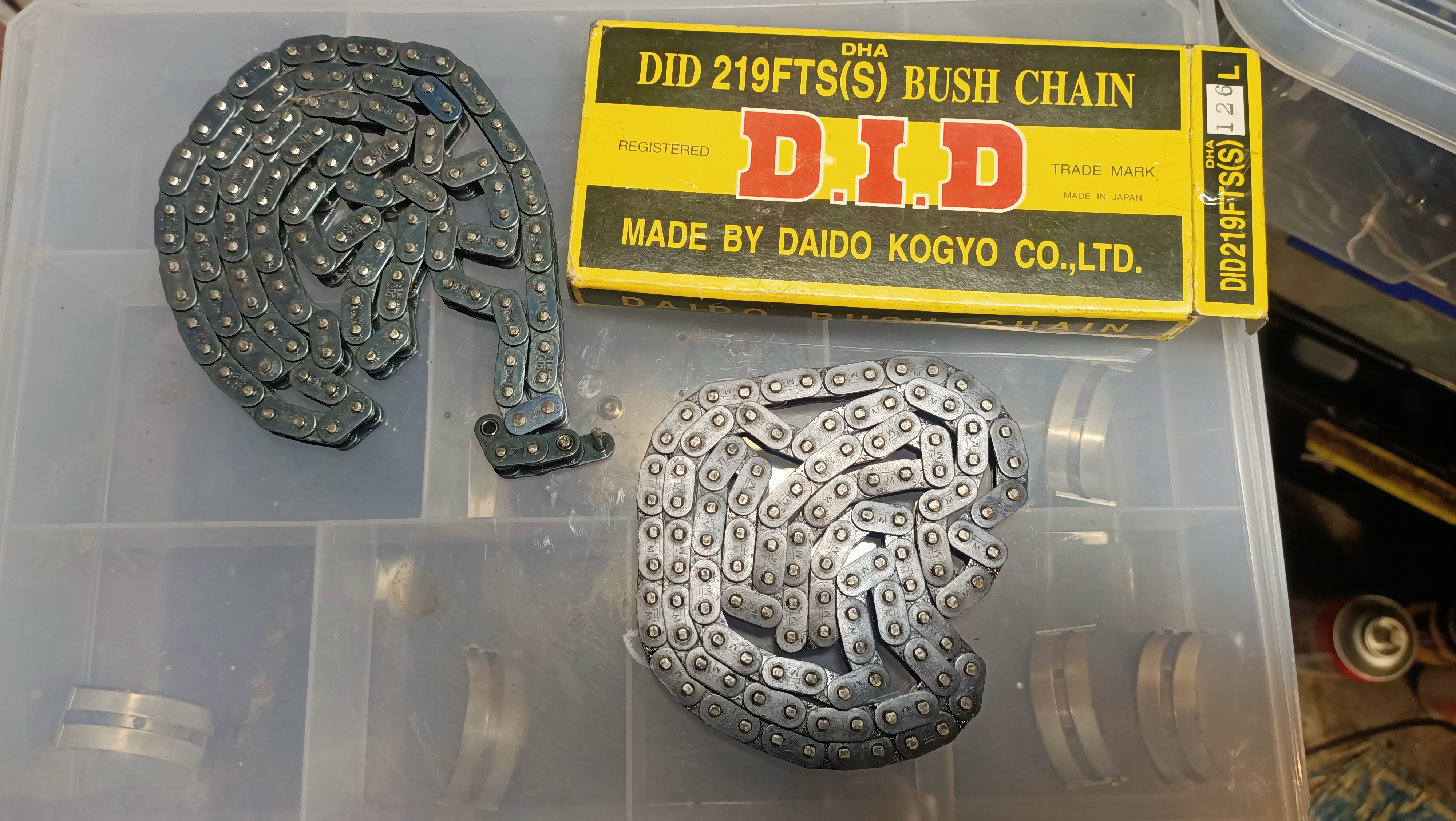
Shortened an 126 link cam chain down to 122
rJWU41k5vZ7AD6bTKhEVtWpBLHHj0xd7REHvFZjDf7oxi81XaaLa_32pr_89WkhDwdVHjqDTi0u3Lo9VGQCtClXvCk9QpuJD-JJEXVpWMSRRwxmJbA9JEuT3TutYlXc12s7mky36vQ=s0

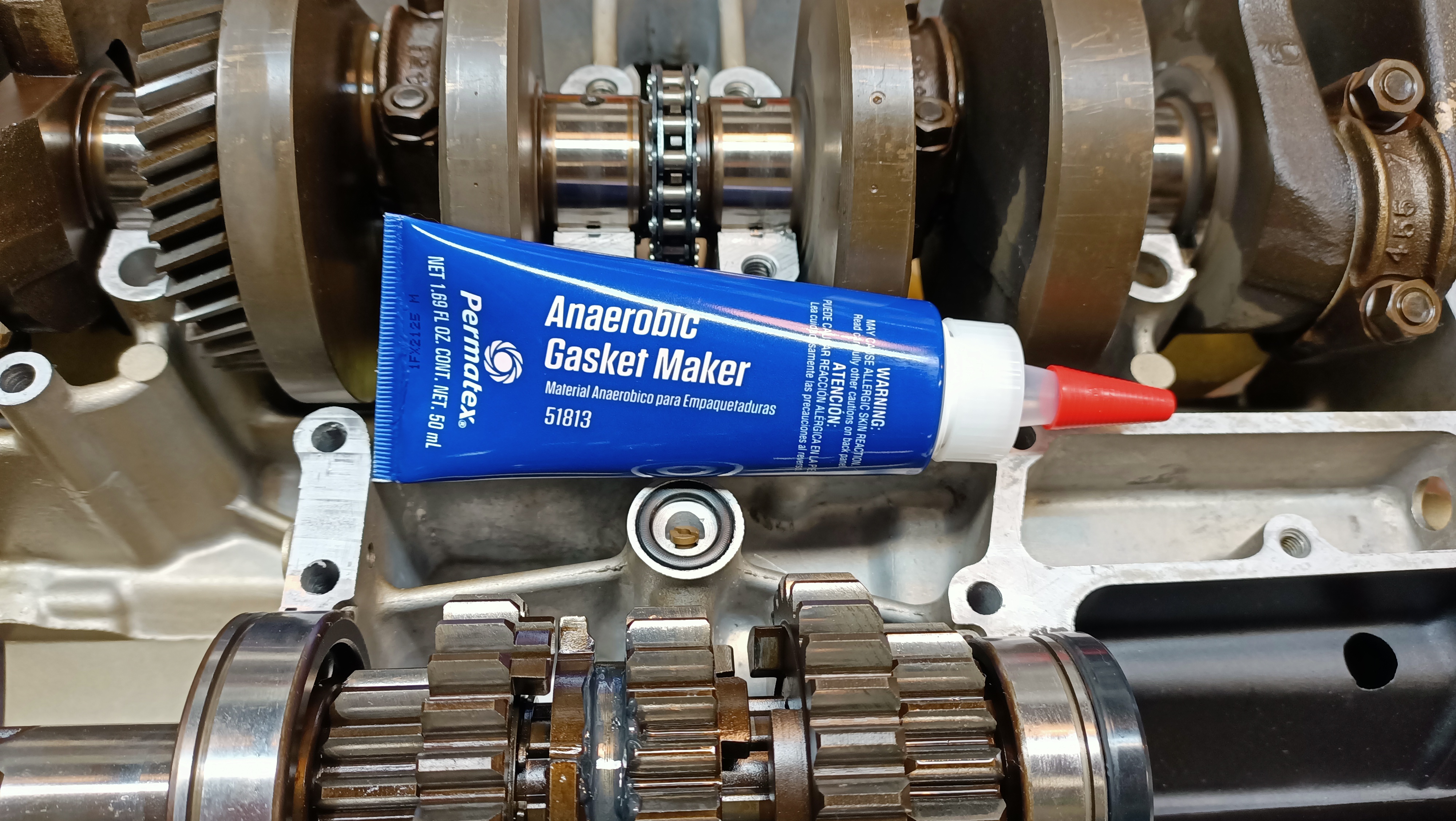
Upper case loaded. I'm using an anaerobic sealer on the case joint. This stuff stays liquid until its clamped down and starved of oxygen and then it cures between the mating surfaces. Excess is easy to wipe away and internally the engine oil washes uncured sealer away.

8CcHiS82_44GtAw9bLP-2Rh5mKVzJbl20UPmHNIGTLYvrE-yJ2_WG_mQQfgR-zylXJwwu-RB4P3XMIuCnFr2ZW0TVv1YVON9c8s0hSGDvbB06AVBEcLU0GOAQVWinf1c1NFI4YfpDA=s0

I applied it with an artist's brush. It is evenly applied, but the glare from the lights makes it look patchy.

-9R4fRFCidNeVc5SPPDJeGZlyx1yN0Y_DGHBupo8k1g6qYzKG2p_RXkRp0aNwHJeksbpnAgVSotayhCbX2INZ1975Hczmlhd_PBRkJLi766g-NFRRvMK_caY3yyWf2kSzyrRbKP8Fw=s0

All torqued up. Not too much excess.

OYzKStNIgJW6dsYCjpvO2PK5A0x2MRLhxpweKcNXuSy5LJKqbalde8WpO4wlCaeGX-w-7m7WrlVOFRSn7UxGUG4j_AgRsqnF8hCEUjjBmeJcw7YUYIBrcS1YSFx7QF_PB_HXDDkZjA=s0

Next step is get the crankcase into the chassis (before it gets too heavy) and then clutch, piston, barrels and head.
 
I've been hearing lots of good things about this anaerobic sealer lately. Is it new? I'm gonna have to look into it and put some on the shelf.
 
I've been hearing lots of good things about this anaerobic sealer lately. Is it new? I'm gonna have to look into it and put some on the shelf.

I don't know how new it is. Loctite do one as well. It's solvent resistant and is all good temperature range-wise. Blurb says it's ideal for sealing gearboxes. Looks ideal for engine cases.
 
Last edited:
Update.

Clutch in.
s9mrKJwgtvyr8swQQnVN2cVo8X1zRwpGZcmI1UBy-Zk7bA9XsohGCy9g0vkE0FKgIiUlQ0shicqgGyZxmKPmz28hFeE7E9V6AjTcOoGuDSlu9tve14l3reRHK2rs76WxfBJAR-DMwQ=s0

Valve seats recut

LW8qkCZB9xZx2p90TaNSLEeyS9zFsc3_Lmqja6RRUn3gEQCIDsUn11xFFbuxOui0Wo9hY9eTzcM77_1a5XeGc9v_RSiG2a48VLvYemneBObEa_Ps_5z-Wd0oEWmtqh0KK4_KvQBcMg=s0


​​​​​​Cylinders honed

jdNJyZ51g9lRovDYFvfOjQCK-yXTR-E-_m73e8Nhtl_5jfEyYNM4XYI8xuDzqBl9zvQemL6uMAuGJ1noG9zr56v16uhZ-46zZmFasAP5ntjyypYpphMa59SeEseQxGGWcJvfJi6nqQ=s0


And painted

zVMCgg9rWewsOXxnwf-YnCItQ_kHtnA6_wXdU4fdymJ45FJVS67eMUYKNn5G2vb1l0CKkv78FejMfAxhLSAHohWBjWrQsNu1gdXJX5ej4XkSDO0ge6kZENue8FQ59ru3hObDh939UA=s0


Next, head assembly and valve leak testing

xoE1FUSBXhW6P2oD3282TX1ZddATWrkNWkv3cTmcx1NFQzoiT9hu_Uk39HSOh0FtnU2CvBhpukeu87srY9lbuIisVDeWzPOSzA0nCZ4OfrD14qLJqocxMixpMXOxZUpV1sxhGPCnzw=s0
 
Progress. Head painted after new valve stem seals and liquid leak test

G_c9NrsBHlYMazyL01BLCul7WEYVclD6cP6nZPCUB1AkUqBau01NIyCvXMb5mwJ8dgf1bQQAdTnqeOwMA7U7E2_Osy55r51DcJO7oLu6_q0WO1YXH8WHUWylKuI7YrGRMxe-l_uVpw=s0

79lv2qskSKeYznhIMVr3fuCCv7jMRhToUgmCri8Qq5Ey0M8kM-Y8fz1kZHihqtfxAGAVVOMm4OT8hlbuWD0BpqRbPpijt2249b4zix6MPBucXcIfabixLCCsr0mv4kKKnpHhsjHNkg=s0


_pvZxLRi9zRDU6Tcof9L9Ilt-gcBTgOdxuXnEWS6fkifP6GNu1YCE3XU4J-jrK7XRcMSOah8Loub4SPt5mRoar80Hm-ESa_dWSmkGQJG-bKSfUtX8kDq6G8icAkeK0nO4EPstnJTmA=s0


Spent half a day scrubbing the pistons. Especially cleaning crap out of the top ring groove. Checked end gaps and fitted the new rings to the pistons.

3mVw41GEfRBQixByr3sY5duY1qv9TgpeipC85aARV0Csdy1JOWAZC_t7hGvGpqHF177cOKfyLfLofn2SqBNpJY68vP9gs8tdEvxfR3SxJmbQ9eTD0N3a5GnHtTqLT_cfSidANflBMg=s0


Pistons back on the rods. Barrels thoroughly cleaned after honing. Barrels back on the crankcase

qTY_SlKNkWD2JIF-nWZKCx1RA7S07QillnkMNA5hjnam62iFpPBME_1p1bLjcOPFJbZOQ-SzfYmuVk6GtLCCZFsNp2zTafRDDLpMKnD6epuPvxiUrQ-mJP2v-FHWVJqOw31AESXgnA=s0


Next squish clearance check (barrels were planed 0.15mm), fresh head gasket and completion of engine assembly.
 
Torqued the head down on the old head gasket and new aftermarket base gasket. Squish clearance measurements were too tight.

9NskC9U1dVhuA9kRTf1qHCWnh7BZSTVe10SdUIEMFZZFVXiwN48A0sg28jG14lWK86jsT6p8ByK3mIxWxh3mRrlFIUvX7DUpDSBoxWUEcP7OuYfciObIh9P-7gqm2U0kP4Mr3gJ_Hw=s0

There was some variation from cylinder 1 to 4 with 1 being the tightest at 0.65mm (0.025") and 4 being at 0.70mm (0.027") so a 2 thou variation... So it seems that the barrels aren't perfectly parallel to the base. The 2 thou variation is over a distance of about 400mm.... So...

The aftermarket base gasket used to check the squish prior to final assembly measures 0.5mm (0.020) crushed. The old head gasket used to check (which is a MLS type) was 1.1mm (0.043) crushed. I have no idea what the thickness of the original base gasket was, and upon which I took my original squish clearance measurements. The virgin aftermarket head gasket has an uncrushed thickness of 1.3mm. This gasket is made from NI-2098 which has a compression factor of 15-30% at 5000 psi clamping pressure (ASTM F 36).

y1fBWzoHQ7b_19TG_--3ZRI-7kDI1gdc0Cn5Pj8_lBxy7jhIfcGcC_9X9NL3xSYrjiFEhrPYfLsmMZkg8y46BWk1YK_QjBLSd1l6fD8iTWwIi40meKlSrRpRDoQl5IuZ4RCq2bOzYQ=s0


I have some 0.8mm fibre oil jointing gasket sheet, so proceeded to make a thicker base gasket.

I86eGHyw2Nm_lQZZ1Zs6L0zcMWIwhBjkd7n6VZBH3HYkF9N_lKzK9_D20ZF071BFMi_1gn8Jd9j5doHQlSC81fqqE-VynHeBWt_pzUPJU2TkikJJoqXWsOumW32LBD6atejX8tPdZg=s0


I don't know the compression percentage of fibre but this is usually around the 20% mark. The new head gasket should crush out to +/- 1.0mm so I'll re-torque the head down on the new base gasket and recheck the squish. My target is 0.75mm (0.030).

I'm hoping the sum of the gasket compression will get me close.
 
Last edited:
A labor of love!!! You could glass bead blast the tops of the pistons, then polish with Jewelers Rouge, they would shine like chrome and you would get better air flow. Impressive thread to read. This is one of the few bike that will always be remembered and be a collectible. IMHO ;)
 
I don't think the head and base gaskets crush that much. I have never had a gasket crush that much on any engine I have rebuilt, car, motorcycle, or aircraft. You could always make a test jig, and using a torque wrench, use a piece of gasket material, replicating a gasket seal, and two equal size flat plates, with the gasket material around the perimeter, then torque them together. I don't think they will crush that much. I knew a guy who rebuilt Rolls Royce engines, they actually use a special thread with a very thin Rolls Royce goop to hold the thread in place, The thread is applied in the middle of the surface contact areas around the perimeter, and cut to meet right at the end. The cases are then torqued together. You are doing a fantastic job on this bike. I have read the whole thread and am quite amazed. That first ride you do will be quite thrilling for you, and rightly so. ;)
 
I have a soft spot for orange Kats after owning the Wilton 1260 for three years.

50322141756_2f63eb68f8_b.jpg


Keep up the amazing work! :encouragement:
 
I don't think the head and base gaskets crush that much. I have never had a gasket crush that much on any engine I have rebuilt, car, motorcycle, or aircraft. You could always make a test jig, and using a torque wrench, use a piece of gasket material, replicating a gasket seal, and two equal size flat plates, with the gasket material around the perimeter, then torque them together. I don't think they will crush that much. I knew a guy who rebuilt Rolls Royce engines, they actually use a special thread with a very thin Rolls Royce goop to hold the thread in place, The thread is applied in the middle of the surface contact areas around the perimeter, and cut to meet right at the end. The cases are then torqued together. You are doing a fantastic job on this bike. I have read the whole thread and am quite amazed. That first ride you do will be quite thrilling for you, and rightly so. ;)

Thanks Suzukian. I beginning to think the crush will be minimal too (at least as a dry/cold install for measurement). Both base gaskets (aftermarket and hand-cut) have been measured before and after being torqued down and show no permanent change... That being said there should be 'recovery' from the crush, but should it be 100%?. The standard test for gasket materials concerning deformation ASTM F 36, gives a percentage of thickness lost at 5000 psi and the percentage recovered after the pressure is released. The problem is that you can't really calculate the pressure on the gasket directly from the torque applied to the studs, or whether it's anywhere near 5000 psi....

The test you propose would provide the answers but I think from the clearance measurements I've already taken, the crush on the fibre head gasket won't be of the magnitude that is going to cause problems.

I found an interesting post on a Porsche forum, about cylinder head nut torque values for early air-cooled 2.7 911 engines (alloy cylinders, steel liners, alloy heads and steel studs) and the issues caused due to heat cycling and the differential coefficient of expansion between the steel studs and alloy barrels. Apparently it was a problem and Porsche came up with studs made from a special steel alloy called Dilivar which expanded at a rate closer to alloy bits, to combat studs pulling out and barrel distortion.

The reason I mention all this is that under heating the the tension on the studs is increased due to the alloy barrel/steel stud combination as is the clamping force at the gasket faces. According to the Porsche site, re-torquing the head nuts at the first service was to take up any 'slack' in the head gasket due to crush caused by alloy expansion from the post-assembly heating/cooling cycles. I suspect this is required on air cooled motorcycle engines too, as they are essentially the same construction.

The post also talked about how stud tension on the air-cooled engines were set well below peak head bolt tension in modern water-cooled auto engines. These are often clamped using using torque to yield bolts to maximize clamping force. Air-cooled studs screwed into the crankcase act more like springs, which is handy given the expansion rates

I'll be going with the aftermarket 0.5 mm base and the 1.3 mm fibre gasket which will give about 0.75 - 0.8mm squish which should be safe. But I will measure to be sure.
​​​
I am looking forward to riding it. It's spring down here at the bottom of the South Pacific, so some summer riding is in order.
 
Last edited:
When Kaz Yoshima helped my on my CB400F build (Stage III 458 cc kit), it was a completely different bike, but no matter what I did, I could not get rid of the weeping of the Honda Cylinder head weeping. It wasn't leaking, it just wept. I just carried a rag, and would wipe it ever 500 miles or so. Much older technology. It never blew. The motor has 8K miles on it, ad last time I started it before setting it up with storage, it ran fine. The bike, which a much smaller and thinner me, was clocked at 135 mpg. It took a while to get there, but that was screaming at 14,5000 rpm's, and it was a burst. It could do 120 all day long. I think you'll have much better results. I was going to use Yamabond #4, but if it didn't work, the clean up is time consuming. That stuff is fantastic though, and it sealed the cases. No oil, of even a hint that there's oil in there.

The care you put into this is admirable, and the documentation is excellent. I have a forum of 50K model builders, mostly paper, but really anything you want to use, and I know a quality, well thought out thread when I read one.;)
 
Back
Top