• Required reading for all forum users!!!

    Welcome!
    Register to access the full functionality of the GSResources forum. Until you register and activate your account you will not have full forum access, nor will you be able to post or reply to messages.

    A note to new registrants...
    All new forum registrations must be activated via email before you have full access to the forum.

    A Special Note about Email accounts!
    DO NOT SIGN UP USING hotmail, outlook, gmx, sbcglobal, att, bellsouth or email.com. They delete our forum signup emails.

    A note to old forum members...
    I receive numerous requests from people who can no longer log in because their accounts were deleted. As mentioned in the forum FAQ, user accounts are deleted if you haven't logged in for the past 6 months. If you can't log in, then create a new forum account. If you don't get an error message, then check your email account for an activation message. If you get a message stating that the email address is already in use, then your account still exists so follow the instructions in the forum FAQ for resetting your password.

    Have you forgotten your password or have a new email address? Then read the forum FAQ for details on how to reset it.

    Any email requests for "can't log in anymore" problems or "lost my password" problems will be deleted. Read the forum FAQ and follow the instructions there - that's what we have one for...

  • Returning Visitors

    If you are a returning visitor who never received your confirmation email, then odds are your email provider is blockinig emails from our server. The only thing that can be done to get around this is you will have to try creating another forum account using an email address from another domain.

    If you are a returning visitor to the forum and can't log in using your old forum name and password but used to be able to then chances are your account is deleted. Purges of the databases are done regularly. You will have to create a new forum account and you should be all set.

Camshaft Top End Rattle

  • Thread starter Thread starter Suzuki_Don
  • Start date Start date
I'm not sure why you need a dial gauge, but you could measure piston height to deck with a good mic. Hampshire explained what Billy meant about measuring at the wrist pin.
 
OK so I have bitten the bullet and decided to do a proper internal measurement of the deck height rather than guessing how much gaskets will compress etc.

This is what I did with the original factory base gasket in place and the cylinders fitted.


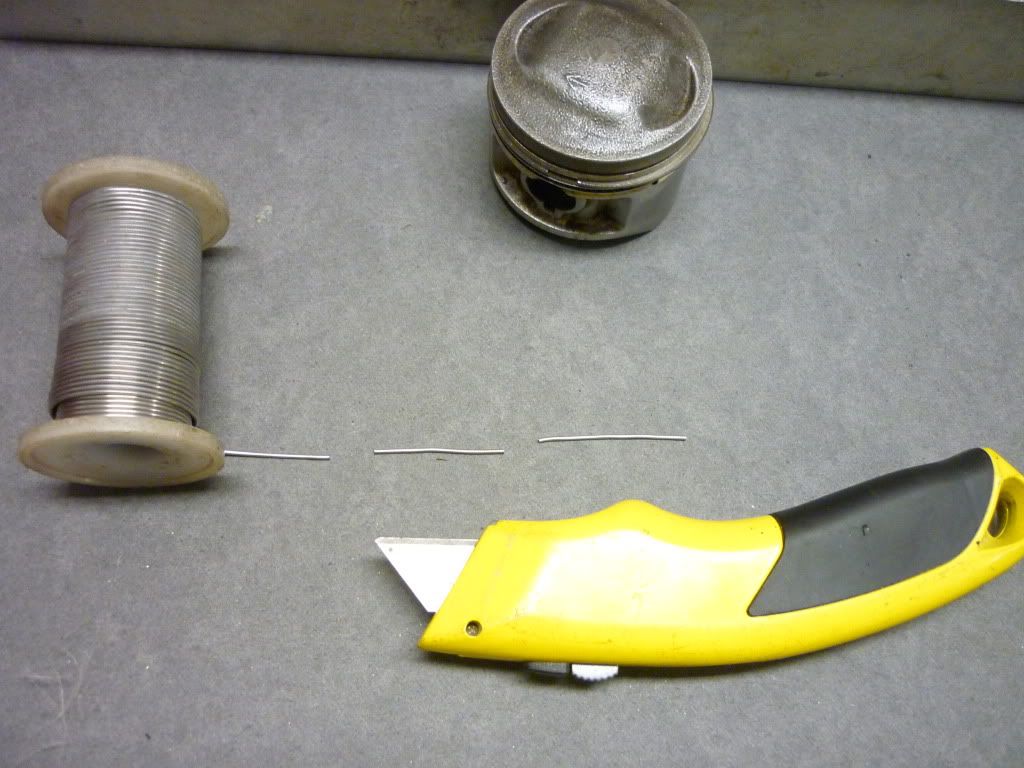
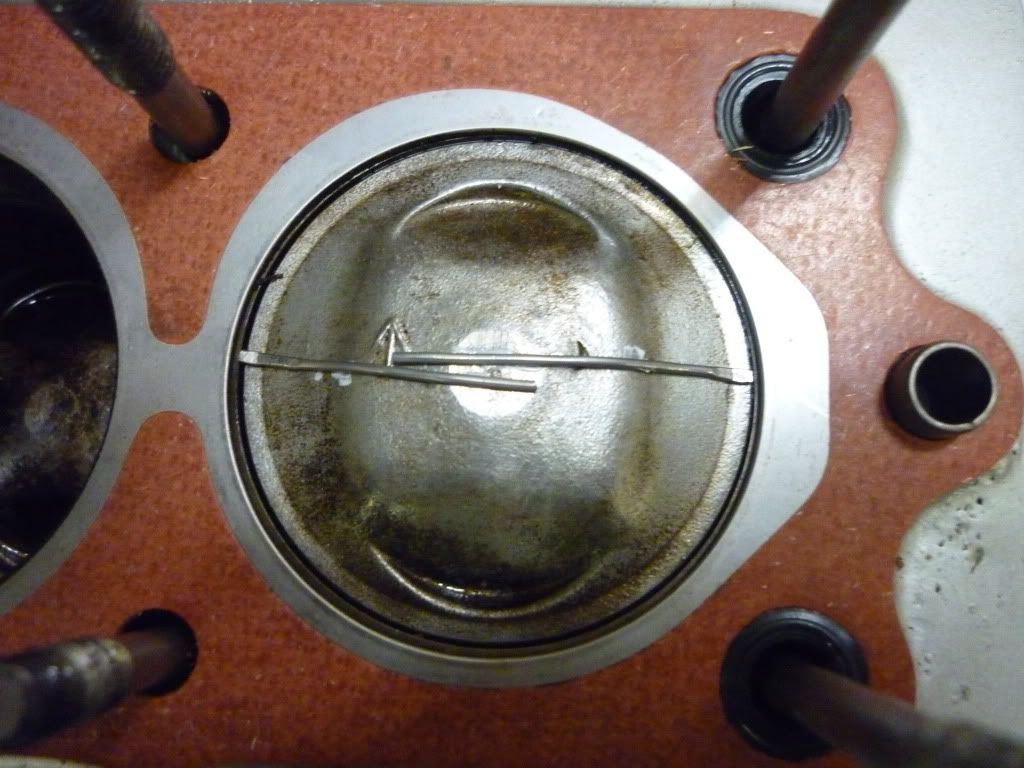
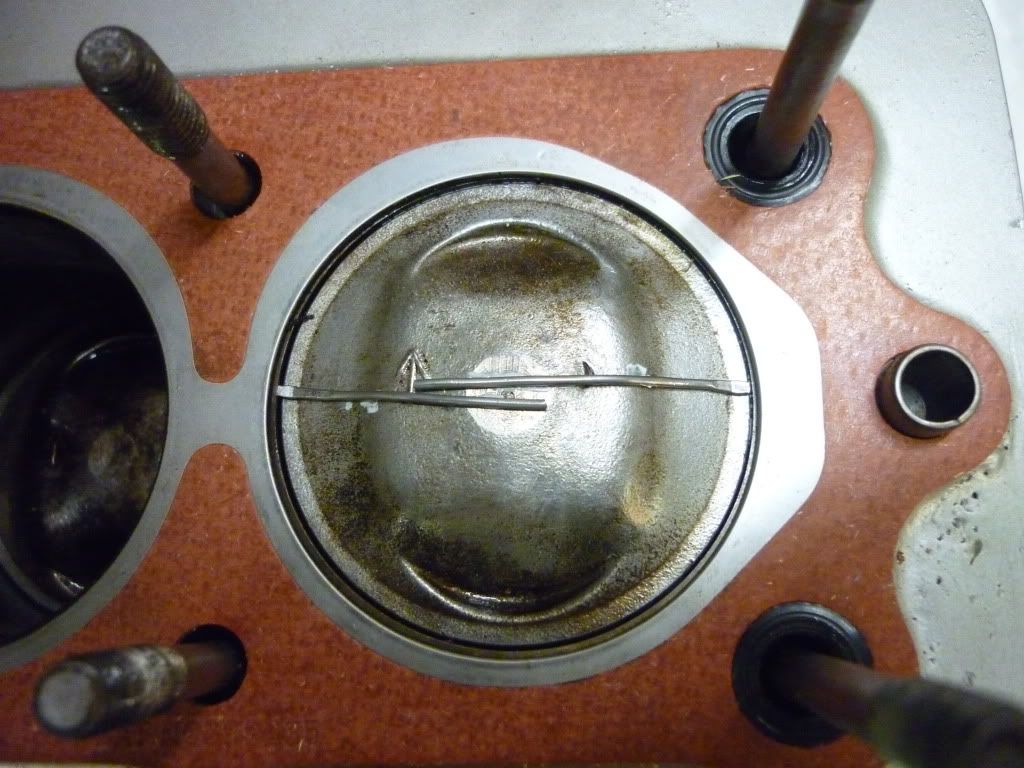
1. I cut two pieces of resin core solder about an inch long with my stanley knife which I glued with crankcase sealer to the top of the #1 piston running directly above the wrist pin.

P1000816.jpg


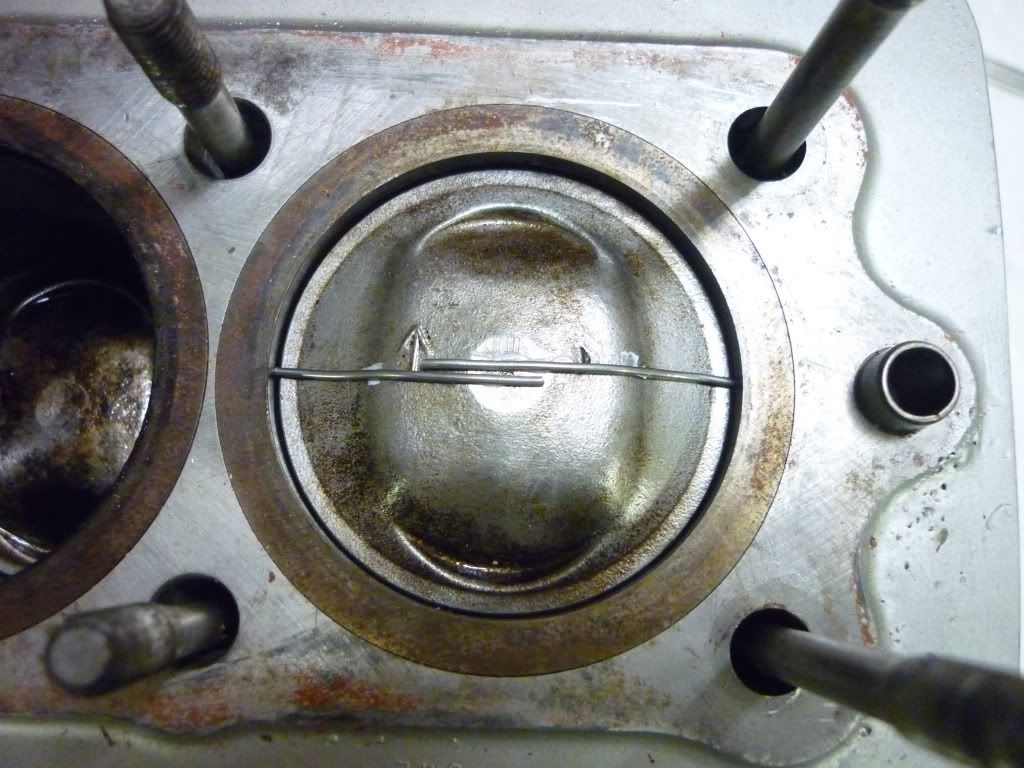
2. I pushed the square ends of the solder against the cylinder walls and placed the piston a couple of mm before top dead centre.

P1000822.jpg


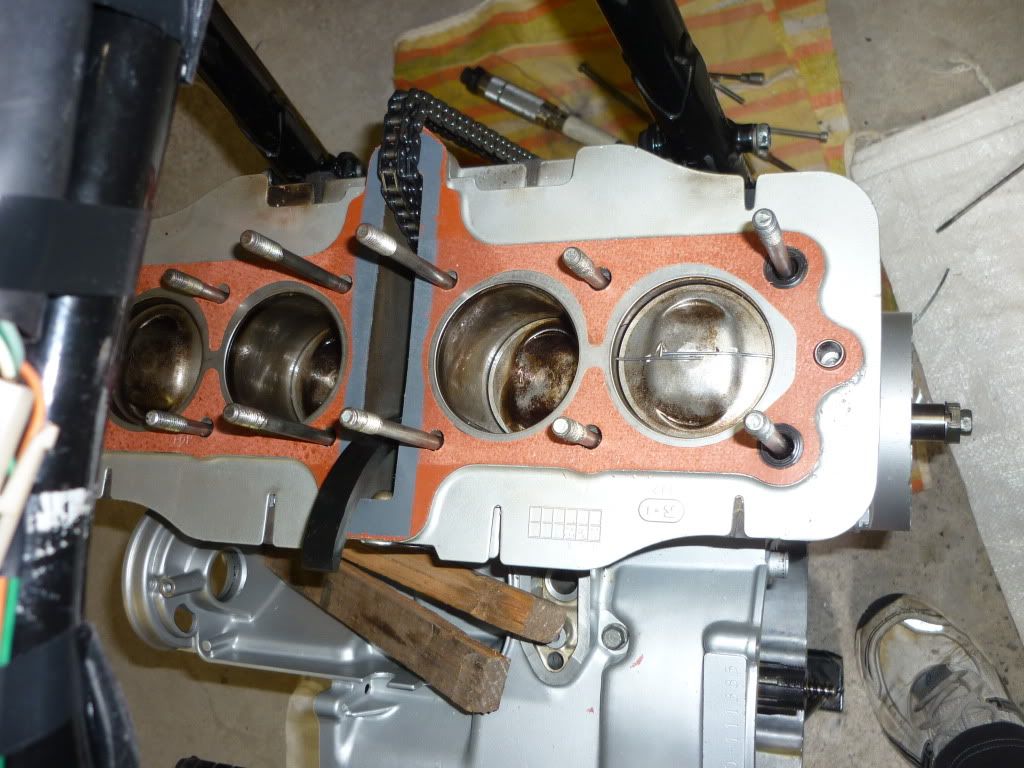
3. I then fitted the old head gasket, did not want to ruin the new one by crushing it down.

P1000825.jpg


4. I then fitted the cylinder head and torqued it to specification.


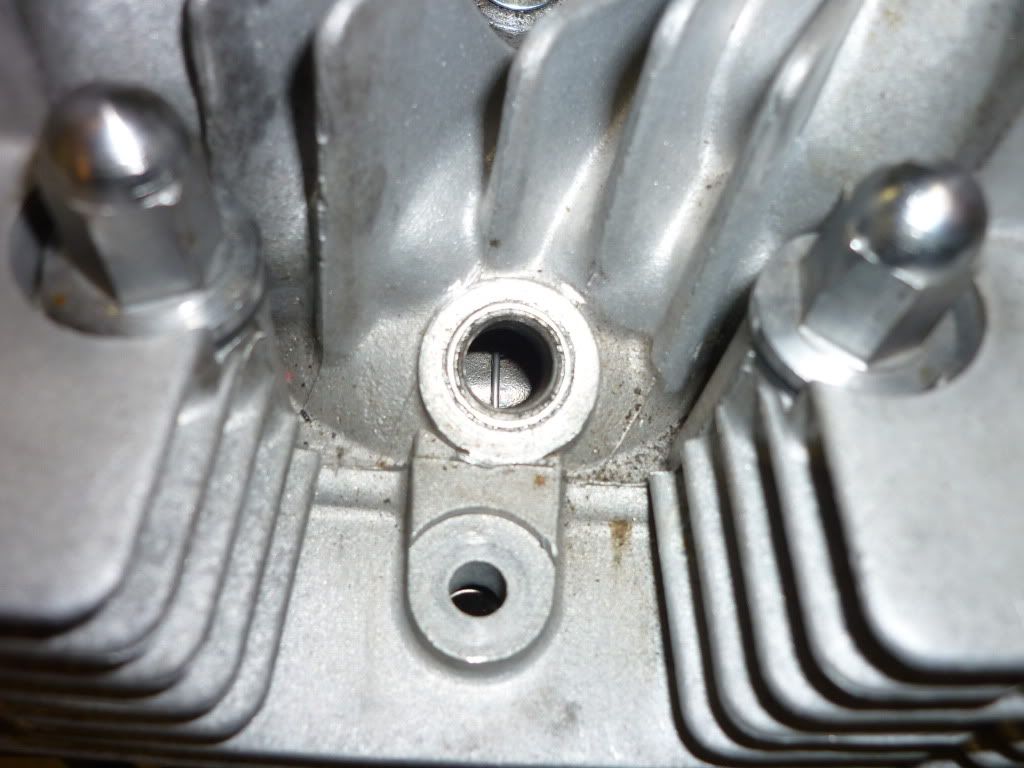
5. I then turned the piston past TDC so the solder would crush to the required space between swish band on the piston and head surface. This is view through #1 plug hole.

P1000828.jpg


6. Then I removed the head and removed the pieces of solder and took the measurements.


P1000832.jpg


P1000833.jpg


Project not finished yet. I have to do the maths on the new deck height measurement and determine which size thickness base gasket material I will need to use and purchase some stout hole punch tools to do a reasonable job on making a new base gasket.

BTW I used the original base gasket that I had in there previously so I could compare measurements between the solder method and the vernier caliper method.

.
 
Last edited:
Hey Don, nice work measuring the clearance...BTW, how much is there?

After my experiences with base gasket failure with the Athena gasket material I'd be leery of cutting my own gasket for that application unless you can be assured you have the proper stuff. Sorry to be negative, and let me know if I can help you in any way - shipping you a gasket for example.
 
Hey Don, nice work measuring the clearance...BTW, how much is there?

After my experiences with base gasket failure with the Athena gasket material I'd be leery of cutting my own gasket for that application unless you can be assured you have the proper stuff. Sorry to be negative, and let me know if I can help you in any way - shipping you a gasket for example.

Sorry Ed I forgot to put the most obvious detail in the post didn't I. Had a long day, getting very tired.

When measuring the compressed solder I came up with .026" on one end and .028" on the other end. So I could average it out at .027" or go with .028" to allow a bit more clearance for a margin of safety.

So if I can make my own gasket from the .031" (.8mm) sheet of gasket material I bought to replace the .020" OEM gasket I should end up with .039" clearance between the piston swish band and the head surface. The ideal apparently is between .035" and .040" so this puts me in the correct range and should eliminate any chance of the piston kissing the head. Just in case that was my knocking noise in the motor previously.

BTW from what I have read quench is non-existent past .060", so I would still be well below this figure at .039".
 
Last edited:
Hey there Don, although you seem to be on the right track, I am going to have to agree with Ed. If you are going to make your own gasket, I would be real careful about what type of material you use. Most of the stuff we have locally here in the parts store is crap.....Do you have any options ???.....Billy
 
Billy I bought a roll of gasket material from the auto parts store last week, it is .8mm thick and I specifically asked the guy if it was oil resistant and he said it was.

What are my other options? I don't have any.

Someone said that there was a company in the US that could make a custom gasket to my specifications.
EDIT: A custom height base-gasket from cometic was the suggestion.

Is that true. Are there any other suggestions?

The cylinders have quite a large surface area that bears on the crankcase so wouldn't a gasket made by myself work OK. Where would the oil get through? How would the gasket fail?
 
Last edited:
The cylinders have quite a large surface area that bears on the crankcase so wouldn't a gasket made by myself work OK. Where would the oil get through? How would the gasket fail?
Typically the failure would be from the gasket shifting or squeezing out. I like to install them bone dry with clean surfaces both sides. The tendency varies with different gasket materials......Billy
 
Thanks Billy & Ed for your replies.

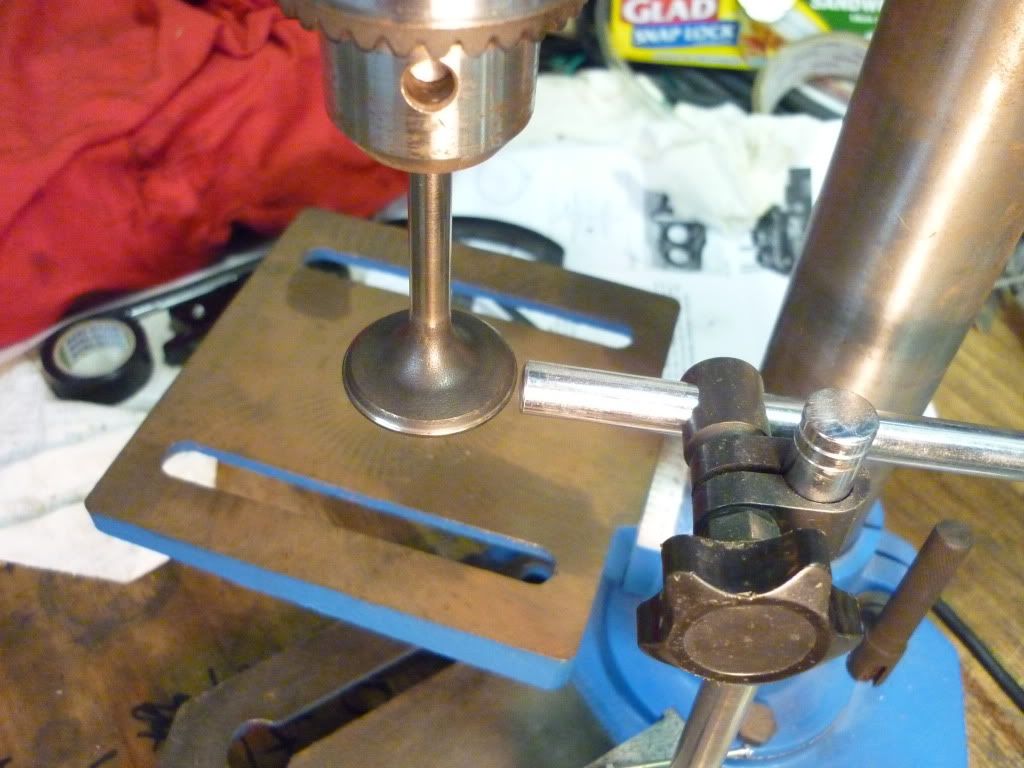
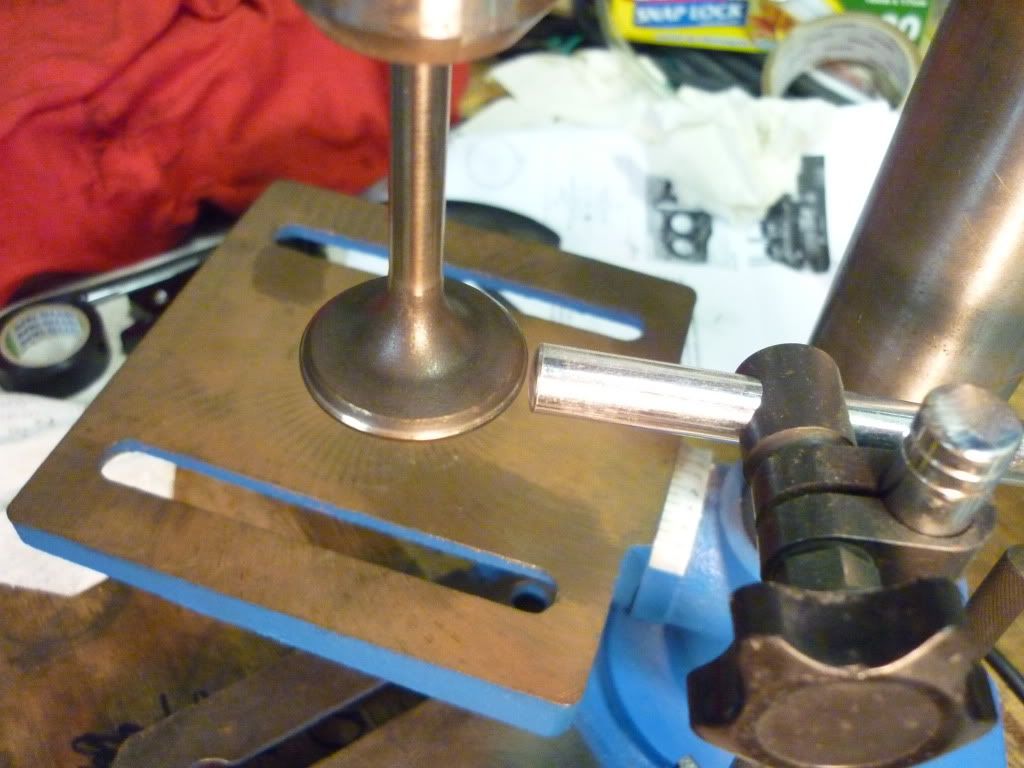
I went through the process of checking if any of my valves were bent tonight. I set each valve up in the drill chuck (only finger tight) and spun them with a dial gauge stand set up next to them as a reference to see if there was any wobble in said valve.

They all appeared to be OK. No run-out or issues with the head of the valve.


P1000854.jpg


P1000853.jpg


http://s226.photobucket.com/albums/...Check movie/?action=view&current=P1000858.mp4

.
 
Last edited:
So Don, hows the re-assembly going?

I'm glad you ran into this problem before I did so I make sure to check. :)

Keep us updated.
 
Contact location on the valve is way out on the outside. Some hot rod guys like this location but the manual calls for the contact area to be more centered on the valve face. Doubtful to cause noise but something to keep in mind when talking to your machinist.
 
So Don, hows the re-assembly going?

I'm glad you ran into this problem before I did so I make sure to check. :)

Keep us updated.

Slowly, but surely I hope. Don't want to pull it down again. Although I am getting good at it now.

I installed the valves, springs, etc. in the head yesterday and last night removed the cylinders that had been installed on the pistons/motor. Motor is back in frame now. Don't know whether I will pull it again to install the cylinders. I haven't installed the cylinders with the motor in the frame before, it has always been on the work bench. I'll see how I go getting the cylinders back on with the motor in the frame, if it proves difficult then it is only about 1/2 an hour to undo engine mounts and get it on the bench again. Remember I am doing this all by myself (putting the cylinders on the pistons I mean), my still at home son can give me a lift to get the motor out and put it back in again.

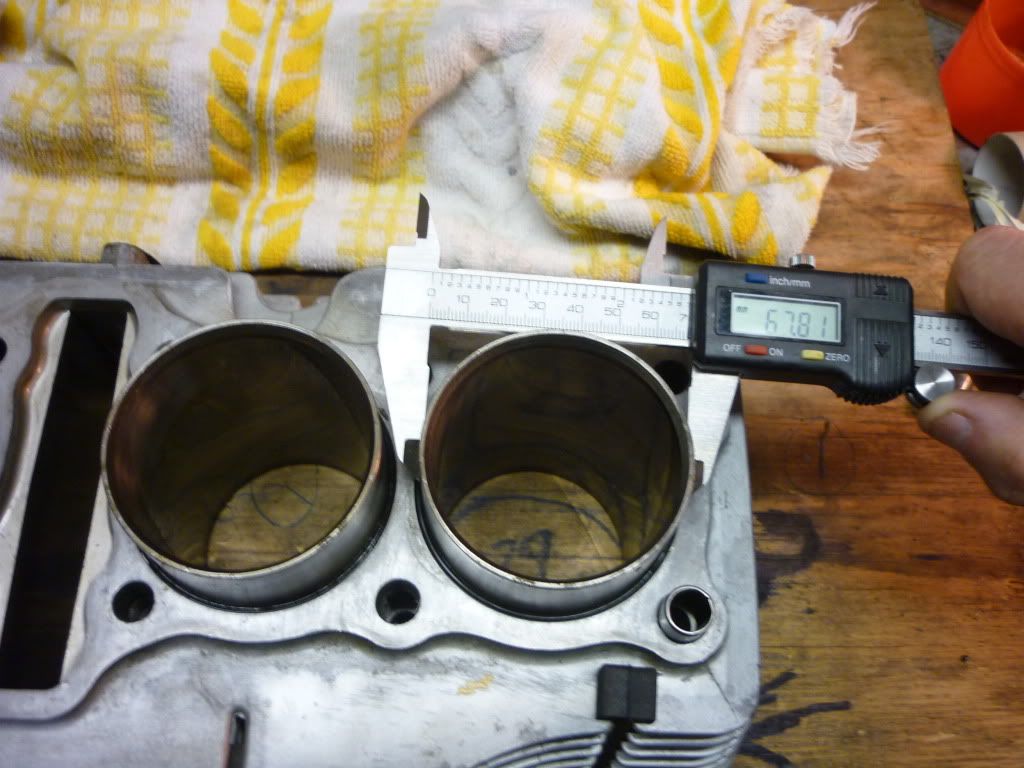
I measured up the holes in the OEM base gasket after pulling the cylinders and now know what size hole punches I need, so hope to get some today. We don't have the selection you guys in the US have for tools, so I am hoping I can find the 10mm and 13mm punches I need to make the new .8mm thick gasket.

ED: As you will have now realised I have fitted the valves back into the cylinder head, so am not keen to pull them all out again to check if the contact area is the same on all valves, but I assume it is. Is there any advantage (the hot rodders like them this way) or disadvantage (the manual says not to do it) of the contact area on the valve being towards the outside circumference of the valve head.
 
A little more progress

A little more progress

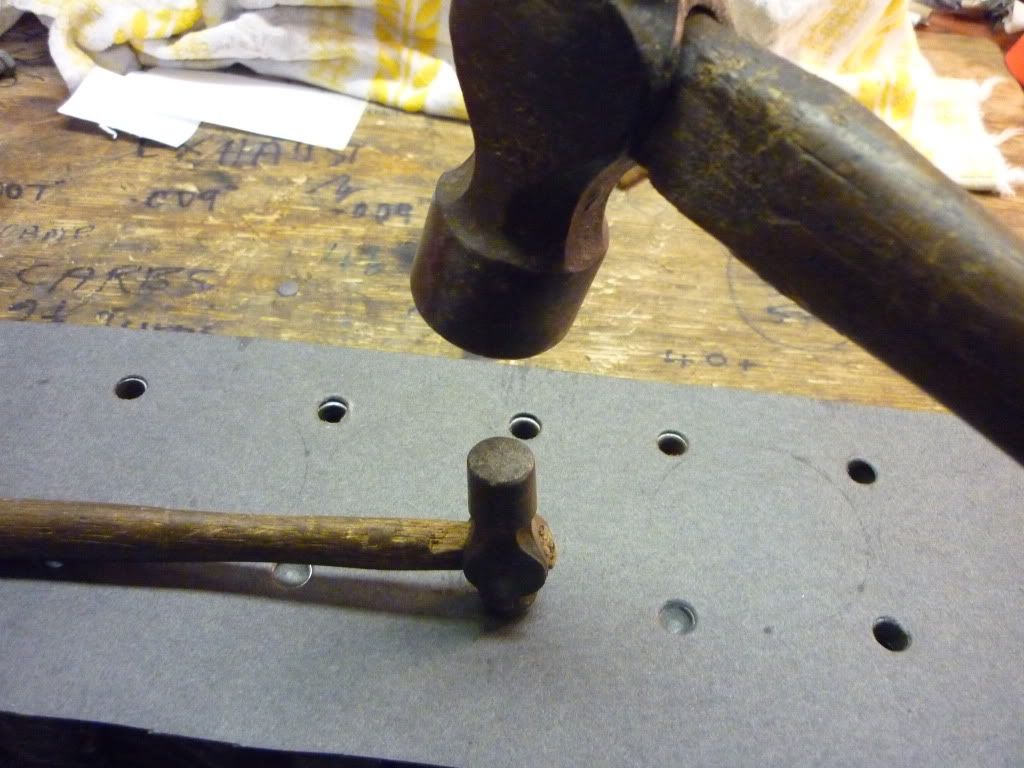
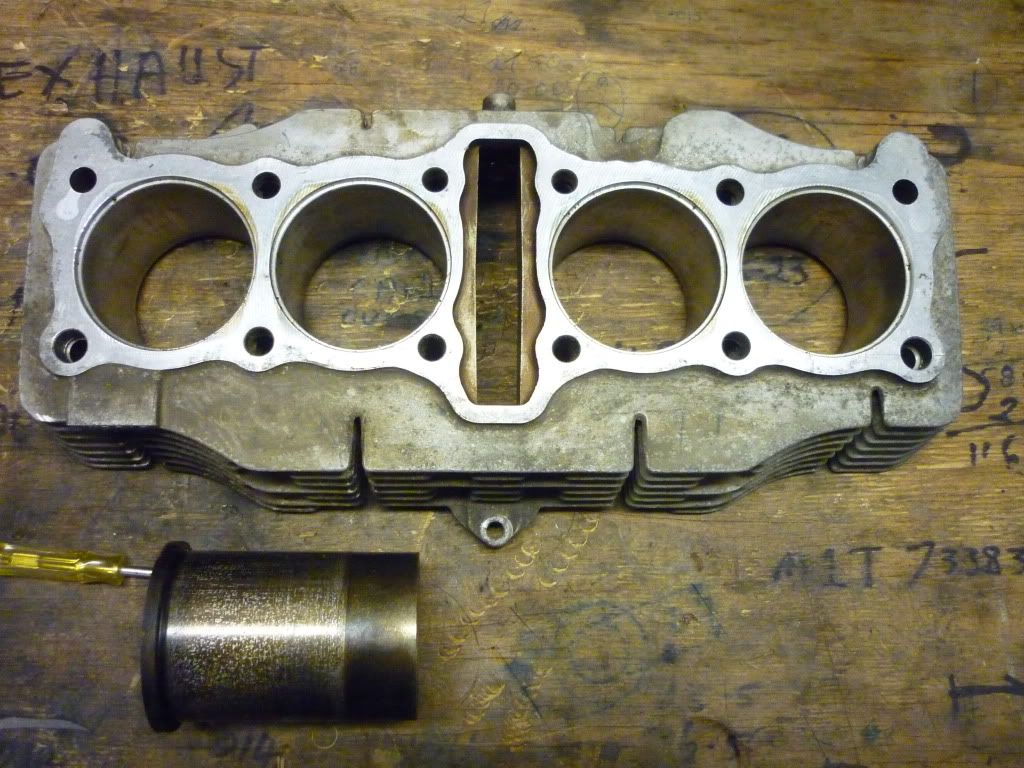
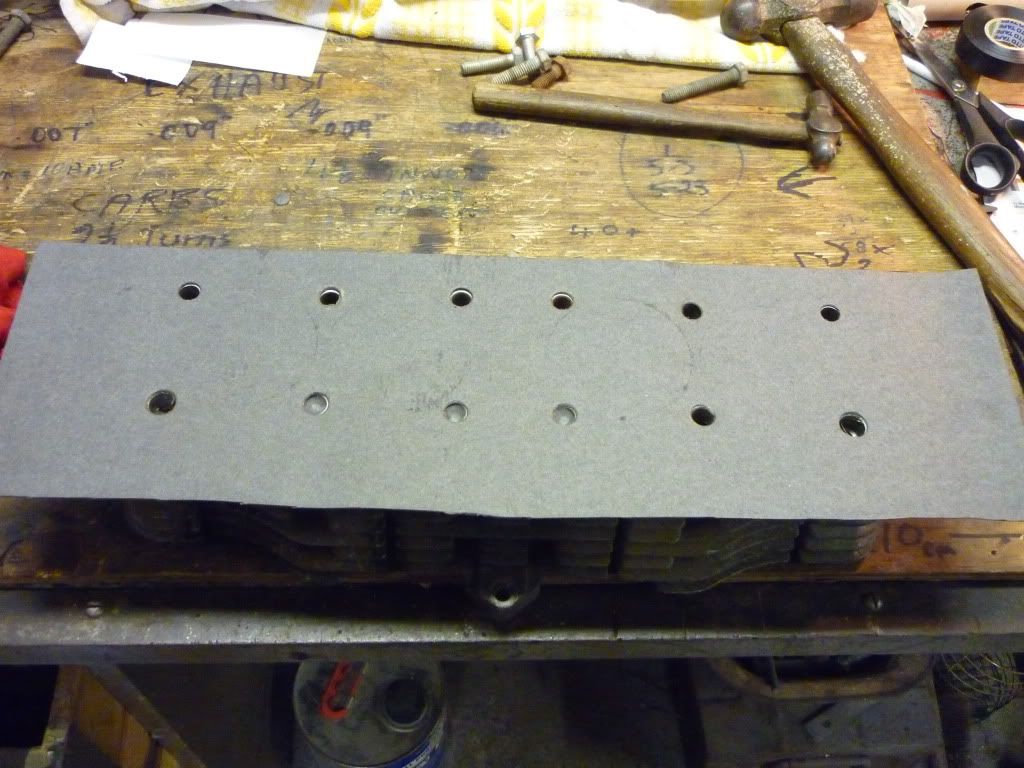
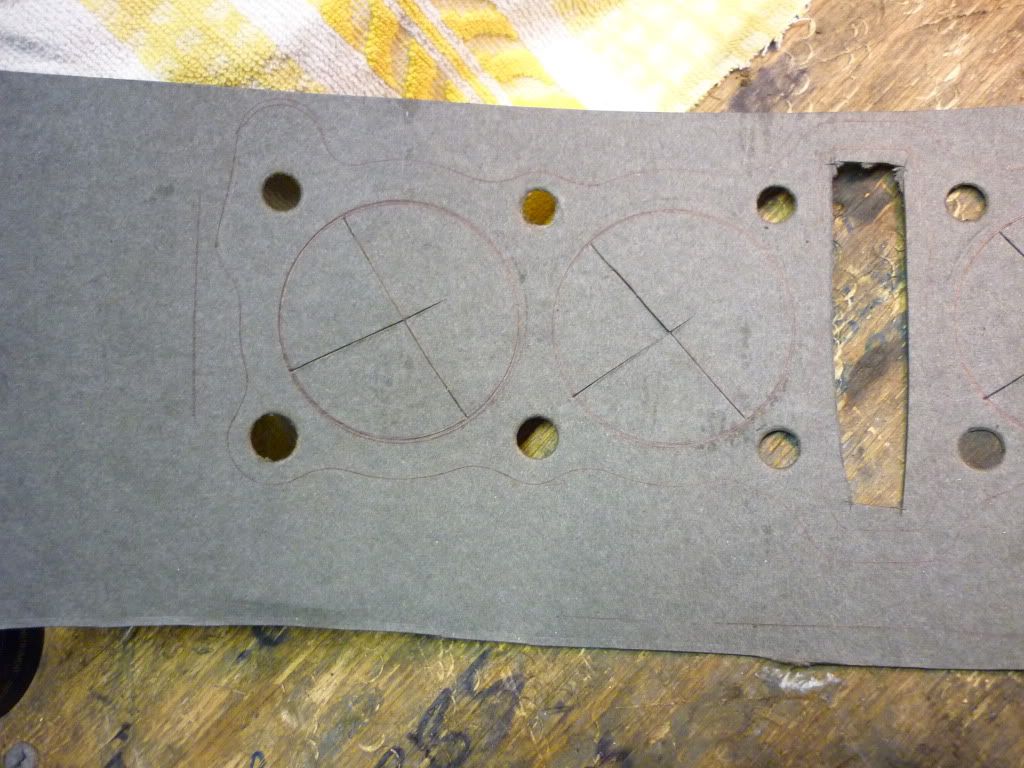
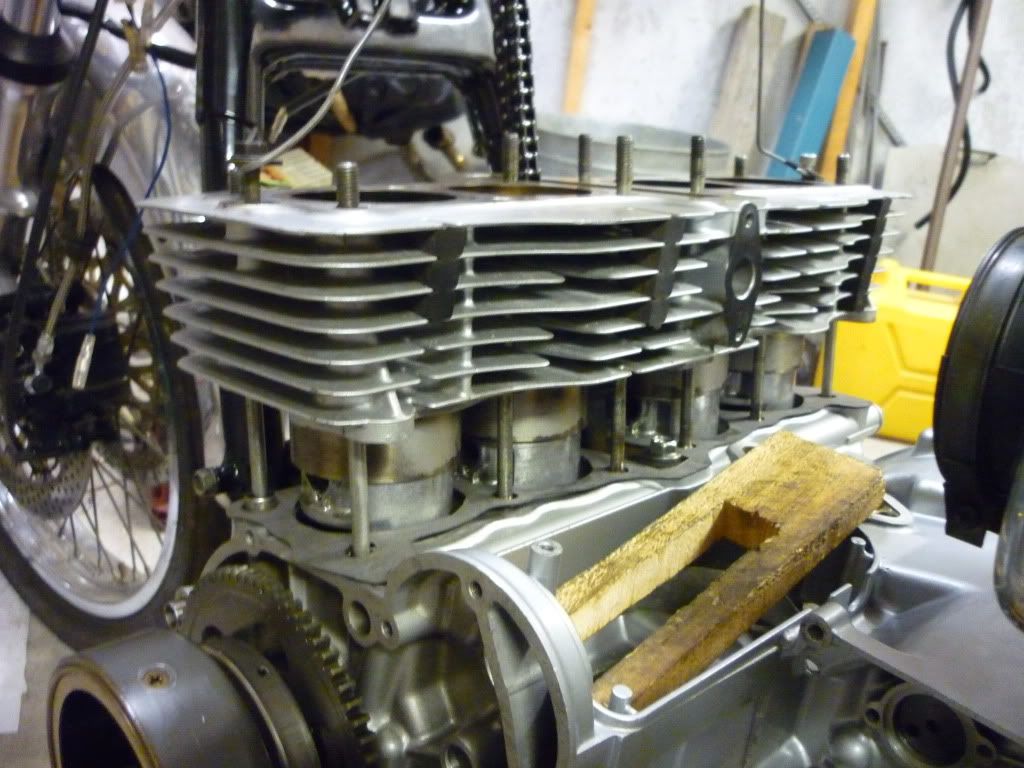
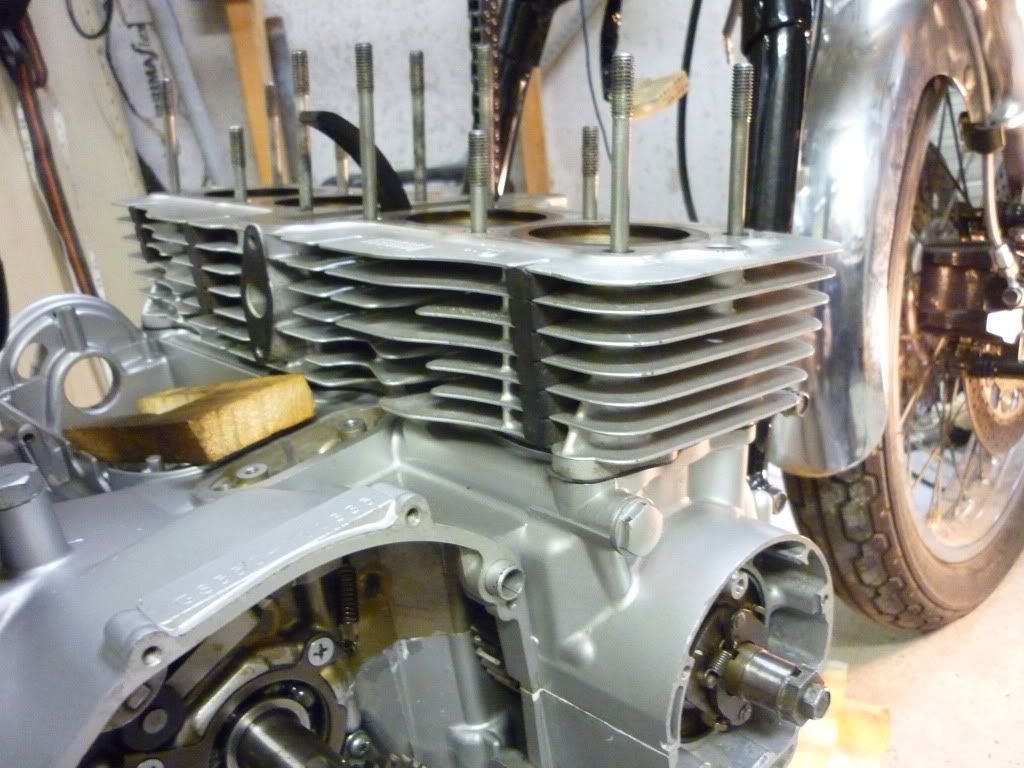
Well, I made up the new base gasket from the .8mm oil resistant gasket sheet I bought. I found a new way to punch holes in gaskets. I had an old set of 650 cylinders, so I removed the liners and laid the gasket material on top and did what you see in the following pics.

P1000859.jpg


Below: Set of cylinders with liners removed.

P1000902.jpg


P1000860.jpg


Measuring cylinder liners to be able to make appropriate holes in gasket.

P1000872.jpg


Gasket during process of being cut out, a bit tedious.

P1000875.jpg


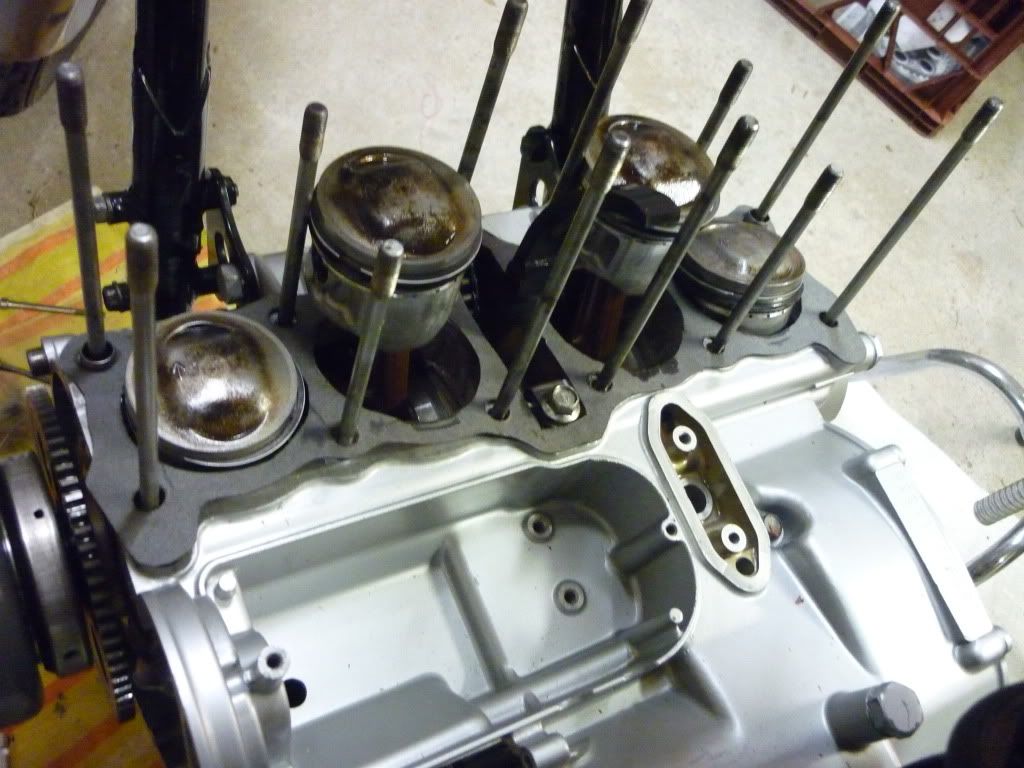
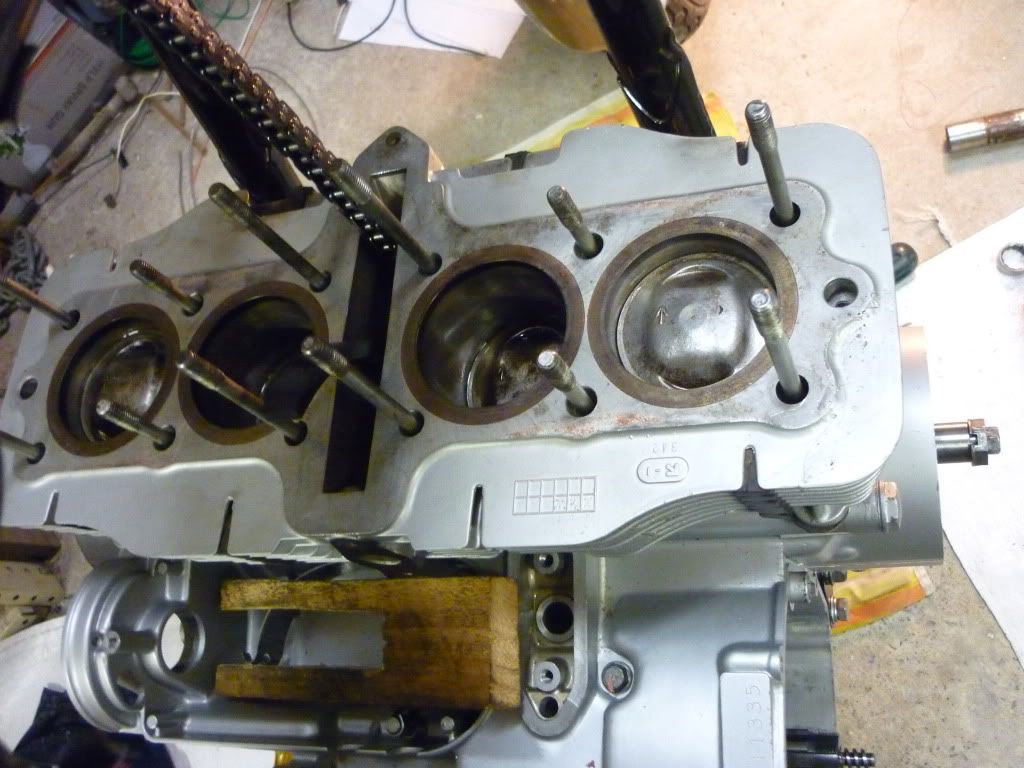
Gasket as fitted ready for cylinders to be fitted.

P1000877.jpg


Cylinderss being fitted onto pistons, hopefully for the last time. Getting good at this now.

P1000890.jpg


Cylinders fitted.

P1000894.jpg


P1000893.jpg


.
 
Last edited:
More progress

More progress

More progress as follows.


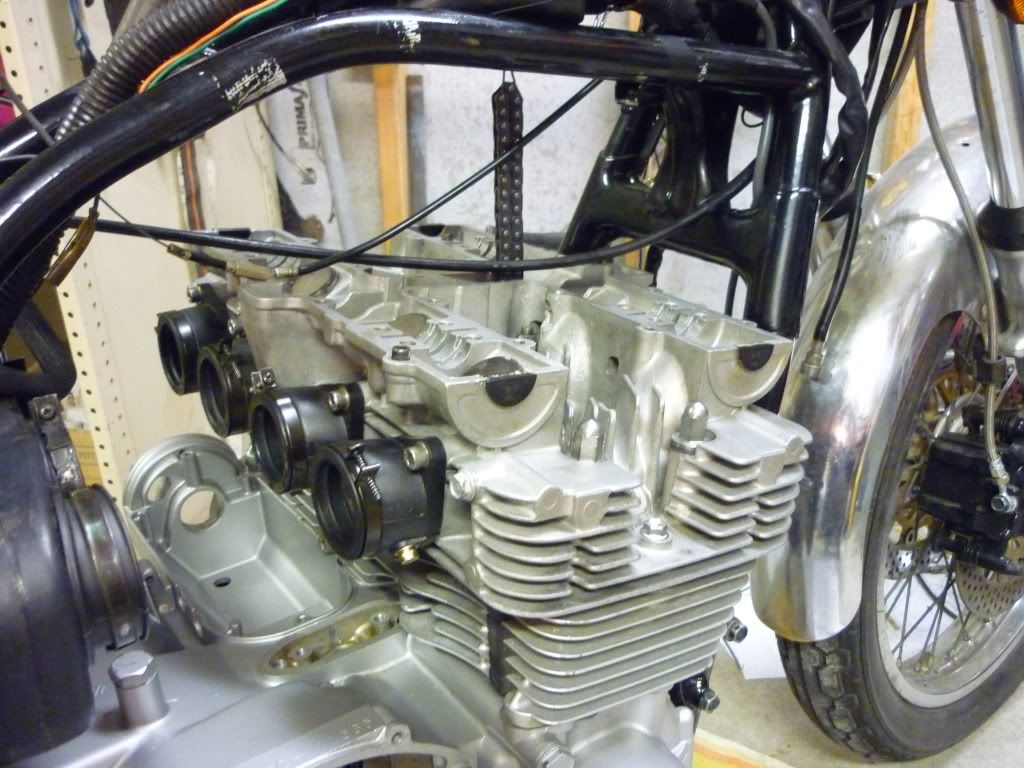
Cylinder head fitted and torqued down.

P1000904.jpg


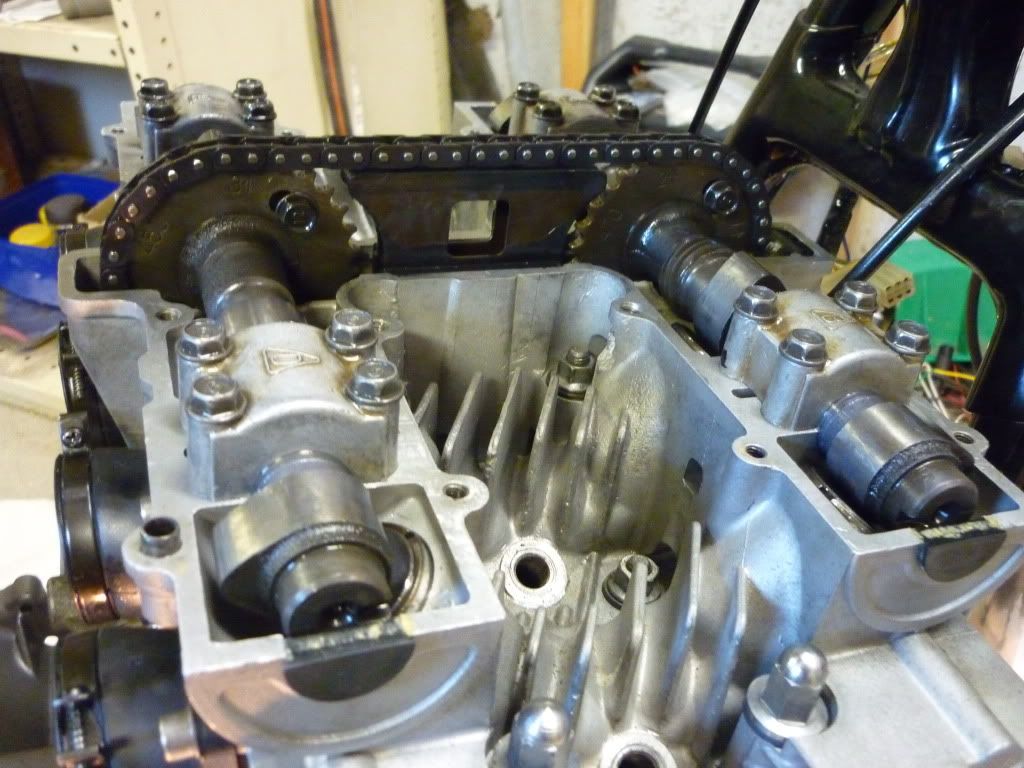
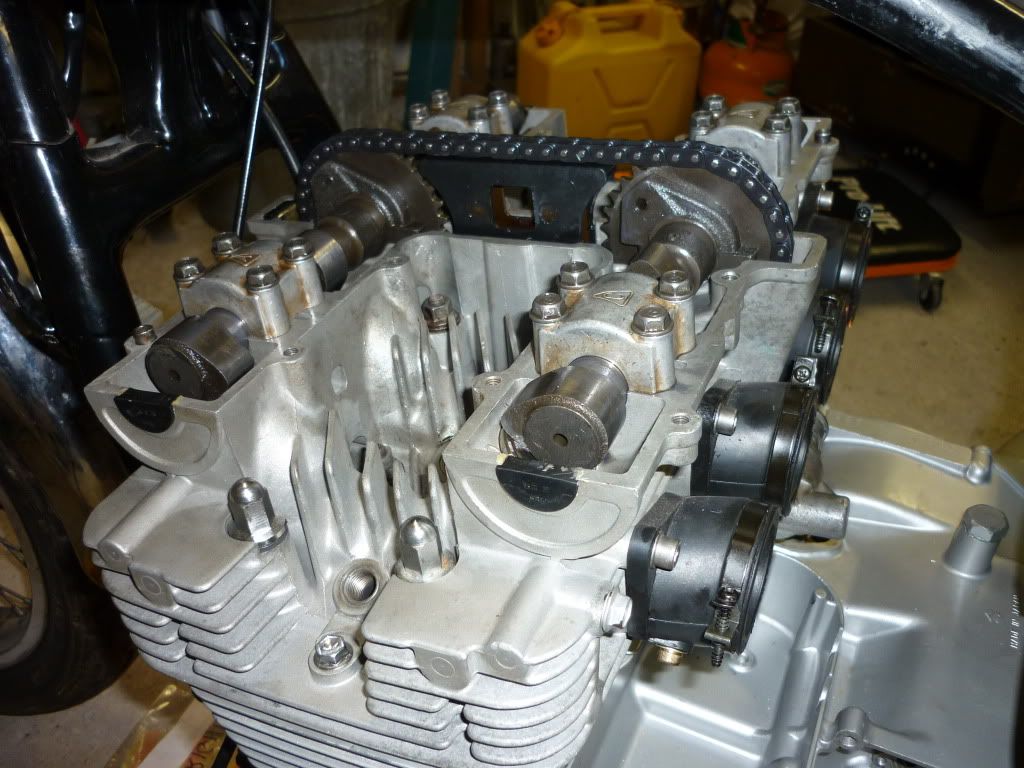
Camshafts fitted and timed.

P1000907.jpg


P1000915.jpg


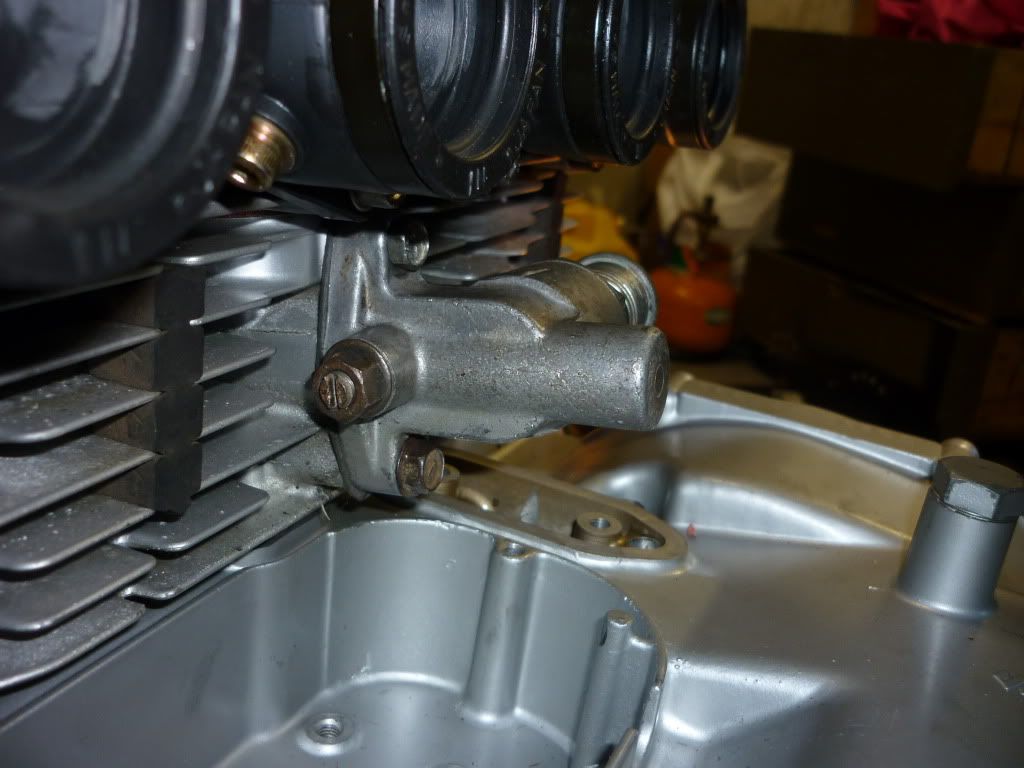
Cam Chain Tensioner fitted.

P1000912.jpg


I had another thought while I was working on the motor today. There is a difference between the 550 and 650 cam timing. The 550 is 20 chain pins between timing marks and the 650 is 19 pins between timing marks. If I still have this noise after the motor is all reassembled another option i have is to take the 650 cams out and try the 550 cams in their place but not degreeing the cams in, just timing them as standard without slotting the sprockets.
 
That base gasket looks pretty nice. I think it will seal just fine. You realize that changing base gasket thickness will alter your cam timing a bit, advancing it since you went thicker. Dar
 
Hi Don,

Was looking though the parts fishe and apparently Suzuki did away with the cylinder head chain guide thing between the cams in 1981 for the 550 and the 650's never used them. Think I'd ditch it but the call is yours.
 
Hey there Don, good to see you making progress. Maybe you could give us a nice camera shot of the end of the camshafts from the right side of the motor. The slot cut in the end of the camshafts should be parallel to the valve cover surface on both cams. It looks like in the picture above, 3rd from the last, that the intake cam is retarded by one tooth.....Billy
 
Billy, it looks to me like the tooth is correct, but he's slotted the cam gear and it looks like maybe the degree it's off is the same amount he's timed the cam at?

I could be wrong.
 
Hi Don,

Was looking though the parts fishe and apparently Suzuki did away with the cylinder head chain guide thing between the cams in 1981 for the 550 and the 650's never used them. Think I'd ditch it but the call is yours.

Ed I had a look at the parts fiche as well and the 550 used that top chain guide up until 1980 and they dropped it as well for the 1981 model 550. I will run it with it in place and if I still have trouble will remove it and see how things run then. Thanks for the input.

Any thoughts on the hot rodders liking the valve wear area on the outer edge of the valve face as mentioned in your previous post.

Thanks.
 
Hey there Don, good to see you making progress. Maybe you could give us a nice camera shot of the end of the camshafts from the right side of the motor. The slot cut in the end of the camshafts should be parallel to the valve cover surface on both cams. It looks like in the picture above, 3rd from the last, that the intake cam is retarded by one tooth.....Billy

Billy, I have degreed the cams in previously, 104 & 106 I think from memory. I am at work now so don't have the details with me. So I just reinstalled them as per the timing marks on arrow 2 and arrow 3 with 19 pins in between. MLINDER is right. I will get you a pic when I get home tonight.

TEAMDAR commented that putting a thicker base gasket on would advance the cam timing, so how much would .010" advance the timing and would the numbers be higher or lower, closer or further apart.
 
Last edited:
Back
Top