• Required reading for all forum users!!!

    Welcome!
    Register to access the full functionality of the GSResources forum. Until you register and activate your account you will not have full forum access, nor will you be able to post or reply to messages.

    A note to new registrants...
    All new forum registrations must be activated via email before you have full access to the forum.

    A Special Note about Email accounts!
    DO NOT SIGN UP USING hotmail, outlook, gmx, sbcglobal, att, bellsouth or email.com. They delete our forum signup emails.

    A note to old forum members...
    I receive numerous requests from people who can no longer log in because their accounts were deleted. As mentioned in the forum FAQ, user accounts are deleted if you haven't logged in for the past 6 months. If you can't log in, then create a new forum account. If you don't get an error message, then check your email account for an activation message. If you get a message stating that the email address is already in use, then your account still exists so follow the instructions in the forum FAQ for resetting your password.

    Have you forgotten your password or have a new email address? Then read the forum FAQ for details on how to reset it.

    Any email requests for "can't log in anymore" problems or "lost my password" problems will be deleted. Read the forum FAQ and follow the instructions there - that's what we have one for...

  • Returning Visitors

    If you are a returning visitor who never received your confirmation email, then odds are your email provider is blockinig emails from our server. The only thing that can be done to get around this is you will have to try creating another forum account using an email address from another domain.

    If you are a returning visitor to the forum and can't log in using your old forum name and password but used to be able to then chances are your account is deleted. Purges of the databases are done regularly. You will have to create a new forum account and you should be all set.

Coil circuit question

pdqford

Forum Mentor
Super Site Supporter
Past Site Supporter
I’m in the process of reassembling my 1980 GS750ET. I had pulled it down to fix the voltage drops in the ignition circuit, done the strip and dip the carbs, done the carb sync, and set the valves. (Hate to admit that this has turned into a multi year project, but sometimes health gets in the way. )

So as of now, my battery puts out 12.6v. When I turn the ignition key on, I have the lights turned off so only the instrument cluster lights come on, and the battery drops to 12.5v.

I have installed an auxiliary volt gauge up by the instrument cluster. It gets its voltage from the O/W wire that powers the coils. (I wanted to be able to monitor coil voltage.) With the ignition key in the on position, and both coils unplugged, the auxiliary volt gauge reads 12.2v.

If I plug in either coil, the aux volt gauge still reads 12.2v.
BUT, if I connect up BOTH coils, the reading drops to 10.5 v.
Whats up with that ???
It seems to me that the igniter should not be grounding either coil since the engine is not turning.

What am I over looking? I could see the voltage going down a bit if the coils were being grounded by the ignitor if the coil was being charged up. Does the ignitor in fact charge up both coils in anticipation of the engine cranking over and that way which ever coil is due to be fired it is charged and ready?
 
Last edited:
If I plug in either coil, the aux volt gauge still reads 12.2v.
BUT, if I connect up BOTH coils, the reading drops to 10.5 v.
Whats up with that ???
It seems to me that the igniter should not be grounding either coil since the engine is not turning.
On the contrary, both coils are grounded just about ALL the time. :-k

When the trigger on the crank spins around and gets near the sensor, the ignitor OPENS the circuit for that coil, which is what causes it to fire the spark plugs.

The ignitor is just a box of transistors that replaces mechanical points. They are "closed" most of the time, allowing the coils to charge. The advantage of transistors over points is that they can "open" much quicker, so they can stay "closed" longer, allowing a better charge in the coils.

.
 
So as of now, my battery puts out 12.6v. When I turn the ignition key on, I have the lights turned off so only the instrument cluster lights come on, and the battery drops to 12.5v.

The battery has internal resistance. If you check it with a voltmeter with the ign switch off you will see the full battery voltage. As soon as you connect a load and draw current from the battery, that current has to overcome the internal battery resistance to get out and you will see a reduction of voltage at the battery terminals.
10.5 is quite low so there is either a large current or the battery is not the best. How old is it, electrolyte level etc etc.
Battery internal resistances are quoted as 50mOhm new to 1 Ohm at end of life.
Given your 2.1 Volt drop my back of the envelope calculation says either you have a new battery sending 40 Amps somewhere, highly unlikely, or a tired battery sending 2 Amps or somewhere in between.
 
You mentioned the headlight is off during all this.
TRy the battery voltage drop test when just turning on the headlight (without the coils).
This may convince you that the battery is suspect.

During this year long project time, have you had the battery charged.....? did it sitt uncharged....?
 
Internal battery resistance is a function of state of charge. SOC may be low in a perfectly good battery that just needs charging. On the other hand if a battery will not accept a charge then SOC will also be low but the battery will need replacing.

reiterating this for the nteenth time, make sure the battery is charged when performing v charging tests like the Quick Test.

The charging system stem has difficulty charging a low SOC battery do a 3-4 amp charger is required. (Not a 1amp trickle charger)
 
Last edited:
THANK YOU all for your responses!
I’ll try to respond to each with what I know or have since found.:rolleyes:
 
On the contrary, both coils are grounded just about ALL the time. :-k

When the trigger on the crank spins around and gets near the sensor, the ignitor OPENS the circuit for that coil, which is what causes it to fire the spark plugs.

.
Thanks Steve. I did not know that the coils would be hot most of the time.
Not sure why the voltage reading was the same (12.2v) with either coil connected to the circuit by it self, but only dropped to 10.5v when BOTH were connected. There is probably something else going on that I’m not aware of (yet).

Just wondering, if both coils are hot and the engine is not spinning, if I was to turn the key to off (or unplug a coil), would that cause a coil to fire?
 
The battery has internal resistance. If you check it with a voltmeter with the ign switch off you will see the full battery voltage. As soon as you connect a load and draw current from the battery, that current has to overcome the internal battery resistance to get out and you will see a reduction of voltage at the battery terminals.
10.5 is quite low so there is either a large current or the battery is not the best. How old is it, electrolyte level etc etc.
Battery internal resistances are quoted as 50mOhm new to 1 Ohm at end of life.
Given your 2.1 Volt drop my back of the envelope calculation says either you have a new battery sending 40 Amps somewhere, highly unlikely, or a tired battery sending 2 Amps or somewhere in between.
Thanks Brendan. Before I got into testing the voltages I put this AGM battery on my battery charger with it set to AGM and 3 amps. The battery charger clicked over to “maintenance” mode in less than an hour and my meter showed it was 12.6v.

The thing that seemed strange to me is that, with the coils disconnected, the battery voltage dropped to like 12.4v and the open coil circuit read like 12.2v. I’m okay with that, but when I plugged the coils in, the voltage at the coil connector dropped to 10.5v, yet my meter on the battery posts only dropped to like 12.1v. :confused:
 
You mentioned the headlight is off during all this.
TRy the battery voltage drop test when just turning on the headlight (without the coils).
This may convince you that the battery is suspect.

During this year long project time, have you had the battery charged.....? did it sitt uncharged....?
Good idea, Rodman. So, with the coils disconnected, and one voltmeter on the O/W wire (harness side of the coil connector) and the other volt meter on the battery posts, I turned the key to on. The battery voltmeter reads 12.2v and the O/W meter reads 12.0v.
Then I switched the headlight/tail light switch on and the battery voltmeter drops to 12.0v and the O/W meter drops to 10.3v. What’s up widdat?

But you got me thinking, when I cleaned up the connections a year or two ago, I found a fair voltage drop inside the main harness (had to unwrap about 8” and found a factory splice that was turning green - cleaned it all up, resoldered it and rewraped it) and a significant drop across the kill switch. Cleaned up the kill switch contacts and all was then good. I’m gonna go out there and check that kill switch to see if something crawled in there and died!
 
Internal battery resistance is a function of state of charge. SOC may be low in a perfectly good battery that just needs charging. On the other hand if a battery will not accept a charge then SOC will also be low but the battery will need replacing.

reiterating this for the nteenth time, make sure the battery is charged when performing v charging tests like the Quick Test.

The charging system stem has difficulty charging a low SOC battery do a 3-4 amp charger is required. (Not a 1amp trickle charger)
So I did put the charger on the battery yesterday morning and set it to AGM and 3 amp. (See above posting).

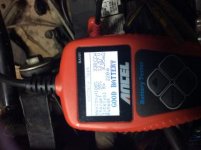
I may have pulled the battery down a bit with all my testing, but this morning I put my electronic battery tester on the battery. The battery is an AGM rated at 220 CCA. The tester showed the battery health at 100%, internal resistance at 8.65 m/ohm, capable of putting out 345 CCA and the state of charge at 75% (12.45v).

I think the battery is still a good one, but I will put it on the charger again.
 
The thing that seemed strange to me is that, with the coils disconnected, the battery voltage dropped to like 12.4v and the open coil circuit read like 12.2v. I’m okay with that, but when I plugged the coils in, the voltage at the coil connector dropped to 10.5v, yet my meter on the battery posts only dropped to like 12.1v. :confused:

Ok, so somewhere between the battery and the coil plug you are losing 12.1 - 10.5 = 1.6 Volt.
Some drop is acceptable but that is too much.
The suspects would be the ignition switch, the kill switch and or the fusebox.
Cleaning the contacts in the switches and the fusebox could get you back over a volt of that drop.
Open circuit has no current flowing so you won't see the resistance drops. V = I R
 
Thanks Steve. I did not know that the coils would be hot most of the time.
Not sure why the voltage reading was the same (12.2v) with either coil connected to the circuit by it self, but only dropped to 10.5v when BOTH were connected. There is probably something else going on that I’m not aware of (yet).

Just wondering, if both coils are hot and the engine is not spinning, if I was to turn the key to off (or unplug a coil), would that cause a coil to fire?

The coils are hot all the time if you consider that the Coil(+) is always hot when the key and start button are on.

How much current the coils are drawing will depend on whether the bike is running or not. If the bike is running the draw (measured with 3 ohm coils ) is about 3 amps.

If the bike is not running it will probably be slightly more as one or the other ignitor channels will be drawing current through the coil.
 
Ok, so somewhere between the battery and the coil plug you are losing 12.1 - 10.5 = 1.6 Volt.
Some drop is acceptable but that is too much.
The suspects would be the ignition switch, the kill switch and or the fusebox.
Cleaning the contacts in the switches and the fusebox could get you back over a volt of that drop.
Open circuit has no current flowing so you won't see the resistance drops. V = I R

Bingo, this is why people do coil relay mods.

Still worth cleaning out the switches with some DeOxit and then reapply some dielectric grease.
 
So I did put the charger on the battery yesterday morning and set it to AGM and 3 amp. (See above posting).

I may have pulled the battery down a bit with all my testing, but this morning I put my electronic battery tester on the battery. The battery is an AGM rated at 220 CCA. The tester showed the battery health at 100%, internal resistance at 8.65 m/ohm, capable of putting out 345 CCA and the state of charge at 75% (12.45v).

I think the battery is still a good one, but I will put it on the charger again.

Your numbers are not really consistent with lead Acid battery chemistry. You should have about internal resistance with about 0.5ohms@ SOC=100% and 1 ohm @ SOC=75%. This corresponds to about 0.5Volt drop @SOC 100% and 1.0 volt drop@SOC 75%.
All voltage drops measured at the battery. The bulk of your voltage drops in the wiring above an beyond this are due to dirty contacts and corrosion. There is only a slight drop due to wire size (less than 0.100 V). This would all be consistent with a stock 14AmpHr battery.


Realise with light and key on you are drawing at least 10amps from the battery (bike not running)
 
The battery has internal resistance. If you check it with a voltmeter with the ign switch off you will see the full battery voltage. As soon as you connect a load and draw current from the battery, that current has to overcome the internal battery resistance to get out and you will see a reduction of voltage at the battery terminals.
10.5 is quite low so there is either a large current or the battery is not the best. How old is it, electrolyte level etc etc.
Battery internal resistances are quoted as 50mOhm new to 1 Ohm at end of life.
Given your 2.1 Volt drop my back of the envelope calculation says either you have a new battery sending 40 Amps somewhere, highly unlikely, or a tired battery sending 2 Amps or somewhere in between.

In nominal terms typical measurements that we have seen reported here for 14 AmpHr batteries using the key on test with the headlamp on (10 amp nominal load)

0.5V drop with key ON would be IR 0.5 ohm and SOC 100%
1.0V drop with key ON would be IR 1.0 ohm and probably SOC 75% (I'm guessing on SOC but I have seen this a lot with the key on around 11.7-11.8V
 
Okay guys, I found my notes from when I cleaned up the electrics a few years ago (and haven’t even ridden it since!)

Back then I was using my ohm meter and broke the coil circuit down into three segments.
Segment A was from the positive battery cable (disconnected from power) to the main glass fuse: 0.2 ohm.
Segment B from main fuse up through ignition switch and back to the ignition fuse: 0.5 ohm.
Segment C from ignition fuse up through kill switch to coil connector: 0.3 ohms.
For a total of 1.0 ohms.

Went out there now and from the positive battery cable with ignition switch turned on all the way to the coil connector it is reading 1.9 ohms! Looks like I have to do the cleaning all over again. I had used DeOxit but I didn’ Use any dielectric grease.

And I found my notes from firing it up with before and after cleaning (prior to doing the carbs and valves) :
Before: @2500 rpm battery voltage was 13.3 volts and voltage at coil was 10.8 volts! (About where I am now!)
After: @2500 rpm battery voltage was 14.3 volts and voltage at the coil was 13.7 volts!
(I could actually HEAR how much better it ran!)

So I guess I get to start all over.

(Still don’t know why turning on the headlight effects my coil voltage but not the battery voltage, but that will be a problem for another day.)

Thanks again everyone.
 
Last edited:
Okay guys, I found my notes from when I cleaned up the electrics a few years ago (and haven’t even ridden it since!)

Back then I was using my ohm meter and broke the coil circuit down into three segments.
Segment A was from the positive battery cable (disconnected from power) to the main glass fuse: 0.2 ohm.
Segment B from main fuse up through ignition switch and back to the ignition fuse: 0.5 ohm.
Segment C from ignition fuse up through kill switch to coil connector: 0.3 ohms.
For a total of 1.0 ohms.

Went out there now and from the positive battery cable with ignition switch turned on all the way to the coil connector it is reading 1.9 ohms! Looks like I have to do the cleaning all over again. I had used DeOxit but I didn’ Use any dielectric grease.

And I found my notes from firing it up with before and after cleaning (prior to doing the carbs and valves) :
Before: @2500 rpm battery voltage was 13.3 volts and voltage at coil was 10.8 volts! (About where I am now!)
After: @2500 rpm battery voltage was 14.3 volts and voltage at the coil was 13.7 volts!
(I could actually HEAR how much better it ran!)

So I guess I get to start all over.

(Still don’t know why turning on the headlight effects my coil voltage but not the battery voltage, but that will be a problem for another day.)

Thanks again everyone.

1.0 ohm (upstream of the coils) and an average 2.5 amp load from the coils is a 2.5 volt drop to the coils. 13.3-2.5=10.8V just about what you measured.

I usually don't recommend using an ohm meter because you are adding up 0.1's of an ohm and there can be significant errors just in the probes. The meter is best for measuring resistances well above 1 ohm.
It is much more accurate to just turn on your loads and move from battery to the load and then back measuring all voltages.
You can adjust voltages based on any battery voltage sag you might have had.
 
Last edited:
Okay. I made good progress today. Pulled the glass fuses and cleaned them up with DeOxit as well as the fuse holder clips and added a thin coat of dielectric grease to all contact points
Took the kill switch apart and sprayed it down with DeOxit. Pulled the ignition switch and did Ditto. Also, same for the connectors in the O/W wire circuit. Put the ohm meter on the entire circuit from battery positive cable to the harness side at the coil connection. Presto/whamo, the over all circuit resistance went from 1.9 ohms down to 0.6 ohms!!!
 
Last edited:
Next, I tested the battery condiction before connecting up the cables, to see if I had pulled it down too much from my testing.
 

Attachments

  • 80EC819C-A579-4D98-A8A2-D9EC8B00DE6E.jpg
    80EC819C-A579-4D98-A8A2-D9EC8B00DE6E.jpg
    15.9 KB · Views: 0
I did not realize you were using the old glass fuses. You need to open your fusebox up and clean those crimps as shown in the picture below. I use naval jelly, set 15min and flush with water.
Then using some liquid flux, flow a small amount of solder into the crimps.
Finish off with the Deoxit.

https://www.thegsresources.com/_forum/attachment.php?attachmentid=25103&d=1239471120

attachment.php
 
Back
Top