
-
Required reading for all forum users!!!
Welcome!
Register to access the full functionality of the GSResources forum. Until you register and activate your account you will not have full forum access, nor will you be able to post or reply to messages.A note to new registrants...
All new forum registrations must be activated via email before you have full access to the forum.A Special Note about Email accounts!
DO NOT SIGN UP USING hotmail, outlook, gmx, sbcglobal, att, bellsouth or email.com. They delete our forum signup emails.A note to old forum members...
I receive numerous requests from people who can no longer log in because their accounts were deleted. As mentioned in the forum FAQ, user accounts are deleted if you haven't logged in for the past 6 months. If you can't log in, then create a new forum account. If you don't get an error message, then check your email account for an activation message. If you get a message stating that the email address is already in use, then your account still exists so follow the instructions in the forum FAQ for resetting your password.Have you forgotten your password or have a new email address? Then read the forum FAQ for details on how to reset it.
Any email requests for "can't log in anymore" problems or "lost my password" problems will be deleted. Read the forum FAQ and follow the instructions there - that's what we have one for...
-
Returning Visitors
If you are a returning visitor who never received your confirmation email, then odds are your email provider is blockinig emails from our server. The only thing that can be done to get around this is you will have to try creating another forum account using an email address from another domain.
If you are a returning visitor to the forum and can't log in using your old forum name and password but used to be able to then chances are your account is deleted. Purges of the databases are done regularly. You will have to create a new forum account and you should be all set.
You should upgrade or use an alternative browser.
GS1100G Road Runner Project
- Thread starter londonboards
- Start date

eil
Forum Sage
The R/R is more likely to die than the stator. Of course, checking to make sure all of the electrical connections are good and solid is a prerequisite to all this.

Testing the Rectifier / Regulator with a Multimeter
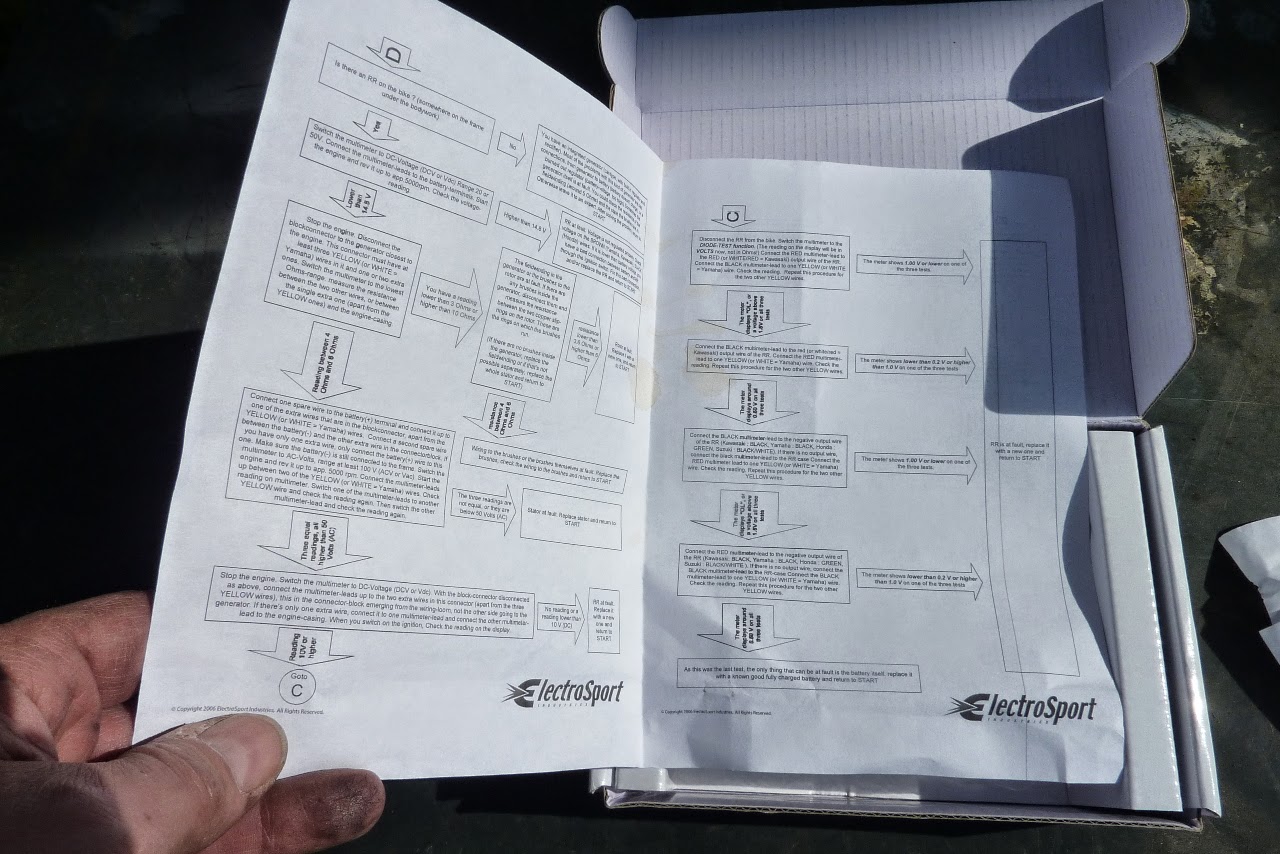
So I'm following the Stator Papers testing procedure. I'm trying to determine if my charging problems are as a result of a faulty Regulator / Rectifier. I'm here:


I have the piece of kit off the bike and I am using a multimeter in the Diode Test position:
I get the same reading connecting the red multimeter lead to the red terminal and testing the three yellows.


Now the testing papers suggest that a positive result should produce a reading of 1.5v or better. What is a reading of 631? Is this reading .631 volts and and is the regulator / rectifier therefore below the 1v service spec? Is it functioning or not?

eil
Forum Sage
The diode test function on most meters is more of a continuity test... if there's "continuity" (typically defined as resistance below an arbitrary threshold) between the two test leads, then beep. Otherwise, be silent. My meter shows the readings in ohms (I believe yours does as well), but assuming that some meters show it in volts, there's the additional wrinkle that different meters use different batteries. Some use a single 9V, some use an array of 1.5V cells. Again... that test, as written, makes no sense.
Furthermore, if this is meant to be a static resistance test, these readings can vary drastically among R/R models because their circuits are not identical. Even if they were, this test would only show you that some of the circuit was behaving properly, it is not a guarantee that all of it is.
My advice would be to test the stator and R/R on the bike per the factory service manual, the procedure for which I summarized in comment #82. I believe posplayr also has some good reference material in his signature which would be worth doing if you want go above and beyond.

Stator/rectifier seems to be working.


13.3V at 3K RPM is actually quite low and possibly indicates that your have poor connections between the Battery and the R/R. With the SSPB that will be taken care of and you will not need to chase it down.
See the Quick Test in my signature for more details on voltage testing.
There is additional information available by doing this simple test which will help confirm any diagnosis I have done here.

I'm glad that I am not going total insane!
Greetings

The R/R tests described above must be done with the R/R disconnected from the bike's electrical system. No stator or battery attached. If you try to do it with them attached you will get incorrect readings.
When checking the stator with a Digital Volt Meter (DVM) you need to disconnect the three stator wires from the R/R and measure resistance only, with the engine off. It takes 3 measurements to do verify this. Just randomly mark each of the 3 stator wires as 1,2,3. Them measure between 1 and 2, then between 1 and 3 and finally between 2 and 3. You should read between .5 to 2 ohms between each leg, but nothing higher then 2 or lower then .5 ohms. You should also measure each of the three wires to ground. Those readings should be virtually open. When checking the stator dynamically you measure AC volts with the engine running. Usually a reading between each combinational pair of wires (again 3 measurements) should read above 75V @ 5000K RPMs. This indicates a good stator.
Testing the R/R is a little more difficult. In the case of most shunt style regulators, you're really only testing the diodes but not the regulation capability. The diodes read continuity in one direction and not in the other. Even if you do test the R/R statically using the DVM, you're not guaranteeing that it’s good. Really, the easiest way to test the R/R is to first verify the stator output is good when operating. To do this you simply connect the R/R as normal and verify battery voltage. Assuming that the inline fuse and wiring is good and the battery is in good condition and charged, the battery should indicate a voltage above 14V but below 15.5V at 5000 RPMs it should also read above 13.8V at around 1500 RPMs. If not, then the R/R is bad and move on.
Definitive Regulator Rectifier Testing for Dummies
I have spent a lot of time in the first instance, trying to find out how a multi-meter works and then figuring out how to use it to test my bikes electrics.
Unhelpful (to me) tutorials that state "test for open circuits" or "continuity of the windings close to the approximate resistance values" just make my head hurt. So I set about doing electrics research 101. I wanted to be 100% certain about what I was doing.
YouTube is the best for this if you have the time and patience. I looked at loads of of vids that came up after searching for; motorbike regulator rectifier testing. The result is that I found the definitive video. It's 15 minutes long and is a great tutorial on the job being done by this piece of equipment AND it also describes and shows how to use a multi-meter to perform the tests (if you don't want the theory, skip the first 12 minutes):
https://www.youtube.com/watch?v=r3mqG7f7qu8
A word of caution: this tests will prove a failed rectifier. It will not prove a working one. Nor will it prove that the regulator is regulating correctly. It only tests the diodes on the rectifier. If any of these diodes are not working then the rectifier must be replaced. If they all appear to be working and pass these tests there is a possibility (I am guessing) that the rectifier could still fail under load.
Applying these tests to my Road Runner bike and my Dad's bike's rectifiers, produced the following table of results:

So the rectifier on this bike is toast and the one on my Dad's bike looks bad too.
Greetings
Paul
Guest
I have a 2nd hand SH-532-12 if you want to try it, (6 wire) msg me on FB just in case I miss it on heretatu -well in so far as a replacement rectifier is required. Probably 2 - one for each bike. Although putting my Dad's rectifier on the GS1150ES shows it to be charging OK. The GS1150 arrived with no rectifier so I still need 2. Think I'll just go with 2nd hand for now.
Greetings
this one .... http://www.ebay.co.uk/itm/suzuki-g1000-regulator-rectifier-/111301682037?nma=true&si=vUTE9fMuHGQOQfgF6GkpJp7tvn8%253D&orig_cvip=true&rt=nc&_trksid=p2047675.l2557
New Rectifier Installed
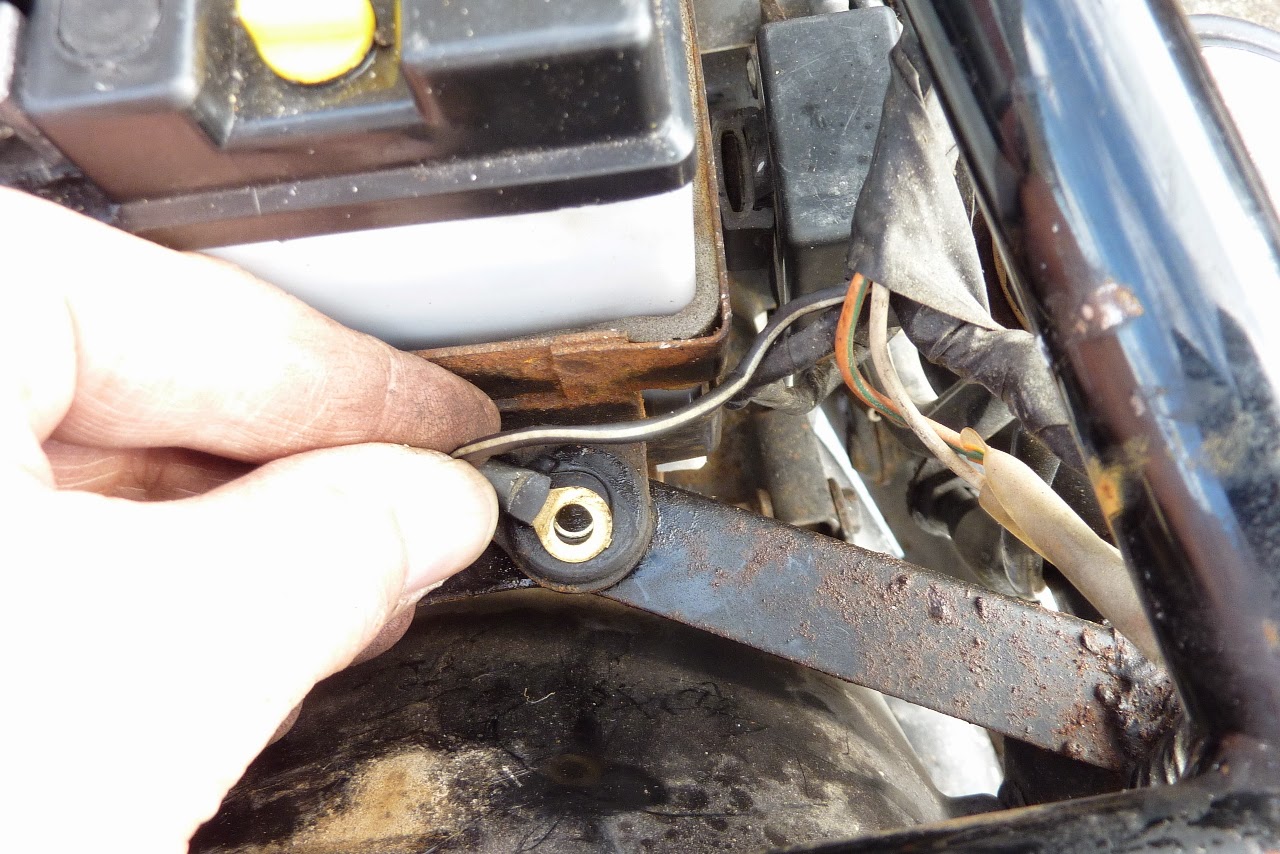
Got a new rectifier and tested it out as perfect. Put it on and tidied up some of the wiring including removing the stator headlamp loop and improving the grounding of the rectifier by wiring it directly to the battery (black lead only).
See: My GS Road Runner Blog - New Rectifier

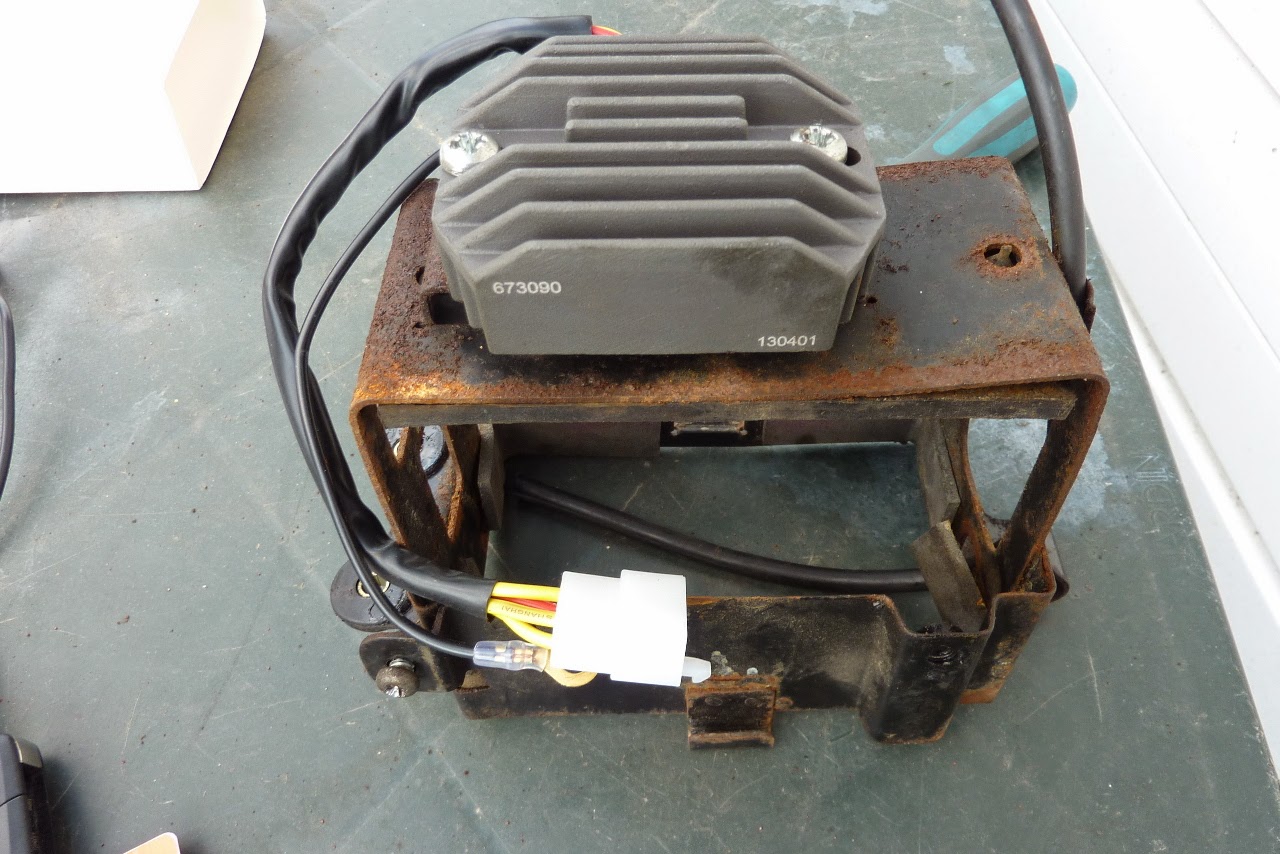
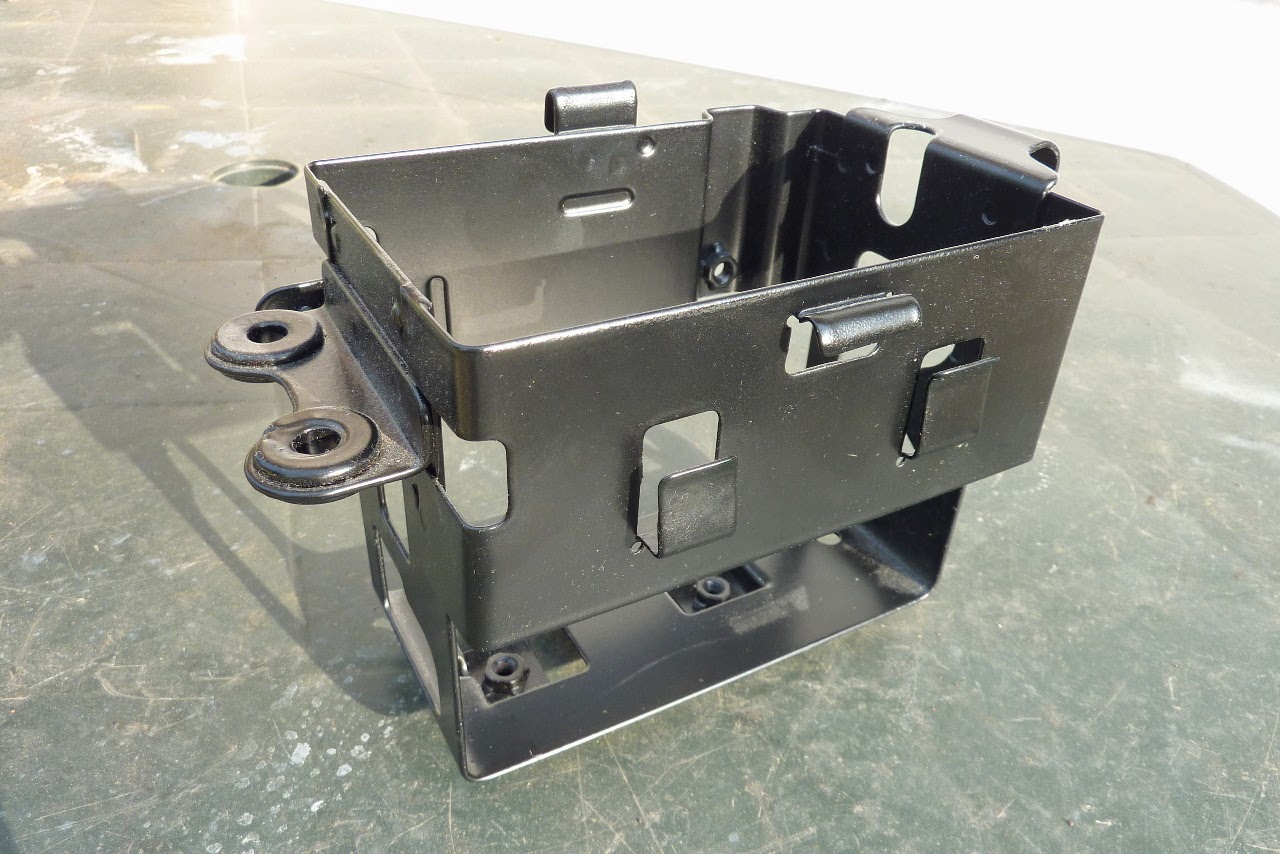
And look, I do know what a nice battery box should look like. Don't have time to refurb this one. I just want to get back on the road. See:
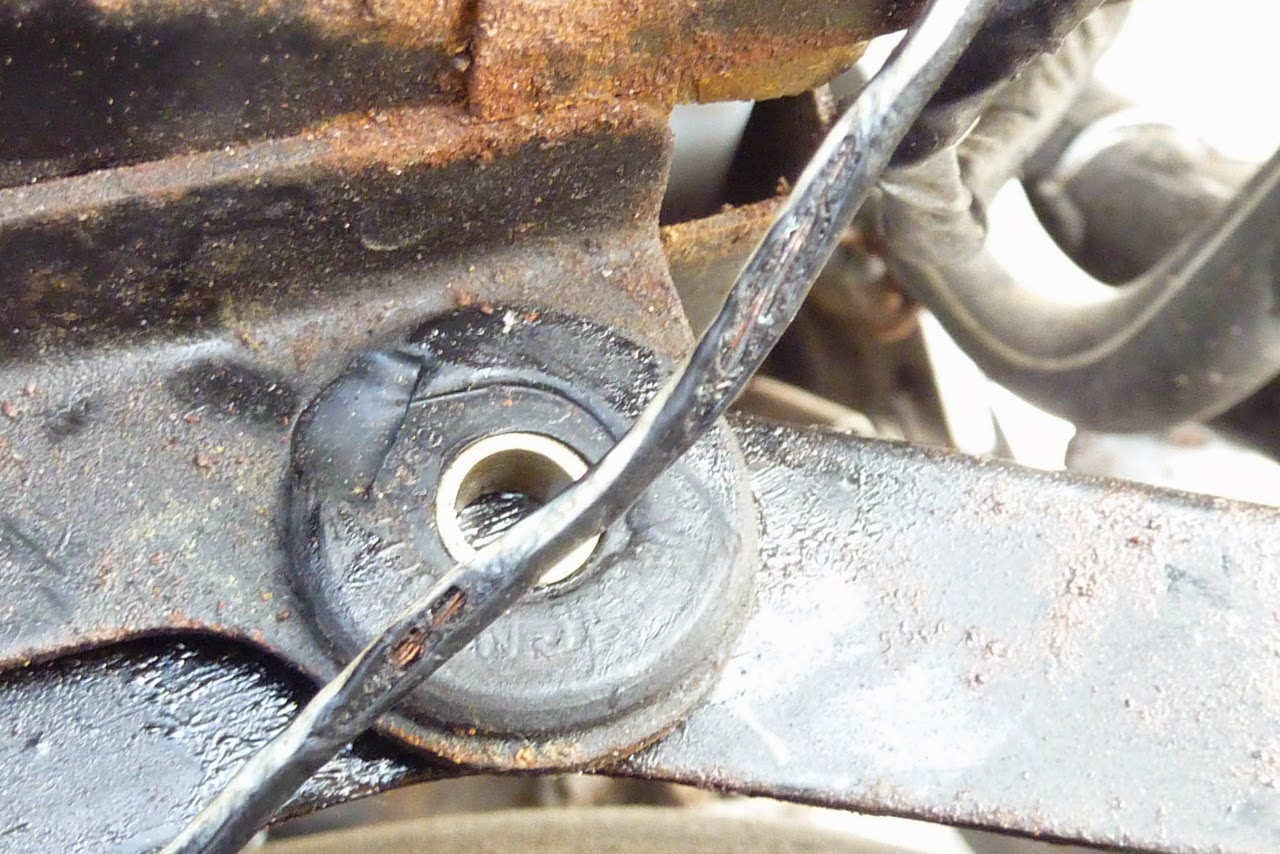
Some of the wiring horror I encountered:
I will be back on the road any day now.
I'm off the Amsterdam in May so it best be ready.
Greetings
Paul
Guest
New Meter Readings
With the new rectifier installed I got some more meter readings:
http://youtu.be/JY5eqqbv_RQ
Greetings

My results are:
1). Key off: 12.78v
2). Key on: 12.18v (headlamp on) 12.32v (headlamp off)
3). At idle: 13.2v (at 1,100 rpm)
4). At 2,500 rpm: 13.83v
5). At 4,500 rpm: 14.05v
6). Key Off: 12.90v
These readings are all within prescribed ranges. And I therefore certify the bike as fixed for now.
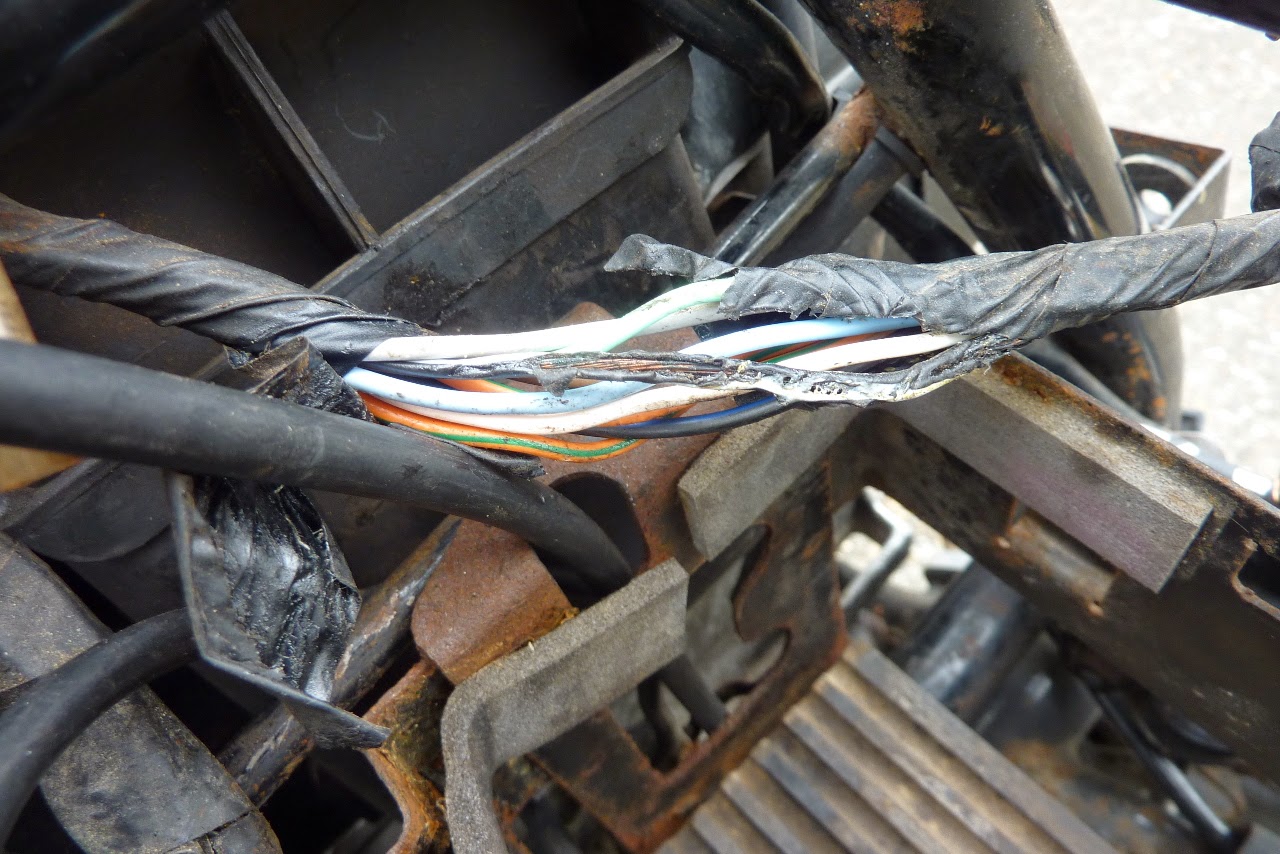
Except I now have to fix the wiring that was burned up in the process.
Greetings


Is this likely to be all the way up to the headlamp shell?
Those wiring diagrams are great but what I need is a wiring loom diagram which shows which cables are bundled together and where they end up.
Greetings
And here is the wiring that needs fixing. How far up does the damage go?
Is this likely to be all the way up to the headlamp shell?
Those wiring diagrams are great but what I need is a wiring loom diagram which shows which cables are bundled together and where they end up.
Greetings
The wire will have got hottest and burntest closest to the short so reducing in heat the further away you go so you might find a place where it isn't burned but best to assume it is and replace the whole piece.
Greetings