• Required reading for all forum users!!!

    Welcome!
    Register to access the full functionality of the GSResources forum. Until you register and activate your account you will not have full forum access, nor will you be able to post or reply to messages.

    A note to new registrants...
    All new forum registrations must be activated via email before you have full access to the forum.

    A Special Note about Email accounts!
    DO NOT SIGN UP USING hotmail, outlook, gmx, sbcglobal, att, bellsouth or email.com. They delete our forum signup emails.

    A note to old forum members...
    I receive numerous requests from people who can no longer log in because their accounts were deleted. As mentioned in the forum FAQ, user accounts are deleted if you haven't logged in for the past 6 months. If you can't log in, then create a new forum account. If you don't get an error message, then check your email account for an activation message. If you get a message stating that the email address is already in use, then your account still exists so follow the instructions in the forum FAQ for resetting your password.

    Have you forgotten your password or have a new email address? Then read the forum FAQ for details on how to reset it.

    Any email requests for "can't log in anymore" problems or "lost my password" problems will be deleted. Read the forum FAQ and follow the instructions there - that's what we have one for...

  • Returning Visitors

    If you are a returning visitor who never received your confirmation email, then odds are your email provider is blockinig emails from our server. The only thing that can be done to get around this is you will have to try creating another forum account using an email address from another domain.

    If you are a returning visitor to the forum and can't log in using your old forum name and password but used to be able to then chances are your account is deleted. Purges of the databases are done regularly. You will have to create a new forum account and you should be all set.

Has anyone wired their own bike???

  • Thread starter Thread starter Guest
  • Start date Start date
Soldering

Soldering

This thread should be put beside the STATOR PARERS.

This from a aircraft electronics quality control inspector.
 
Having done all this work on my own GS, I must offer an alternative to soldering, for some of the work.

Within the harness itself there is little opportunity for moisture and/or corrosion, but a good chance for vibration if it is not wrapped properly.

Obviously, wrapping is important, (especially as we are nearing Christmas again:) )

A liberal dose of Liquid Electrical Tape (it is sold under that name) on a crimp joint works fine, and it offers both insulation and flexibility, so the crimp joint stays together, even with normal vibration. Apart from, perhaps, a feeling of security, there is no significant advantage to soldering all the links/joints/splices inside the wrapped harness.

The liquid tape works on exposed areas as well, and it retains its advantage of flexibility in areas where this may be needed.


Which leads to a note of caution when soldering:

Should one be overly generous with the amount of solder used, it will move along the wires, as well as the connectors, and one will soon learn that solder is not flexible, and this could introduce an element of brittleness in areas where flexibility is necessary.

On exposed electrical joints, by all means take the extra mesures and give yourself the best connections you can, but do not dismiss the crimp method as an overall failure as it is not that.
 
Don't dismiss crimped connections factories use it.
 
Last edited:
I use crimp connectors in a lot of the work i do. using the PROPER crimping tool makes all the difference. for butt connectors i use a crimping tool available from klein tools. i have seen a similar version at harbor frieght. using the correct size of connector is also important. some of your spade connectors require a different crimping tool and a different method of crimping. waterproofing on of these connections is easy using heat shrink tubing and silicon sealer applied correctly. soldering is ok if done correctly. i have had a milspec soldering course. it is an art, like welding. i have been installing and wiring two way radio sytems, sirens, light controllers, computers, mobile data terminals, etc into vehicles for years for government agencies, private agencies, etc.
 
Don't dismiss crimped connections factories use it.

This is true...as long as it lasts past the warranty period it is fine. Seriously, if you live in a fairly dry climate then you may be able to get away with just crimp type conections. If you live in an area where the roads are often wet and are salted for traction in the winter, I wouldn't dream of using crimp type connections.

I completely wired a Baja Bug from scratch in the mid Eighties. I used crimp type connections and gave it no second though...until about 2 years later. I started to have intermittant problems with my electrical system, especially in the engine bay. I had driven the Bug on the Texas Gulf coast and up in Washington/Oragon most of the time. I found the connections were corroding badly despite having used a professional quality crimper and lots of heat shrink and electrical tape. I never used the Liquid Electrical tape so I can't comment on it but it sounds great.

I miss that old Bug...
 
This is true...as long as it lasts past the warranty period it is fine. Seriously, if you live in a fairly dry climate then you may be able to get away with just crimp type conections. If you live in an area where the roads are often wet and are salted for traction in the winter, I wouldn't dream of using crimp type connections.
Hap, mr. rosin and i have been on a first name basis since about '68. The only way i do exposed wiring repair is solder, silicone and shrink tube, but crimped and properly sealed wiring is more than fine IMHO.
 
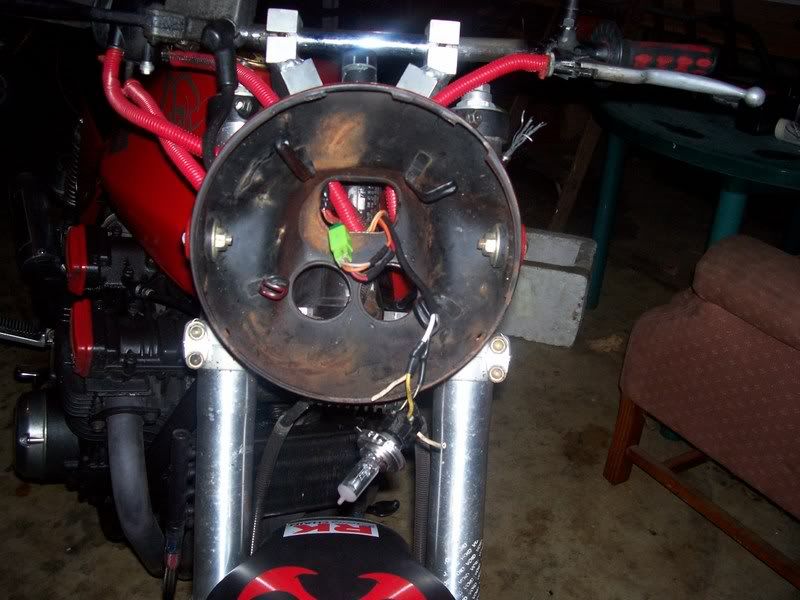
i rewired my bike from sctatch, i wanted the bike to be as naked as possible. all i have is head light tail light , and brake light. no guages, idiot lights, speedo, tach, not even a gas guage. it was fairly simple !!! here is what the inside of my head light looks like now, big difference !!!
100_0615.jpg
 
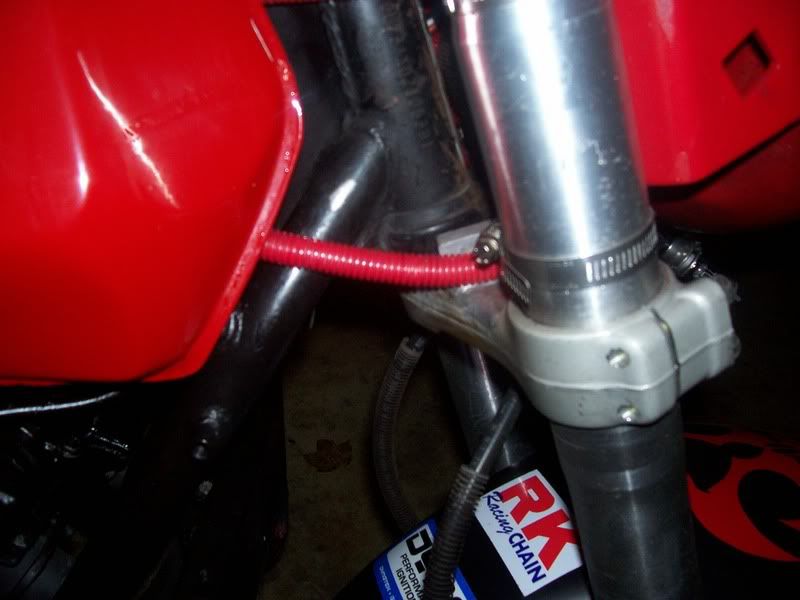
my wiring harness went from 1 1/2 inches in diameter to about 1/2 inch in diameter !!! this gives more spark to the motor!!!
100_0616.jpg
 
I don't know where the article is now, but.....

About ten years ago I read an article about electrical connectors, written for owners of ocean-going sail boats. With salt water around, and many opportunities for galvanic corrosion, the conditions are much more severe than our motorcycles will see. The author strongly favored crimp connectors, but I don't remember all of the reasons. The author had a lot of professional experience in the area. If I recall correctly, covering the connection with some sealant really helps.
 
Hap, mr. rosin and i have been on a first name basis since about '68. The only way i do exposed wiring repair is solder, silicone and shrink tube, but crimped and properly sealed wiring is more than fine IMHO.

Dale, you are probably correct...in the majority of connections a crimp type connection is fine but from my personal experience I've had problems with some of them so I'm a solder kind of guy. If I were in a bind, I would not hesitate to use a crimp connection but if I'm going for the long haul, I would go solder only.

As far as the marine applications, I've never seen a crimped connection where there was any possibility of exposure. I've got 6 years sea time with both the Coast Guard and the Army (seriously, the Army) and a good chunk of experience working on drives systems on offshore oil platforms with Rockwell Automation. There may be some issues with cathodic protection where solder and dissimilar metals may require the use of crimp connections over solder but I can't recall any.

Hap
 
what about soldered crimp connections\\:D/ :-D 8-[
Crimp then solder the connection/ problem?
 
You're still looking at a friction connection that has gaps where moisture can enter and wreak havok. I use connectors where I absolutely have to or in areas that never come in direct contact with moisture. Which, as any of us that have been caught in a downpour on our bikes know, is practically nowhere on a motorcycle.

And never, NEVER use the standard 4- and 6-pin connectors from Radio Shack! I found out the hard way that the 10-amp rating is for the ENTIRE connector, not each pin! Literally cooked to a crisp in a matter of minutes. That's when I said "screw it" and bought a good soldering gun and some heat shrink.
 
So where does one find a good supply of wire for re-wiring a bike? I need proally 200' in varying guages.
 
Napa's been my best source for wiring. Great selection, very good quality wire, and you can order various color combos (black w/white stripe, etc). Someone suggested auto wires from a junkyard, but I don't like using used wiring.
 
Dont used cheep or used wire. I use a tefzel wire in the airplanes .P/N 22759/16-(gauge #). 16ga is about $.25 a ft.

Aircraft Spruce

In the product index go to electrical, then wire. Its good stuff.
 
Back
Top