• Required reading for all forum users!!!

    Welcome!
    Register to access the full functionality of the GSResources forum. Until you register and activate your account you will not have full forum access, nor will you be able to post or reply to messages.

    A note to new registrants...
    All new forum registrations must be activated via email before you have full access to the forum.

    A Special Note about Email accounts!
    DO NOT SIGN UP USING hotmail, outlook, gmx, sbcglobal, att, bellsouth or email.com. They delete our forum signup emails.

    A note to old forum members...
    I receive numerous requests from people who can no longer log in because their accounts were deleted. As mentioned in the forum FAQ, user accounts are deleted if you haven't logged in for the past 6 months. If you can't log in, then create a new forum account. If you don't get an error message, then check your email account for an activation message. If you get a message stating that the email address is already in use, then your account still exists so follow the instructions in the forum FAQ for resetting your password.

    Have you forgotten your password or have a new email address? Then read the forum FAQ for details on how to reset it.

    Any email requests for "can't log in anymore" problems or "lost my password" problems will be deleted. Read the forum FAQ and follow the instructions there - that's what we have one for...

  • Returning Visitors

    If you are a returning visitor who never received your confirmation email, then odds are your email provider is blockinig emails from our server. The only thing that can be done to get around this is you will have to try creating another forum account using an email address from another domain.

    If you are a returning visitor to the forum and can't log in using your old forum name and password but used to be able to then chances are your account is deleted. Purges of the databases are done regularly. You will have to create a new forum account and you should be all set.

Help! Should I avoid rain?

  • Thread starter Thread starter GregM.
  • Start date Start date
My GS650GL would complain strongly in a heavy downpour. Turned out to be the spark plug boots were old and electrically leaky and when wet, would pass a lot more of the sparking current to ground killing some cylinders in an erratic fashion. Replacing the old boots with some new NGK ones solved the problem.
 
My GS650GL would complain strongly in a heavy downpour. Turned out to be the spark plug boots were old and electrically leaky and when wet, would pass a lot more of the sparking current to ground killing some cylinders in an erratic fashion. Replacing the old boots with some new NGK ones solved the problem.

I need to do zactly that... split leads wrapped in electrical tape dont like the wet much...:(

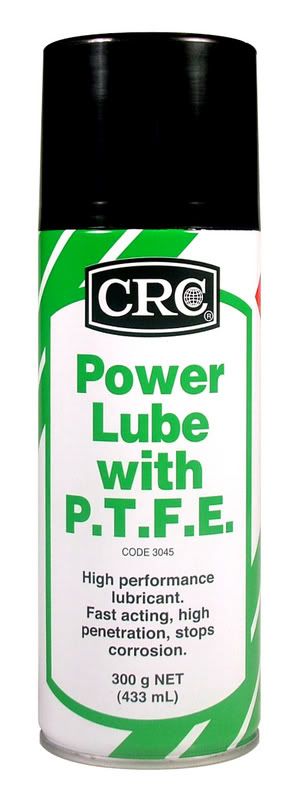
but I thort id share this lil number

crc.jpg


stats here

I started using this stuff for my fishing reels since I use eggbeaters susceptible to seawater and its been a wonder

the stuff leaves a synthetic coating of sorts that helps protect from water and condensation even after wiping the excess off...

Yeah - its a lubricant first - but it was an electrician m8 at the local paper mill who put me onto it as they use it on electrical connections that may get water damage...

I use it on my bar mounted switches, even leads and pretty much every electrical connection I can get to and havent had a prob since - specially the indicator assembly which used to give meh trouble after a run in the rain... and as a lubricant it helps those lil moving parts along quite nicely

I also use it on my truck when Im going up the beach - I give the starter motor connections, distributer cap, plug leads and coil a blast cause the old MQ patrol had a habit of dying immediately I hit water at any speed... I would have to get out of the truck - spray the whole lot down with standard CRC and eventually she'd fire up...

after using this stuff - it was gr8 - it doesnt water proof - but it does give more water resistance than anything else I have found

just thort Id share

cheers

Phark
 
Last edited:
I have found that on the old bikes, the electrical plugs, wrapped harness wires, plug boots, spark plug leads etc., can allow water intrusion simply due to age and not quite perfect sealing. Spraying them with WD40, Boeshield T-9 or any electrical barrier spray usually cures those problems. I wrap the harness connectors with fresh electrical tape and just spray things down. I've never had a problem with the electrical system due to riding in the rain and I've ridden in constant rain for two days sometimes when on a trip. Traction in the rain is about 80% of what there is when the road is dry, so that isnt a problem. Braking is more sensitive, but once adjusted to, isnt a problem either. I dont ride in the rain if I dont have to, but thats because I dont like being wet and cold, not because of the bike.

Earl
 
Last year our Annual GS rally at Moosehead Lake, ME was a total washout. I rode a total of about 1300 miles that long weekend in torrential rain. Pod filters and all, stock electrical system- even my old wires!! No problem at all.

Worry less, ride more!!
 
...using crimp style butt splices, crimp ring terminals on the end of the new wires and attach them to the battery negative post with the other ground wire. :-D

I do not recommend crimp connecting any wires to anything. Solder all connections and then use heat shrink tubing to cover it up. Really, all existing crimp connectors should be replaced with soldered ones.

My dad always used petroleum jelly on all exposed connections like the battery. I'm not sure if there are any problems doing that, but it does prevent corrosion.

As fars as rust is concerned, there's not much we can do to avoid it, short of redoing all the body work or avoid the rain whenever possible. I only ride in the rain if I'm caught out in it.
 
The compressed can of air won't last one spray down and I'd say you're wasting your time and money with it.

I'd clean every, yep every, connector on the wiring harness and coat them in silicone dielectric grease, available from the auto parts store. Most problems with the GS charging system stem from poor electrical connections so cleaning the connectors is something you should do whether you spend time in the rain or not. Yes, even the ones under the tank and the rats nest inside the headlight bucket. Pay particular attention to the frame ground connections and the fuse box.

Make sure your rainsuit is high visibility.

Standard GS electrical maintenance is a must anyway as pointed out. Good tires, good rain gear, a bit of common sense and your commutes in the rain could even be enjoyable. Kind of like this http://www.youtube.com/watch?v=nj1vMaVD7Ng&mode=related&search=
 
I do not recommend crimp connecting any wires to anything. Solder all connections and then use heat shrink tubing to cover it up. Really, all existing crimp connectors should be replaced with soldered ones.

My dad always used petroleum jelly on all exposed connections like the battery. I'm not sure if there are any problems doing that, but it does prevent corrosion.

As fars as rust is concerned, there's not much we can do to avoid it, short of redoing all the body work or avoid the rain whenever possible. I only ride in the rain if I'm caught out in it.


I cant agree with you about the connectors. Soldered wires will break with vibration. Crimp connectors do not have that disadvantage. I prefer a crimp connector and electrolytic grease.

Earl
 
I cant agree with you about the connectors. Soldered wires will break with vibration...

I thought someone here had recommended against crimping. I've been replacing mine as I get to them. Maybe I should rethink that plan.

Anyone else have a comment?
 
Either soldering or crimping will work satisfactorily if done with good workmanship and common sense. Good soldering requires a mechanical connection between wires before the solder is applied, so that the connection does not depend on the solder for strength and vibration resistance. Covering the connection with heat shrink tubing will increase vibration resistance and help to prevent flexing.

Crimping requires a precision crimping tool that can make an airtight joint at high pressure between the wire and connector. Sloppy crimp joints probably cause more problems and failures than solderered connections. If crimp joints are done right and coated with electrical grease to prevent oxidation, they make a very good and reliable connection.
 
I thought someone here had recommended against crimping. I've been replacing mine as I get to them. Maybe I should rethink that plan.


We've been down the crimp vs solder debate road before. :-) My main criticism of soldering is regardless of how the strands are entertwined, once the solder is applied, the wire is for all practical purposes transformed from multi stranded flexible wire to rigid, solid wire, much like used in house wiring. I do not feel solid wire is a good choice in a vibration prone environment. Apples and oranges maybe. :-)

Earl
 
I thought someone here had recommended against crimping. I've been replacing mine as I get to them. Maybe I should rethink that plan.


We've been down the crimp vs solder debate road before. :-) My main criticism of soldering is regardless of how the strands are entertwined, once the solder is applied, the wire is for all practical purposes transformed from multi stranded flexible wire to rigid, solid wire, much like used in house wiring. I do not feel solid wire is a good choice in a vibration prone environment. Apples and oranges maybe. :-)

Earl

I get your point about solid wiring, but I don't think that's the issue, per se. I think that the failure prone area of mechanically linked solder joints is the flex point where the flexible wire joins the "solid" solder joint. If it is allowed to flex at that point it will stress the wire and eventually break it. That's another good reason for reinforcing the joint with heat shrink tubing which will limit flexing at the solder joint and help prevent failures to vibration, overflexing, etc..

On the other hand, the failure prone area of a crimp joint (not even considering oxidation problems) is the point where the wire joins the connector. The crimp connectors behave like a "solid" wire just like a solder joint, and if a wire is allowed to flex at a crimped connector it can break there just as it may at a solder joint.
 
I get your point about solid wiring, but I don't think that's the issue, per se. I think that the failure prone area of mechanically linked solder joints is the flex point where the flexible wire joins the "solid" solder joint. If it is allowed to flex at that point it will stress the wire and eventually break it. That's another good reason for reinforcing the joint with heat shrink tubing which will limit flexing at the solder joint and help prevent failures to vibration, overflexing, etc..

On the other hand, the failure prone area of a crimp joint (not even considering oxidation problems) is the point where the wire joins the connector. The crimp connectors behave like a "solid" wire just like a solder joint, and if a wire is allowed to flex at a crimped connector it can break there just as it may at a solder joint.

I always use crimp connectors with the plastic piece removed and heat shrink tubing. First I slide a piece of heat shrink up the wire after the old connectors are cut off, then I crimp the new connectors to the wire like you should to hold the wire and then I solder the connections to prevent them from working loose or corroding. When everything tests OK then I apply the heat shrink tubing. The reason I don't depend on just a crimped connection is that they can corrode and if you don't get a perfect crimp they can work loose over time. The reason I don't depend on a soldered only connection is that if you have a connection that for whatever reason heats up occasionally, or shorts, you will end up having the solder fail and the wire actually pop out of the connector, not so great if it's the live end of the connection. So I do both. With the bullet connectors you can almost duplicate the stock clear plastic cover using a large diameter piece of clear heat shrink tubing by putting it over the finished connection and just heat shrinking one end of it.
 
I always use crimp connectors with the plastic piece removed and heat shrink tubing. First I slide a piece of heat shrink up the wire after the old connectors are cut off, then I crimp the new connectors to the wire like you should to hold the wire and then I solder the connections to prevent them from working loose or corroding. When everything tests OK then I apply the heat shrink tubing. The reason I don't depend on just a crimped connection is that they can corrode and if you don't get a perfect crimp they can work loose over time. The reason I don't depend on a soldered only connection is that if you have a connection that for whatever reason heats up occasionally, or shorts, you will end up having the solder fail and the wire actually pop out of the connector, not so great if it's the live end of the connection. So I do both. With the bullet connectors you can almost duplicate the stock clear plastic cover using a large diameter piece of clear heat shrink tubing by putting it over the finished connection and just heat shrinking one end of it.

That darned Earl. He's gotten the quotes all screwed up again. :lol:

I like your method, Sandy. It combines the best of both alternatives.:)
 
Back
Top