• Required reading for all forum users!!!

    Welcome!
    Register to access the full functionality of the GSResources forum. Until you register and activate your account you will not have full forum access, nor will you be able to post or reply to messages.

    A note to new registrants...
    All new forum registrations must be activated via email before you have full access to the forum.

    A Special Note about Email accounts!
    DO NOT SIGN UP USING hotmail, outlook, gmx, sbcglobal, att, bellsouth or email.com. They delete our forum signup emails.

    A note to old forum members...
    I receive numerous requests from people who can no longer log in because their accounts were deleted. As mentioned in the forum FAQ, user accounts are deleted if you haven't logged in for the past 6 months. If you can't log in, then create a new forum account. If you don't get an error message, then check your email account for an activation message. If you get a message stating that the email address is already in use, then your account still exists so follow the instructions in the forum FAQ for resetting your password.

    Have you forgotten your password or have a new email address? Then read the forum FAQ for details on how to reset it.

    Any email requests for "can't log in anymore" problems or "lost my password" problems will be deleted. Read the forum FAQ and follow the instructions there - that's what we have one for...

  • Returning Visitors

    If you are a returning visitor who never received your confirmation email, then odds are your email provider is blockinig emails from our server. The only thing that can be done to get around this is you will have to try creating another forum account using an email address from another domain.

    If you are a returning visitor to the forum and can't log in using your old forum name and password but used to be able to then chances are your account is deleted. Purges of the databases are done regularly. You will have to create a new forum account and you should be all set.

Repairing my gas tank

  • Thread starter Thread starter bobiii84
  • Start date Start date
B

bobiii84

Guest
I've been reading about Kreem and so far no one here seems to like it. So I continued reading and found that for pinholes caswell epoxy seems to work well. My question is this, can I use the cleaner from my Kreem kit, then use the caswell and be good to go?
 
Bob,
Please search though the archives for information about derusting tanks and sealing. I've posted extensively on the subject and don't want to keep repeating myself. The Advanced Search feature works well if you search on a term like "rust" and used Titles Only to limit the search.

Regarding your tank, you can use Caswell's epoxy to seal small holes, but they better be small, and I strongly suggest you derust the tank fully first...which may make that small hole larger. Big project, hope it goes well for you.
 
I have used Kreeme, POR-15 and Caswell and for my money, the Caswell kit is by far the easiest to use.

The advantage to the Caswell kit is that it really requires minimal derusting to work well and as a two part epoxy it sets up quickly. Indeed the kit claims to work best with rust which it grabs on to and encapsulates. My tank is fine and going strong after 5 years.

I also had holes and prior to sealing I filled them with plumber's epoxy putty which has also held up well. With the sealer over top its a solid and permanent repair.

You won't be disappointed in it.

cheers,
Spyug
 
The advantage to the Caswell kit is that it really requires minimal derusting to work well and as a two part epoxy it sets up quickly. Indeed the kit claims to work best with rust which it grabs on to and encapsulates.

cheers,
Spyug


Yea, that's what they say but I don't believe it. Rust is like cancer just waiting to spread. The various tank sealer products attempt to stop the rust by encapsulating it thus denying the rust it's fueling oxygen. Problems start if there are any voids in the coating which allow oxygen to get though to the rust, in which case the rust will grow under the coating. Also, in a case where there has been perforation of the metal, there is going to be rust on the outside of the tank as well as the inside so the only way to seal it would be to strip off the paint on the outside and completely seal the tank inside and out.

The various sealer products will stick perfectly to raw CLEAN metal, so no worry there. I work for a commercial aviation supplier that builds waste system tanks among other things. Our people here are paranoid to the nth degree about any corrosion in the system, even though the entire system is stainless steel. The waste tanks are powder coated in addition to being stainless and the metal prep process prior to coating is extensive to assure there is no corrosion on the metal before coating.

In the case of a perforated tank I'd strip off all the exterior paint and perform an extensive derusting process before sealing. Phosphoric acid works well and is the stuff in the Por-15 kit. The acid will cause a chalky film to form after a day or so in the sauce so that should be scrubbed off before applying the sealer. The best metal scrubbing material I have found is aquarium rocks since they are small enough to get into the nooks and crannies, and they also have sharp edges to scrub the metal really well.

Lots of work but doable, and way more robust a repair than coating over rust.
 
Bob,
Please search though the archives for information about derusting tanks and sealing. I've posted extensively on the subject and don't want to keep repeating myself. The Advanced Search feature works well if you search on a term like "rust" and used Titles Only to limit the search.

Regarding your tank, you can use Caswell's epoxy to seal small holes, but they better be small, and I strongly suggest you derust the tank fully first...which may make that small hole larger. Big project, hope it goes well for you.

Yea, that's what they say but I don't believe it. Rust is like cancer just waiting to spread. The various tank sealer products attempt to stop the rust by encapsulating it thus denying the rust it's fueling oxygen. Problems start if there are any voids in the coating which allow oxygen to get though to the rust, in which case the rust will grow under the coating. Also, in a case where there has been perforation of the metal, there is going to be rust on the outside of the tank as well as the inside so the only way to seal it would be to strip off the paint on the outside and completely seal the tank inside and out.

The various sealer products will stick perfectly to raw CLEAN metal, so no worry there. I work for a commercial aviation supplier that builds waste system tanks among other things. Our people here are paranoid to the nth degree about any corrosion in the system, even though the entire system is stainless steel. The waste tanks are powder coated in addition to being stainless and the metal prep process prior to coating is extensive to assure there is no corrosion on the metal before coating.

In the case of a perforated tank I'd strip off all the exterior paint and perform an extensive derusting process before sealing. Phosphoric acid works well and is the stuff in the Por-15 kit. The acid will cause a chalky film to form after a day or so in the sauce so that should be scrubbed off before applying the sealer. The best metal scrubbing material I have found is aquarium rocks since they are small enough to get into the nooks and crannies, and they also have sharp edges to scrub the metal really well.

Lots of work but doable, and way more robust a repair than coating over rust.

Somehow I knew this topic wouldn't just die... And here you are, reiterating the tank cleaning procedures for the 673rd time.

When I derusted my tank I used electrolysis then vinegar. Didn't have pinholes but I had a tremendous amount of scale.
 
Thanks!

Thanks!

I appreciate all the feedback. Problem with search may be a user error on my part but I kept finding the wrong articles. It can be a lot to go through but I'm sure I'll get better at it. Thanks again for all the advice guys!
 
Need to be a member to see that thread.

Oops sorry, here ya go.


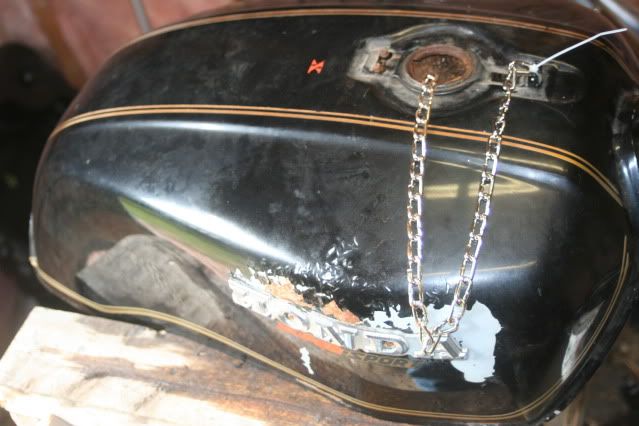
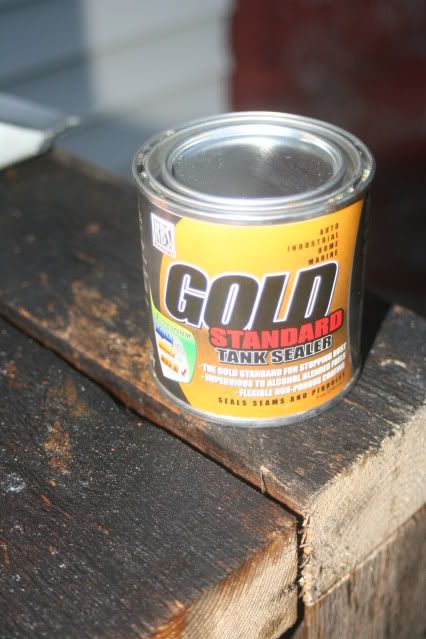
My CBX tank was very rusty inside and this kit came up on kijiji not opened. I have used the POR-15 kit before with good results and thought I'd document the process and compare the two kits.

030.jpg


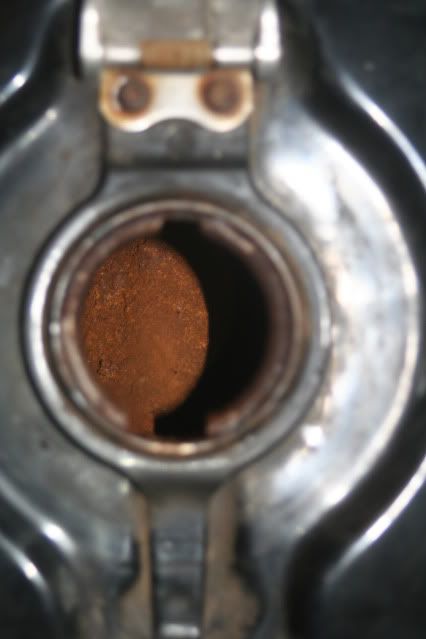
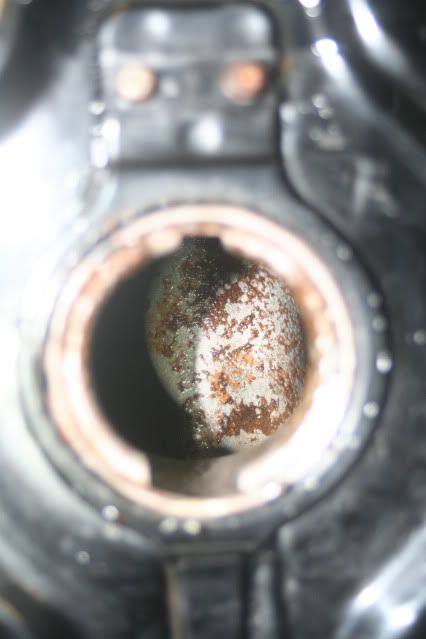
Here is what I started with.

018.jpg


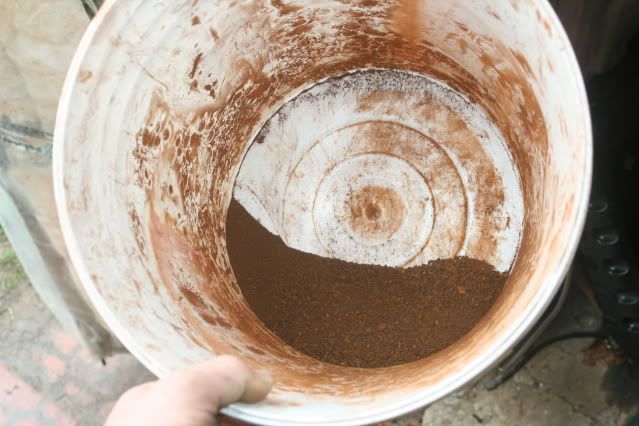
First I cut a piece of chain about 3 feet long and rattled it around inside. Alot easier to get out than ball bearings.

025.jpg


Here is some of the rust I got out of it from about 10 min of doing this

029.jpg


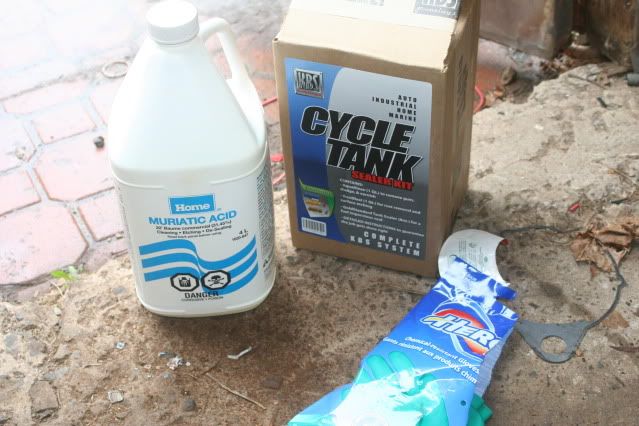
Next step to getting the rust out is muriatic acid. This is toxic stuff. I mixed the gallon of acid with whatever water filled the tank. I sealed off the bottom and top and let it sit for about an hour. Here is the result.

032.jpg

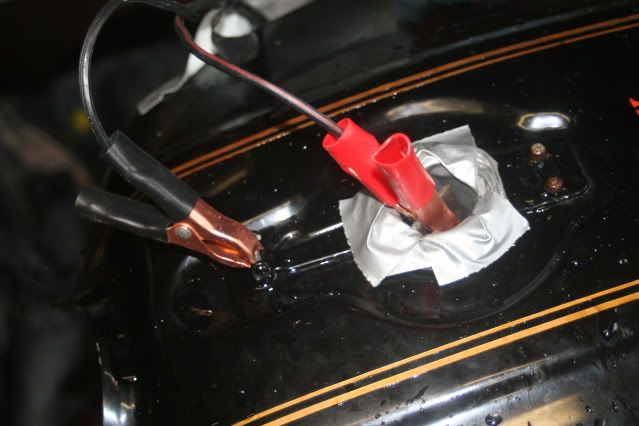
I than used a battery charger with salt water for a while. Not great results as I ran out of salt and couldn't get the current up very high. I did find that it made alot flake off though.

033.jpg


I decided to try the acid again, but this time mixed it half and half and sloshed it around the tank for about 10 min.

042.jpg


There is a cleaner in the kit that seems to do the same thing as the acid but is much slower.
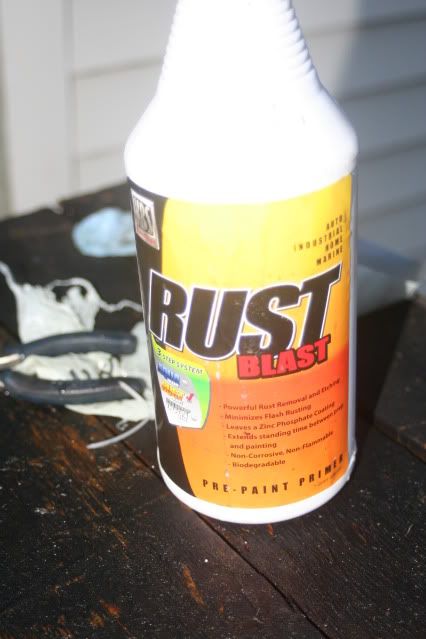
After the acid you will get flash rusting. The kit came with the "rust blast" which is only really a rust converter. It turns it into a primer for the sealer to adhere to. I used it directly after the acid bath and there was no flash rusting during the dry period.

044.jpg


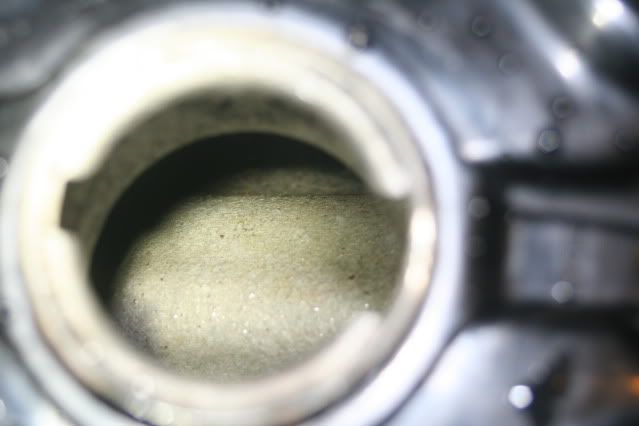
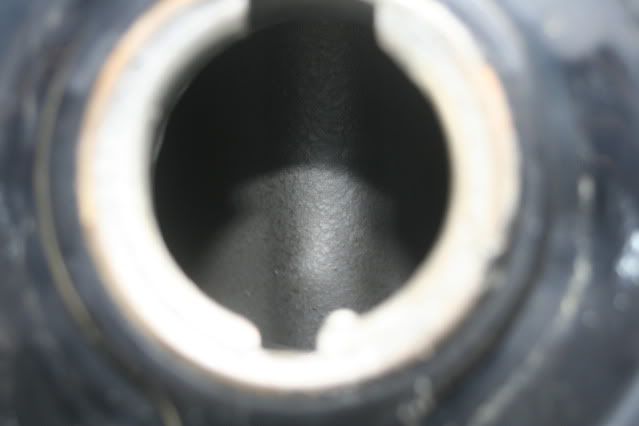
I made sure that the tank was very dry and than I used the sealer. I put it in the tank and moved the tank around for about half an hour to make sure it had coated everywhere. I than drained out the remaining sealer.

045.jpg


047.jpg


Overall the kit was easy to use. Just as easy as the POR-15 kit, but I found that the POR-15 kit had a rust remover that actually worked. I didn't use acid for the POR kit.
This kit seemed a little easier to get the sealer spread evenly over the whole tank.
I'll have to wait and see what its like long term, but overall I'm happy with the KBS kit.
 
I'm not a chemist or anything but from what I've read, muratic acid is not recommended for rust removal. The acid is too strong and has a negative effect on the metal, even if neutralized with a base solution. I've found lots of warnings about this on the web including this link... http://www.hotrodders.com/forum/muriatic-acid-rust-removal-133307.html

Phosphoric acid or oxalic acid are much less damaging.

P
 
I'm not a chemist or anything but from what I've read, muratic acid is not recommended for rust removal. The acid is too strong and has a negative effect on the metal, even if neutralized with a base solution. I've found lots of warnings about this on the web including this link... http://www.hotrodders.com/forum/muriatic-acid-rust-removal-133307.html

Phosphoric acid or oxalic acid are much less damaging.

P

Can you just pour powdered Oxalic acid (barkeepers friend) into water and use that?
 
Can you just pour powdered Oxalic acid (barkeepers friend) into water and use that?

I'm not familar with Barkeepers Friend but I think it's basically a cleanser with oxalic acid. Pure oxalic acid is better for a usage like derusting. Many deck cleaner products have oxalic acid in them such as Savogran? Wood Bleach. This stuff is cheap, eats off rust really well, and won't damage the metal or paint.
 
I've done my own research on that subject. After neutralizing it than coating over it I have no issues whatsoever with using muriatic acid.

I would however not recommend its use on exposed materials as it will flash rust unless treated.
 
If I had any holes In the gas tank, i'd MIG weld it.
For pinholes, just tack weld it, then grind it down.
The downside is, your going to need to re-paint around your Grind spot.

The paint on my tank sucks anyways, so it's a win-win, haha.


I've also had horrible experiences with Kreem!
The acid works great, but it simply flash rusts it's ass off IMMEDIATELY!
I couldn't even get the dehydrating wash in the tank fast enough!

If I had known about WD-40 and various oils....i would have just quickly sprayed the inner tank with THAT, then re-assembled.

But the only way you learn to do it better, is by screwing up the first time!


I think I'll go with electrolysis next time.
I've been playing around with it, and had success so far.
 
question

question

So I saw some of the pictures you all posted with rust in the tank and realized that the inside of my tank looks great! Except I have a very very slow leak near my back/bottom/right side of the tank. I already tried to use seal-all and that worked for a few months but I want to fix the problem. The paint in that area is already off so no harm there but I don't have access to a welder or anyone that does. I have the Caswell epoxy coming already so I think I will just use that inside, any thoughts?
 
I and others have used muriatic acid without issue in motorcycle fuel tanks, however I've since converted to using regular white vinegar (9%) it's not as fast as muriatic acid, but less hazardous to use (I never diluted my acid, BTW, just used it straight, then basted out the tanks with a pressure washer) and freindlier to the environment.
I like the chain idea, though I still prefer nuts as they have more 'edge' to them.
I extract them with a magnet.
Of course, the best way, if you have the wherewithal, is to open the tank, media blast it, weld up any holes, weld the tank back together, then epoxy it.
Next will be a ton of folks hollering how dangerous it is to weld on a gas tank, and it is, unless it's been blasted first, which removes the gas as well as the rust, leaving clean, bare metal.
 
So I saw some of the pictures you all posted with rust in the tank and realized that the inside of my tank looks great! Except I have a very very slow leak near my back/bottom/right side of the tank. I already tried to use seal-all and that worked for a few months but I want to fix the problem. The paint in that area is already off so no harm there but I don't have access to a welder or anyone that does. I have the Caswell epoxy coming already so I think I will just use that inside, any thoughts?

Caswell is great stuff when you're already leaking. It's thick, bridges over holes nicely, and cures hard. I followed their instructions and all went well. Their kit does two tanks. You might be tempted to use it all on one tank, and if you want to that's fine. But still, do it in two parts. Once you mix the parts it's already starting to cure. It's thick stuff, too. Make sure you have some time to turn the tank.

Caswell doesn't necessarily recommend de-rusting the inside of the tank, as the rust (so long as it's surface rust - try to get large scales out) supposedly helps the epoxy stick. I didn't de-rust myself: I tried before I knew my tank was already leaking and $20 worth of Evapo-rust wound up on the floor. However, Caswell does cure clear. So if there's surface rust in there and you seal over it, you're going to see it as long as you have that tank.

Remember to go in while it's still soft (~40-60 mins after application) and clear the holes for the petcock and fuel gauge.

General recommendations for all tank sealing:

1. Make sure your tank is clean and BONE DRY before sealing (I let mine dry for 3 days after 2 acetone rinses, 2 water rinses, then 2 alcohol rinses)
2. Let your sealant cure for at least 3 days before putting fuel in the tank
 
Back
Top