• Required reading for all forum users!!!

    Welcome!
    Register to access the full functionality of the GSResources forum. Until you register and activate your account you will not have full forum access, nor will you be able to post or reply to messages.

    A note to new registrants...
    All new forum registrations must be activated via email before you have full access to the forum.

    A Special Note about Email accounts!
    DO NOT SIGN UP USING hotmail, outlook, gmx, sbcglobal, att, bellsouth or email.com. They delete our forum signup emails.

    A note to old forum members...
    I receive numerous requests from people who can no longer log in because their accounts were deleted. As mentioned in the forum FAQ, user accounts are deleted if you haven't logged in for the past 6 months. If you can't log in, then create a new forum account. If you don't get an error message, then check your email account for an activation message. If you get a message stating that the email address is already in use, then your account still exists so follow the instructions in the forum FAQ for resetting your password.

    Have you forgotten your password or have a new email address? Then read the forum FAQ for details on how to reset it.

    Any email requests for "can't log in anymore" problems or "lost my password" problems will be deleted. Read the forum FAQ and follow the instructions there - that's what we have one for...

  • Returning Visitors

    If you are a returning visitor who never received your confirmation email, then odds are your email provider is blockinig emails from our server. The only thing that can be done to get around this is you will have to try creating another forum account using an email address from another domain.

    If you are a returning visitor to the forum and can't log in using your old forum name and password but used to be able to then chances are your account is deleted. Purges of the databases are done regularly. You will have to create a new forum account and you should be all set.

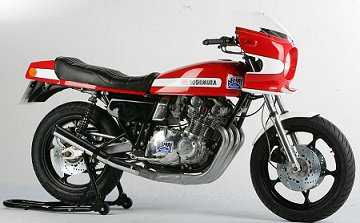
Rickman CR900 "GS" engine choice poll - big bore GS550-741/789cc vs GS750-894cc

Rickman CR900 "GS" engine choice poll - big bore GS550-741/789cc vs GS750-894cc

  • 741cc GS550 w/650 top end and 650 big bore Wiseco's

    Votes: 0 0.0%

  • Total voters
    6
Big bore 750, it is....

Big bore 750, it is....

AHEMMMM.....

Well, I have pretty much decided the Ricky is going to get the big bore GS750 option... The 789cc 550 is still a project I want to build, maybe in 741cc stock 750 piston form for a friend/flip type project next year or two, but the big power of the biggest kicker and some other issues have convinced me.

The engine is the closest bolt in of the candidates, and the big factor was the 550 exhaust spacing. the engine was going to have to get completely relocated in all mounts to get the exhaust to even "just rub" the big four cylinder Rickman frame. deal breaker. I was skeptical of the 550 gearbox, but it never got a chance to prove itself to the big big bore territory.

The big bore torque/power potential from same pistons I need to have made for the GS425-475cc and coupled with the used Yoshimura Road and Track cams, the abundance of GS750 engines in my workshop, and the hours of frame and suspension geometry planning and research that I put in last night and the past weeks for a quick and nimble corner burner will easily offset the 35lbs extra of big engine to make it very flickable to toss into the tightest of turns as my GS750 improved greatly with a bit of rake and trail deduction as wel.
With just a 1" rise in the rear and slight drop in front, a 4.21" trail 27 degree rake GS750 turns in substantially better - like a MUCH lighter bike, getting the trail reduced below 4" and the rake down to a quicker but stable 26 degrees. With my proposed 3.73" trail and 25.45 degree rake that I came up with last night on the dining room workbench er...um, dining room table with a calculator, angle finder, rake and trail calculator web app, and a lot of figuring, I know the extra weight will be much easier to manage than as it was on a stock GS or Rickman geometry.

This is going to be a spare no detail type of build, in terms of performance for it's purpose - vintage appearing style, upgraded to top notch geometry, suspension, and braking for a vintage racer, top notch rubber to fit these wire spoke GS1000/DID rim'd 3.50x18 and 2.50x18 wheels... As with my builds, cosmetic finishing touches are the last concern I have and not on the priority list, but if I get new fiberglass pieces for the tank cover and tail section, I will be giving it a good quality paint job - black all the way! Gold Rickman decals... Unsure of side covers. May just let it all hang out - tiny LiFePO4 battery box and minimal electrics. Will need turn signals for the time being I suppose since I have to apply for a custom built vehicle title or a lost VIN, unfortunately. The only way I could afford a Rickman chassis to begin with...
 
Last edited:
So I've spent some time planning the past few days after long hard days at work and no motivation to work on house projects...

I got an angle finder so that I could prop the chassis up to a 24.5 to 25.5 degree rake angle and assess how much the jacked up rear and dropped front would really have be slidiing into the tank forward and putting all the weight on my wrists on this aggressive riding position solo racer machine... 1.75" or so riser clipons ON TOP of the upper triple clamp yoke and angled down and back will really help out with the riding position and lessen strain. Couldn't believe the comfortable position on a 1st gen ninja I was on last year, angled down and back, riser clipons, same ones on the Rick actually, but not using that triple.

Reading an article about modern suspension designs, I ascertained that the ideal swingarm angle in terms of anti-squat powering out of turns is as much as 12.5 degrees from horizontal, but many vintage bikes will have trouble getting over 9 degrees. Somehow sprocket size plays into the equation as well, but I have not read that far to see how that affects things as far as chain pull trying to raise the rear end vs weight transfer trying to squat the rear end. With the swingarm between 9 or 12 degrees and horizontal, accellerating out of a turn will keep the swingarm fairly planted at a constant angle under power, but as it nears horizontal and goes beyond horizontal squatting the rear, the weight transfer increases greatly and gives you substantially more rake and trail, causing you to have to back off the throttle as you lose your good cornering steering geometry, and thus not being able to keep the tight turning radius exit under power. I am shooting for 10-11.5 degrees, and plan on YSS shocks with 10mm ride height adjusters so I can play around with rake/trail and swingarm angle changes, which will also work great with the two sets of shock mounts on the Rickman CR 2nd gen swingarm (MUCH more stout AND HEAVIER than the first gen CR arm). Moving the 13" shock that came on the bike from the rear to the front gives me 5/16" or 8mm higher ride height in the rear. The rear suspension will be slightly softer, but in terms of rear end lift under power, the leverage gain against the shock springs will help keep things in check in terms of allowing weight transfer to balance out the steeper arm's tendency to pull inward under chain pull force.

Porn, on the dining room table of all places (hope wife doesn't read this while she's away for 6 weeks training for the wall of death thrillshow!):

^^^^^^^ This is propped up in position with the rake at 25.4 degrees so that I could measure the frame pitching forward being a minor 3 degrees, not too terrible! No offset neck bearings needed after this discovery!

So I set this all up so that I could check out how much the seat would be sloping forward if I got the rake set where I wanted it, or rather needed to get it based on the triple clamp offset achieving a desirable amount of trail... Turns out that with approximately 25.48 degrees rake, the frame is only pitched forward 3 degrees, as in photo! Heck, I can offset that with differing seat and tail section rubber mounts, and level the the tank to match the body lines of the angle of the tail! May not even bother, seems pretty good to me. I could try undoing Corbin's job of reupholstering the seat and stuff some more foam in the front and stretch the vinyl out more with the help of a hair dryer... will try as is first before any of the above.

After the rake and frame pitch conclusion, I determined how I was going to arrive at that. 715mm was the original Rickman 38mm dual disc fork length. RF900R's are 730mm. clipons on top will eat up at least 35mm of fork tube, so 695mm effective fork length drops the front slightly at 20mm, but not too much to cause major clearance issues.

Then the biggie, Loooonnngggg shocks! $479-$999 range in whatever offering I can afford at the time from http://www.YSS-USA.com, shocks in the range of 360mm with their +10mm ride height adjuster to quicken the steering in the twisties when needed... With the angle finder, I didn't want to get all the way down to the modern ideal of 12.5 degrees, but I toyed around at 11.5-12 degrees, and looking at the exhaust mounting boss, not much clearance with a large bolt head there, figured I'd limit it below 12. 14-11/16" was the absolute max I could run in the forward shock mount position. This may require a larger front sprocket and rear sized in perspective, just to keep the chain off the swingarm... geometry update is worth it though. 520 DID chain and Vortex/SuperSprox cogs will save weight, a few more links will be offset.

So I didn't want to drop the forks any more, and I wasn't comfortable with any more swingarm angle or any longer shocks.... where else to go? Tires, of course! Sadly, my top pick Pirelli Sport Demons took the backseat... I have DID 2.50x18 front wheels and 3.50x18 rear wheels. Shinko and Avon say 140/70 fits best on a 3.75 rim, but acceptable on a 3.50. that tire is 26.2 diameter and looks not quite meaty enough on the rear of a vintage bike, but is a superb handler for sure (shredded 2 of them, awesome grip and profile). 150/70 looks right at home with a taller section at around 26.8" in an Avon Am26, but only comes in 17" in the Pirelli, bummer. 3.50 is the narrowest allowable rim, 4.00" is ideal. Now, my 3rd or 4th pick was the Bridgestone BattleAxe BT45V, and it comes in a rare 140/80-18, nearly the same width as the 140/70, but the same height as the 150! Now we're talking! I hate adding extra unnecessary rotating weight, but my only other option to get the geometry right on target was hassle around with custom offset steering bearing adapters to un-rake the front end, opposite of what most chopper guys use them for! real pain with alignment, and a hassle to calculate all the machining angles for the bearings. Only one flat track place advertises this custom service anyways. 1 degree steeper (less) rake for $120 and a nightmare of aligning the eccentric adapters.
middle_1405182939.jpg

The other bonus (cosmetic detraction though) was that the BattleAxe BT45V's 110/80-18 is smaller diameter than an Avon RoadRider, 24.8" vs 25.2"! smaller front tire means more help reducing trail with a limited choice in offset of only one good OEM swap triple clamp option! I was shooting for trail between 3.75 and 3.85, with hopes of adjustment options towards 3.85"-3.9" for long hauls and a steepened switcheroo for say when I arrive in the West Virginia mountains or in the Red River Gorge for the DoTheTon.com annual Spring Thaw campout...

I've heard great things from a very few about Continental Attack tires, or Attack 2's or something (they come in a 150/70-18 I was told), but I have not looked into them yet. The BT45V's get great reviews, but when compared to Pirelli Sport Demon's, the Pirelli always "Goes to Eleven."
 
Last edited:
Very suprising to me that the frame didn't end up pitched forward drastically with 1.68" longer rear shocks, .73" more forward slope from the combined tire radius differences vs stock Rickman sizes, and 20mm drop in the forks.... Wow! Over the 58" wheelbase, the length has cushioned the impact on the seat's preferred horizontal persuasion! With dropping only slightly in the front end and keeping most of the steering-quickening in the revised swingarm angle/increased shock length, I didn't lose too much ground clearance on the extra wide GS750/Z1 big four engine cases.... Exhaust I will probably custom fab from the back of a MAC collector out of aluminum tubing, so that I can tuck it nicely. An Italian made Marving flat collector 4:1 upswept road race pipe at $500+ would be nice, but dreaming... or a Predator stainless system from the UK. Both have flat collectors I believe. More clearance. I may angle mill the ignition and stator covers and weld on a flat aluminum plate in order to gain a slight but more lean angle advantage yet.

Uber ground clearance from these Italian masterpieces from Marving, only one US distributor though:
images
gs1000_vsmall.jpg
s-07-bc.jpg
 
Here's another peak at the fork setup:


This is a set of Suzuki RF900R 43mm diameter 730mm long cartridge beauties... early Hayabusa/Bandit 1200 6 piston calipers for a slight advantage in smaller pistons giving a tad more clearance to the wider (closer to hub) portion of wire spoke wheels. Calipers came with stainless lines, only reason I bought this particular pair. Full ft&rr set of RF900 stainless lines coming with another $75 pair of RF900 fork legs! the "1997's" in the photo don't have adjustable dampening, my mistake not to spot that they were actually 1994's or early 95's. later models had rebound adjustment externally. Both are supported fully by RaceTech. The early models are the same as Bandit 1200 forks aside from being 730mm long vs 775mm long.

In the photo is a custom made GS500 fork brace that was destined for the GS425-475cc, but now I may throw a single 310mm rotor and RF900 forks on that as well. The RF, Bandit, and GS500 all have fork brace mounts cast into the fork lowers, so they just simply bolt on. I'll be making some billet spacers for this one to gain more clearance over the tire on a 17" wheeled fork so that I can squeeze the Rickman fender under it, and increase the spread to the 198mm to 204mm triples that I end up with in order to run opposed piston calipers on wire spoked wheels (a tough task!)

Also, a favorite on the GS forums for their i.d and o.d. diameter and 6 bolt pattern, late model Honda rotors... the RF rotors are 5 bolt 310mm with less offset. May work well on a friend's KZ550, but the 97-98 CBR900RR Honda rotors are 310mm, 6 bolt, and the exact same bolt circle diameter as GS hubs (and old Goldwing spoke hubs??), and have a much needed greater offset than the rest at around 21.5mm or so. spacers between the hub and rotor will still be necessary, but not needing to be so thick now. Too thick and the speedo drive wouldn't fit recessed in there!

There is a Yamaha VMAX 1200 93-05 triple clamp arriving here by post on Saturday, and I am crossing my fingers that it has at least the 198mm spacing that I photoshop guesstimated it has, for more caliper to spoke clearance. The steering stem may be slightly too long, but since it's aluminum with a steel stem, I can press it out and machine it, or look into swapping a Suzuki GS1100E or RF900R stem in place. a GS500 may work as well, as it is the shortest of all, and the Rickman is a short head tube frame. May just have the 86 Ninja 600 stem machined shorter, as the top bearing is nearly infinitely adjustable in position on that, but the stem protrudes above it too far for what I'm doing. May get it machined to copy the top of the VMAX stem, since the bearings in the frame on the early Ninja 600 stem are brand new 15 years old....
IMG_0300.JPG
IMG_0303.JPG
 
Last edited:
To utilize the massive hollow axle's stiffness of the RF axles, it will be necessary to swap to a 20mm i.d. bearing to fit the GS hubs, and come up with custom spacers, as well as a quest for a 20mm axle speedo drive that can be adapted to the GS hub, that came off of a bike with an 18" front wheel (1990+ cruiser or retro model will be best bet). early 90's GSXR and the RF900 speedo drives look to be the same hub interface, but are for 17" wheels, so my speedometer would get me speeding tickets if I trusted it! Getting custom gauge face vinyl overlays made up by Sonrier would be one option, after using GPS to determine actual speed at marked speedo needle positions...


The bearings in the GS front hubs are 15x42x13. For the modern 20mm axle that the modern forks are made for, jumping up to 20mm i.d. in the same 42mm o.d., the only standard options are a 20x42x12 (1mm skinnier), or a 20x42x16 (3mm wider)... hanging out an additonal 3mm of bearing outboard may help with the speedo drive being recessed with the rotors being spaced out maybe 10mm off the hub (exact spec once I decide if the VMAX triples are wide enough or if the calipers can be slightly milled for more clearance, vs custom Weiss Racing billet triples in 204mm width). The double row bearings are looking to be the better bet. the cages I don't believe were metal on the ones I first spied on, however. I will have to look into this further. I really want to get bearings in it to get the caliper to spoke clearance examined once I receive the VMAX triples. I'll probably just snag a stock gsxr or rf900 center hub bearing spacer and shave it down in width to the 15mm gs axle hub spacer width. already correct in two of three dimensions, and machine shop apprenticing time with my buddy is very limited.


63004-2RS1 20x42x16mm is used in a rear Ducati hub on a mid 1980's sport bike model. Lots available in Europe! Not much here, but I will check with Bearing Distributors, Inc tomorrow.
 
Last edited:
kingofvenus, was the RF900 steering stem shorter than the GS? Longer? I am looking for options to swap into some VMAX1200 triples that are in the mail. I suspect the stem is much closer in height to what I need, but still a bit too long. nice double clamp bolt aluminum lower triple, so I can press out the stem and swap it.

The Rickman has an 86 Ninja triple in it now, but it is too tall, but the upper bearing slides up and down infinitely on it and the bearings have zero miles on them since their install 15+ years ago, so I considered possibly trying to have the top of it machined down identical to the VMAX, and pressing it in, or just pressing out the VMAX stem and having it cut shorter, as we know it fits the VMAX triple! Then I'd need new bearings again. at 52mm o.d., these steering bearings and Rickman head tube are MASSIVE... more welding area I suppose was the goal.

The rf900 stem is same length.
 
Well I'm getting more zoned in on what parts will make this franken-Rickman/GS work together...
370mm YSS G362TRL rear shocks with the +10mm ride height adjusters that come with high end YSS shocks, 49mm or 50mm custom offset triples with an upper triple made from 2" billet 6061 to accomodate double pinch bolts and a 26mm step down offset to the upper triple so that I have more than 12mm to run 38mm tall clipon bars on top of the triple, 2" thick lower milled out in the center so that I have substantial 45mm thick clamps on the fork tubes but 30mm in the center so that I can offset the bottoms up slightly to drop the front a hair and still have room for the 120mm of fork travel and give a substantial 45mm tall double pinch bolt clamping area.
These calculations are based on running a 140/80-18 BT45V rear and 110/80-18 BT45V front tire and jacking up the rear as much as my sprocket size increase allows the chain to clear the swingarm. This is all done to avoid running complicated custom offset steering bearing races to reduce the lazy 28 degree rake on this otherwise incredible frame, while jacking up the rear and sticking a taller/wider rear tire and a wider/lower profile/smaller diameter front tire on, and slightly dropping the forks, all in order to get the rake at around 25.5-25.8 degrees. Then a custom triple to hone the trail figure in at around 95mm-96mm for very quick turn in but good stability. I may go for 94mm trail and run a steering stabilizer just in case I decide I need to drop the rear end down slightly again if I encounter issues with the swingarm angle maxed out at the tallest angle Dave Moss says is allowable (13.5 degrees MAX topped out suspension).

I have what I thought was a MAC header initially, but turns out MAC and Kerker had some similarities or some merger or buyout or something at some point and this is possibly a Kerker (doesn't matter name, it is what it is, and I like the header itself quite a bit). the Kerker typically looks very similar to the MAC but runs a seperate mid pipe section and then an aluminum muffler can, where the MAC runs the collector and mid pipe as all one piece, and a thick gauge heavy steel muffler can in the same shape as the Kerker, but less cornering clearance. I snagged a nice NOS aluminum Kerker System K aluminum muffler can from a Ninja 1000R setup, and some metric V-twin exhaust pipe in about the same size as the 4-1 collector, with a nicely placed big offset in the straight pipe with a slash cut exit. I was going to use this pipe and weld up some pieces to it to bolt onto the MAC/Kerker mystery GS750 4:1 and Kerker aluminum System K muffler, but with the angles it is and minimal welding/fab work, I could just run a straight pipe and make my own baffle for it similar to the look of the Marving tailpipe but slightly less upward aimed. May do both, make it exit at the shock, and make the Kerker muffler attach way back there so it exits at the rear of the rear wheel's rim... may look goofy way back there though. I was impressed with the System K aluminum can look, and then it was pointed out that that system (on a KZ700@ the Rice Paddy) was a nicer but nearly identical version of the cheaper MAC's... I always liked the MAC headers but not so much the big clunky mufflers - I scraped the crap out of my MAC muffler in hairpins and 10-30mph turns when I was riding Hocking Hills State Forest frequently....

Going with the CBR600F4/F4i 755mm tall forks in VMAX 1200 triples with modded Hayabusa/GSXR aluminum stem pressed in would have been easier (taller so flat upper triple would still work for clipons above the triple, CBR/VTR forks have their 4&6 piston opposed piston caliper mounts further outboard for more clearance to wire spoke wheels, may need slight milling on GSXR1000 6 pots to clear more in case of wheel flex), but I opted to stay with the nice adjustable rebound/preload 727mm tall RF900R forks as they look more vintage with their brake mounting configuration, as the Honda's typically run the lower mount cast into the fork lower sticking out substantially further back than the upper mount which is right on the fork. Custom triples allowed me to get more clearance to the spokes than ~2.5mm (wheel flex under hard use or when needing spokes tightened!), so I figured I'd just run with that. RF900R/Bandit forks with Shindy Nissin 6 pot calipers would give me about 2mm clearance to the spokes in the VMX12 triples, but the calipers are $250/each! yikes. May snag one of those and mill it slightly to run on the GS425-475cc with another pair of RF900R forks with VMX12 triples, but we'll see.

Here's the Rickman suspended from the basement ceiling to try and simulate a 13 degree swingarm angle and lifted off level to simulate my BT45V Battlax tire diameter choices that play an important role in getting tires that are the best recommended fit for my 3.50/2.50 rims and also a taller rear than what I've been running in a 140/70 (140/80 BT45V) and a smaller o.d than my other top 4 tire picks (to help reduce trail and front end height without dropping the forks any lower since Rickmans run the shortest forks possible already). Going to press in one 20mm i.d. bearing and lightly tap the other in place in the front hub while I wait for the RF900R hub spacer (needs shortened for GS hub) in the mail so that I can get the front tire more accurately located and get a more precise physical measurement on the rake angle of the frame then. Then I can determine the exact amount of offset i need in my custom triple clamp set...
 
Last edited:
This is way over my head! Thank you for so much info. Once I start my mock up, this will get clearer.
Started the mock up as you described. Once it was hands on, your directions made sense. Picked a digital angle sensor and got the swingarm @ 12.5 degrees. Using a Bandit arm and wheel. Good clearance at swingarm pivot. I'll dig into the front this week. In regards to Pirelli Sport Demons, I could not get a 140 or a130 to bead up properly on my wire wheels, went to the recommended 130 Avon(I had fit 140 to them years ago) and it beaded up normal. Little skinny though.
 
Using 12.5 degrees at the swingarm, with 0 degrees triple tree rake, 1.6" triple tree offset, I came up 27.1/4.1. Using 10.5 degrees at the swing arm, I came up with 26.3/4.0 Both the GS1100 and the Triumph 0 degrees triple tree rake. Plenty of chain clearance.
 
are you sure about those numbers? I think maybe you have them reverse, more swingarm angle would mean Stevie Ray, so smaller rake angle number and less offset.
if you are going with a substantially longer swingarm and want it to go around corners really well still, usually into the tight ones, I would shoot for 3.85 or 3.94" of trail most importantly, as long as that doesn't raise your seat super high or drop the front super low. whatever right you end up at in that vicinity will be fine, the trail is the very important part. it determines how easily the bikes tears into corners vs. how stable it is at speed, the 3.75-3.95" range of trail is the good turning but still stable zone, 3.75-3.8 being very good quick sporty turn in, 3.8-3.95 better overall for a bike ridden in all sorts of varying conditions. You don't want a sport bike that doesn't like to turn unless you are just drag racing, so try to get the trail below 4", down as low as 3.85-ish if you can.
 
Steering stem height between the bearing locations is the critical part for the stem to match up. Then you will need to check with Allballs on what bearing sizes are available in the outside diameter to match your frame & the inside diameter to fit your steering stem on the triumph front end.

Then you will need to look at the height of the forks. 775mm axle center to top of forks is fairly standard amongst most bigger 4 cylinder GS models. GS550 and 650 are slightly shorter, as well as the twins. if you are running the 17 inch triumph wheel, you will just need to shorten the front end from the stock configuration download a bit and then add taller rear shocks to match the advertised rake angle of the triumph. Then you are triple clamp offset on the Sprint forks will work out for good handling when transplanted onto the GS. Too many for swaps using the donor triples as well will result in better brakes and better suspension dampening, but will overall result in worse handling because the steering will be even heavier than a stock 1970s Japanese bike, due to the minimal offset on the triples. whatever amount the front of the bike is lowered from the original configuration, you should raise the rear a similar amount until you get to a measured rake angle close to the Triumph Sprint. Or for $425 Weiss Racing can design and build you a CNC billet aluminum custom triple in the larger offset needed to maintain a good sporty trail number in the range of 3.8"-4". 4.2" is stock. Trail (dictated by triple offsets, front tire diameter, & frame rake - rake being altered by front and rear ride height and tire diameter changes) is the single most critical number in suspension/chassis geometry.

You can
 
FYI - Wiseco GS550-650 740cc piston run limited special order

FYI - Wiseco GS550-650 740cc piston run limited special order

FYI Wiseco said will gladly make a new run of GS650-740cc pistons based on their old designs from the 1980's Wiseco K740 kit they offered, but they have a minimum run of 12 pistons at $125/each piston w/pin/clips/rings. 25+ pistons manufactured and they can be had for as low as $95/each piston. There is a group purchase thread going on elsewhere in this forum stated by Ace07 I believe his username is. This is quite possibly the best combination of GS's to build for best all around good handling corner burning twisties machine with a great amount of power in a rigid lightweight chassis with a 2" narrower and 35lb lighter engine than the GS750/1000/1100.
The exhaust ports didn't really align well with the Rickman frame like the GS750/1000 ports did, so this was unfortunately not the likely candidate to swap into the Rickman for me, but I hope to be building one of these for my wife's GS550 with 650 cylinders and head this year soon.
 
Well I was actually getting pretty tempted to look into dropping in a GS1150 engine into the Ricky, but turns out the 1100/1150 monsters weigh about 30 lbs more than the GS1000 engines... so by bye factory oil cooler plumbing and rocker arm 16v heads... gs750 big bore and gs1000 will definitely be the top picks for a road racer minded vintage GS superbike build...
Too bad the GS650 exhaust spacing is too narrow to easily fit around the Rickman frame cradle, as 30 lbs lighter than a 750 engine and putting out 741cc's and high compression would really really be the ultimate corner carving GS engine. GS650E or 550-650 with the Wiseco limited run k740 pistons are definitely the top 2 picks for GS canyon carvers....

I figure if I get to be any more concerned about engine weight, I could send my crank off to John Pearson/Pearson Racing and have him knock off 6 or 7 lbs and balance it, so that it's the same weight as a GS1000 crank. That's going to the extreme though.

I can't wait to see how much this thing weighs when complete. Should be a good bit lighter than my 920cc '77 GS750. Barebones racer! The massively thick Rickman swingarm is certainly not helping with the unsprung weight however, in comparison with the GS1100E arm on my other bike.

Project is a bit delayed thanks to the IRS. changing jobs for the better and using my previous employers 401k to fund my wife's dream house renovation has left the IRS demanding a small fortune from me! Once I sell the old house, IT'S ON!!! Should have adequate funds to get out of debt and finance both project bikes and the 1962 GMC 1000 Panel Truck rebuild!
 
No, 30 pounds heavier than the 8 valve 750 engine. Only about 10-15 pounds more than the 8 valve 1000 motor.
Ray.
 
Aha... thanks for the clarification Ray! I was under the assumption the 750 engine weighed a tad more than the 1000 due to the massively over built crank. 750 8v's do have a much shorter stroke and correspondingly shorter cylinders.
I yanked the starter motor, starter gears, & starter clutch off my 750 8v, and went as far as to cut the gear off the starter clutch hub so that I could remove all but the bearing that rides on the crank, it order to keep the oil pressure and flow as stock in the crank.

I weighed the 750 vs 550 engines, with starter motors, and I seem to recall the 750 weighing around 175lbs. I probably posted the bathroom scale weight in this thread. The 550 was about 30 lbs lighter.

So for that extra 30 lbs of weight, I figured I'd better build this thing to the hilt to make up for a few more pounds. Drop as much weight elsewhere as possible.

Ray once my house sells, you may likely be receiving 1 each gs850 & gs425 heads from me to get some Serdi valve jobs, bigger valves in the 425 at least, minor porting work, and resurfacing. Probably some cylinders to bore to 71mm as well...


I'm thinking a 1980+ GS850 head BS32 CV carb head might possibly be a good match for a set of Keihin CR31 smoothbores. I don't want to kill the low end response though. I'll be looking for feedback on this in the near future.

The vm26 head with smaller intake ports fits vm29 smoothbores well enough, but I wondered really how much gain there was to be had without opening up the intake ports bigher on the vm26 heads.

Maybe that is the best street engine plan, 29 smoothbores on the 26 head.
Or maybe the bs32 intake ports will work better for either vm29/CR29 smoothbores AND CR31 smoothbores... ????
 
The Rickman fuel tank has a petcock on each side, not sure if 1 is meant to be a reserve or if the are identical, but if identical pickup levels, then the dual fuel feed CR smoothbores win.
I think there is a flatslide smoothbore Mikuni (FCR?) that also has dual fuel tees. If this user the same jets
If the Mikuni flatslides use the same main and pilot jets as the VM26/VM29 smoothies & maybe even needles, then those things will get some real serious consideration...
 
Back
Top