• Required reading for all forum users!!!

    Welcome!
    Register to access the full functionality of the GSResources forum. Until you register and activate your account you will not have full forum access, nor will you be able to post or reply to messages.

    A note to new registrants...
    All new forum registrations must be activated via email before you have full access to the forum.

    A Special Note about Email accounts!
    DO NOT SIGN UP USING hotmail, outlook, gmx, sbcglobal, att, bellsouth or email.com. They delete our forum signup emails.

    A note to old forum members...
    I receive numerous requests from people who can no longer log in because their accounts were deleted. As mentioned in the forum FAQ, user accounts are deleted if you haven't logged in for the past 6 months. If you can't log in, then create a new forum account. If you don't get an error message, then check your email account for an activation message. If you get a message stating that the email address is already in use, then your account still exists so follow the instructions in the forum FAQ for resetting your password.

    Have you forgotten your password or have a new email address? Then read the forum FAQ for details on how to reset it.

    Any email requests for "can't log in anymore" problems or "lost my password" problems will be deleted. Read the forum FAQ and follow the instructions there - that's what we have one for...

  • Returning Visitors

    If you are a returning visitor who never received your confirmation email, then odds are your email provider is blockinig emails from our server. The only thing that can be done to get around this is you will have to try creating another forum account using an email address from another domain.

    If you are a returning visitor to the forum and can't log in using your old forum name and password but used to be able to then chances are your account is deleted. Purges of the databases are done regularly. You will have to create a new forum account and you should be all set.

RRR R/Rs

Bakalorz, haven't seen you on in a while. Any chance you remember the title of that thread? I searched for it, but came up with diddly. I'd like to read it (and then do what I want). :D
 
A lot of people on the GSR advocate soldering harness wires, but I advocate against it.

My reasoning is that the solder flows into the wire and stiffens it for some distance past where the strain relief protects it. So in a year or two or ten, you face the possibility of the wire being broken INSIDE the insulation. Have fun troubleshooting that situation ... :(

For a PROPERLY crimped connection, the problem is rarely the crimp itself, its the connector to connector conection that can degrade ... and dielectric grease pretty much prevents that. Some go even farther and use special crimp connectors made for boats, which are designed to seal out water.

To get a good crimp you need a couple of things:
Good non-corroded wire to crimp to.
Reasonable quality connectors (not the dolllar store specials)
AN ACTUAL CRIMPING TOOL ... not vise-grips or needle nose pliers ... and for Gawds sake not those crappy things that come with 100 assorted crimps for $9.99.

If you search you will find a fairly big thread a year or two ago where a bunch of us beat the subject to death and then beat the corpse for a while longer.

-----

If a R/R passes all the diode tests, it will usually charge (since it will Rectify completely correctly)
Note however, the diode tests tell you nothing about whether it will regulate, so it could overcharge ...

-----

One further point ... in your first post you said your stator tested marginal ... but in fact, you only tested at 3500 RPM ... the stator test is supposed to be at 5000 ... since voltage is proportional to RPM, that means that you could expect to get about 85 volts at 5000 ... so the stator is not just marginal but probably good.

I will agree with most of this, but for your typical layman who doesn't have a $200 crimper I would solder most of the R/R connections and dress the harness so that the wires are secure. The solder joint is preferred from the standpoint of keeping corrosion out of the crimps. Yes spade connections are much better than bullets but they both still have crimp connections to the end of the wire. Depending on your local weather conditions corrosion can be a constant battle (I live near the ocean where there is high humidity).

Another thing you could do if you want to only crimp is to stick some dielectric grease into the connector before crimping it. I did some crimp spades recently (when installing the Compufire SERIES R/R) kinda as a test to see how long they last (no dielectric grease in the crimp and it was only the switched power for coil relay mod).

You need to stay below 0.1 ohms resistance for the most of the R/R connections doing that in a humid environment is tough without soldering

I don't want to beat this to death, and am well aware of solder connections v.s. crimp in aerospace.

Jim

P.S this is a linky to the best thing since GS Sliced Bread.

http://www.thegsresources.com/_forum/showthread.php?t=161397
 
Last edited:
For the most part, I have replaced the bullet connectors with weatherproof connectors. I guess I do things a little differently than some, since I solder all of the "crimp" connections instead of crimping them. (Yes, I have a $200 crimping tool I rarely use anymore, I prefer solder for anything that doesn't get hot enough to reflow the solder.)

Any connection not sealed behind dielectric grease and silicone boots also gets dual wall heat-shrink over it. I find that barely anyone uses this stuff, but I whole-heartedly recommend it since the inner "wall" is a malleable plastic liner which liquifies when you shrink the piece, and oozes into all of the airspaces around, and in the connection. Permanently sealing it away from everything. It can make it a real bear to open connections up after they are shrinked for later testing, but I personally prefer to know that there is 0% chance of any elements getting at my connections.

I believe I have exactly 2 wires on my harness which I had to put extensions on, and they are joined with a western union twisting of the wires, soldered, and then dual wall heatshrinked.

The only frustration I have ever had from doing wiring this way is that sometimes after I have already twisted wires together and soldered them, I discover I forgot to put the length of heatshrink over the wire first! :eek::mad::lol:

I hope this helps,
 
The only frustration I have ever had from doing wiring this way is that sometimes after I have already twisted wires together and soldered them, I discover I forgot to put the length of heatshrink over the wire first! :eek::mad::lol:

been there done that :o
 
Dale, these are the connectors I was telling you about:http://www.napaonline.com/Search/Results.aspx?Ntt=785927&Ntk=Keyword&Nty=1&N=0
The female part number is 785927, the male part number is 785928.
Simply slip the bare wire into the connector and use a heat gun. It melts the solder and seals the shrink tubing. Once the solder is melted, use a crimper to finish the job. One connector, solders seals and crimps.
Just a thought, you can do the same thing by hand as long as you remember all the steps.
They also may ring connectors and butt connectors that do the same thing, and they come in various gauges.
I purchased this kit on fleabay: http://cgi.ebay.com/ebaymotors/NEW-...6ed08QQitemZ260576832776QQptZWholesaleQ5fLots
Best of luck.
 
Bakalorz, haven't seen you on in a while. Any chance you remember the title of that thread? I searched for it, but came up with diddly. I'd like to read it (and then do what I want). :D

The thread is here.

I forgot one important point for making well crimped connections:
the connector must be the right size for the wire guage ... the wire should fill up all of the barrel before you crimp it. If not, you can strip it long, and then fold it back so that its doubled up ... not an officially approved method, but a better alternative to crimping with way too little wire in the barrel.

Re crimping tools: harbor freight used to carry a $15 tool that often went on sale for $10, but I couldn't find it just now. Even some of the linesmens pliers types are ok ... (and I never said this, but with care and practice you CAN make good crimps with vise-grips ... I did it for years ... but won't "officially" recommend it now)

One final point is that an unpracticed shadetree mechanic can usually get acceptable results with crimping without TOO much practice. Getting GOOD solder joints is a much more involved skill ... especially on the crowded greasy corroded wires often found in our harnesses.

Oh, and final point ... which almost goes without saying:
NO BULLET CONNECTORS ... replace them with spades.
 
Just a quick update here. It was indeed a grounding issue. Sort of. The stator was shorted to the cover. More later. I'm goin' for a ride.
 
So here's the story. I finally finished going through the wiring harness and rebuilding the charging wiring Friday about midnight. I got the new R/R mounted and wired in. Replaced the fuse panel and all the wiring associated with the charging system. Still no charging, so I went to bed trying to think what could still be wrong. I had tested all the charging wiring as close to the R/R as I could, with no drop in voltage. The only thing left to change was the stator. So, I popped the cover off this afternoon and the stator was black as can be. The very first leg I tested had continuity to the cover. Well, that might have something to do with my troubles. I'm pretty sure George tested for that, maybe others. I guess maybe it was borderline and in the process of failing completely while we were looking at it. That last run with Bonita's R/R must have been the last straw.

Well then. I had a new stator on hand from Z1. The windings aren't epoxied, but it does have the grommet molded onto the wiring. It didn't take long to get that mounted up and start testing. It made about 80V on each leg. Much better. Connected up the regulator that got about 13.5 at idle speed, 14 or 14.5 ( I already forgot) at 5k. If that sounds a little odd, it's because I installed the Cycle Electric 601 Series R/R.

Golden.

Except I forgot to drain the carbs, and she just will not idle. I'll try running the idle screw even further in tomorrow night. I don't have time to dismantle the carbs before Thursday morning. I'll try lots of Seafoam instead. If that doesn't get it, I'll dip them again, I guess.
 
I will agree with most of this, but for your typical layman who doesn't have a $200 crimper

Klein tools makes a solid crimper that beats the stamped versions hands down for the princely sum of 25 dollars. Even the progressive crimpers are around 50 dollars. I'm not sure where you are getting tools from but you don't need to spend that kind of money on a crimper.

P.S this is a linky to the best thing since GS Sliced Bread.

http://www.thegsresources.com/_forum/showthread.php?t=161397

Actually, this is a better deal
http://www.thegsresources.com/_forum/showthread.php?t=148739

And it bolts right in without any drilling or welding.
 
The story of the harness

The story of the harness

In my quest to never again be stranded by electrical troubles, I decided to disassemble, clean and generally work over the wiring harness. I don't have any pics of the disassembly process, but it was wrapped in nasty, gooey tape. Yuck. I tried soaking it in high concentration of dish soap to get rid of the sticky residue, but that didn't work. A good soaking with WD-40 and a wipe down did.

I bound the unwrapped harness with wire ties to mark the original splits, etc.
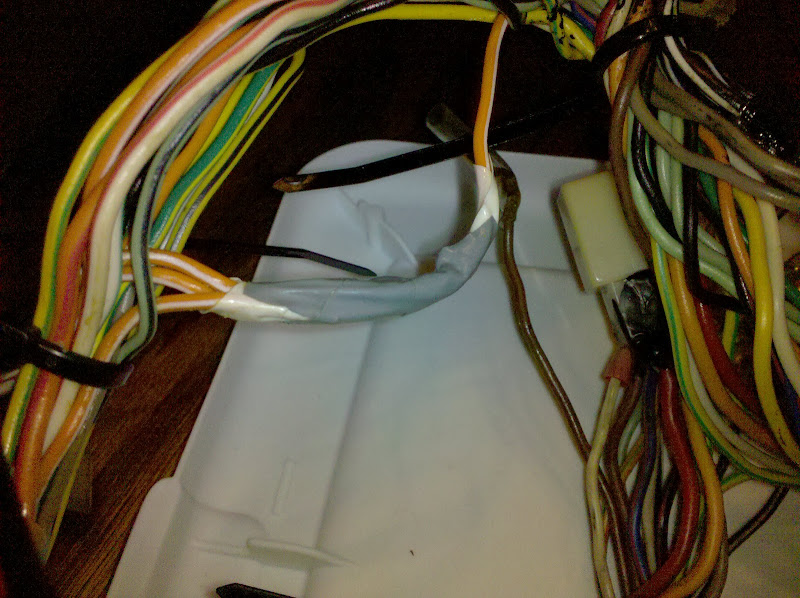
as illustrated elsewhere. I then worked from end to end inspecting and replacing every splice and crimp. Since you can't visually inspect a crimp, I just cut them out and replaced them. The soldered splices were more interesting:

2010-08-10%2022.38.00.jpg


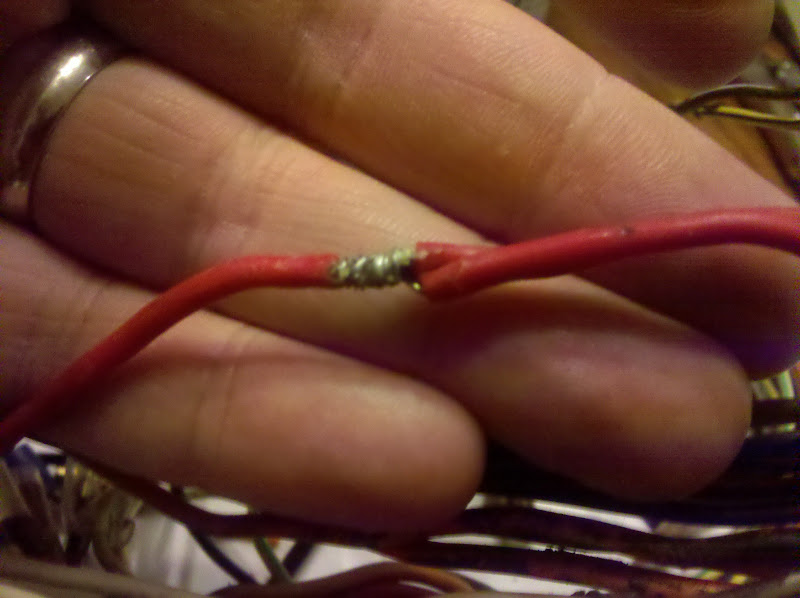
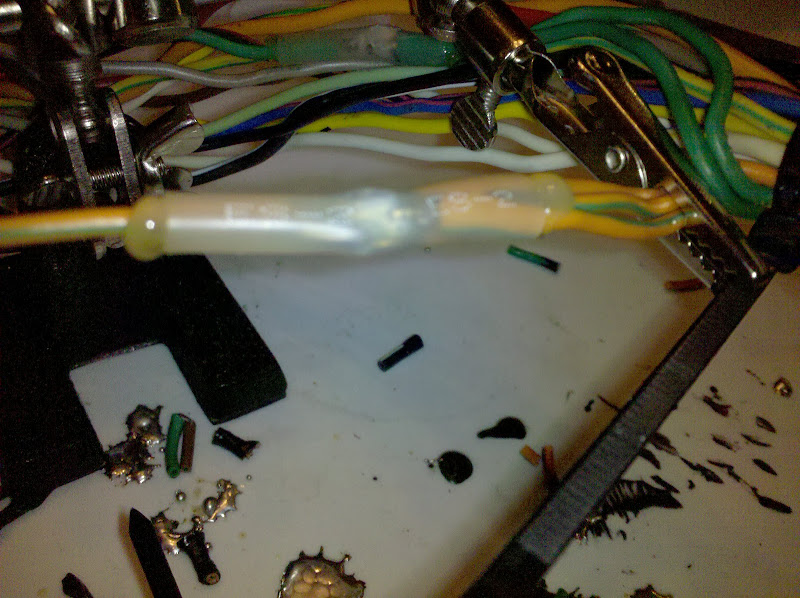
Every one of them had two layers of electrical tape, each layer a different color. The different color tapes seemed to have no difference other than color. All of the soldered splices looked to be quality work: neatly wrapped, clean and shiny solder. Except this one:

IMG_20100812_212524.jpg


Showing definite signs of corrosion, this is the infamous "somewhere in the harness" split from the regulator positive site to the battery and fuse panel. This is what Steve bypassed back in May to get it charging the first time.

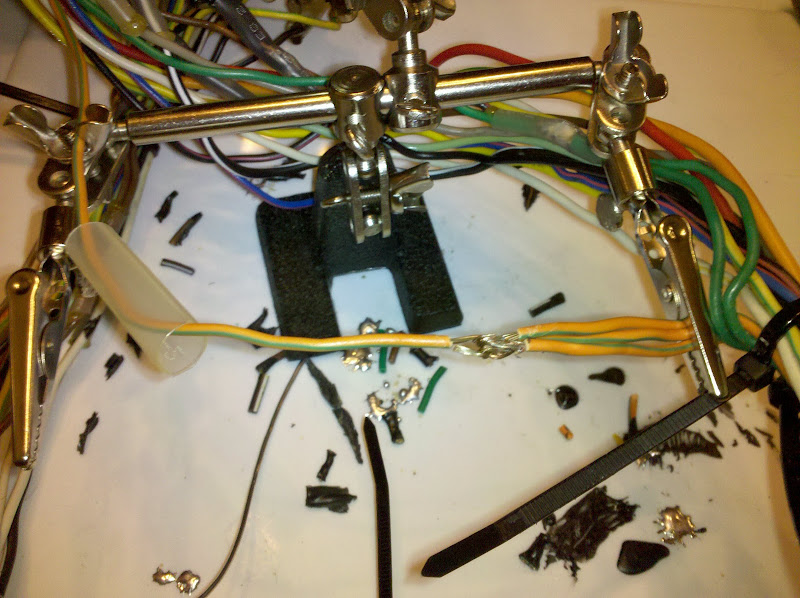
Somewhere in my researches, before starting work, I ran across a post by brwinger recommending double-walled heat-shrink tubing. This stuff is the bee's knees. $5 for 48" from McMaster Carr. The inner wall melts when headed, gluing and sealing the tube to the splice. Here's the process.

2010-08-10%2022.25.50.jpg


Tie the bare wire together to make the mechanical bond. Notice the chunk of tubing already on the wire. Solder the splice, then forget to take a picture.

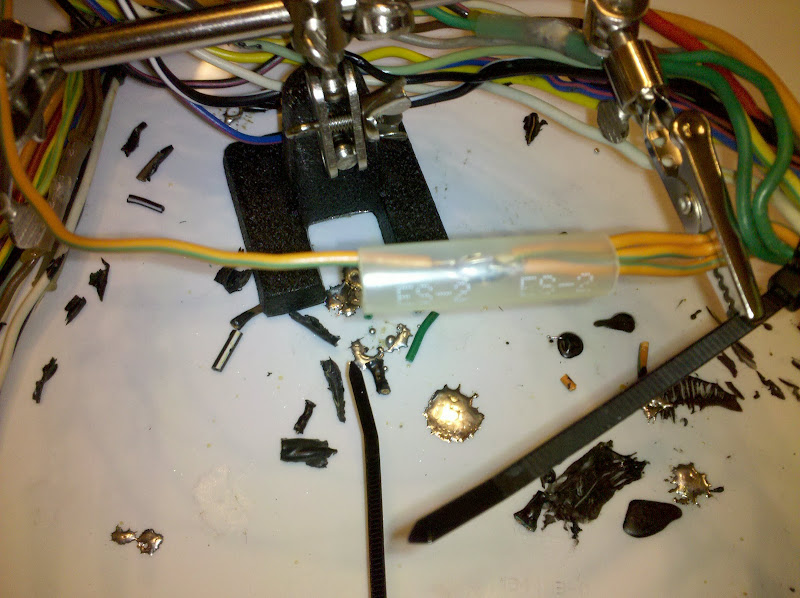
2010-08-10%2022.27.19.jpg


Here's the tubing ready to shrink. The low setting on Harbor Freight's $10 heat gun was great for this.

2010-08-10%2022.30.40.jpg


I should have used the real camera instead of the Droid, but here you can see the the melted inner layer of the tube squirting out the ends. This flow completely seals the splice. The transparent tubing allows you to visually inspect the splice at a later date. Very nice.

All the connectors were cleaned with Deoxit, and protected with dielectric grease. I got the dielectric grease in a can this time, which is much better than the little blister packs you can get. I expect the can will be a lifetime supply for me. I didn't find the Deoxit locally. I'm sure somebody has it, but I'm not driving half an hour to some electrician's supply store on te other side of town. McMaster has it, but not as Deoxit. Deoxit's web site explains with numbers to order from McMaster. 8381T11 is it.
 
The story of the new R/R

The story of the new R/R

As Duaneage has pointed out, the $40 Honda R/R is the most cost effective direct replacement for the GS unit. Unfortunately for me, I don't want a direct replacement. The shunt regulators all can cook a stator, and I'm not having that. So I bought the Cycle Electric 601. It's larger than the Compufire, but significantly cheaper with a bit more capacity (which the GS can't use anyway).

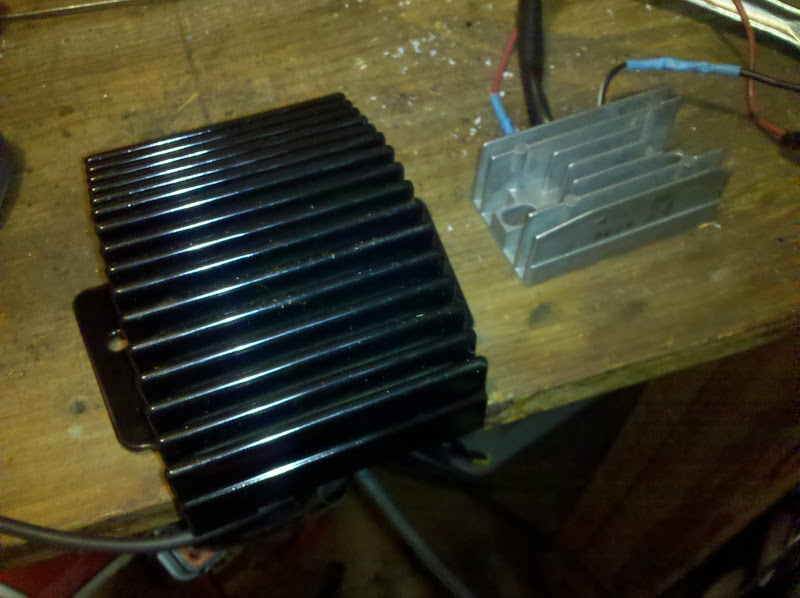
IMG_20100826_211702.jpg


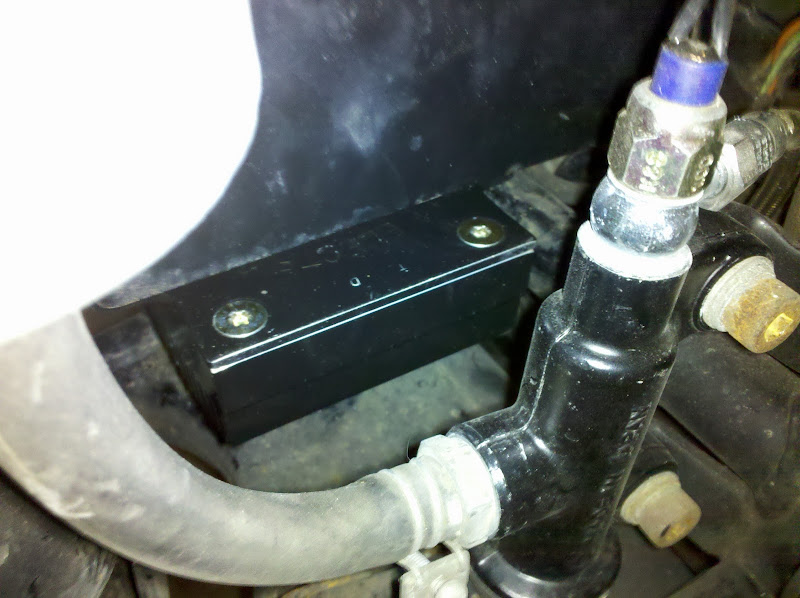
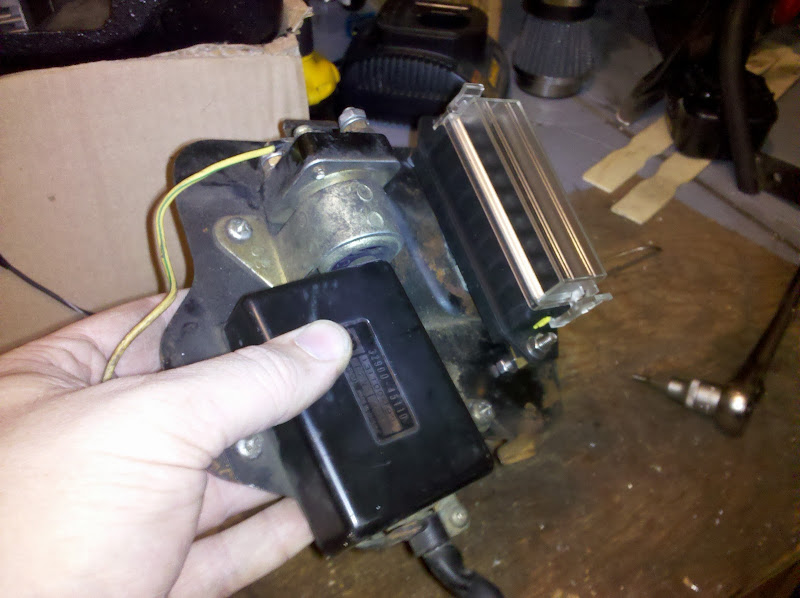
Quite a lot larger than the stock R/R. However, it does fit in the space under the battery box on the GS shafties. At least on the T and X models.

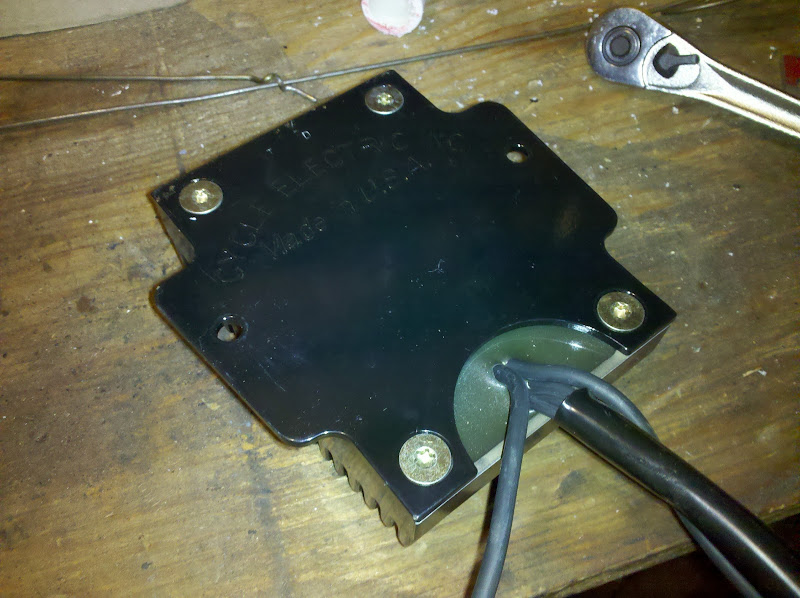
Here's the backside of the unit, and with the mounting plate removed:
IMG_20100826_211754.jpg


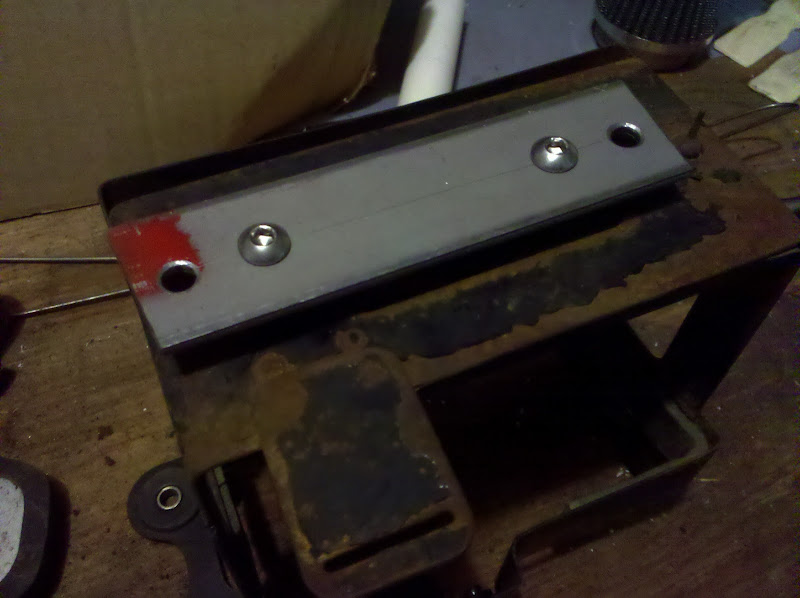
Initially, was concerned that the new regulator was too heavy to mount on the battery box. After some consideration, I decided to try a simple adapter plate, and I'm happy with the installation, in principle. The implementation, not so much. I've done better work. Here's the adapter plate, and the battery box in dire need of de-rusting and painting:

IMG_20100826_211330.jpg


The cycle electric mounting plate needs clearance for the screw heads holding the adapter plate.

IMG_20100826_213051.jpg


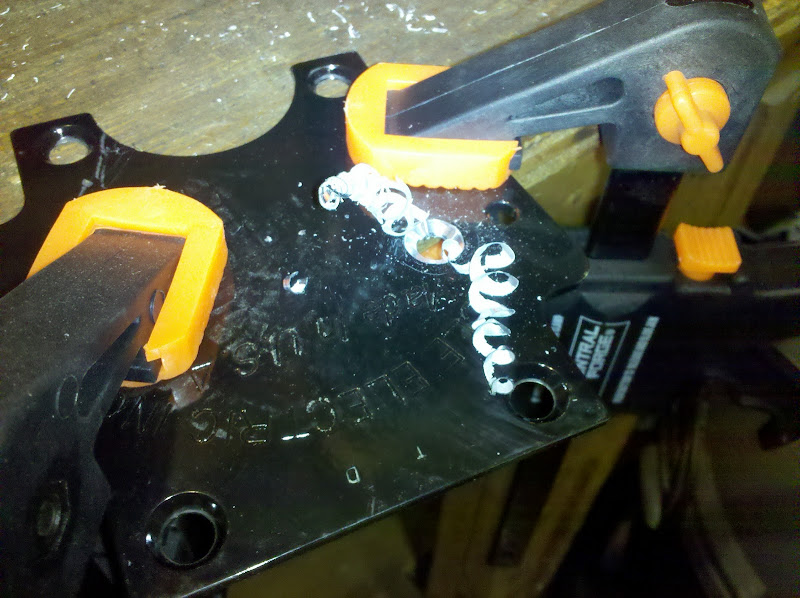
I had some nice curls going when the drill's battery died. The mounting plate drills easily. I might have been able to drill it in one step instead of three.

Here you can see my sloppy work transferring hole locations:

IMG_20100826_213752.jpg


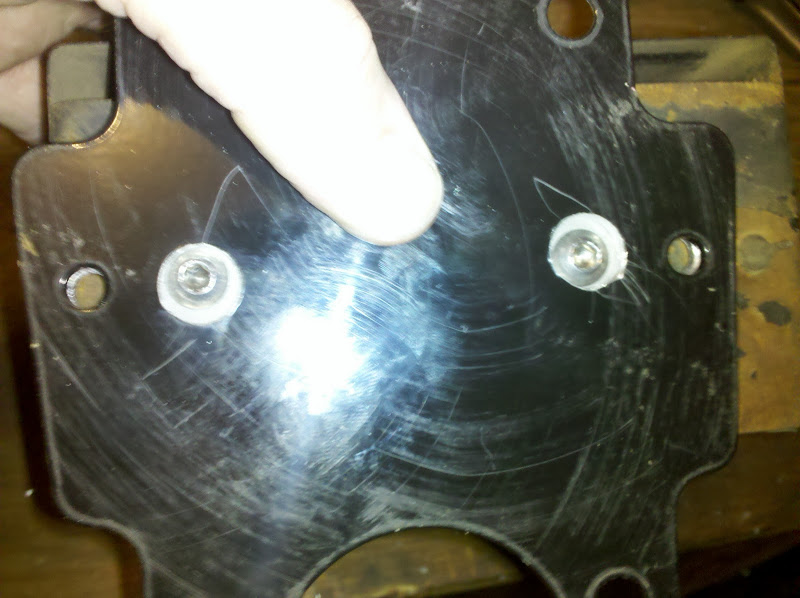
I think I may have transferred the holes to the wrong side of the adapter plate. Moot point. It fits. Notice the button head caps screws. These, or low head cap screws are necessary to make sure the screw heads clear the epoxy potting in the R/R. The adapter plate is 1/8" thick.

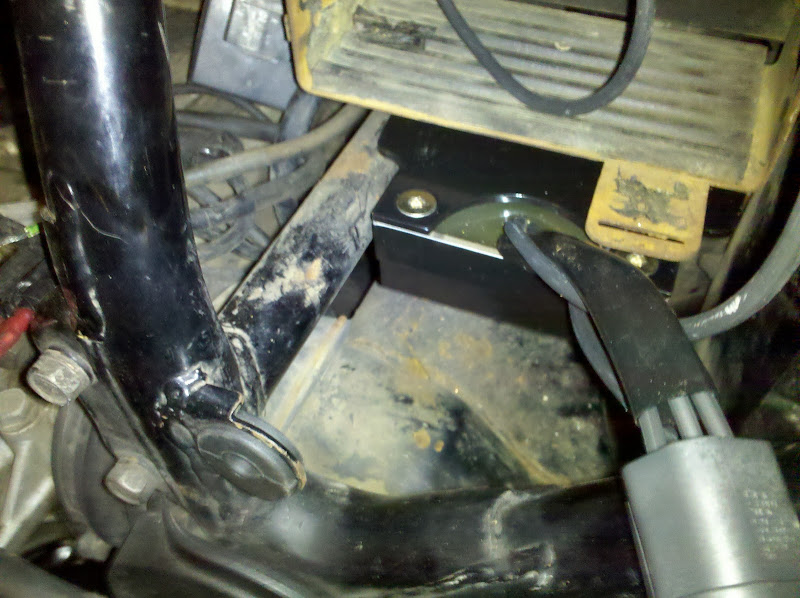
Here are some pics of the regulator and battery box installed:

IMG_20100826_214429.jpg


IMG_20100826_214454.jpg


IMG_20100826_214506.jpg


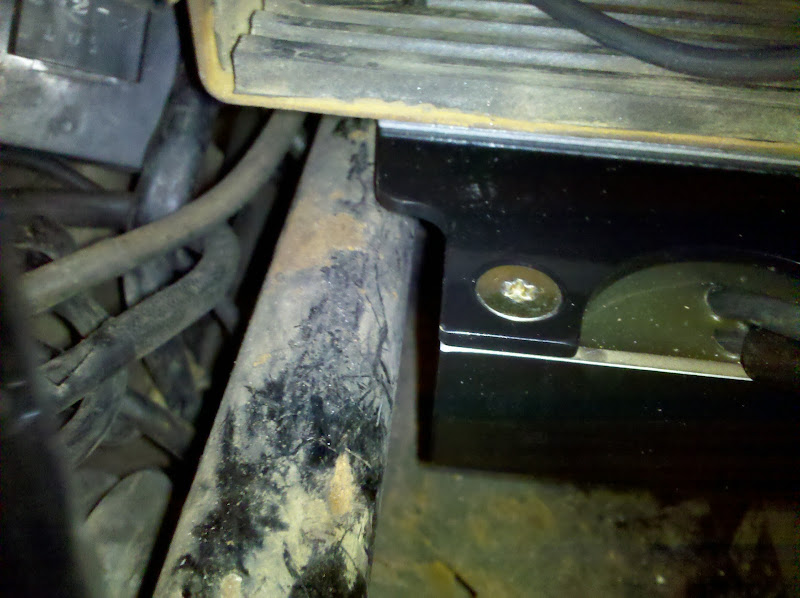
A pretty snug fit. I would like to have positioned it a little farther from that frame tube, but it's also against the inner fender to the rear. Button head cap screws are necessary here also, to keep it from rubbing the frame.

Not the prettiest installation, but not too awful, I suppose, for figuring out how to get it in there. Those who choose to follow this path can make it look good if they choose.

The frame is in dire need of a blast and paint too. The frame isn't as badly rusted as the battery box, but it doesn need painted. About the time I'm ready to paint the bodywork, I'll have to do a frame-off job. At which point I can tidy this up too.
 
The story of the new fuse panel

The story of the new fuse panel

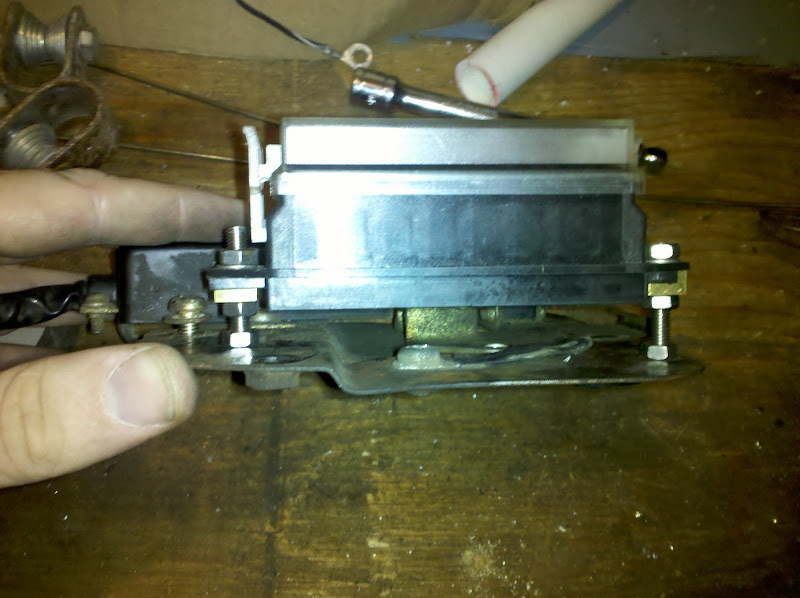
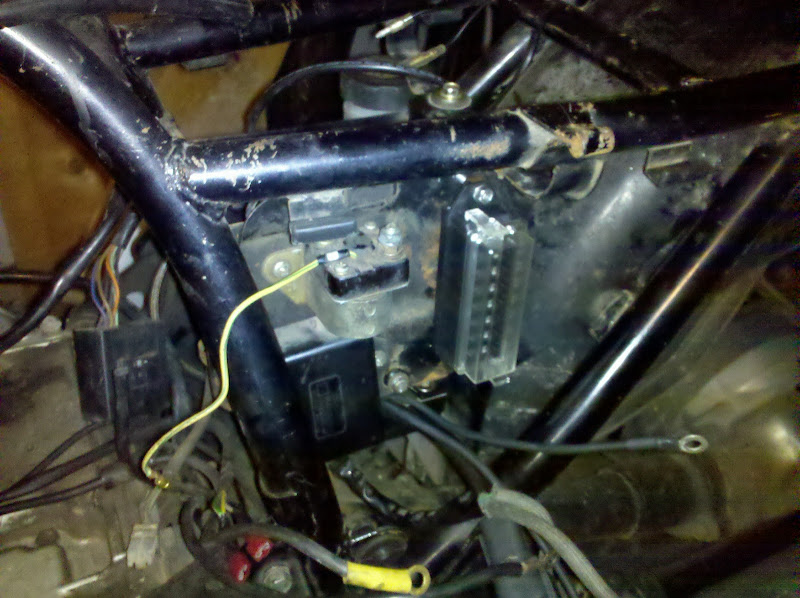
In the process of inspecting the whole electrical system, I was delighted to find that the main fuse's holder was, in fact, broken. This wasn't helping things. So, I installed a new fuse panel. New OEM parts are not cheap, and they use the old glass tube fuses. Instead, I bought a cheap 8 position panel for the more moderns and available ATC fuses. You can even install breakers in the ATC form factor. I guess that would be handy if you expect to push things near the limit. With 8 positions available, I was able to add a fuse between the R/R and the battery, as well as a switched auxiliary circuit to complement the usual unswitched auxiliary. With one position to spare. Never mind that I don't need any auxiliary circuits just now.

Here are some pics of the mounted fuse panel without much discussion or even good focus:

IMG_20100826_221114.jpg


IMG_20100826_221133.jpg


IMG_20100826_221439.jpg


The mechanical installation on this turned out pretty well. Just some stainless socket head cap screws with strategically placed nuts to elevate the panel and make room for the wiring.

I like the gasketed cover on this panel. With the wiring into the back sealed with epoxy, there should be little trouble with corrosion. The electrical installation did not go nearly as well as the mechanical. It is so ugly, I'm not even going to show it to you. The ideas just didn't pan out the way I wanted. I intend to do it over. It is quite functional though, so it's staying in place for now.
 
A followup on the Cycle Electric series regulator: It's too heavy for the stock mount.

IMG_20150313_205307.jpg


It only lasted something less than 4 years and 25000 miles. Wow, does the time fly. If the other weld had let go, it would have been resting on top of the swing arm, waiting to be eaten by the rear wheel.

I'll have to fab a new bracket that reaches up to the battery box mounts before continuing on to the SSPB install.
 
Last edited:
Back
Top