• Required reading for all forum users!!!

    Welcome!
    Register to access the full functionality of the GSResources forum. Until you register and activate your account you will not have full forum access, nor will you be able to post or reply to messages.

    A note to new registrants...
    All new forum registrations must be activated via email before you have full access to the forum.

    A Special Note about Email accounts!
    DO NOT SIGN UP USING hotmail, outlook, gmx, sbcglobal, att, bellsouth or email.com. They delete our forum signup emails.

    A note to old forum members...
    I receive numerous requests from people who can no longer log in because their accounts were deleted. As mentioned in the forum FAQ, user accounts are deleted if you haven't logged in for the past 6 months. If you can't log in, then create a new forum account. If you don't get an error message, then check your email account for an activation message. If you get a message stating that the email address is already in use, then your account still exists so follow the instructions in the forum FAQ for resetting your password.

    Have you forgotten your password or have a new email address? Then read the forum FAQ for details on how to reset it.

    Any email requests for "can't log in anymore" problems or "lost my password" problems will be deleted. Read the forum FAQ and follow the instructions there - that's what we have one for...

  • Returning Visitors

    If you are a returning visitor who never received your confirmation email, then odds are your email provider is blockinig emails from our server. The only thing that can be done to get around this is you will have to try creating another forum account using an email address from another domain.

    If you are a returning visitor to the forum and can't log in using your old forum name and password but used to be able to then chances are your account is deleted. Purges of the databases are done regularly. You will have to create a new forum account and you should be all set.

Rusty Tank

  • Thread starter Thread starter bob_coakes
  • Start date Start date
B

bob_coakes

Guest
I have two parts bikes that I've been using to build one complete bike. I have everything mechanical sound and running well. The tank I have on the bike now is smashed in a good inch or two and would take lots of bondo to fix. The other tank is is great shape on the outside except scratched paint. The inside is a different story because it looks like someone dumped a cherry slusshy in it. I've heard lots of stories of having a radiator shop boil the tank out or using gravel and parts washer to clean it out. Has anyone else had this problem and have a solution to fix it? Any advice would be great.
 
I've used POR-15 tank strip, derust, and coat kits, and I've used KBS kits.

Both are equal in my mind, but if your tank is very rusty than dont use just the "rust blast" that comes with the kit. It needs some help if the rust is extreme.
 
The problem with really rusty tanks is you will never get all the rust out and it is very likely there will be holes when you get most of the rust out. You will need a good tank coating and in my experience the kit from Caswell Plating is the best the epoxy (phenol novalac) is designed to bond to and encapsulate rust. I have tried most of the others including POR 15 but Caswell's is the only one I use now as it is the easiest to use. It is not so fussy about the tank prep which can be tedious and if not done really well may cause problems for the liner to attach.

Prep is easy and you can use plain old vinegar (add a half cup of salt to make it more potent) and a good handfull of drywall screws. Take off the petcock and fuel guage sender unit if fitted and plug the holes. Shake the heck out of the tank several times over a few hours and maybe let it sit overnight (optional). Pour everything out and fish out the screws with a magnet. Suck the pieces of rust out with a vacuum cleeaner attached to some 1/2" hose. No need to do anything more, mix up your epoxy as per instructions, pour in and swish around to coat. Leave it 24 hours to harden right up and you are good to go.

If , when you are doing this (and prior to lining the tank) you find pin holes or even something larger you will need to deal with them. Welding or brazeing is best but if you are not equipped for that you can plug holes with plumber's epoxy putty (any hardware store or auto store). It hardens to rock in about 15 minutes but can be worked and it is impervious to gas, much like the caswell epoxy. I have done 2 tanks with pin holes this way and lined with Caswell and 5 years later they are still fine.

I don't have any financial interest in this product :) but it does work better than anything else for me.
Good luck with the project.
spyug
 
IF the paint is good you can derust with extra strength white vinegar for a few days soaking.. Then dump the vinegar into a 5 gallon bucket because your gonna reuse some in the next step.

Get some aquarium rocks and add a good 1/2 gallon of the vinegar and shake the tank until your arms fall off, then keep going for a while. Dump everything out and shake the rocks out the petcock hole. Do this a few times untill no more rust chunks are comming out.

If the tank has a sending unit leave that in with the initial soaking and the vinegar will clean the contacts for that as well. AND you can use a shop vac for sucking out any little grit that wont come out the petcock hole.

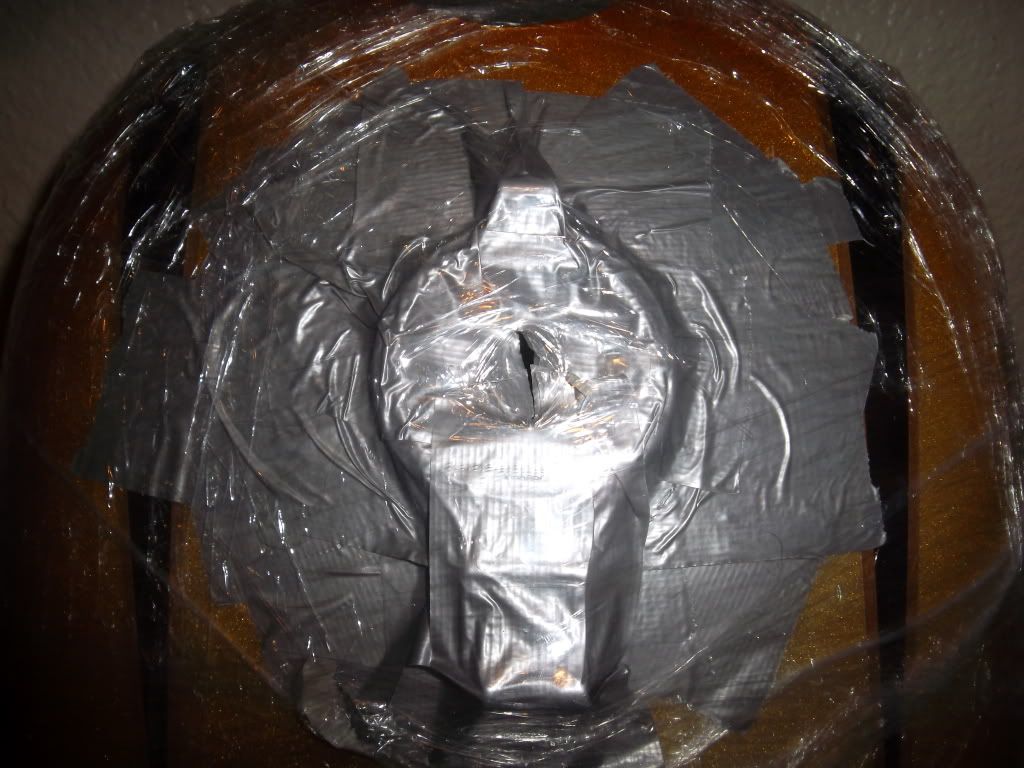
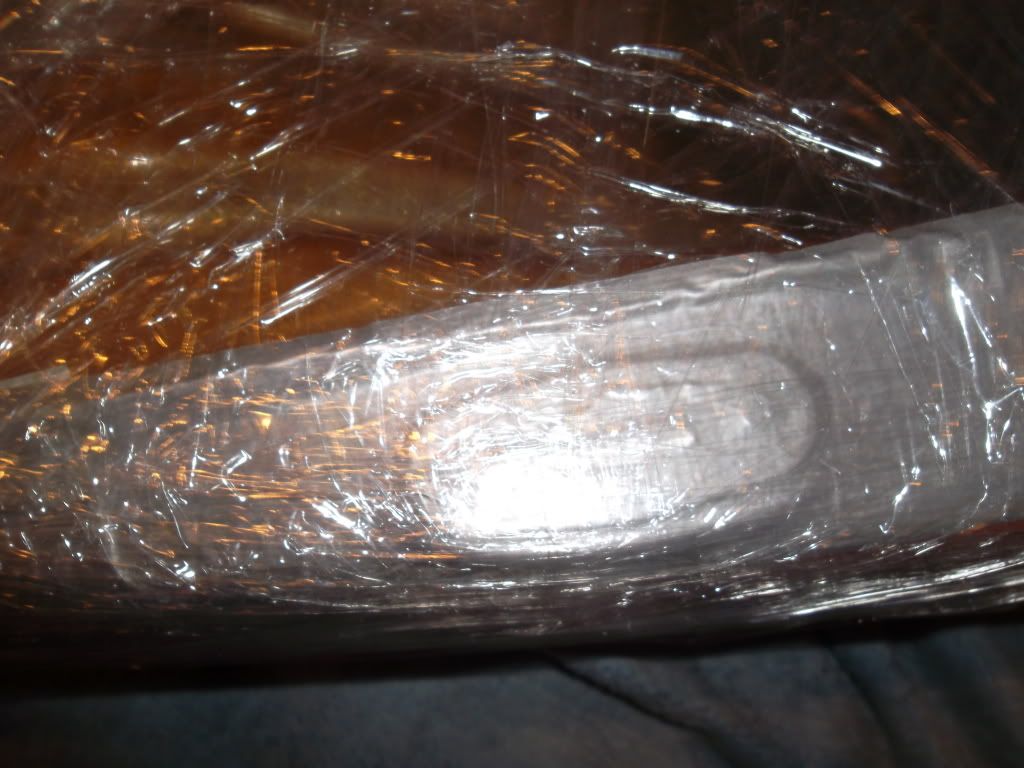
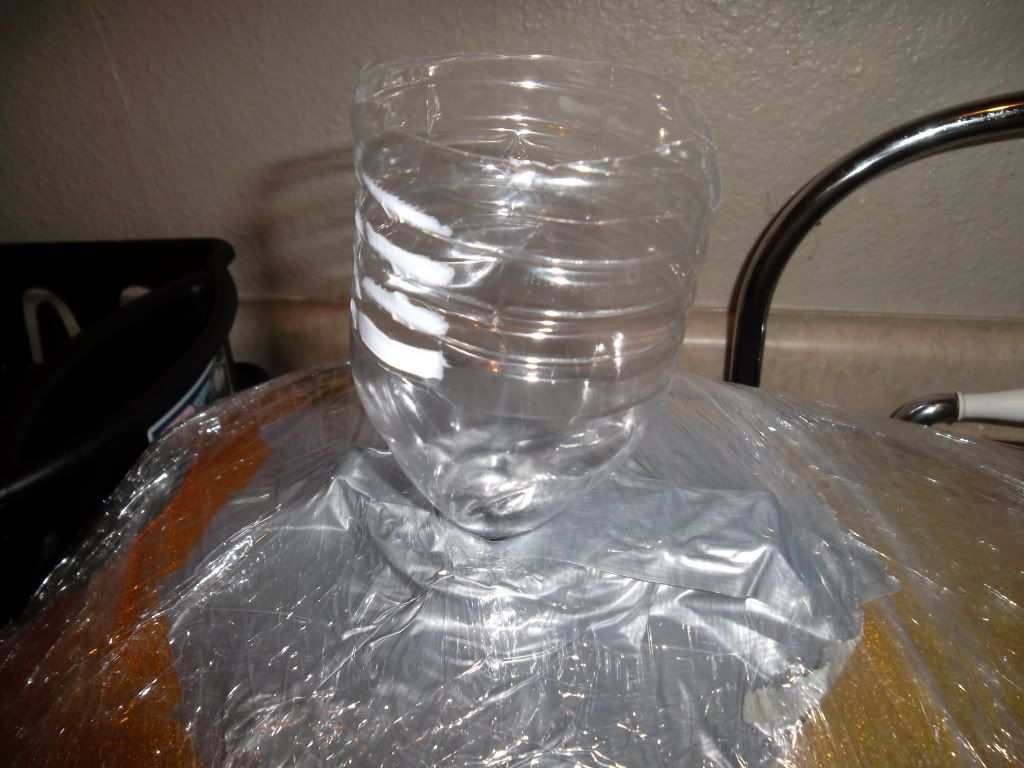
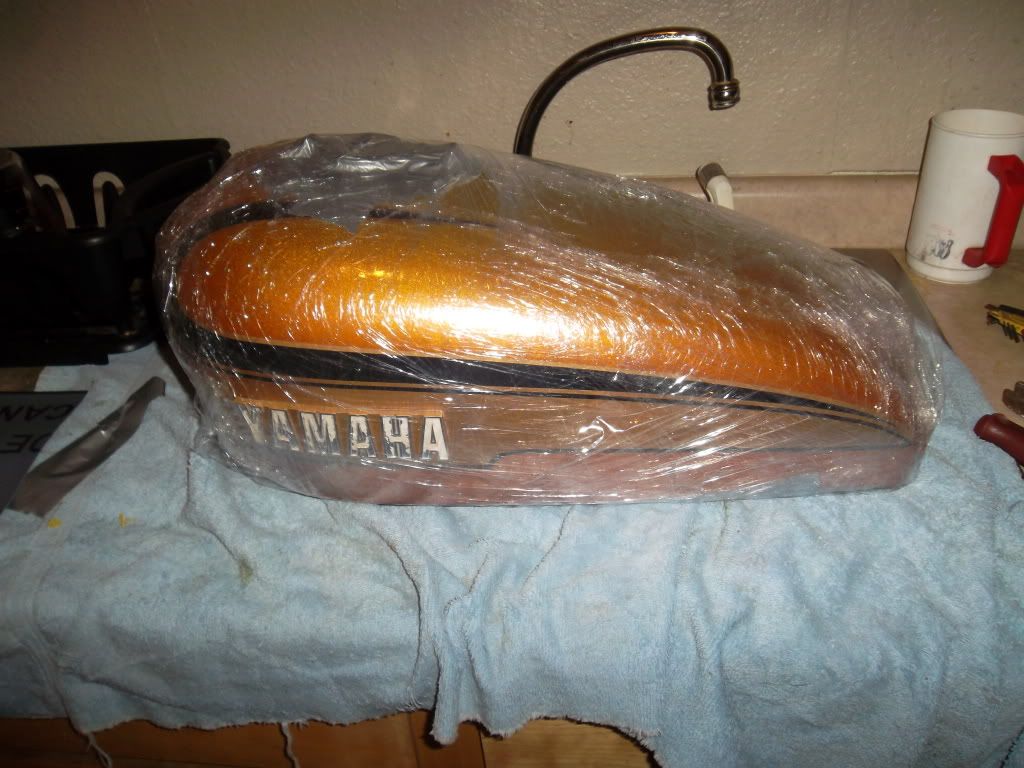
I Just did the tank on my 73 Yamaha TX 750 that had sat for 24+ years and wrapped the tank with lots of plastic wrap to do the sealer process..I will attatch pics of it ready for the Caswell kit.


001-10.jpg

002-11.jpg

003-10.jpg

006-8.jpg
 
Last edited:
Oh what fun. I got a little excited when I saw this thread. I've done 6 tanks now, so I thought I would add my 2c.

First off, I typically start with just trying to get the loose surface rust off with water, before I spend any money on acids. couple pounds of 3/8 gravel instead of screws do a better job, and a good wire brush on a long handle is nice to have too. remove the cap/petcock but don't cover the holes. Just keep changing the water and you can get most of the rust off this way and it is a lot faster than waiting for vinegar to do it for you.

Instead of vinegar I use muriatic acid. It is strong stuff so read the warnings and be careful, but it is MUCH faster. It has yet to harm any paint of mine, but it has destroyed one pair of jeans and a pair of boxers. I cut it by half with water for more gravel based scrubbing. you can actually hear the stuff working...and smell it so, well ventilated area and all that, please.

I keep going till there is no more rust. If you are not going to line the tank right away, put some engine oil in it and coat the inside well. you can get it all off with soap and water before you put in your liner.

Remember to dry your clean tank with a hair drier or better a heat gun. Never let a wet tank sit on its own.
 
There are dozens of tank repair threads in the archives. There are also dozens of different methods you can use.

Common derusting methods include:
- phosphoric acid (metal prep)
- vinegar
- EvapoRust
- electrolysis
- muratic (HCl) acid

Common tank sealing materials include:
- Caswell Plating epoxy
- POR-15 tank sealer
- Redkote
- KB
- Kreem (this one seems to have the worst reputation)

What ever material/method you choose, I strongly advise that you fully derust the tank before sealing.

My personal preferred method is to use metal prep and POR-15 sealer. If the metal is thin (holes), then Caswell's epoxy is what I use because it's thick and will reinforce the metal.

Good luck and don't forget to check the the archives for a wealth of information.
 
Get some aquarium rocks and add a good 1/2 gallon of the vinegar and shake the tank until your arms fall off, then keep going for a while. Dump everything out and shake the rocks out the petcock hole. Do this a few times untill no more rust chunks are comming out.

To remedy the arms coming off scenario, how about a large pillowy blanket covering the tank and putting it into a concrete mixer and let it spin for a while.
 
couple pounds of 3/8 gravel instead of screws do a better job.


I prefer to use a long length of light chain with one end secured to the filler hole.

Much easier to fish out when your done ;)
 
Thanks everyone for all the advice. I've been reading a lot of the reviews for POR-15 and the Caswell products and have a few questions. Looking at my tank I havent noticed any pin-holes but should I sand the paint off before sealing the inside? I'm going to bondo and repaint the tank anyways, but should I find out if there are pin-holes first and if there are, would that change what kit I should get?
 
Thanks everyone for all the advice. I've been reading a lot of the reviews for POR-15 and the Caswell products and have a few questions. Looking at my tank I havent noticed any pin-holes but should I sand the paint off before sealing the inside? I'm going to bondo and repaint the tank anyways, but should I find out if there are pin-holes first and if there are, would that change what kit I should get?


you'll find out quick enough once you derust.
 
To remedy the arms coming off scenario, how about a large pillowy blanket covering the tank and putting it into a concrete mixer and let it spin for a while.

Clothes dryer on no heat?
 
If you have access to industrial equipment this is a different game entirely.

I haven't done a tank the ol'fashion way in a while, thanks to a little invention called a sand blaster. Not that you should actually use sand, but a small one with crushed walnut shells does a wonderful job.
 
If you have access to industrial equipment this is a different game entirely.

I haven't done a tank the ol'fashion way in a while, thanks to a little invention called a sand blaster. Not that you should actually use sand, but a small one with crushed walnut shells does a wonderful job.


You will have to cut off the bottom of the tank in order to sandblast the inside completely. There is a guy on the internet that does just that when restoring tanks, but it's not an easy do it yourself type job unless you have a TIG welder and know how to use it.

Thanks everyone for all the advice. I've been reading a lot of the reviews for POR-15 and the Caswell products and have a few questions. Looking at my tank I havent noticed any pin-holes but should I sand the paint off before sealing the inside? I'm going to bondo and repaint the tank anyways, but should I find out if there are pin-holes first and if there are, would that change what kit I should get?


As mentioned earlier in this thread, Caswell's epoxy is thick and will reinforce the metal if there are holes.
 
Back
Top