• Required reading for all forum users!!!

    Welcome!
    Register to access the full functionality of the GSResources forum. Until you register and activate your account you will not have full forum access, nor will you be able to post or reply to messages.

    A note to new registrants...
    All new forum registrations must be activated via email before you have full access to the forum.

    A Special Note about Email accounts!
    DO NOT SIGN UP USING hotmail, outlook, gmx, sbcglobal, att, bellsouth or email.com. They delete our forum signup emails.

    A note to old forum members...
    I receive numerous requests from people who can no longer log in because their accounts were deleted. As mentioned in the forum FAQ, user accounts are deleted if you haven't logged in for the past 6 months. If you can't log in, then create a new forum account. If you don't get an error message, then check your email account for an activation message. If you get a message stating that the email address is already in use, then your account still exists so follow the instructions in the forum FAQ for resetting your password.

    Have you forgotten your password or have a new email address? Then read the forum FAQ for details on how to reset it.

    Any email requests for "can't log in anymore" problems or "lost my password" problems will be deleted. Read the forum FAQ and follow the instructions there - that's what we have one for...

  • Returning Visitors

    If you are a returning visitor who never received your confirmation email, then odds are your email provider is blockinig emails from our server. The only thing that can be done to get around this is you will have to try creating another forum account using an email address from another domain.

    If you are a returning visitor to the forum and can't log in using your old forum name and password but used to be able to then chances are your account is deleted. Purges of the databases are done regularly. You will have to create a new forum account and you should be all set.

Anti-dive haters?

  • Thread starter Thread starter Big Nick
  • Start date Start date
B

Big Nick

Guest
:confused: Okay, I'll bite. Why are you guys taking off/bypassing/blocking the front fork anti-dive assemblies on your GS1100/1150's???? I'm talking for street riding, not racing. Stock front end, no progressive springs. Did the engineers miss something that hurt the bike rather then help it? What's the scoop???
 
They work good. A lot of people don`t like the way it makes the bike handle. Quite a few people valves don`t work due to lack of maintenance so the block them off. They have always worked good for me.
 
Stock anti-dive sucked. It created spongy front brake feel and the front end still dove about 90% as much as it would without anti-dive.
 
I disagree respectfully Kris. The antidive blows. But not for the crappy lever feel. For me it's simply because it's not consistant. One time it works great. The next it loads unevenly. The next not at all. I would rather deal with fork dive ( which is remedied greatly by good stiff forksprings) and KNOW how the bike is going to react every time rather than have to guess what's going to happen should something get hairy. Valve emulators also do an excellant job of helping with dive.
 
I disagree respectfully Kris. The antidive blows. But not for the crappy lever feel. For me it's simply because it's not consistant. One time it works great. The next it loads unevenly. The next not at all. I would rather deal with fork dive ( which is remedied greatly by good stiff forksprings) and KNOW how the bike is going to react every time rather than have to guess what's going to happen should something get hairy. Valve emulators also do an excellant job of helping with dive.

It always seemed lame to me. Who cares if it dives?
Bikes do that...
I have several bikes that dive however much, some with sagged springs, some with good tight ones, and a BMW which does not sink at all when the brakes are on. I don't know how it works but when you pull the lever the front suspension is done moving.
And when stopping hard I can't even tell the difference unless I make it a point to think about the diving... You get used to what you are riding and ride accordingly.
The BMW sure does stop quick though..
 
When I rebuilt my forks on the 700, I completely disassembled the anti dives and replaced the o-rings inside the modular plunger and it seems to have rendered some of the issues we all experience. I also replaced the stock springs with a set of Progressives and 1" spacers which I highly recommend. A fresh set of springs and a small amount of air pressure IMO will provide more stability and almost eliminate the function of the anti-dive mechanism. This allows for a stock look and you won't have to fab anything.

my .02
 
Last edited:
Well, Nick, there you have it. Six responses, basically six different answers. Pretty much what I expected. :-\\\

The way the GS anti-dive works is by using brake line pressure to move a mechanism that changes the damping ability of the forks. The "spongy feeling" that some are experiencing is that extra lever movement that it takes to move the mechanism before there is enough pressure in the lines to actually squeeze the calipers for braking effort. This is complicated by the fact that there is another chamber that needs to be bled of air when changing the brake fluid. Another place for air to hide simply means another chance for "spongy" brakes.

TCK mentioned inconsistent results. That could be the result of the mechanism not being clean enough to move freely. I don't know exactly how they move, I have never had them apart, but it makes sense to me.

I have never ridden a GS with anti-dive long enough to really notice the difference. The bikes that I have ridden that were not mine, were so different in handling, I didn't know if it was steering geometry, brand of brake pads, tires (and pressures), seating position or what. It was just so different, I figured "that's the way this bike rides".

The only bike I have ridden consistently with that has anti-dive is my Wing. It activates a little differently. The caliper mount has a pivot on one end. The end that is free to move has a small piston to change the damping. When the brakes are applied, the caliper moves (pivots) about 1/4", pushing the piston. Based on the rotation speed of the wheel, there is virtually NO delay in braking action, so I don't really notice anything.

.
 
As Steve states, the damping circuit in the forks is different; when the anti-dive is activated the compression damping increases although it's not a dramatic change.

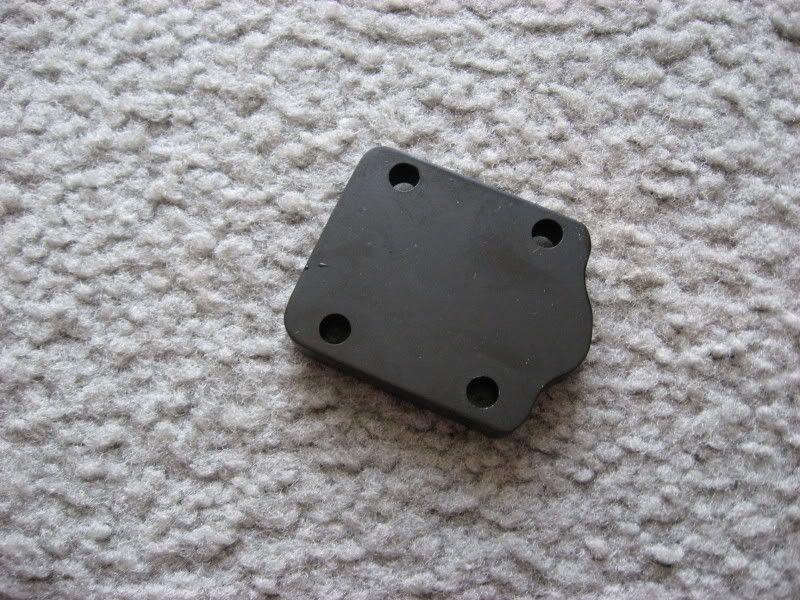
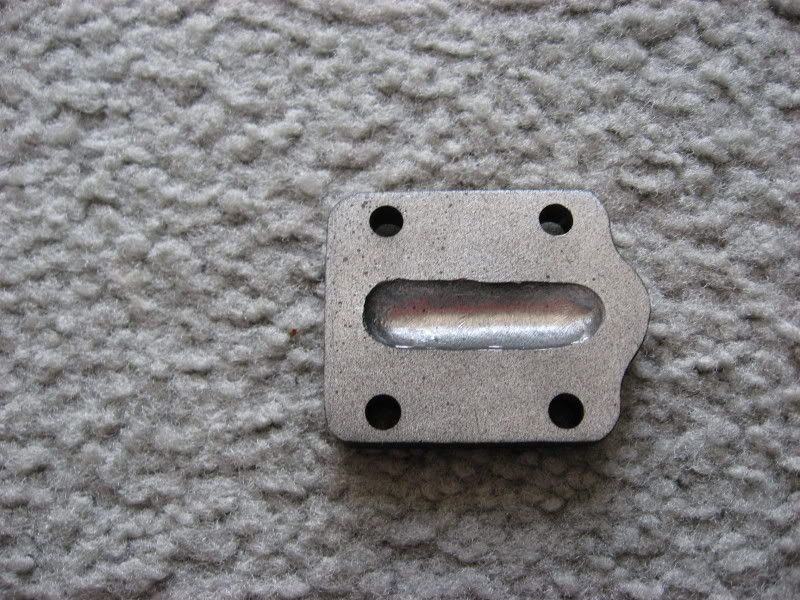
Some people remove the anti-dive mechanism from their forks and replace them with a block off plate. What people don't realize is that with a flat plate installed over the oil holes, the forks behave like the anit-dive is activated all the time. What you really should do is groove the block off plate so oil can flow between the two holes. Case in point of how useless the anti-dive is, is when people report improvements in their forks when flat block off plates are installed; many people can't even tell the difference in the fork action despite the fact that the compression damping has increased. What I noticed by using flat block off plates is poor compliance in the fork - more of a ride quality thing than anything else. Grooving the plate returned the fork damping to normal.

anti-dive001.jpg


anti-dive002.jpg
 
Last edited:
i disabled mine, using gsx1100 katana forks on my gs 1000. kept the origonal anti dive units for the "look" but blocked them off. better feel from the forks and the brake.

100_0847.jpg
 
Mine seem to work fine. I have the basic fixes (ss lines, progressive springs, fresh 10w, new seals). The harder I grab the brakes the stiffer the forks get. If I ever get the chance to ride a bike with good brakes and suspension Ill find out how crappy the EZs system is.............
 
Technical definition....The brake line of the front brakes master cylinder leading to the caliper is connected by a hose to the antidive device. When the master cylinder's hydraulic line functions to brake the front wheel, it simultaneously operates the anti-dive device's plunger, which regulates and limits the flow of oil in the front fork. This reduces the compression of the front fork, which also reduces the extension of the rear shock absorber. Hence, the device serves to counteract the change in the motorcycle's attitude during braking." (from the Suzuki GSX 750/1000/1100 Supplementary Service Manual, Sept. 1981, p.6)
 
Here are the anti dives on my ED. Forks are 87/88 GSXR 1100 RSU forks (41mm), with modified fender mounts to accept stock ED fender. Wheel is 88 GSXR 1100 3 spoke, with 1st Gen GSXR brakes.

Forks have Race tech cartridge emulators ($175) which requires disabling all of the OEM internal damping so there is no need to provide the alternate flow as Ed describes. The anti dives off the 83 GS1100ED fit right on the GSXR forks. I added a think brass block off plate underneath the anti dive unit after taking all of it's internal out.

You will notice that I did add the brake line to complete the appearance. However the double banjo at the brake caliper has the line to the anti dive soldered shut.

I use a dremel to open up the pin hole in the banjo so that the solder blob is forced into a tapered hole. I did this the first time using JB weld, but the solder is more reassuring as the brake fluid is unlikely to attack it.

After spending about 40 hours to get those fender mount completed(hand made mounts, jib,brasing with HTS2000), the minor expense of the antidive plumbing to complete the effect was minor.
 
Last edited:
I am guessing there is a reason Suzuki didn't use them for long on the bikes.

Personally, never liked the feeling or performance of them.

I think it was an engineering gamble that did't pay off. Much like, I am guessing again, the short stint of attaching the brake arm to the frame instead of the swingarm. Then armless caliper and back again to the torque arm attached to the swingarm again.
 
On my XS 650 project I used Racetech cartridge emulators and I was very impressed. Absolutely no dive on braking. It does make a difference from non regulated forks I think.

Now on my 750 I think the antidives are working properly as the bike does not squat or dive on braking. Even hard emergency braking and she stops with minimal fuss.

On the Kat project I notice the antidives have been blocked so I'm thinking the racetechs might be in order. I'll get her going first and see how she runs before I put the dollars in, however.

Given the option, I'd go for non diving on stops everytime.

Cheers all,
Spyug
 
FYI, back in the day ('82-'83) pretty much all of the bike magazines panned the whole anti-dive thing on brand new bikes due to spongy brake feel and produced a bunch of write-ups as to disabling these systems, so cleaning up the lines and calipers won't help much.
 
Alrighty then.

Alrighty then.

Wow, great info and feed back. My thanks to all that weighed in on this subject. It would appear that a combination of grooving the block off plate (to allow fluid flow), good set of progressive springs, new seals/oil, and brake pads will put the front end about right for regular street riding. I've only put 160 miles on the bike since I got it, but all that work will have to wait till spring since shop is closed up for the winter months. I suppose my pettite figure (305lbs) is contributing to a little more weight transfer then the bike would like anyway. Thanks again to all for your input. Side note; I'm building another GS out of my collection for an assault on the Bonneville Salt Flats in 2012. Will keep you guys posted on the build progress. Planning on the build to happen 2010, testing and working the bugs out 2011 season, then hit the salt for the BUB bike trials in 2012. After that just run at local 1/4 & 1/8 mile tracks, and once a year go to the Maxton Mile. Thanks again for the forum and the feedback.
 
Stock anti-dive sucked. It created spongy front brake feel and the front end still dove about 90% as much as it would without anti-dive.

Actually, it dives 100% as much as without, just at a slower rate. All the anti-dive does is jack up the compression damping when activated. All the extra damping does is slow down the rate at which the dive occurs, if you brake hard for any length of time, you get all the dive you would without any anti-dive.

The extra compression makes the front end harsh and less able to absorb bumps under braking, right when you would like the tires to stay firmly in contact with the road.

As for the Suzuki engineers, they were caught up in the fad and probably hostage to the marketing department demanding anti-dive because everybody else had it. If it had value, current bikes would still use it and they do not. Far better is to use proper spring rates and oil weight along with Race Tech cartridge emulators. This will get the old tech GS forks as good as they can get and provide ride, handling and control that is worlds ahead of the original set up.

Mark
 
wow great thread, learn alot. i was thinking of trying to rebuild mine as i think they are allowing brake fluid to enter my forks. now i may just block them out,add the progressive spring and the cartridge emulators. at least till i give her the 1st gen gixxer upgrade :p
 
Love the spikes! :D

Badass. Very badass.


i disabled mine, using gsx1100 katana forks on my gs 1000. kept the origonal anti dive units for the "look" but blocked them off. better feel from the forks and the brake.

100_0847.jpg
 
Back
Top