• Required reading for all forum users!!!

    Welcome!
    Register to access the full functionality of the GSResources forum. Until you register and activate your account you will not have full forum access, nor will you be able to post or reply to messages.

    A note to new registrants...
    All new forum registrations must be activated via email before you have full access to the forum.

    A Special Note about Email accounts!
    DO NOT SIGN UP USING hotmail, outlook, gmx, sbcglobal, att, bellsouth or email.com. They delete our forum signup emails.

    A note to old forum members...
    I receive numerous requests from people who can no longer log in because their accounts were deleted. As mentioned in the forum FAQ, user accounts are deleted if you haven't logged in for the past 6 months. If you can't log in, then create a new forum account. If you don't get an error message, then check your email account for an activation message. If you get a message stating that the email address is already in use, then your account still exists so follow the instructions in the forum FAQ for resetting your password.

    Have you forgotten your password or have a new email address? Then read the forum FAQ for details on how to reset it.

    Any email requests for "can't log in anymore" problems or "lost my password" problems will be deleted. Read the forum FAQ and follow the instructions there - that's what we have one for...

  • Returning Visitors

    If you are a returning visitor who never received your confirmation email, then odds are your email provider is blockinig emails from our server. The only thing that can be done to get around this is you will have to try creating another forum account using an email address from another domain.

    If you are a returning visitor to the forum and can't log in using your old forum name and password but used to be able to then chances are your account is deleted. Purges of the databases are done regularly. You will have to create a new forum account and you should be all set.

Arc Welder Question(?)

  • Thread starter Thread starter BurntKittyForge
  • Start date Start date
B

BurntKittyForge

Guest
Hello all,
Just seeking advice , suggestions about mostly a particular or similar Arc welder.
General tips as well.

Been thinking I should tighten up the 2" custom exhaust portion on my MC again.
Just get it 100% for once.

Been Looking at MC clamps (used some ugly car clamps previously, currently none).
Thing is I need 3 or 4. They're around $12 each , besides being a lot of seams.

For past couple weekends I've noticed This arc welder at sidewalk sale for even less:
http://www.harborfreight.com/70-amp-ac-120-volt-stick-welder-60768.html
Don't know whether it's even usable for exhaust pipe and thin metal like shop carts, etc..

My thoughts:
- I prefer the 110v over using two plugs for now.

-I prefer the arc welder over the cheap wire feed (MIG) because I'm thinking less parts to break.(?)

-Don't mind messy welds as long as they're sturdy because I can clean them up with grinder or Dremel.

-It's mainly for just this one exhaust (?) ,Perhaps another in future. I have some other thin mild steel uses in mind. (TV stand made from angle-iron, sheet metal body work patching, thin shop cart stuff maybe.

Don't have much space and can't justify much extra $ for now.
But I Don't even know whether it's usable for 2" exhaust pipes. (excuse for getting one)
It's around $35 more than the clamps.
Course I'd need a mask or dark goggles too, so a little more cost.

Not entirely exhaust related hence "Tips" sect. But I noticed a Pipe stretcher tool there too.
Looks like IF I use that on end of a 2" pipe, I could eliminate one seam and one coupling. (?)

Thankyou very much in advance for advice, suggestions, feedback ...:cool:
 
That welder is probably OK if you were welding up a frame for a gate, but pretty much useless for welding an exhaust pipe.

I don't really know what you are wanting to do, but you could probably take your pipe to an exhaust shop and have it welded up for less than what it would cost to buy that welder. Just saying....
 
I tried the same welder last fall for a project. It's too hot for thin exhaust pipe or bike frames, because the rods too long to manage the fine welding required.
I bought a wire feed MIG welder, and it's much easier to work, more precises.
The ideal welding process for exhaust pipe seams would be Brazing, but that requires an oxyacetylene outfit.
 
Thankyou very much in advance for advice, suggestions, feedback ...:cool:

You can't (successfully) weld thin material with a stick welder, you will need a MIG or TIG machine. MIG is by far the easiest to learn for someone who has no training and there are lots of cheap 110V MIG machines available. Be aware that the cheap machines have low duty cycles, usually 20% or so. That means the machine can only weld 20% of the time without heating up and having your setting go whacky on you. 2 minutes out of 10 welding is extremely limiting for anything beyond small hobby stuff, tacking and small repairs. They are also not capable of welding much beyond 1/4" material (maybe less, depending), they just don't have the amps available to do heavier stuff. That is also quite limiting even if you don't think you have any heavier things to weld at this point. I promise you that you will find some along the way.

If you really want to learn to weld passably well (ie - well enough to actually make things that work and don't fall apart), my advice would be to see if you can find a local night school class on welding and take that. It will explain the various processes, give you experience with them and show you how to do sound welds. If you just need a couple things welded go find a welder and pay him to do it for you.


Mark
 
Hey, Awesome to get replies back from my favorite members!

(Brain fried from work a little ,but) .
I might go ahead and order the MC exhaust clamps.
It's gotten confusing/ overcomplicated,
because of some modifications I've been thinking about.
Once welded up I won't be able to change as much...

The HF discounts seem to always have a clause including welding equip.
But I've seen "Open box" or sidewalk sale stuff for much less occasionally.
Just watched a vid of the cheapest wire-feed, sort of cool it doesn't need gas with the wire type it uses...Looks very interesting for tinkering with. (Going to watch for it on sale)...

I worked in a welding factory in past, but my job was pre-welding machining on the parts and setting up jigs.
The shop closed down before I had chance to learn (off-clock) .
There's no longer a course at the community college when I checked in recent past.

The guy I bought my muffler from was telling me he knew a shop that did his exhaust , but he paid some (can't remember exactly) rediculous high amt. to have his bike's exhaust routed under the tail section and welded.
It involved pipe-bending and all too though...I was thinking "Dang, for that much I'd have just run flex pipe (it was all underneath stuff) " Expensive anyway.

I have a good basic book on this sort of welding called "Performance Welding" , Just noticed on Amazon there's "second edition". The author wrote it because the welding info was either dated or for large (huge) stuff...It was already dated and now there's 2nd edition looks like. well HERE (I Have no affiliation w/ seller)..

I always get off/on topic but been wondering about a project like THIS example But don't know whether THIS HF regulator is any good for it because rather than "PSI" output, the output gauge reads in Cubic feet per minute, or such...A lot of the similarly priced reg.s on ebay are for beer kegs so only go beer keg pressure (below 50 psi even)...(???) I considered a paintball reg but they're $100+ although much more compact.
Thanks again!
(I was about to "pull the trigger" on that one and wouldn't have done me any good):cool:
 
Just watched a vid of the cheapest wire-feed, sort of cool it doesn't need gas with the wire type it uses...Looks very interesting for tinkering with. (Going to watch for it on sale)...

That is flux-core welding instead of MIG. FC is a good process, penetrates better than MIG at these small machine power settings and works just as well for most thin wall stuff. It also leaves rougher looking welds and lots of spatter to clean up. That isn't the end of the world, but can be an issue if cosmetics matter. FWIW, you can also use shield gas with flux-core and this is often down in heavy commercial welding. You need to match your wire and your shield gas, the same as you do with MIG, but it can improve the performance depending on what you are doing.


There's no longer a course at the community college when I checked in recent past.

Damn, that is too bad. Is there a local high school level night course system? I took a welding course from that level years ago and it was a good introduction to the processes and the basics. Cheap, too.


I always get off/on topic but been wondering about a project like THIS example But don't know whether THIS HF regulator is any good for it because rather than "PSI" output, the output gauge reads in Cubic feet per minute, or such...

I would only buy welding gear for welding, regardless of the cost. It just isn't something that is worth trying to bodge up to save a few $$. That HF regulator is exactly what you want for gas on a MIG machine.


Mark
 
You can't (successfully) weld thin material with a stick welder
I call Hog wash on that.

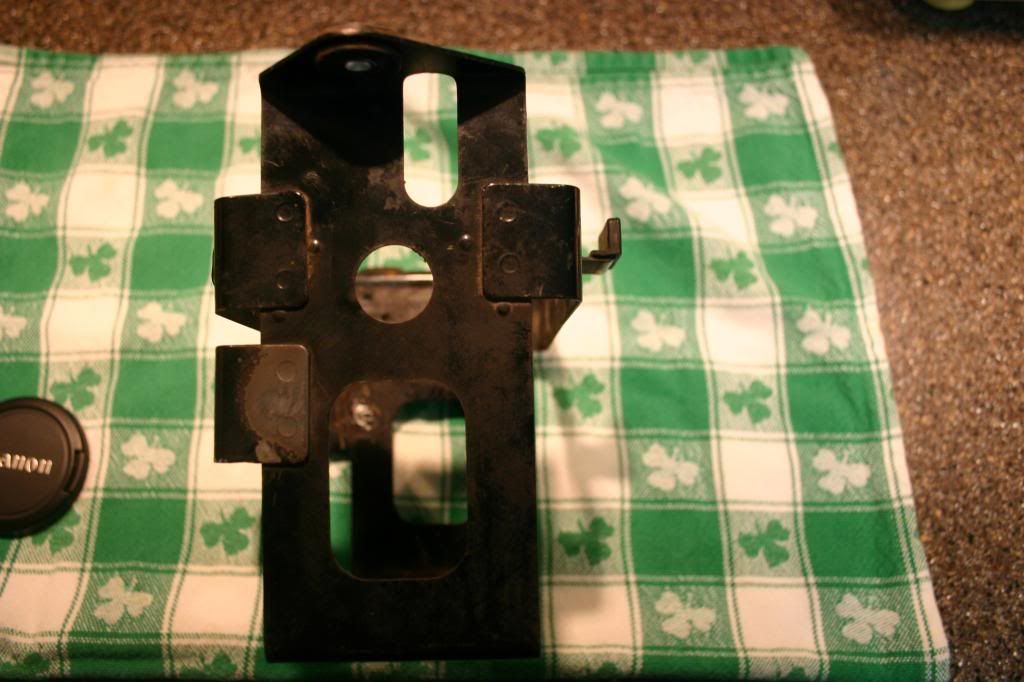
IMG_3324.jpg


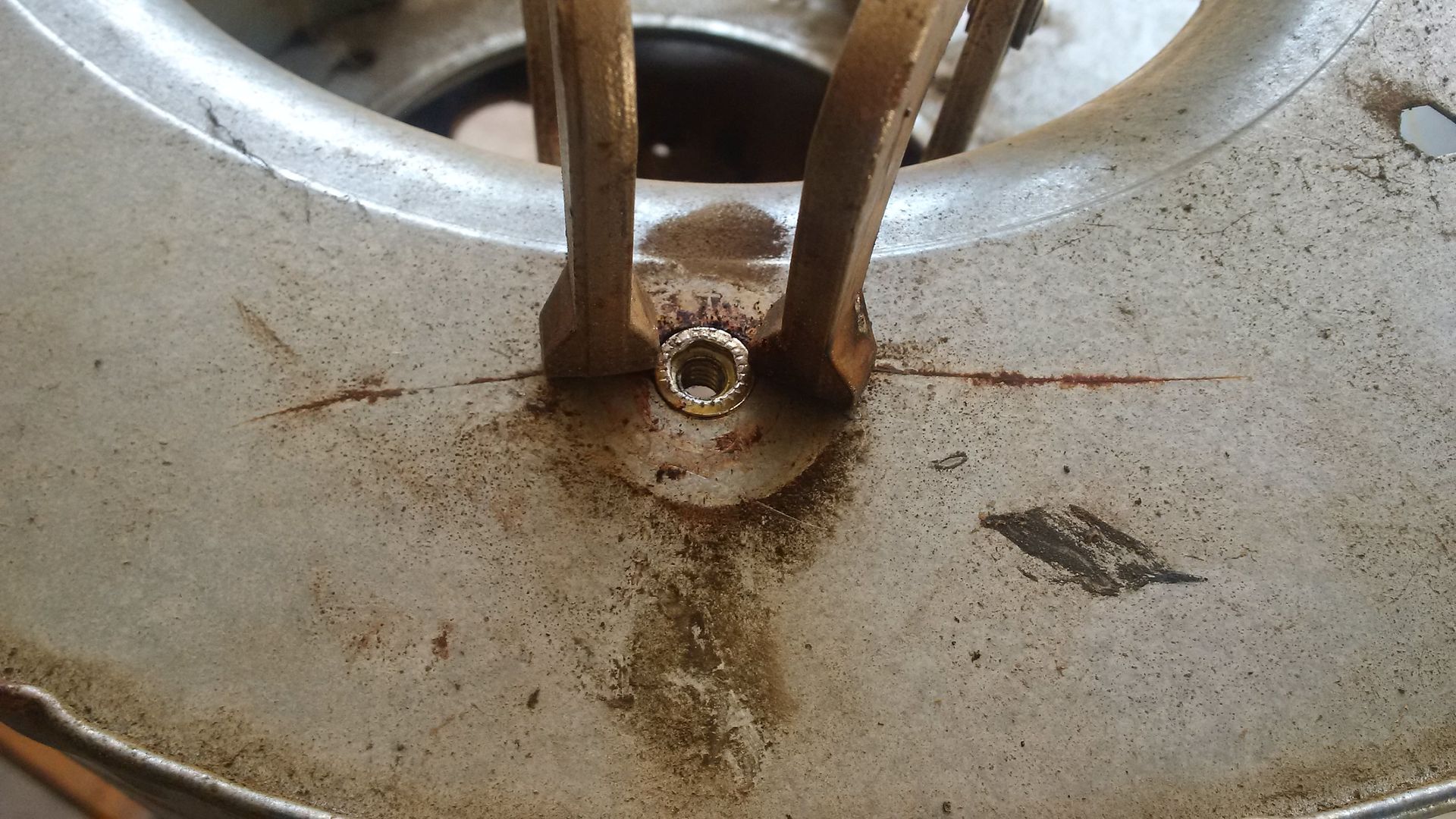
IMG_20160416_134303.jpg


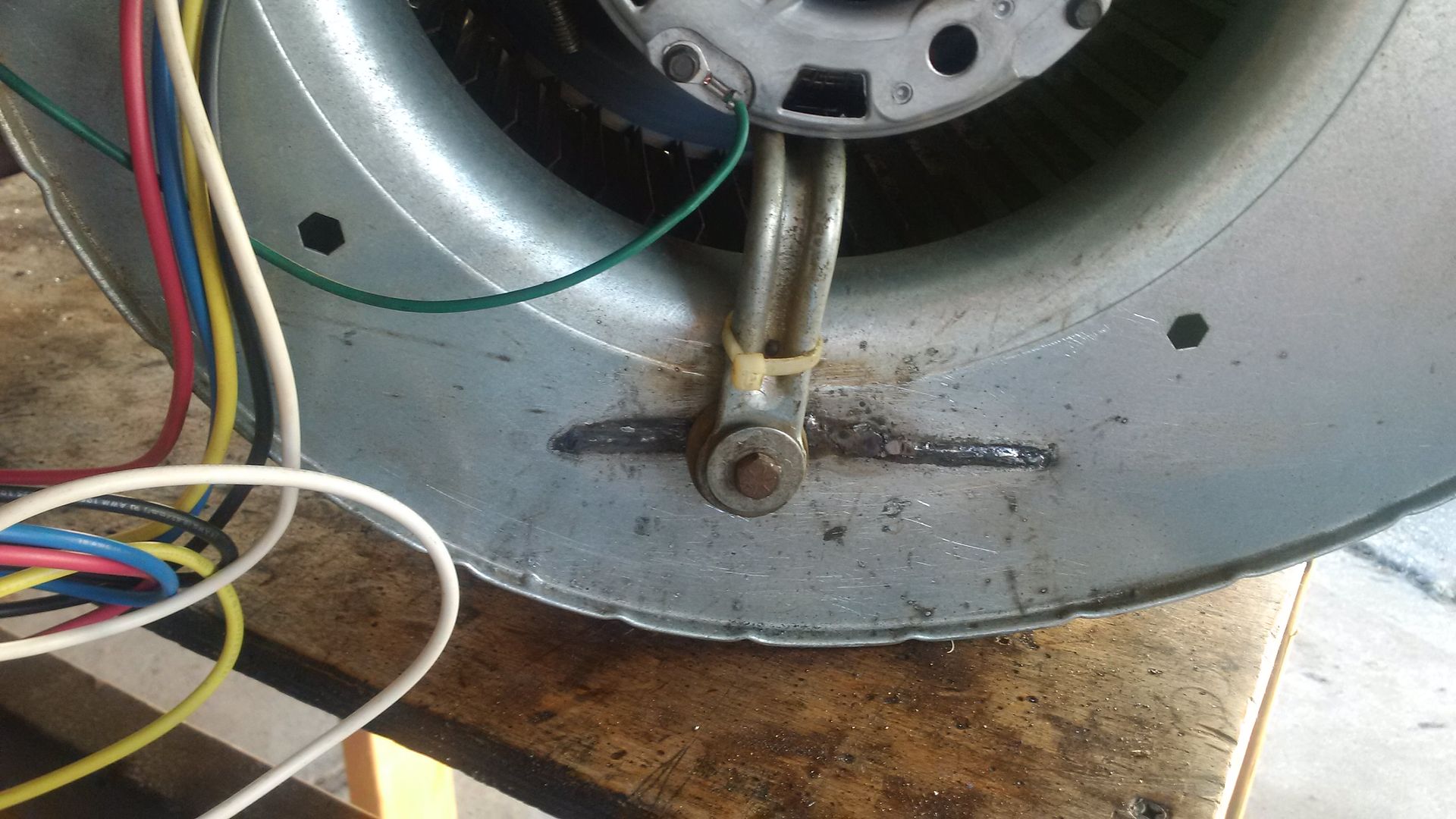
IMG_20160417_100109.jpg


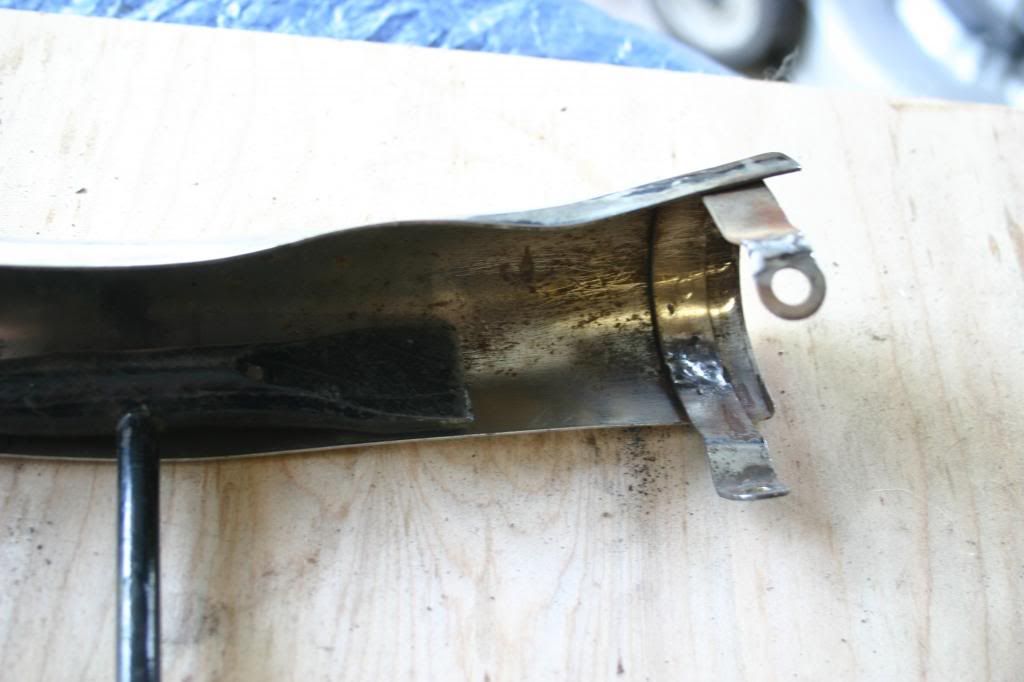
IMG_3034.jpg
 
I call Hog wash on that.

Wow, I recognize the pic as a HVAC type blower made from sheet metal and the other welds look decent too.

What kind of stick welder did you use?
Maybe it's a level of experience required I'm thinking (?)

I'm handy with tools but no experience with welding units.
There was a book in the "Evil Genius" series where the author stated he welded up the tubing frames on different electric bikes using a "cheap arc welder"

I sort of need to "jump right in" ,just hands on.

Sort of "by the way" (not my plan but) There's plenty of youtube vids on hacked microwave oven transformers, converted to arc welder use ,"metal melter" or most practical for those seems like the homemade spot-welders using re-wired transformers...(Dangerous electric risk though)

Another interesting mod vid (IMO),was to rewind the microwave transformer for homemade battery charger even.
The coil used can be tested using a multi-meter, just need to test (using 110v input) the voltage/amperage output 12V batteries get between 14-16V output (By adjusting the number of coil cable wraps until desired output) .
For electric vehicles usually 36V uses three 12v batteries so either a 36v charger is needed OR three individual 12v chargers, or have to charge batt.s one at a time with a 12v (48v =four 12v)...Good info for golf carts or electric bike maybe , but the good chargers have automatic cut-off when fully charged to prevent frying battery...
Wife finally home from work...LOL , Goodnight!:cool:
 
The unit I'm using is an early '80's craftsman A.C. "Buzz" box. It is a nothing more than a relabeled Century. Better welds could be had with a better welder but it's all that I have.

MIG is nice when you are welding a known quantity but there is nothing better than a unit that you can vary the heat on the fly. (speed up- slow down- long Arc to cool the puddle) MIG wire just keeps on coming until you reach down and dial it back. I suspect you can get a variable control at the head but I'm ignorant when it comes to what options are available for them. TIG is a wonderful welder when used in conjunction with a foot pedal to regulate the heat on the fly. I really wish I had one but at this stage in the game... :(

I suggest you save your money and find a nice used AC-DC welder.
 
I call Hog wash on that.

Well, that depends on how thin thin is. Usually when you run enough power to properly start an arc you blow a hole in the thin material. How thick was the blower housing and what size/type of rod did you use for it? E-7024 is stupid simple to use but is not suitable for structural welds that are carrying significant loads. E-7018 is a proper structural electrode but blows holes in the thin stuff.


Mark
 
6013 as I recall. Gauge, who knows. Get the rod warm first and don't stop. Burn through? back it up with a piece of metal and fill it in.
 
For my bike's exhaust, a member here recommended a local shop and there was an ad for welding in MC section of local craigslist.

I'm thinking of leaving the ugly Auto exhaust clamps and making, or ordering a cheap MC exhaust heat shield that will cover that entire section of pipe. Makes it easier to change around in future mostly.

Today I saw a bernzomatic oxy-mapp mini "welding/cutting/brazing" torch. It doesn't seem practical at all because there's no pressure gauge (according to "Performance Welding" book the acetylene anyway should be kept around 4 PSI (IIRC)...
Got an idea to fit a Harbor Freight regulator to one maybe (?) (For a mini gas welder project)
I thought that one was no longer stock item because not on webpage, but saw it in Home Depot for "$64.97" today. (Had to run in for bolts for another project I could've welded instead)...

Still checking for the Flux-core wire feed at HF sidewalk sale. Also I'll look into Rusty Bronco's suggestion of a nice used ac-dc welder...Don't have any space for more tools lately. Sometimes my tools make/save money though.
Thanks for the replies! :cool:
 
I have one of the HF flux core wire feed welders. Traded some crap I didn't need for it, and it's been moderately useful a few times.

I had to do some twiddling to get the wire feed to work reliably -- there was some molding flash or something like that in the feed mechanism that kept the roller from clamping down on the wire. I also bought some name brand wire because some folks have reported better results that way.

It's more than powerful enough to do thin metal for exhausts. You have to turn down the power and keep moving so you don't blow through, and do several experiments with scrap first. I've used it for car exhaust pieces to make a custom adaptor, and it's held up for at least a year so far. The welder also can make a decent tack in much thicker material if you crank the wire feed speed way down and use max power.

There are tons of vids on Youtube, but even with an experienced welder at the controls (I have absolutely no experience welding) the welds are going to be very ugly and spattery, and the flux is really stinky. But in the end, yep, you do indeed end up with fused molten metal under all the bird poop, epic amounts of splatter, and flux residue.

I'm somewhat interested in converting mine to DC -- supposedly you can do this for around $60 or so in parts (a large capacitor and a rectifier) and it greatly reduces spatter and improves the results. Again, there are several Youtube vids on this.

Also, Harbor Freight's auto-darkening hood is pretty darn legit for the price. They also sell a very handy welding table and other odds and ends that are very handy.

MIG is a lot easier, of course, but then you're talking about spending real money with the tanks and all.


Also, in any tool thread, people will tell you to check CraigsList. I can tell you that at least around here, CrackList is a complete joke -- the only welding equipment you'll find is decrepit Harbor Freight stuff or ancient filthy broken industrial stuff for more than it cost new. I don't really understand why so many idiots bother to post these, or maybe there are just enough idiots who will buy this stuff without checking the new prices.
 
Last edited:
The great thing about the HF welder is that it was made in good ol' Chicago! :D

After I got out of the Army many years ago, I worked in an exhaust system manufacturing plant. I was a production welder at first and learned mig welding which is used for the production stuff. Welds went through QC and if the system leaked, theses systems went into a repair bin and the repairs were stick welded. Since it was a union shop and the repair work actually paid better than production, I didn't do much of this as the very experienced (and longer seniority welders) got those tickets. It is easy to blow holes in exhaust tubing with an arc welder but that type weld is good for blobbing shut small leaking holes.
 
****UPDATE (FINALLY)***********: :)

Just picked up a store discount Harbor Freight Flux core mig, 90 amp/110v welder AND 2lb.s of 0.035" flux core wire for grand total of $41 !!!

No instruction book because the box was open and taped again. DANG! (ADVICE/ Link for one?)


Been watching plenty of youtube vids on it though...I didn't buy it last evening, got home, watched vids, kept hearing ," It's good for 100 dollars"
Even one was "Meh, it's good for $150" ...(This one was half of $75 discount)

So I went back first thing this A.M. and manager gave me little better discount since it was missing the wire and they had open spool flux wire nearby, I asked whether my 20% off was good etc. ,

Couldn't turn it down for the price...I'm excited despite it being hobby/ tinker level (that's mostly what i do LOL)...

It's a WHOLE new level for me and I'm quite a master at bolting, grinding, drilling/home milling and threaded components...This is opening a whole other (new) design/ tinkering level(despite it's limitations)...

Going to tinker on scrap a bit , then hit the GSX1100G's exhaust in couple spots (leaving the muffler removeable...!@#% It's raining today...Got 5 days to return it if don't work...:cool:

Oh, I was very interested in the mini- brazer torch (Mapp/Oxy.) Bernzomatic from Home Depot too , but ...
(That could perform heat treating on high carbon, brazing and more portable was advantage but the mini mig is a definate for exhaust work...

Thanks for the replies and in advance for info on what I might miss from not having the manual...
 
The great thing about the HF welder is that it was made in good ol' Chicago! :D

After I got out of the Army many years ago, I worked in an exhaust system manufacturing plant. I was a production welder at first and learned mig welding which is used for the production stuff. Welds went through QC and if the system leaked, theses systems went into a repair bin and the repairs were stick welded. Since it was a union shop and the repair work actually paid better than production, I didn't do much of this as the very experienced (and longer seniority welders) got those tickets. It is easy to blow holes in exhaust tubing with an arc welder but that type weld is good for blobbing shut small leaking holes.

Is there a town named Chicago in China now?
 
You can get the manual from HF's web site. Just find the product page and there will be a PDF you can download.
This might be it:
http://www.harborfreight.com/120-amp-flux-welder-61849.html

Before attacking your bike with it, practice on a lot of scrap exhaust pipe and cut your welds in two so you can understand what's going on. I've done car exhaust parts that worked out pretty well

Also, from what I understand welding on a vehicle can damage the battery and electronics. Do a little research on this before welding directly on the bike.
 
Glad you finally found a welder. Just a little advice:

Don't skimp on a good hood. Dark goggles are not good enough. Flash burn really sucks! I did a bunch of welding on my trailer and had a cheap hood and didn't realize my neck was exposed. Felt like a bad sunburn the next day.

Make sure your ground is on good clean, not painted or rusted, metal or you won't be able to strike a good arc. The same goes for the weld, if it's painted or rusted metal grind it till it shines or you'll get a lousy weld.

I always keep a fire extinguisher handy especially when welding in the garage.

Don't weld galvanized metal if you can avoid it. The smoke is a carcinogen and super bad stuff to breathe! If you have to then take care not to breathe the smoke.

Molten metal will burn through the tops of your sneakers and the splatter from the weld of a flux cored wire feed will burn your shirt too. This I learned the hard way. I have a crappy denim jacket I wear which does ok, but long leather gloves help a lot.

Remember, you're sending electrical current into the steel. If your gloves are wet, or you're standing in water you'll get shocked. That sucks too!

Good luck and I hope you have fun with that new welder.
 
You can get the manual from HF's web site. Just find the product page and there will be a PDF you can download.
This might be it:
http://www.harborfreight.com/120-amp-flux-welder-61849.html

Before attacking your bike with it, practice on a lot of scrap exhaust pipe and cut your welds in two so you can understand what's going on. I've done car exhaust parts that worked out pretty well

Also, from what I understand welding on a vehicle can damage the battery and electronics. Do a little research on this before welding directly on the bike.
Thankyou very much for the link (I downloaded/ saved it going to print it probably too! And the advice.
I'm planning on removing the Exhaust, but also wanted to give a try to maybe welding a rod onto a stuck header bolt for (another) removal attempt. Gonna check on the electrical issue FIRST regarding it. (Probably won't work for removal but worth a shot(?))

Glad you finally found a welder. Just a little advice:

Don't skimp on a good hood. Dark goggles are not good enough. Flash burn really sucks! I did a bunch of welding on my trailer and had a cheap hood and didn't realize my neck was exposed. Felt like a bad sunburn the next day.

Make sure your ground is on good clean, not painted or rusted, metal or you won't be able to strike a good arc. The same goes for the weld, if it's painted or rusted metal grind it till it shines or you'll get a lousy weld.

I always keep a fire extinguisher handy especially when welding in the garage.

Don't weld galvanized metal if you can avoid it. The smoke is a carcinogen and super bad stuff to breathe! If you have to then take care not to breathe the smoke.

Molten metal will burn through the tops of your sneakers and the splatter from the weld of a flux cored wire feed will burn your shirt too. This I learned the hard way. I have a crappy denim jacket I wear which does ok, but long leather gloves help a lot.

Remember, you're sending electrical current into the steel. If your gloves are wet, or you're standing in water you'll get shocked. That sucks too!

Good luck and I hope you have fun with that new welder.
Thankyou very much! I have gear for when I'm doing pretty heavy angle grinding/ other steel work but this gave me more insight.

Been mega-busy at work. Rained couple days straight. I'm past the five days return and no use yet.
Got into an arguement with an old part-time ex boss of some crap at work (Lazy old shammer w/ false pride issues always in my way telling me to slow down [milk it] meddling when I'm super busy daily already, alone too...Had to talk with owner over it.
Wasn't much of a talk. he heard him in private, lectured me. Sad that the owner has no idea his loyalties...
Maybe he just figures it's lesser problem dunno.
Realized there's like 8-9 managers through my tiny workspace and my info is basically simple : I'm below them all and the place is set up/ structured for clowns and rejects...no place OR structure intact for professionals...(only time I've sat for past year and half is during 30 min. lunch for 20 minutes. Jeez...it's all just been extra work...

SOOOOoooo: I took one week of my vacation time (was saving for trip w/ wife out of country) to go apply for jobs in outer banks, N.C. Instead...Got one interview saturday, another looks very promising...fingers crossed...hopefully I'll have more space and get to use the welder very soon!
Phew! sort of off-topic but on-topic excuse i guess. {thanks in advance for some prayers]:rolleyes:
Thanks again!:cool:
 
I did a bunch of welding on my trailer and had a cheap hood and didn't realize my neck was exposed. Felt like a bad sunburn the next day.

The arc is many times more intense than sunlight. Covering up all exposed skin is pretty much a necessity if you want to avoid injuries. There are sound reasons why welders wear long sleeves, turtle necks, long pants, leather gloves, leather shoulder/arm covers and work boots, even in warm weather. Doing the same makes the work both more enjoyable and safer. Also watch for frayed cuffs on your pants and trim off any loose bits, the dangling strings catch fire pretty easily and it's no fun doing the hot foot dance across the garage while trying to put out your burning pants.

Make sure your ground is on good clean, not painted or rusted, metal or you won't be able to strike a good arc.

Also place the ground close to where you are welding, it helps a lot when working with the light duty hobby machines.


I always keep a fire extinguisher handy especially when welding in the garage.

Great advice. Police up any rags, garbage and/or junk laying around, too. Sparks and blobs of hot metal can bounce an amazing distance and easily start fires if they find flammable materials.


Mark
 
Last edited:
Back
Top