• Required reading for all forum users!!!

    Welcome!
    Register to access the full functionality of the GSResources forum. Until you register and activate your account you will not have full forum access, nor will you be able to post or reply to messages.

    A note to new registrants...
    All new forum registrations must be activated via email before you have full access to the forum.

    A Special Note about Email accounts!
    DO NOT SIGN UP USING hotmail, outlook, gmx, sbcglobal, att, bellsouth or email.com. They delete our forum signup emails.

    A note to old forum members...
    I receive numerous requests from people who can no longer log in because their accounts were deleted. As mentioned in the forum FAQ, user accounts are deleted if you haven't logged in for the past 6 months. If you can't log in, then create a new forum account. If you don't get an error message, then check your email account for an activation message. If you get a message stating that the email address is already in use, then your account still exists so follow the instructions in the forum FAQ for resetting your password.

    Have you forgotten your password or have a new email address? Then read the forum FAQ for details on how to reset it.

    Any email requests for "can't log in anymore" problems or "lost my password" problems will be deleted. Read the forum FAQ and follow the instructions there - that's what we have one for...

  • Returning Visitors

    If you are a returning visitor who never received your confirmation email, then odds are your email provider is blockinig emails from our server. The only thing that can be done to get around this is you will have to try creating another forum account using an email address from another domain.

    If you are a returning visitor to the forum and can't log in using your old forum name and password but used to be able to then chances are your account is deleted. Purges of the databases are done regularly. You will have to create a new forum account and you should be all set.

Best substance to clean tarnish off carb insides

Suzuki Mad

Forum Mentor
Past Site Supporter
So far I have tried:-

Malt Vinegar 5%
Apple vinegar 5%
Bi-carbonate of soda
Coke
Carb cleaner

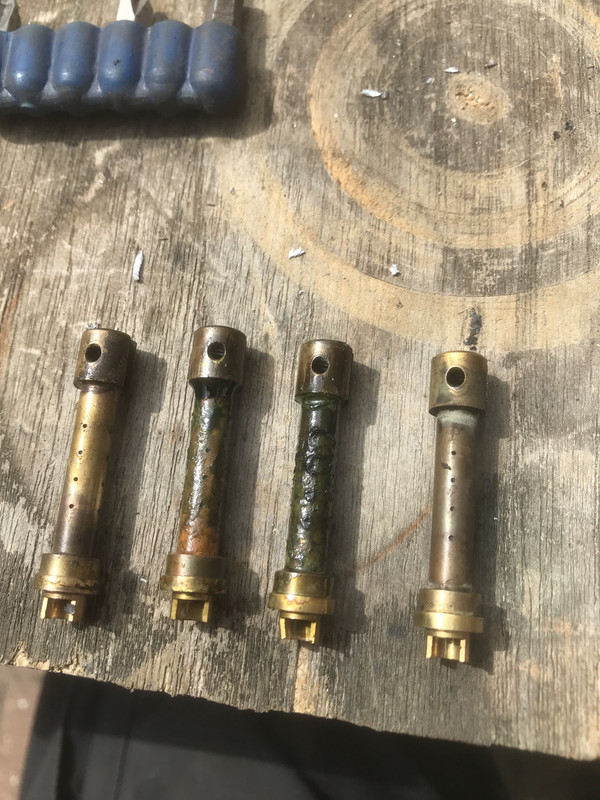
...and nothing is shifting this varnished old fuel from the carbs, jets and tubes.

Anybody else suggest something that will at least soften this off.

I know we cant buy Berrymans carb cleaner here in the UK so that's a non starter option.

This is what I am trying to soften off...

 
Cellulose thinners will shift it no problem and you can still get a can easy enough.

No 3, left to right, looks like the cutaway is skewed?
 
Acetone... I don't know how chemical laws work in the UK, but acetone will make short work of that. If that's not available, just go with a good carb dip, like Berrymans, or Gunk.

And yes, the second from the right looks a little bent on the bottom cut out. Like it was dropped.
 
Cellulose thinners will shift it no problem and you can still get a can easy enough.

No 3, left to right, looks like the cutaway is skewed?

Cheers HH. I will see if I can get some.

Yes it is. The jet thread is also damaged now. I have a new one on order.
 
Acetone... I don't know how chemical laws work in the UK, but acetone will make short work of that. If that's not available, just go with a good carb dip, like Berrymans, or Gunk.

And yes, the second from the right looks a little bent on the bottom cut out. Like it was dropped.

Acetone is more likely that Berrymans here in the UK.

It wasn't dropped. I had to get a little aggressive to get it out after 24 hours of soaking and thats where the damage occured.
 
If you can get a cheap ultrasonic I’ve heard placing them in a container full of gasoline in an ultrasonic will clean anything.
 
EDGECRUSHER, I don't know if that's the wisest advice. I have no experience with an ultrasonic cleaner. But I have done some reading on their use and what to put in them (and what not to put in them.)

The Don’ts

To avoid damaging your cleaners (and your bodies), you should:

  • Never mess with the electronic controls, transformer, or transducers on the unit, or try to do your own repairs. Ultrasonic cleaners operate under high voltage, and if you don’t know what you’re doing, you can damage the equipment and yourself. On a similar note, don’t spray down the outside of the tank, control box, or electrical box with water or other liquids. If the outside gets dirty, unplug the unit and wipe it down with a clean rag.
  • Never fill the tank of an ultrasonic cleaner with alcohol, gasoline, or any other flammable liquids. They will vaporize, and could cause a fire or explosion, or release harmful gasses into the workspace.
  • Never put any parts of your body into the ultrasonic cleaner while it is operating without proper protection such as thermal gloves and goggles. The detergents can cause mild skin irritation, and the cleaning action can cause discomfort. In addition, the operating temperature of the solution and tank can reach 160 degrees F, which will cause burns.
  • Avoid putting chlorine bleach into the tank. Bleach does not promote good cavitation activity.
  • Keep parts off the bottom of the tank. Setting parts directly on the tank bottom bottom increases the incident of cavitation erosion – pitting of the tank eventually causing the ultrasonic cleaner to leak . Use a basket, tray, or suspension system to hold parts in the unit.
 
Last edited:
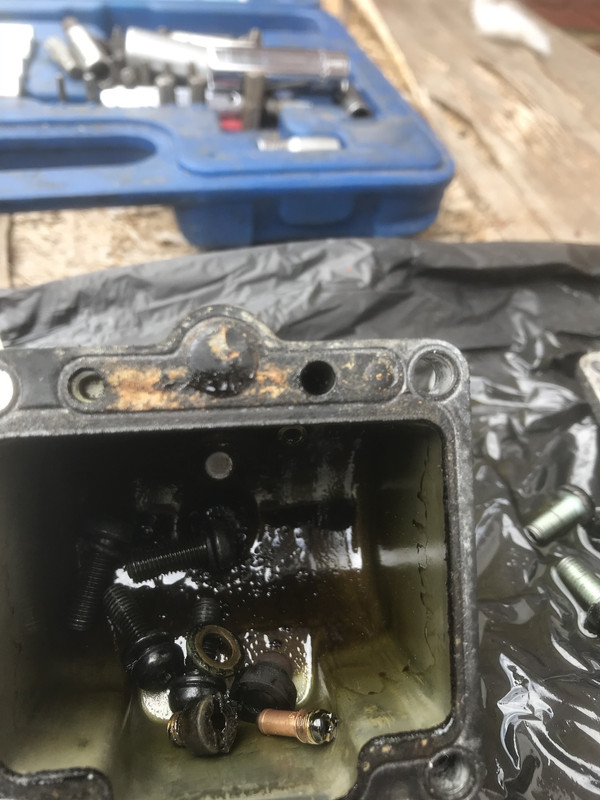
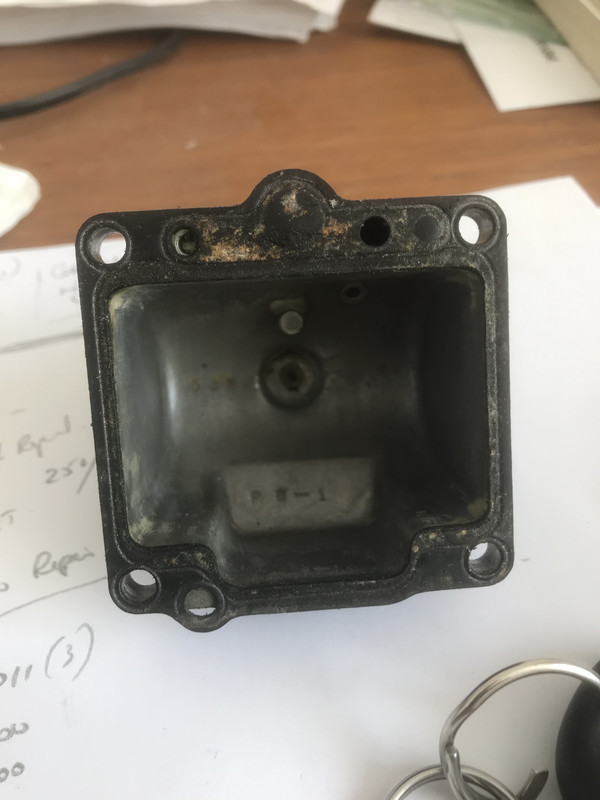
When I stripped the bowls off a few days ago....


....about 3 minutes with Nail varnish remover supplied by my daughter.... (its acetone in another form)


Cheers guy's.
 
You don’t fill the sonic with fuel. Just a container which you then set in the sonic. This is a trick experienced users use so they only have to fill the sonic with water which keeps it clean and in good condition. A small glass jar big enough for your parts is employed with your favorite noxious chemical. Of course caution is always smart whenever using anything flammable. A sonic doesn’t run for hours but seconds. You can afford to sit and watch it for a minute to make sure nothing happens.
 
The throttle shaft seals could be damaged by acetone so be careful what you dunk.
 
I'm soaking jets, emulsion tubes, washer and pilots in acetone. I have the floats, float needle housing, float needle, screw, locating bracket and pin in white vinegar cleaning over night to get the worst of the varnish/old fuel off the carbs.

I washed the inside of the float bowls out with acetone to remove the sludge and caked on blackness from the old fuel and then washed stuff out. I wasnt going to go mad and shove it in the carbs.

I have used acetone one a paper towel and wiped the slide and needle clean making sure not to touch the diaphragm with the acetone as the slide and needle have a load of sticky fuel on them.

Then it's the carb bodies. They still have chokes in and mixture screws.
 
Not sure if its available in the UK, but Yamaha has a carb cleaner you mix with water that works great. Its a part of their Yamalube line. Maybe check that out.
 
EDGECRUSHER, I don't know if that's the wisest advice. I have no experience with an ultrasonic cleaner. But I have done some reading on their use and what to put in them (and what not to put in them.)

The Don’ts

To avoid damaging your cleaners (and your bodies), you should:

  • Never mess with the electronic controls, transformer, or transducers on the unit, or try to do your own repairs. Ultrasonic cleaners operate under high voltage, and if you don’t know what you’re doing, you can damage the equipment and yourself. On a similar note, don’t spray down the outside of the tank, control box, or electrical box with water or other liquids. If the outside gets dirty, unplug the unit and wipe it down with a clean rag.
  • Never fill the tank of an ultrasonic cleaner with alcohol, gasoline, or any other flammable liquids. They will vaporize, and could cause a fire or explosion, or release harmful gasses into the workspace.
  • Never put any parts of your body into the ultrasonic cleaner while it is operating without proper protection such as thermal gloves and goggles. The detergents can cause mild skin irritation, and the cleaning action can cause discomfort. In addition, the operating temperature of the solution and tank can reach 160 degrees F, which will cause burns.
  • Avoid putting chlorine bleach into the tank. Bleach does not promote good cavitation activity.
  • Keep parts off the bottom of the tank. Setting parts directly on the tank bottom bottom increases the incident of cavitation erosion – pitting of the tank eventually causing the ultrasonic cleaner to leak . Use a basket, tray, or suspension system to hold parts in the unit.

That's how it works... The resulting fire burns all the gunk off and hopefully not the shed.
 
Back
Top