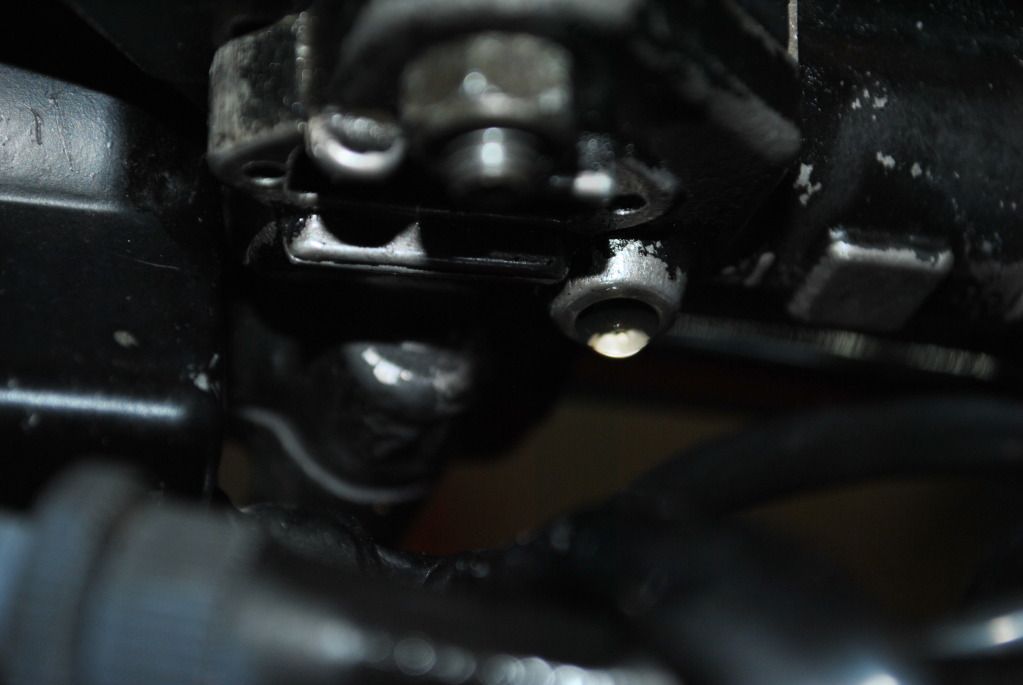
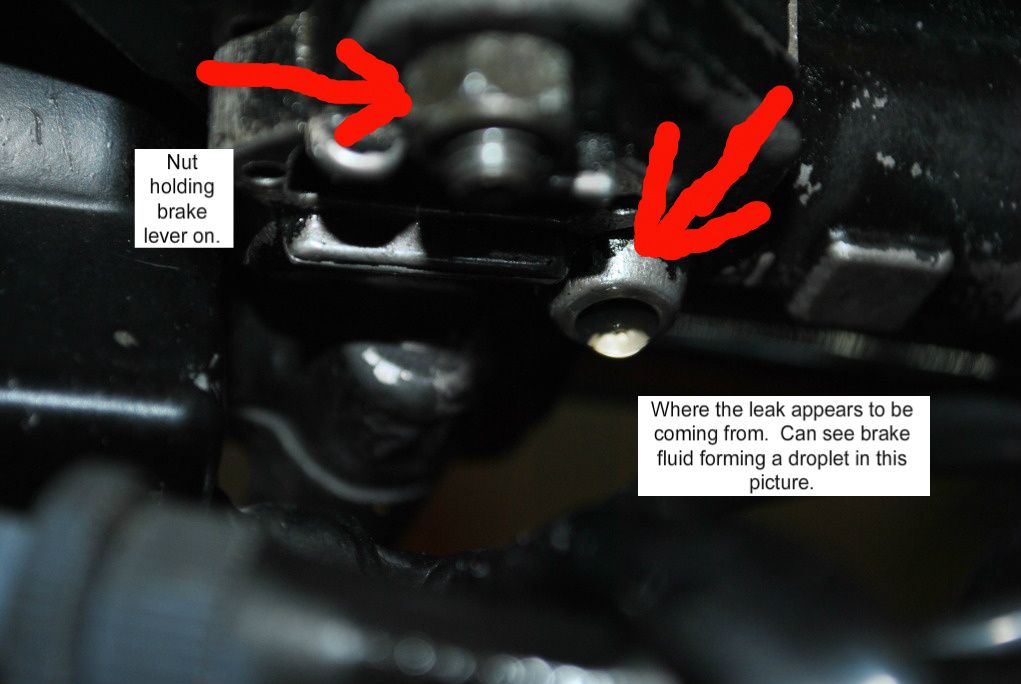
Not sure all this is necessary, but I'm bored.
M/C designs have some innovations over the years, but a basic M/C is a basic M/C still today. Our bikes use single chamber M/Cs. Finding a picture or diagram of a single chamber M/C is getting tough. This is a good representation of one, close enough to our M/Cs for my discussion.
The piston assembly is the most complicated of the parts. At the back end we have a spring, which acts as a return spring as well as in some cases a method of applying light pressure to the pistons primary cups so the edges of the cups are against the M/C bore at all times, eliminating a delay in their sealing which would require longer travel. The design of the primary cup is such that it seals tighter with the more pressure that is being exerted. Good thing.
If we had a “closed” hydraulic system we would have to use more travel to compensate for brake pad wear which extends the brake pistons farther outward. The way we make up for this wear and caliper extra volume is by the use of a compensating port, a small hole just in front of the resting point of the primary seal. The port allows more brake fluid to enter between the M/C and calipers to compensate for the larger caliper volume.
When the piston is starting to pressurize the brake fluid by moving forward some pressurized fluid will be pushed out of the compensating port and back into the reservoir creating a small geyser until the primary cup goes past the port. Once the cup is past the port, full pressure can be applied to the calipers in this now closed system.
The piston assembly is quite long and has a secondary cup at the other end where a lever or pushrod resides. This is the neutral chamber and is necessary as once the primary seal/piston end goes past the compensating port, fluid would just escape the reservoir and dribble out if the piston was only long enough to be behind the primary cup. Some caliper designs like the one shown have two ports where the reservoir is attached to the M/C body. This is done to make sure the neutral area of the long piston has a pressure relief when the primary piston is fully back and the neutral chamber no longer has access to the compensating port. It should be noted that the design of the secondary or sealing cup is a low pressure design, never intended to hold back full operating hydraulic pressure that is achieved by the primary seal/cup.
At the back of this M/C example is a flange that holds a dust boot, often accordion in shape. This is only to prevent dirt and moisture from accumulating at the back of the M/C piston/bore area. Some of these are fully enclosed, while other designers have a small hole to allow some airflow. These boots are never designed to hold back brake fluid.
If you have a non-sealing primary cup, brake fluid will blow past the seal and enter into the neutral area. This results in the neutral chamber of the piston assembly having pressurized fluid, and the compensating port develops an outflow during the entire piston stroke. Sometimes fluid will also come out past the secondary seal, but that usually only happens if the small compensating port can’t handle the volume of fluid rushing past the primary seal.
You can also have a weak, partially compromised primary cup. This often will result in a continuous moving lever or pedal under low pressure applications, while a hard pull or press will result in a solid holding situation. Remember that the primary cup is designed to seal tighter with higher pressures.
If you don’t have a long geyser coming out of the compensating port during application, just the initial squirt, but have fluid dribbling out of the secondary seal or dust boot then the secondary seal is compromised. You still can have good brakes, but you will lose fluid continuously.
The rubber parts of brake systems on these bikes are designed around glycol fluids, so any contact with petroleum products should be avoided. Brake cleaning fluid is fine and so is alcohol. When assembling M/Cs and calipers you can use brake fluid or brake assembly fluid for lubrication, as you never want to put everything together dry. Assembled dry raises the chances of nicking one of the seals exponentially.
The biggest detriment in rebuilding M/Cs is corrosion in the bore due to moisture entrained, poorly maintained brake fluid. Seals can last a long time. The proper way of dealing with oxides in the bore is to hone the bore out. You are limited to how much larger the bore can be and still maintain a good cup seal. And you also have the issue of how deep the pitting is in the bore. A honed bore that still has pits will wear away at the cups and seals so it’s just a matter of time (a few strokes or a hundred strokes) until the system has lost integrity again.
The end point is that looking at the compensating port output and fluid out of the back of a M/C tells you a lot about the M/C condition and understanding what all the parts do can save you a lot of grief.
Edit - This is an example of the assembly lube I mentioned, it is not brake slide pin silicone grease which is too thick for the assembly use. This is one brand but I've gotten it at auto parts stores such as NAPA. One bottle will probably last you for life.
http://www.jegs.com/i/Wilwood/950/290-11087/10002/-1?parentProductId=1402309