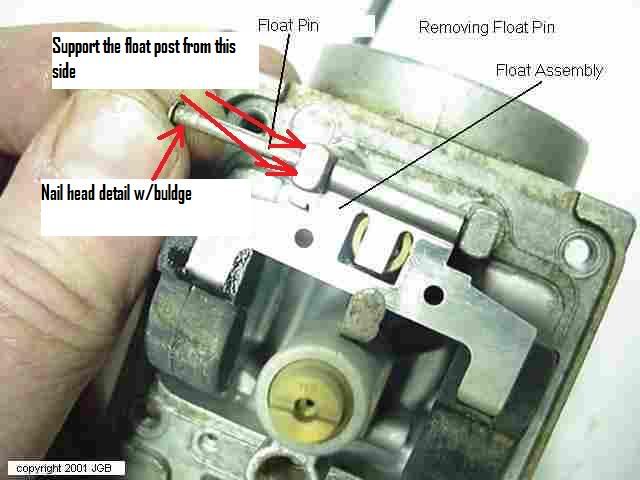
I've only broken off one post (one too many). The method you've outlined describes, perfectly, the way I managed to break it.
So we don't get confused on what needs to be done...
- The float pin is shaped like a nail, with a bulge under head
- The bulge under the head of the pin is what creates the interference fit in the float post
- The float post that is holding the bulged head is the one that breaks off if it's not properly supported during pin removal
- Float post needs to be supported on the outside edge of the post (the side where the head of the pin abuts)
- Common methods to support the float post include (based on comments in this post): spread jaws of vice just enough to support the post but allow the pin to move downward, small socket around circumference of the pin head, edge of wooden work bench (or similar piece of soft material or wood).
- The idea here is to support the post against something solid, while allowing the float pin to be driven downward and out.
- If you choose to use pliers to remove the pin, you still need to support the float post in some way.
- Last method that sometimes works is to take a small flat blade screwdriver and lay the blade along side the float post next to the head on the float pin. If you can get the edge of the blade to dig under the head on the float pin, you can pry pin out levering against the post itself. This method works well but most of the time the head of the float pin is abutted against the side of the post so you can't get a blade in there.
Hope this helps someone.