• Required reading for all forum users!!!

    Welcome!
    Register to access the full functionality of the GSResources forum. Until you register and activate your account you will not have full forum access, nor will you be able to post or reply to messages.

    A note to new registrants...
    All new forum registrations must be activated via email before you have full access to the forum.

    A Special Note about Email accounts!
    DO NOT SIGN UP USING hotmail, outlook, gmx, sbcglobal, att, bellsouth or email.com. They delete our forum signup emails.

    A note to old forum members...
    I receive numerous requests from people who can no longer log in because their accounts were deleted. As mentioned in the forum FAQ, user accounts are deleted if you haven't logged in for the past 6 months. If you can't log in, then create a new forum account. If you don't get an error message, then check your email account for an activation message. If you get a message stating that the email address is already in use, then your account still exists so follow the instructions in the forum FAQ for resetting your password.

    Have you forgotten your password or have a new email address? Then read the forum FAQ for details on how to reset it.

    Any email requests for "can't log in anymore" problems or "lost my password" problems will be deleted. Read the forum FAQ and follow the instructions there - that's what we have one for...

  • Returning Visitors

    If you are a returning visitor who never received your confirmation email, then odds are your email provider is blockinig emails from our server. The only thing that can be done to get around this is you will have to try creating another forum account using an email address from another domain.

    If you are a returning visitor to the forum and can't log in using your old forum name and password but used to be able to then chances are your account is deleted. Purges of the databases are done regularly. You will have to create a new forum account and you should be all set.

Solder vs. Butt Connector on hot for Coil Mod

  • Thread starter Thread starter jswhite
  • Start date Start date
J

jswhite

Guest
Hey All,

Doing the coil mod on my 81' GS650G and am at the point where I'm doing the hot with an inline 10A fuse. I need to connect the inline fuse holder to the wire and the write ups say to solder these two together. I bought a solder gun and the correct solder but when I try to heat up the wires enough to melt the solder it doesnt melt (maybe its the gun, harbor freight). So in order for it to melt I have to do it the incorrect way of touching it to the tip and covering the wires.
This was the nasty result
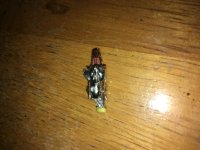
IMG_7057.jpg

Can I just use a butt connector for this? I have connectors for 12G wire, and that route would be much more friendly considering the soldering route isnt really working as it should.

I know this is for the hot so a short would be really bad.

Opinions?

thanks

Justin
 
It would be better than that solder connection. You need a good solder gun to heat up 12g wire.
 
First of all, why are you using 12-gauge wire? You are fusing it for 10 amps, which is EASILY handled by 18-gauge. Using 16 would be overkill and entirely acceptable. There is no need for 12.

Second, why aren't the wires connected properly? It looks like those two wires were just pushed into each other. You should start with a good MECHANICAL connection, then apply solder. That means that you should strip a little more insulation, then wrap the wires around each other, so they grip on each other. The solder is not there to "glue" the connection, it is just there to "paint" over it, keeping it from corroding.

In my opinion, there is plenty of heat available from your gun, but that "joint" is so scattered, it was all dissipating before it could do any good. :-k

.
 
First of all, why are you using 12-gauge wire? You are fusing it for 10 amps, which is EASILY handled by 18-gauge. Using 16 would be overkill and entirely acceptable. There is no need for 12.

Second, why aren't the wires connected properly? It looks like those two wires were just pushed into each other. You should start with a good MECHANICAL connection, then apply solder. That means that you should strip a little more insulation, then wrap the wires around each other, so they grip on each other. The solder is not there to "glue" the connection, it is just there to "paint" over it, keeping it from corroding.

In my opinion, there is plenty of heat available from your gun, but that "joint" is so scattered, it was all dissipating before it could do any good. :-k

.


1. Received the info from one of the write ups so went out and bought 12G wire, electrical is my weak point in the garage, so knowing which can handle what isn't something I feel I can determine, as a novice. So now I have a bunch of 12G wire.
2. Being a novice I watched a bunch of youtubes which showed them pushing the wire into each other and then soldering, so that is what I did.

Any words of advice on how to have the good "mechanical" connection? I would prefer to solder, and want to learn.

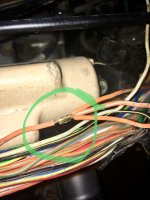
Also, here is a pic of where they t'd off the positives for the coils on my bike IMG_7060.jpg
If I understand correct, these are what I am going to bring to the #86 terminal on the relay. I'm assuming this would be beneficial to bypass? Any suggestions on how to do this? Would one of those quick splice/inline splices be OK or is that no better? Or would this be OK to go with?

Thanks!
 
First of all, why are you using 12-gauge wire? You are fusing it for 10 amps, which is EASILY handled by 18-gauge. Using 16 would be overkill and entirely acceptable. There is no need for 12.

Second, why aren't the wires connected properly? It looks like those two wires were just pushed into each other. You should start with a good MECHANICAL connection, then apply solder. That means that you should strip a little more insulation, then wrap the wires around each other, so they grip on each other. The solder is not there to "glue" the connection, it is just there to "paint" over it, keeping it from corroding.

In my opinion, there is plenty of heat available from your gun, but that "joint" is so scattered, it was all dissipating before it could do any good. :-k

.

As Steve said - strip the insulation, wrap the wires around each other, then solder
 
Solder is for forming a permanent connection. Where the idea of "paint over it" came from I have never heard of before.

placing your soldering iron tip on the wires, after the twisting of both wires together to form a mechanical connection, and dabbing the soldering iron tip with the solder is a way of creating a larger heating surface. This heats up the wires more quickly and then through capillary action the solder is drawn into the mechanical connection. Only a very small amount of solder is required. Too much solder and it will wick up the wire causing a stiff wire and premature failure through work hardening of the connection.


OP, Maybe you should watch a few YouTube videos on how to properly solder wires. I am sure there are plenty.
 
I prefer a “western union splice”. I typically only strip about 3/4” to 1” of wire. Slide on one piece of shrink wrap well away from the union splice and solder so that it doesn’t tighten earlier than you’d like. And another on the opposite side slightly longer than the first so that it covers it all completly once you shrink the shorter tube down first. Hold your iron under the wires that are now mechanically joined to get the wires hot, tap the solder on the top while still holding it in place below and touching the solder joint(only tap it there for a moment) then point the solder tip directly on top of the joint while still holding heat to the bottom with the gun and allow the solder to flow through the joint and solder it from end to end. Make sure there aren’t any pointy portions of solder that could poke through the heat shrink. If there are just rub the iron on that lightly and it should melt it down. Slide the smaller tube of heat shrink(this piece should cover the entire joint with about 1/4” on each side) hold a bic lighter under it without the flame touching wave it back and forth and it’ll shrink it down. Now slide the longer tube over and do the same and your all set. That’s how I’ve done it and am always pleased with the results. Additionally I also use 16 gauge wire myself in coil relay mods.

Video of how to make the mechanical connection below, noted above that I don’t trim more than an inch of insulation.

https://youtu.be/IsZvHrMIoNs
 
Last edited:
I prefer a ?western union splice?. I typically only strip about 3/4? to 1? of wire. Slide on one piece of shrink wrap well away from the union splice and solder so that it doesn?t tighten earlier than you?d like. And another on the opposite side slightly longer than the first so that it covers it all completly once you shrink the shorter tube down first. Hold your iron under the wires that are now mechanically joined to get the wires hot, tap the solder on the top while still holding it in place below and touching the solder joint(only tap it there for a moment) then point the solder tip directly on top of the joint while still holding heat to the bottom with the gun and allow the solder to flow through the joint and solder it from end to end. Make sure there aren?t any pointy portions of solder that could poke through the heat shrink. If there are just rub the iron on that lightly and it should melt it down. Slide the smaller tube of heat shrink(this piece should cover the entire joint with about 1/4? on each side) hold a bic lighter under it without the flame touching wave it back and forth and it?ll shrink it down. Now slide the longer tube over and do the same and your all set. That?s how I?ve done it and am always pleased with the results. Additionally I also use 16 gauge wire myself in coil relay mods.

Video of how to make the mechanical connection below, noted above that I don?t trim more than an inch of insulation.

https://youtu.be/IsZvHrMIoNs

This was very helpful. I'm gonna go get some 16G wire instead of this 12G stuff I have.
Give this another try tomorrow.
 
Any words of advice on how to have the good "mechanical" connection? I would prefer to solder, and want to learn.
Watch the video that drey6 posted. That is exactly the technique that I use, but have never heard it called "Western Union" splice.


Also, here is a pic of where they t'd off the positives for the coils on my bike
View attachment 54521
If I understand correct, these are what I am going to bring to the #86 terminal on the relay.

Assuming that is the single wire coming from the kill switch on the left and the other wires go to the coils and ignitor, you will want to cut the single wire, to the left of that junction. Connect the kill switch wire to #86 on the relay, connect the coil side of the wire to #87. Terminal #30 will go to a fused power wire, #85 will connect to a good ground.

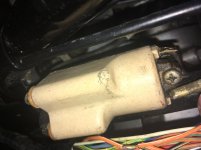
Also, you might want to take a good look at your coil. Is that dirt or a crack?

attachment.php


Solder is for forming a permanent connection. Where the idea of "paint over it" came from I have never heard of before.
I use the term "paint" because it only needs to cover the good mechanical joint like paint. You should still be able to see the strands of wire. Some people like to glob it on so it is all smooth, thinking it will be a stronger joint, but the solder is there mainly to keep the copper wire from corroding. Pretty much like paint would. Yes, it provides a modest amount of mechanical retention, but you certainly don't want to simply lay two wires side by side and solder them together. They NEED to be wrapped or twisted together.


I prefer a “western union splice”. https://youtu.be/IsZvHrMIoNs
I have never heard it called that, but that's the way I do it. :encouragement:

.
 
This was very helpful. I'm gonna go get some 16G wire instead of this 12G stuff I have.
Give this another try tomorrow.

A friend taught me that just over a year ago in person and I?ve also been recommended the same technique by Chuck (chuck78). I?ve been lucky to have some people share some knowledge....in DETAIlL!. That?s what makes a difference and expedites it?s application for the person wanting to learn. Best of luck. Also, a 650G is a very solid bike. My buddy bought one last year and we went through all of this with him as well as the regulator upgrade to a used Polaris Ranger SH775 regulator. If you haven?t already I highly recommend this alteration while you?re improving your wiring with the coil relay mod. Otherwise enjoy the hell out of that bike, I loved the test rides I experienced !
Let us know how it goes today. Feel free to post a bike pic too, people like those.
 
In case you missed it in my longer post, be sure to check that coil, it doesn't look so good in that picture.

If that coil is, indeed, cracked, doing the relay mod won't help it at all. :-\\\

.
 
I use the term "paint" because it only needs to cover the good mechanical joint like paint. You should still be able to see the strands of wire. Some people like to glob it on so it is all smooth, thinking it will be a stronger joint, but the solder is there mainly to keep the copper wire from corroding. Pretty much like paint would. Yes, it provides a modest amount of mechanical retention, but you certainly don't want to simply lay two wires side by side and solder them together. They NEED to be wrapped or twisted together.

.


They way way he is doing it is OK - he just needs to get the wires hotter so the solder flows into the join.

I don't agree with the idea that the solder is just there to cover the join - it is an integral part of the electrical flow. Think of a circuit board and how you would solder a resistor onto it - you push the ends through the board and the solder completes the electrical circuit as well as holding the resistor in place.

And I can guarantee you if you soldered the wires like he has but PROPERLY flow the solder you will break the wires before the join if you tried to pull them apart.
 
A soldered joint is actually more prone to corrosion than a properly crimped joint. Solder, when used on the Suzuki wires is a formula for dissimilar metal corrosion due to the simple fact that the wire is not a tinned wire.

Properly crimped wires are far superior to soldered wire connections. Why do you think there are typically no soldered joints in pretty much all wire harnesses?

If you insist on using a soldered wire splice then you should ensure all flux is removed, after that a corrosion inhibiting compound such as ACF50 and then an adhesive backed heat shrink to ensure no corrosion and an environmental secure joint.

Now you are probably thinking that seems like extra work? Well its not, it is creating a high quality splice that is not prone to failure, or worse yet, an intermittent failure that is hard to find.
 
but have never heard it called "Western Union" splice.
oh yes indeed......and it can do very well without solder if you can seal it up or away from a corrosive environment- very handy for emrg repair.
 
Also, you might want to take a good look at your coil. Is that dirt or a crack?


.

Thanks for the heads up on the coil, looks like it is a scrape from the previous owner. Heres a pic
IMG_7067.jpg
 
Assuming that is the single wire coming from the kill switch on the left and the other wires go to the coils and ignitor, you will want to cut the single wire, to the left of that junction. Connect the kill switch wire to #86 on the relay, connect the coil side of the wire to #87. Terminal #30 will go to a fused power wire, #85 will connect to a good ground.


attachment.php


.

This clarification helps with the way I'm thinking about it.
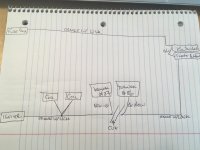
Here's a diagram I drew up, so this is what it should look like right? Tried to be clear as possible. I need to cut on the Kill switch/starter button side of the Orange/white wire and route the kill switch side to #86, and the coil/ignitor side to terminal #87
IMG_7068.jpg
 
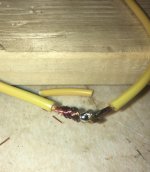
I got some 16G wire and wrapped it together per the video and it took 5 min of holding the solder gun to the wire to get this result. The solder just wouldnt melt. Since soldering isnt too successful, I'm thinking at this point I will just butt splice ( I have good crimp pliers) the wires and wrap well in electrical tape. Dont want to screw up the wiring with a bad solder job.
IMG_7066.jpg
 
Back
Top