• Required reading for all forum users!!!

    Welcome!
    Register to access the full functionality of the GSResources forum. Until you register and activate your account you will not have full forum access, nor will you be able to post or reply to messages.

    A note to new registrants...
    All new forum registrations must be activated via email before you have full access to the forum.

    A Special Note about Email accounts!
    DO NOT SIGN UP USING hotmail, outlook, gmx, sbcglobal, att, bellsouth or email.com. They delete our forum signup emails.

    A note to old forum members...
    I receive numerous requests from people who can no longer log in because their accounts were deleted. As mentioned in the forum FAQ, user accounts are deleted if you haven't logged in for the past 6 months. If you can't log in, then create a new forum account. If you don't get an error message, then check your email account for an activation message. If you get a message stating that the email address is already in use, then your account still exists so follow the instructions in the forum FAQ for resetting your password.

    Have you forgotten your password or have a new email address? Then read the forum FAQ for details on how to reset it.

    Any email requests for "can't log in anymore" problems or "lost my password" problems will be deleted. Read the forum FAQ and follow the instructions there - that's what we have one for...

  • Returning Visitors

    If you are a returning visitor who never received your confirmation email, then odds are your email provider is blockinig emails from our server. The only thing that can be done to get around this is you will have to try creating another forum account using an email address from another domain.

    If you are a returning visitor to the forum and can't log in using your old forum name and password but used to be able to then chances are your account is deleted. Purges of the databases are done regularly. You will have to create a new forum account and you should be all set.

Solid State Power Box STANDARD INSTALLATION

posplayr

Forum LongTimer
Past Site Supporter
TGSR Superstar
Download a copy of the install guide. It is a 13 page pdf file.
Preliminary SSPB Installation Manual

This is a preliminary markup of a 1977 GS550 schematic and represents what is involved with converting your single fuse bike to use the SSPB.
SSPB Install for 1977 GS550

Status Update 1/17/2014
The first 10 units of the Solid State Power Box with the Rev C PCB's (no red wires) have been completed and delivered. See this video and an overview of the capability and installation.
SSPB Overview Video for First production units

The first production run of the Solid State Power Box (SSPB) is in full swing now and I have been posting links to YouTube videos outlining standard installations of the SSPB.
Solid State Power Box: 1983 GS1100 ED Demonstration
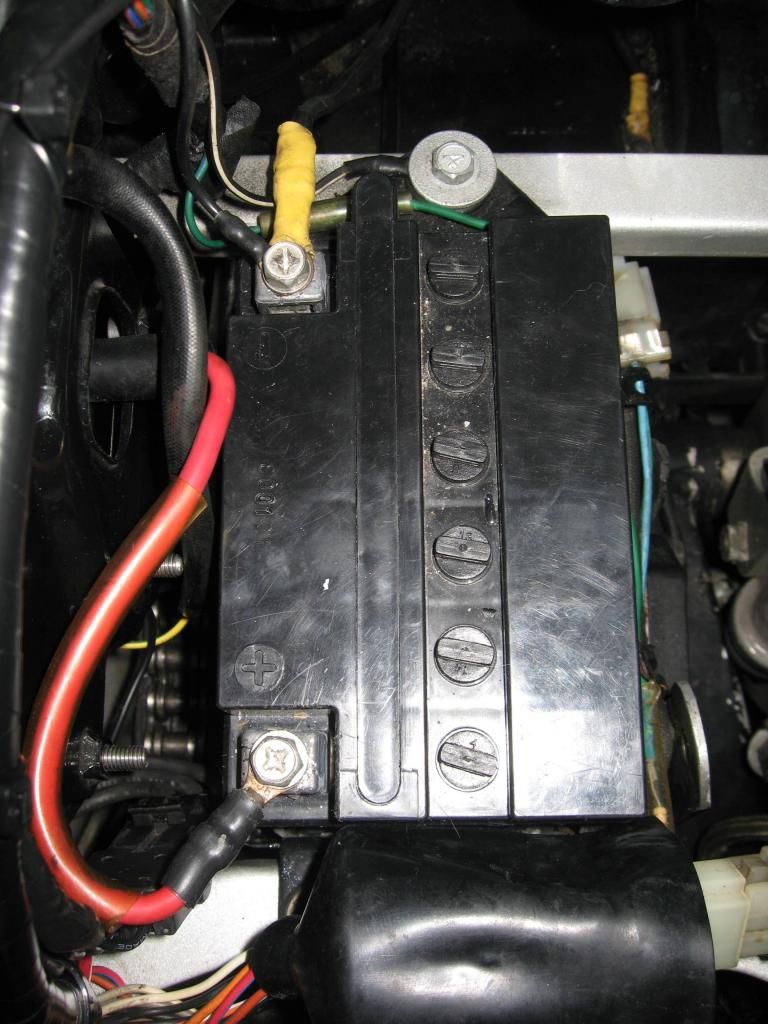
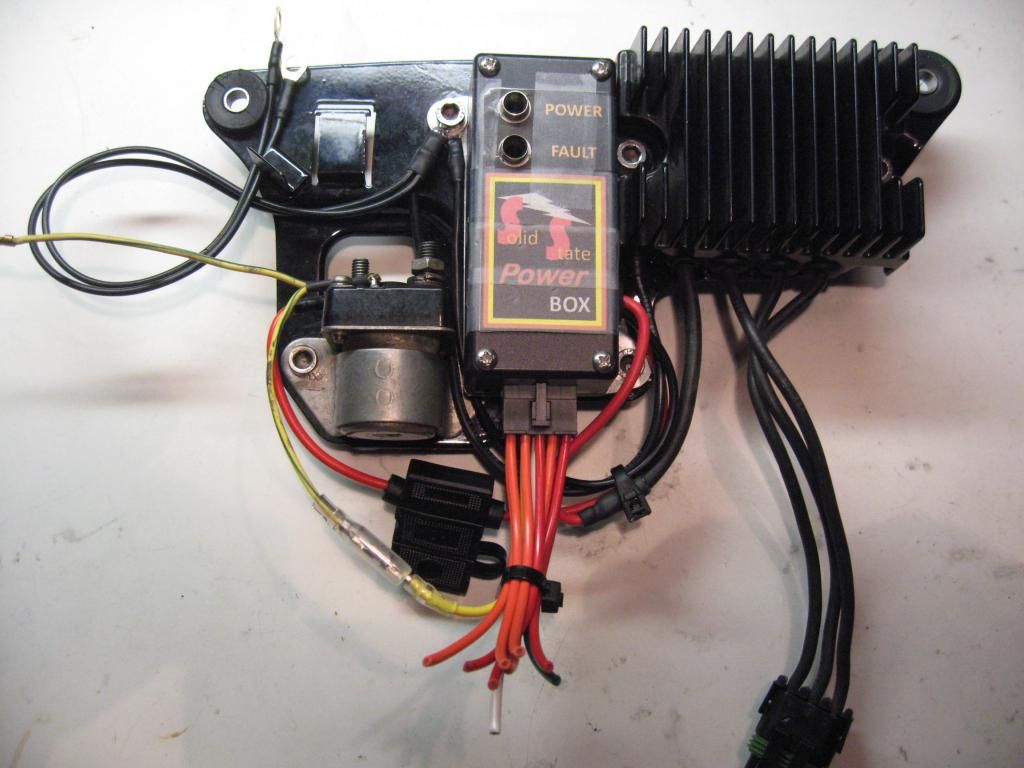
IMG_10061_zpsd27f652f.jpg


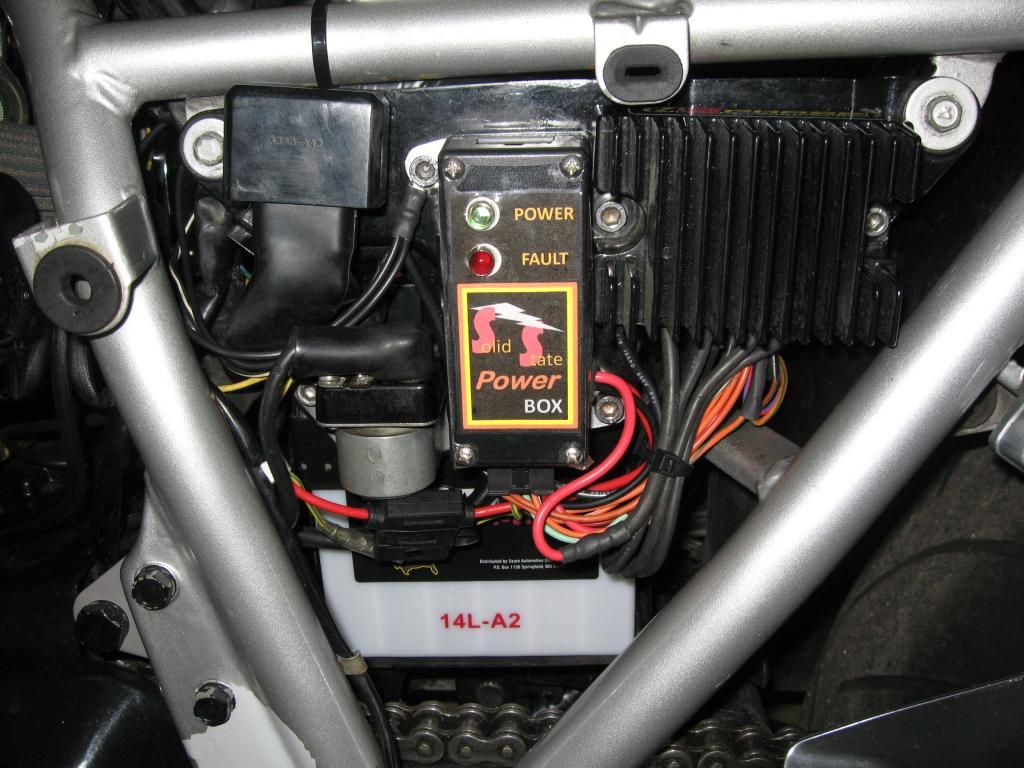
IMG_10041_zps4a967792.jpg


Here is the original link describing the product.

http://www.thegsresources.com/_forum/showpost.php?p=1887048&postcount=1

This thread will focus on Standard Installations for any GS Suzuki that already has a fuse box and you are looking to replace it with the SSPB. If you don't already have a fuse box and only have one main fuse, things are a little more complicated and I will start a new thread for describing that and others.


Here is a small library of install videos for the SSPB.


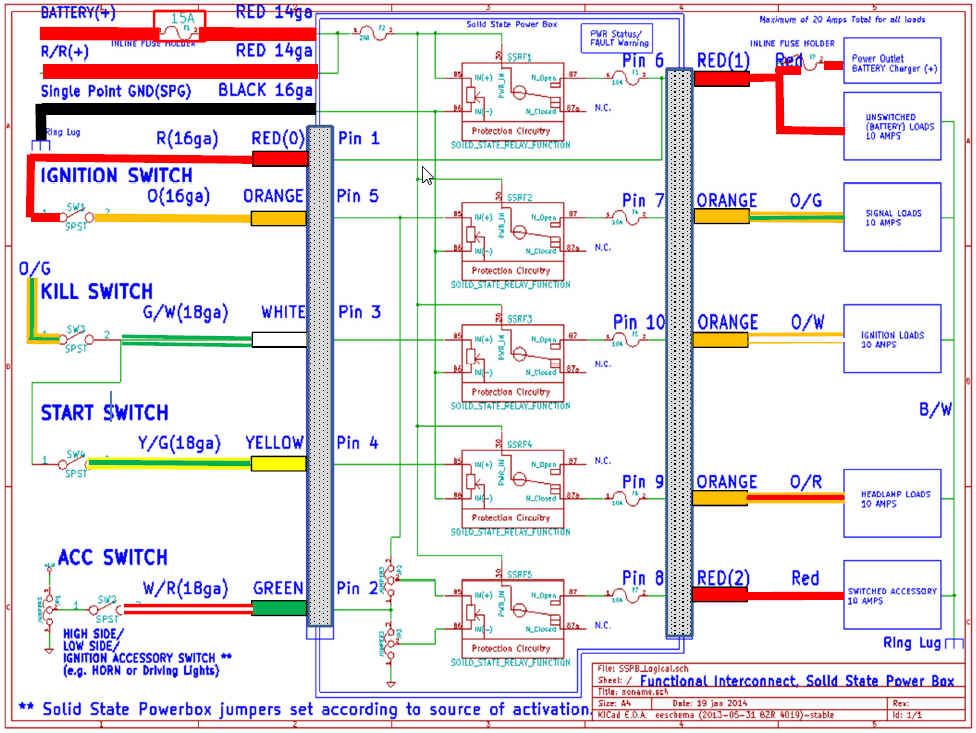
Introduction to the Solid State Power Box (SSPB) features and capabilities. The SSPB replaces your existing motorcycle fusebox to upgrade and improve your entire motorcycle electrical system. The SSPB features five 10 amp, "Safe Power" channels for distribution to your harness. SSPB delivers power which is protected against over current, over temperature and +/- conducted voltage spikes. With the SSPB, the Ignition, Kill and Start switches only signal the SSPB to distribute power. This avoids voltage drops due to corroded and over heated switches and excessively long high current runs.
Solid State Power Box Introduction


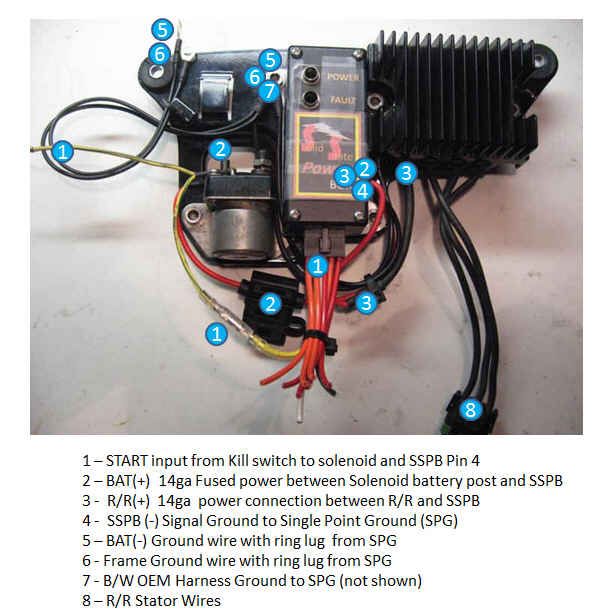
Overview of interconnections for the Solid State Power Box and the installation on the electronics side plate of a 1983 GS1100ED with Compufire Series R/R. The install will be very similar for any 5 wire R/R. The video highlights the various connections made on the electronics side plate between the SSPB, R/R, Battery and starter solenoid including a Single Point Ground.
#2 SolidStatePowerBox: Power and Ground Connections Part A

#2 SolidStatePowerBox: Power and Ground Connections Part B


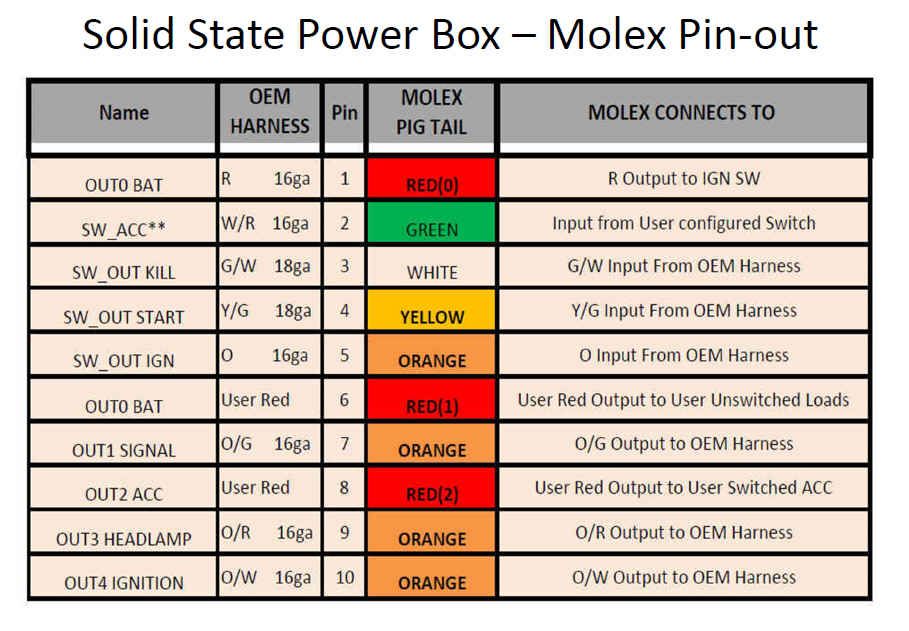
Overview of interconnections for the Solid State Power Box and the GS Suzuki harness. Provides an overview of the Molex 10 pin connector pre-wired with pigtails and how to connect it to the harness.
#3 SolidStatePowerBox: 10 Pin Molex Connectors Part A

#3 SolidStatePowerBox: 10 Pin Molex Connectors Part B


Video showing the wiring and soldering techniques for attaching the MOLEX pigtail unit to your GS Suzuki harness. This applies to GS Suzuki's with stock fuse box with SIGNAL(O/G), HEADLAMP(O/R) and IGN(O/W) circuits.
#4 SolidStatePowerBox: MOLEX/Pigtail to Harness Part A

#4 SolidStatePowerBox: MOLEX/Pigtail to Harness Part B

#4 SolidStatePowerBox: MOLEX/Pigtail to Harness Part C

#4 SolidStatePowerBox: MOLEX/Pigtail to Harness Part D

#4 SolidStatePowerBox: MOLEX/Pigtail to Harness Part E
 
Last edited:
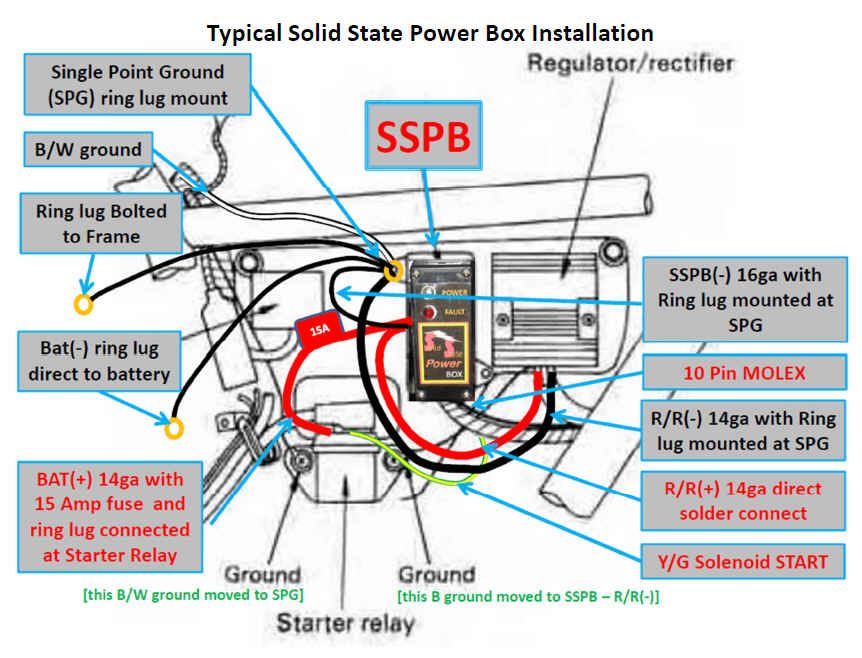
OPTIONS FOR VOLTMETER and POWER PORT INSTALLATION:

picked up one of the earthquake proof ones. Does this wire right to the battery? maybe i could wire it into my sspb?
Hook it to O/G (Pin7) SIGNAL or the RED2( Pin 8) switched ACCESSORY if you want the voltmeter only ON when the ignition switch is on. You would need t o jumper ACCESSORY to come on with the IGNITION SW however. If you use O/G, then keep it as close to the SSPB output as possible. If you converted to Led then probably any where on o/g.

If you add a charger port then it is nice to see volts when trickle charging but you need an extra switch.
I have an accessory port for 12v devices including trickle chargers. So I wanted to see voltage when the bike is off but not drain the batt. I measure the unswitched output at the plug but with a small inline switch I can turn off.

it is not necessary to trickle charge , only to activate/deactivate the meter.

Here is a schematic


SSPB_Voltmeter_Connections_zps7z6yrlm3.jpg


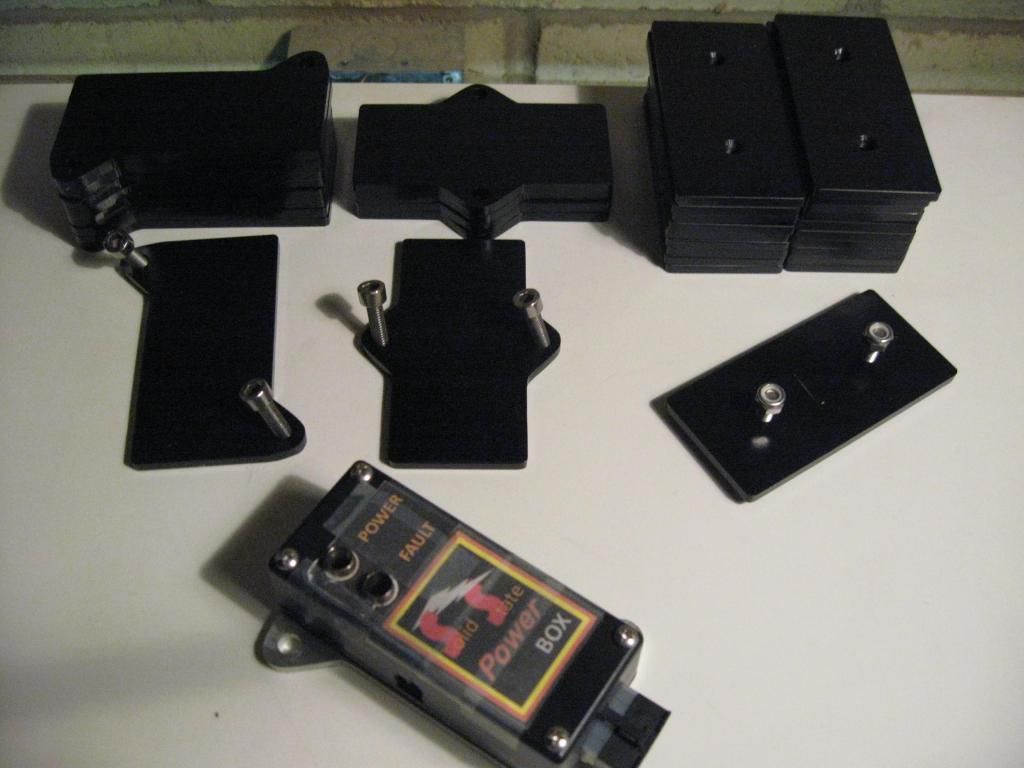
There are currently three heatsink options for mounting the SSPB to your bike.

Diagonal tabbed base (fits later 1982+ GS models)

Horizontal tabbed base (fits earlier version hole patterns)

Tabless base for non standard installs where you want to save space.

IMG_0940_zps6fc4f064.jpg
 
Last edited:
INTRO
Here is a little discussion on power and ground wire sizes and voltage drops between the R/R and Battery and what happens if you run 4 foot wires v.s. 1 foot in order to locate the R/R to the front of the bike. The SSPB is designed with relatively short 1 foot long leads. The R/R(+) and R/R(-) are 14ga while the BAT(-) is only 16ga. According to this analysis while charging you can expect just at 0.1V drop (between R/R and battery) due to the size of these cables. In other words there is really no reason to put in larger ones.

DISCUSSION:
There is no reason that you could not extend the Red R/R(+) wire and the Black R/R(-) wires 4 feet to put the R/R in the front of the bike. The SSPB would not care but you will lose voltage to the battery and it will not charge as much.

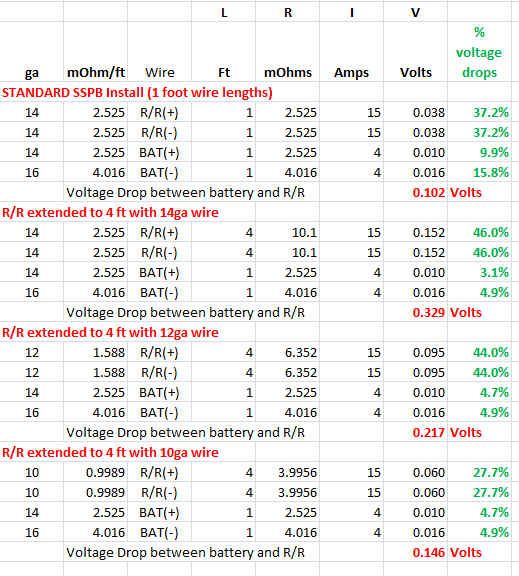
I did some quick calculations (assuming standard ignition and incandescent bulb loads) and here are the results:

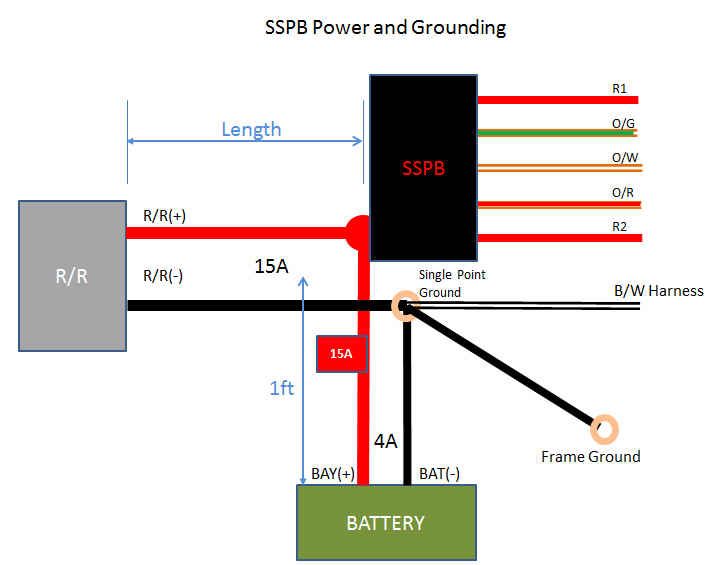
This is the basic configuration for how the SSPB is connected to the battery and R/R. In this analysis I am going to change the length from 1ft out to 4 ft. And then look at the impact using different wire gauges on the R/R(+) and R/R(-) wires coming from the SSPB and SPG respectively. These come standard as 14 ga wire, but I look at how 12ga and 10 ga wires perform at 4 ft. The primary thing to look at is the total voltage drop between the R/R and the battery. If the R/R has a 14.5V set point then subtract what ever voltage you see calculated to be the net charging voltage to the battery.

Note this analysis is for the SSPB which is a virtually an ideal case. If you have a stock fuse box there will be additional connector losses.

SSPB_Pwr_grounds_zps54a28667.jpg


The standard SSPB install should only lose 0.1 volts with 1 foot 14 ga leads. That is virtually imperceptible. If the same 14ga leads are extended to 4 ft then the drop becomes more measurable at 0.33 volts. This is not due to corrosion or connector loses it is simply cable resistance losses. It means you will always charge low and expect to barely get over 14V in the best case at your battery. If you have poor connections somewhere (harder to do with the SSPB) then it will get worse.

To compensate for the extra length, I increased the wire size to the R/R to 12 and 10 ga for voltage drops of 0.2V and 0.15 volts respectively. As you can see you have to add a very large wire to compensate for the extra length to get back to a charging performance of the standard SSPB configuration.

VoltageDrops_zpscb0fb890.jpg
 
Last edited:
Watching the last of the videos now. Out of curiosity, how difficult would it be to de-pin the molex connector that comes with the kit, and pin the harness directly to the connector?

My OCD hates solder, and shudders at the sight of shrink wrap...
 
Watching the last of the videos now. Out of curiosity, how difficult would it be to de-pin the molex connector that comes with the kit, and pin the harness directly to the connector?

My OCD hates solder, and shudders at the sight of shrink wrap...

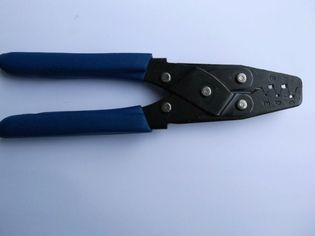
I would much prefer you crimp your own connectors on but I have had my doubts about peoples ability to do it. I did 10 sets tonite mainly using my cheaper crimper below.

I will let you know that when you first see the pins it is a bit intimidating (they are small) but with directions, the right tools and a little practice it is pretty easy.

I can work up a tutorial on that as well; direct connection is how I plan to do my own bike as well.


P.S. I would still dab a little solder on the crimp to secure it mechanically and against corrosion.

Not the best crimper, but it does do the little molex pins in two-three steps if you solder.

http://www.cycleterminal.com/crimp-tools.html

From CycleTerminal $31.55 each ECT39
open-barrel-terminal-crimp-tool_zps8ba88f5d.jpg


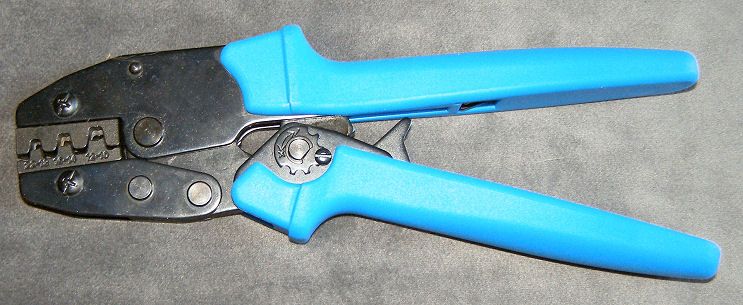
This is a great crimper for the price, but I'm not sure if it will do the molex pins as they are so narrow.
http://vintageconnections.com/
Our 3rd Generation of Ergonomic Ratcheting Crimping Tool Makes Professional Crimping of Open-Barrel (F-Crimp) Terminals 30% Easier! --
VC_3rdGen_Crimper_zps91ad6ad6.jpg


http://vintageconnections.com/
 
Last edited:
Jim,

My single point ground that I run all my grounds too is on the frame not on the fuse block. I also run a ground from that point to the engine ground point and to the neg battery point. Is that ok with the sspb setup?
 
Jim,

My single point ground that I run all my grounds too is on the frame not on the fuse block. I also run a ground from that point to the engine ground point and to the neg battery point. Is that ok with the sspb setup?

Yes that is fine, then you don't have to use the mini harness.

You need to make sure that the B/W ring lugs have goo grounds to the frame then; ideally to the frame mounting point.


Basically you need to stack ring lugs or fix together as I did

  • Frame
  • Battery(-)
  • R/R(-)
  • B/W ring lug
  • SSPB Ground
need to be all connected somewhere that is reasonably close (i.e. short 14 AWG wire) to the R/R(-)
 
I would much prefer you crimp your own connectors on but I have had my doubts about peoples ability to do it. I did 10 sets tonite mainly using my cheaper crimper below.

I will let you know that when you first see the pins it is a bit intimidating (they are small) but with directions, the right tools and a little practice it is pretty easy.

I can work up a tutorial on that as well; direct connection is how I plan to do my own bike as well.


We can work on that, but the pins are a little intimidating when you first see them.

P.S. I would still dab a little solder on the crimp to secure it mechanically and against corrosion.


Not the best crimper, but it does do the little molex pins in two-three steps if you solder.

From CycleTerminal $31.55 each ECT39
open-barrel-terminal-crimp-tool_zps8ba88f5d.jpg

I'm not afraid of pins. In my 'former life' I built Sport Compact cars, and on more than one occasion I've converted a harness to run an ECU that the car was not intended to have.

If you've never seen the difference between an OBDI/II/IIb ECU, they're a lot of "fun"...

attachment.php


Never used an 'adapter harness', either. My OCD hates those even more than butt connectors.
 
need to be all connected somewhere that is reasonably close (i.e. short 14 AWG wire) to the R/R(-)

It is. It's the frame cross member that the front of the air box attaches to so maybe 2" additional. And yeah, I am stacking the rings currently but will probably move to combining the rings together like on your included wire. Thanks. Looking forward to getting this installed.
 
I'm terrified. But I assume you will be here to help along the way when I need help.
 
I'm terrified. But I assume you will be here to help along the way when I need help.

There is no need to be terrified; you won't get hurt but the biggest risk is in getting frustrated or flustered.

I'm spending a lot of time doing the video's and trying to keep the directions easy with a minimum of theory so that if you had planned on doing anything like rewiring your bike or installing a R/R that this will not be too much more of a stretch. :)

Understand I will help but I don't want to handhold 10 different people through every step. You should watch the video and read the other installation directions. Of course if you are stuck or if there is anything confusing I would want to help you with that or rewrite/reorganize the documentation to reduce/eliminate whatever is confusing. The easier this documentation is to understand the less work it will ultimately be for me. I'm expecting that most of the help people will need is in the variations from what I might have encountered in my videos.;)

In the end the benefits of the SSPB should outweigh whatever challenges you might have in getting it installed; if you still feel like you can't modify your harness then let me know and maybe we can workout an arrangement if you are willing to send it to me. :o
 
Last edited:
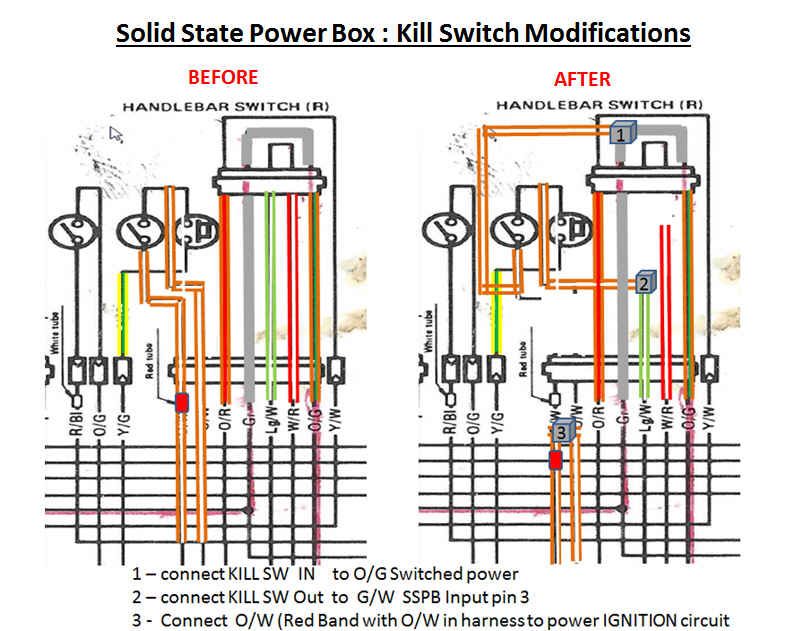
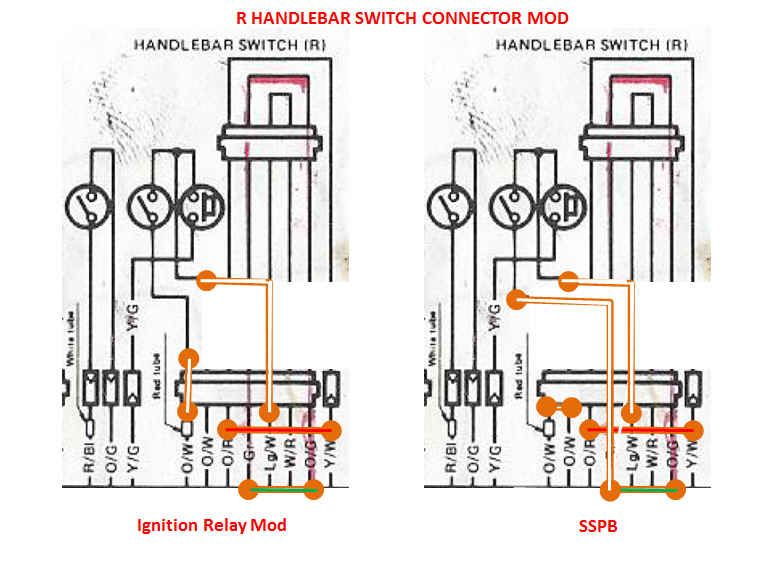
I completed the installation of the prototype SSBP onto my GS1100ED. I updated the documentation in post #2 of this thread to show how to modify your connector for the kill switch connections.

http://www.thegsresources.com/_forum/showpost.php?p=1965977&postcount=2

I will wait till the first shipment is complete to do anymore videos.

Everything is working so I will start to complete the production of those people that have paid. Get you payments in soon if you have not already done so.

Send me an email at solidstatepowerbox@gmail.com with any questions. I plan to complete this initial batch and ship by Dec 10th 2013.


Solid State Power Box: 1983 GS1100 ED Demonstration

http://www.youtube.com/watch?v=U5xObIAwZwI&feature=youtu.be


IMG_09601_zps7d85357a.jpg


Here is the original link describing the product.

http://www.thegsresources.com/_forum/showpost.php?p=1887048&postcount=1
 
Link says "This video is private". Is it only for people who have purchased the SSPB?

My appreciation of technical innovation and natural curiosity makes me want to view all your videos, even though I have not (yet) purchased a SSPB.
 
Link says "This video is private". Is it only for people who have purchased the SSPB?

My appreciation of technical innovation and natural curiosity makes me want to view all your videos, even though I have not (yet) purchased a SSPB.

Should be fixed now. I intended to make all the videos public.
 
I have a preliminary Install manual completed tonight to complement the YouTube (and hopefully reduce) the number of videos.

Contact me at Solidstatepowerbox@gmail.com if you would like a copy of the install guide. It is a 13 page pdf file.
 
Back
Top