I think you missed the point. I said "YOUR first task ..."

I don't know of any engine that small that would have a turbo. For the cost and effort involved in adding a turbo to that size engine, you could substitute a larger engine that would be easier and cheaper.
If you have never been involved in turbocharging an engine, sit down and realize what you are up against. There are kits to put a turbo on a motorcycle, so obviously, it's possible. I don't think I have ever seen a bike with twin turbos, let alone
multiples. Even though you claim to have "a lot of welding" experience, just locating the turbos will be hard. By "locating", I don't mean
finding them, I mean
putting them on the bike. Where were you thinking of putting them?
There are two locations I have seen for the single-turbo setup. On a more-or-less stock bike, they will remove the carbs and airbox and mount the turbo in that area under the tank. The exhaust will either snake around the side of the engine, back to the turbo, or it will go under, and come up between the engine and the swingarm. (On the 850, that exhaust setup won't work.) The single exhaust from the turbo will usually exit out the left side, drop down along the frame rail, then go toward the back. On the intake side, there is a single carb that is mounted to the intake of the turbo, so at least the intake side is somewhat easy.
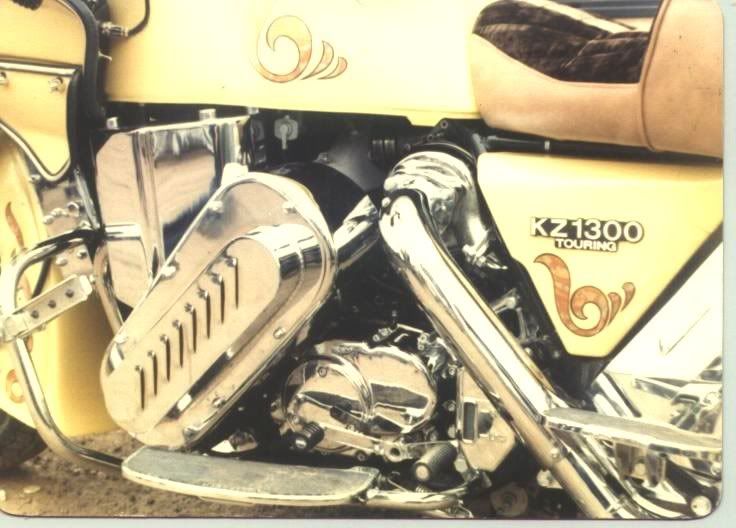
I know this is not on a GS, but it shows a turbo installed and the single exhaust going down and back.
This bike has the exhaust pipes under the engine, coming up to the turbo behind the engine, so you can't see them.
Now try to duplicate that with two or four turbos.
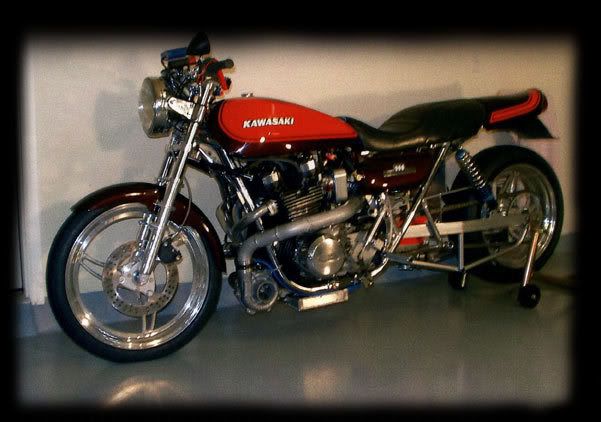
The other installation method I have seen is usually on drag bikes. That is because the turbo is mounted low, in front of the engine. The front end might have to be raked out a bit to make room for it, but this picture shows the location:
Now to get down to "why".
Other than just having 'fun' or doing an engineering exercise, the main reason for using multiple turbos instead of a single one is to reduce the "lag", which is the time it take for the turbo to start making boost. A smaller turbo has less mass and will spool up quicker, giving boost quicker. A turbo small enough for the 850 will probably spool up quickly enough, I don't think the split-second difference between the single- and double-turbos would really be noticeable.
More things to consider:
Converting an engine to pressurized intake has other considerations. The compression ratio of the engine in the bike is already reasonably high for performance. By simply hanging a turbo on there, you will not be able to use much boost, meaning you won't see much of an increase in power. That's a LOT of work for not much reward. By lowering the compression ratio, you will lose a bit of power when not using boost (which will be most of the time), but will be able to use more boost, which will really wake up the engine. The cams that are in the engine are ground to maximize efficiency at the upper end of the band, while still being docile enough to give respectable performance at idle and low speeds. The very characteristics that give the cam high-end performance work against it for turbo use, so you might have to look for a milder cam, and that would have to be custom-ground.
We have several racing guys on the forum, but I have not seen any of them respond to this thread yet. Probably because virtually all of the performance-related improvements are directed at the 16-valve engines.
I agree that the concept of a turbo (or two, or four) on an 850 is interesting, but if you simply want a bit more power, pull the 850 engine out and substitute a 1000 or 1100 engine. They pretty much bolt right it, but you have to move the driveshaft over along with the engine.
Not trying to discourage you, just giving you food for thought.
.