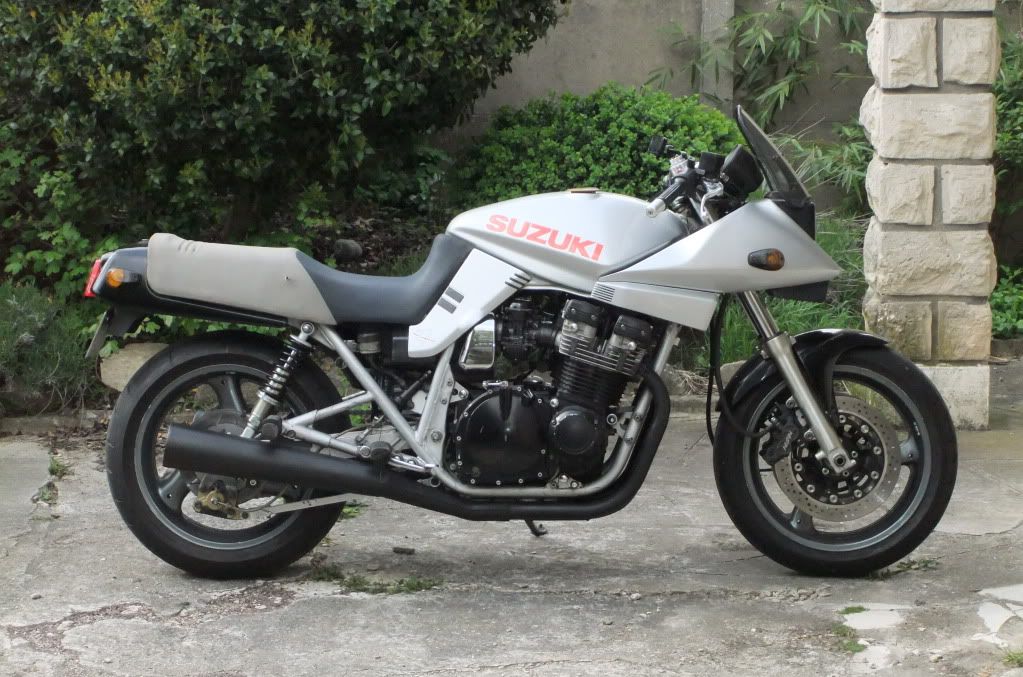
Kawfeedave is a little over the top...the 1100's do make a very competitive Vintage racebike - if you're man enough to handle it....17 inch wheels in the limited widths allowed make just enough difference to be interesting. The GS1000 I look after for a very good local rider is starting to get too much for it's tyres now too - not just weight but HP too...
Note that you state 'if you're man enough' and that your friend is a 'very good local rider'. I do state that it's possible to set-up and run a bike as described in the first post, but that it would take a degree of skill and experience, just as you described.
I think the point that many people miss is that the design and component choice of a new bike is far more than just seeing what's around, or what they can wedge into an existing bike. The suspension geometry, pick-up point, front/rear weight balance, wheelbase, head angle etc, are all carefully chosen to provide a specific result, and even then it's tested extensively for many miles by some very skilled riders.
All of the resto-mod projects I have seen were assembled on the basis of what was easiest to fit, or what they could find the cheapest when sourcing components, and that's not the way to build a race bike. The proper way would be to run it stock, identify the flaws one at a time, and then address those flaws individually. If the fork is too soft, or flexy, up grade the forks, then work on the springs, oil, valving, and settings, and get it working with the new forks. Then move on to address the next problem, and so on.
To simply replace everything front and rear, and then hit the track with a heavy, long wheel-base, tourque monster running modern suspension on a 30 year old frame is not the way to go. Show me the factory race team or racing shop that builds a hodge-podge bike and then send it out with a novice rider on day one, and I'll retract my posts, but you won't find it.
There's a reason that Kenny Roberts and Kenny Jr practice with XR100s on their ranch, and that's because it's the rider that makes it go fast, not the bike. They could handle any size XR they wanted, but all they need are the 100s to really work their skills and keep themselves sharp. A lighter, well sorted bike will be far eaiser to ride (and ride fast) then a mixed up, heavy brute of an 1100e, plain and simple.
All of that is ignoring the fact that modern suspenion and tires will load up the chassis that much faster, and spit the rider off that much quicker unless the bike and rider are both 'expertly set-up'. Watch the movie 'Faster' about Moto-GP, and they describe the life style as 'Practice on Sat, race on Sunday, and travel all week during the season, and then test, test, test, test, test, the rest of the year'. Set-up and rider skill are come first, big horsepower is a distant second.