Well thought out, Jim!
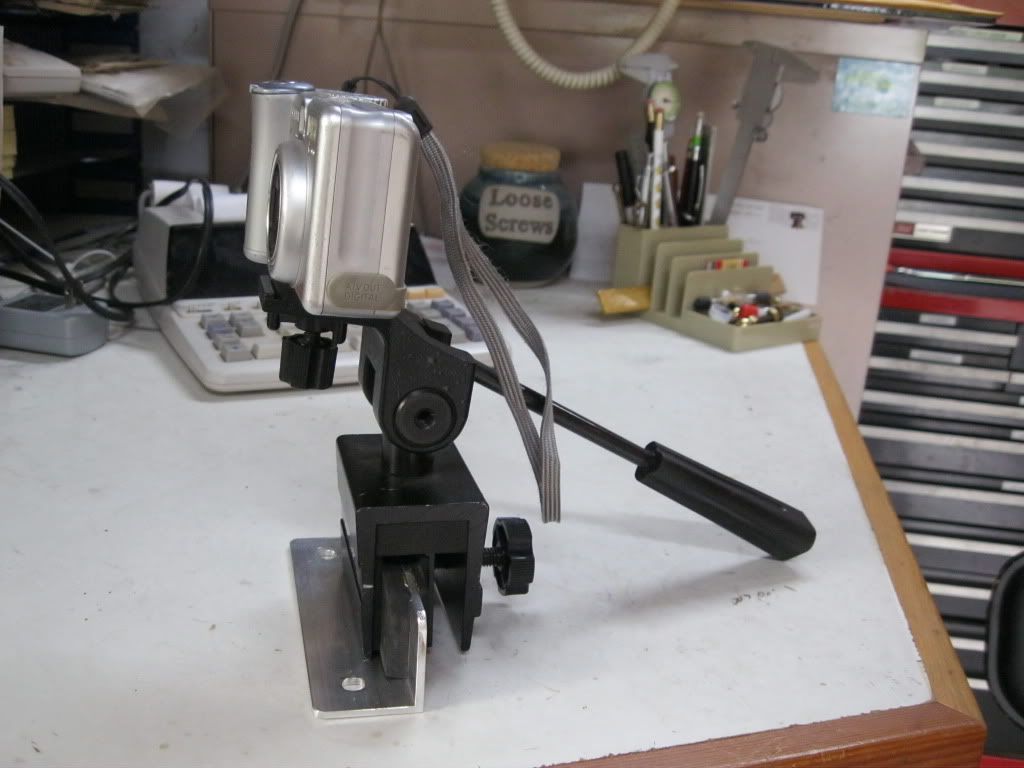
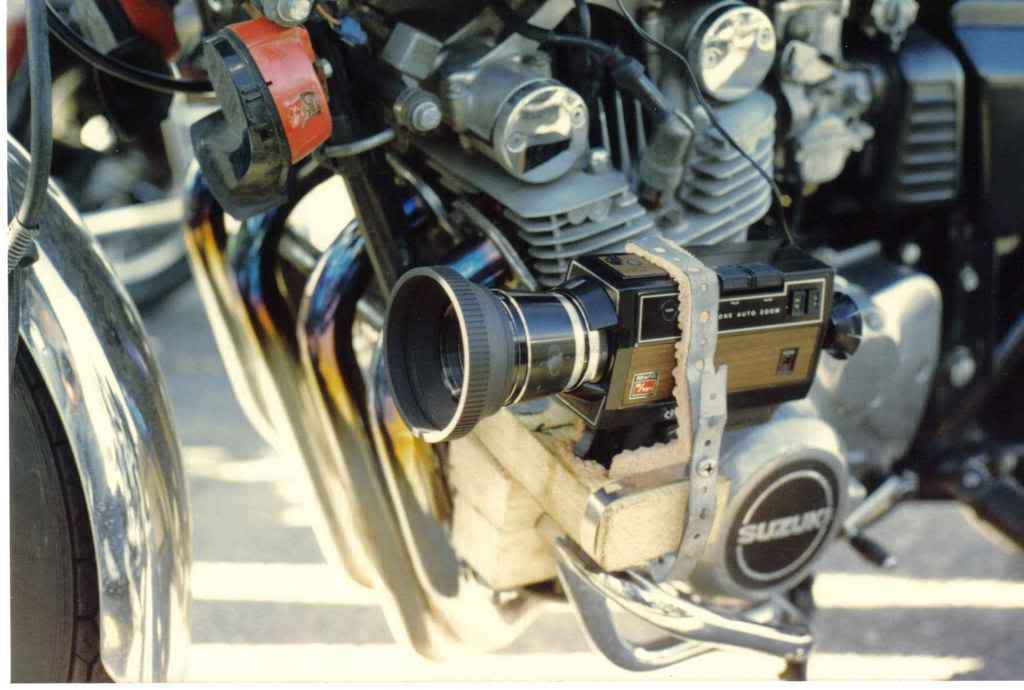
Greg (Nerobro) and I created a "last minute" camera mount for my Vetter fairing (that hung off the right side using the "lowers" mounting screws) the night before we did a track lap at the Indy Moto GP two years ago. Despite rubber dampening in various places it suffered from vibration at higher RPM's, and I now realize from your excellent description that the combination of a short bracket, along with low mass on the camera end contributed to the vibration problems (along with the camera having mistakenly been set to low res instead of high res - I'm still kickin myself for that one!). We also made a mount for his bike, which yielded similar results for the same reasons, although in his case the camera was set to record video "properly" ... it was just a lower resolution camera than mine.
If I ever use the mount again I'll remember to add weight to the bottom in order to improve the results.
Regards,
I just went and did a little trial fit thought experiment and it is important to get a diagonal arm (45 deg across the bike as shown in the pics) as well (like a camera mounted above the clocks from a mirror mount off the centerline and below the camera).
For example if you mount right off of the triple clamp then the any up and down motion will be transmitted right up through the arm. If the arm is perpendicular to that motion it allows the rubber to flex and the arm moves with respect to the bike but the inertial is actually keep it inertially stable (at least with respect to the nominal bike C.G. motion).
It is the offset that allows the weight operating at the end of the arm to deflect when the up and down motion occurs. With a completely horizontal arm you will not dampen and side to side motion either so 45 degrees to striaght vertical is best. There is not that much fore aft vibration to worry about. If there was you would need another degree of freedome and to a certain extent the handle bar gives that as well as additional vertical isolation.
Last edited:
 , I order a bunch of really expensive parts from Hong Kong
  so might take a couple of weeks but should have a pretty nice setup for a camera mount.