• Required reading for all forum users!!!

    Welcome!
    Register to access the full functionality of the GSResources forum. Until you register and activate your account you will not have full forum access, nor will you be able to post or reply to messages.

    A note to new registrants...
    All new forum registrations must be activated via email before you have full access to the forum.

    A Special Note about Email accounts!
    DO NOT SIGN UP USING hotmail, outlook, gmx, sbcglobal, att, bellsouth or email.com. They delete our forum signup emails.

    A note to old forum members...
    I receive numerous requests from people who can no longer log in because their accounts were deleted. As mentioned in the forum FAQ, user accounts are deleted if you haven't logged in for the past 6 months. If you can't log in, then create a new forum account. If you don't get an error message, then check your email account for an activation message. If you get a message stating that the email address is already in use, then your account still exists so follow the instructions in the forum FAQ for resetting your password.

    Have you forgotten your password or have a new email address? Then read the forum FAQ for details on how to reset it.

    Any email requests for "can't log in anymore" problems or "lost my password" problems will be deleted. Read the forum FAQ and follow the instructions there - that's what we have one for...

  • Returning Visitors

    If you are a returning visitor who never received your confirmation email, then odds are your email provider is blockinig emails from our server. The only thing that can be done to get around this is you will have to try creating another forum account using an email address from another domain.

    If you are a returning visitor to the forum and can't log in using your old forum name and password but used to be able to then chances are your account is deleted. Purges of the databases are done regularly. You will have to create a new forum account and you should be all set.

Battery amp lesson help

ukjules

Forum Sage
I have never known how to test a motorbike battery or any battery to test the amps ?
This is not related to another thread I have open. This is a separate bike issue.

(Can I add I am the worst at electrics but can do basic diagnosis)

I ask this as on my GSX250 i have a madly old lead acid battery that I have kept going for.over 7 years . However it is now given up the ghost I think .
I have revived it and it has 12.8v on bike now but won't start the engine.
Adding a mega battery start device starts engine ok.

So the battery is for sure showing ok volts but the amps are no longer enough to start a bike - I assume.

So how could I with a multimeter test for this ? Or satisfy my curiosity on finding what amps are on this knackered one and a new battery?
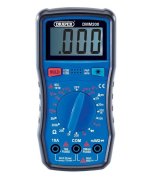
I have a new multimeter (pic attached)
Or is this too small to test the amp output ?

I desire more than anything to attain this knowledge.
Help ....
 

Attachments

  • 20240513_155653.jpg
    20240513_155653.jpg
    83.4 KB · Views: 0
A multimeter is not going to give you the information you desire. You need to put a load on the battery, like a headlight bulb. For a lighter load, use a turn signal bulb (it's about half the load).

With an old battery, it is quite common to see the voltage, but there simply is not enough capacity to support any kind of load. For all the effort you are going through, you may as well just resign yourself and get a new battery. When you get your new battery, charge it overnight BEFORE putting any load on it, even if the retailer says it's "ready to go". It might be an old superstition, possibly removed with newer technology and chemistries, but I have heard that whatever the charge level on a new battery, the first heavy load (the starter), it sets that charge level as a "set point" and calls it 100%. Subsequent use and charging will not allow it to go over that point. As I said, that might not be valid any more, but it can't hurt. :-\\\
 
As far as getting an amp-hour number, no.

The best you can do with a standard multimeter is functional testing using the motorcycle to create a load.

Start with a charged battery.

Hook up the multimeter DIRECTLY to the battery (use jumpers or clips so you can use your hands, careful about shorting), note the voltage with the key off, then turn the key on (without starting the bike) to place a load on the battery. Note the voltage with that approximately five to seven-ish amp load, and note how fast it's ticking downward. Turn the key off and take note of the new resting voltage and how long it takes to recover.

So a battery in good shape will read a minimum of 12.5 up to 12.8 volts resting, and, very roughly speaking, the voltage will drop slowly by, oh, maybe half a volt or so over the course of 30 to 60 seconds.

With some experience in this, you can make a rough approximation as to the battery's overall health by seeing how quickly each tenth of a volt passes by. Slowly is better than quickly.

If it drops below 12 volts in, say, 30 to 60 seconds, it's getting pretty weak. I bet your old battery goes well into the 10V range or below the second you turn the key on.

Now leave the meter hooked up, and try to start the bike. It's really hard to catch on a digital meter if the bike starts right away, but the bike won't start if the voltage while cranking drops below 10V. I'm guessing your old battery drops way below that, to the point where it won't turn the starter.

Now stop trying to start the bike (or switch it off if it started, then turn the key on), leave the key on, and see how the battery recovers. A worn-out battery can't recover, and might even read something like 7 volts or less, maybe even zero volts. A good battery will easily stay above 12 volts.

Now turn the key off and see what you get. A good battery should recover within .2 volts of the original resting voltage.


If a battery reads good off the charger, but can't sustain voltage with any load, some folks call this tricky phenomenon "surface charge". The voltage reads good, but there's not enough electrons to get anything done, and the second you place a load on the battery, it drops below the voltage where the bike can run, sometimes down to 2 or 0V.


There are fancy-schmancy electronic battery testers that test things like capacitance and monitor how the battery responds to various arcane electrical stimuli, and can generate a reasonably accurate approximation of the battery's amp-hour capacity. (I'm not 100% sure how these work, but they do seem to work.)

However, there's no real-world point to these gadgets in the vintage motorcycle world; what you want is to generate a yes or no functional result; will this battery reliably start my bike?
 
Last edited:
The battery is 7 years old. Consider yourself lucky. Buy a new one and move on.
 
Last edited:
Thanks guys. GSX and GS now share a battery .....
By elimination it is of course knackered. Agreed.

Annoys me that I can't be more specific and
reveal yes voltage ok but it's only pushing out
??? amps. Agreed my multimeter is thus
not the tool to do this.

But agree - buy another !!
 
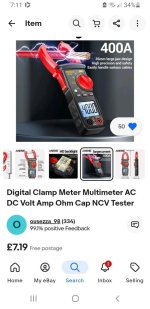
One more question. What about one of these devices ?

Yes agreed I already know battery is knackered
BUT
What coukd this tell me ? Or could it confirm
a poor battery due to lack of amps ?

I promise I won't ask about amps again ever ,!
 

Attachments

  • Screenshot_20240513-191140_eBay.jpg
    Screenshot_20240513-191140_eBay.jpg
    70.9 KB · Views: 0
One more question. What about one of these devices ?

Yes agreed I already know battery is knackered
BUT
What coukd this tell me ? Or could it confirm
a poor battery due to lack of amps ?

I promise I won't ask about amps again ever ,!

It could tell you the starter current draw - on a good battery.
It will tell you nothing about anything if the battery's dud.
However, even lack of information is still information.
 
Actually, you can hook up the DVOM and watch it while you hit the crank button.
The below information is based on a good battery charge with the battery at or around 12.5 volts - aka: static voltage. A long SLOW and LOW charge is always recommened before testing.
If it drops under 10.5 volts you do not have the AMPS to crank the starter or it'll crank slower than normal.
If it hovers around 10.5 volts your battery is iffy.
If it stays above10.9 volts you're good to go.
When the bike starts and runs your voltage should increase to over 13.2 volts. Anything less could lead to charging issues and a dead battery.

If your DVOM has an amp clamp you can check starter amp draw but this might be above your experience. No biggie.

I have a battery from 2017 that is in one of my bikes. Been working great. However, with my experience, I can tell it's starting to lose the all important amps...

If you can pour out the liquid inside the battery, add fresh (this is battery acid) you can revive the battery but as cheap as batteries are now...

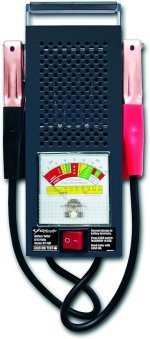
Find an old battery "toaster" as this is the most accurate and easiest way to test without a VAT40. From whats been shared with me from ALL the battery manufactures I've dealt with, the digital battery testers available are mostly worthless. I have a couple that have proven this point. Still have one of these:

When you hit the button, you'll understand why it's called a toaster...

71Mc87ocCWL._AC_SY879_.jpg
 
If you can pour out the liquid inside the battery, add fresh (this is battery acid) you can revive the battery...

Is that recommended?

Years (decades) ago, a neighbor had a dead battery in her car. Having a jug of battery acid, I told her I could 'juice' it up and get her going, but doing so was not in the best long term interest of her battery. (It worked.)

I've always heard that after it's initial fill up and charge, nothing should ever be added to a battery except distilled water. I guess this is becoming obsolete knowledge. Do they even make old style 'wet' batteries with removable cell covers any more?

I can't say I'll much miss 'wet' batteries, but why can't we have two stroke Kawasaki triples any more? I liked the way they smelled! :onthego:
 
Is that recommended?

Years (decades) ago, a neighbor had a dead battery in her car. Having a jug of battery acid, I told her I could 'juice' it up and get her going, but doing so was not in the best long term interest of her battery. (It worked.)

I've always heard that after it's initial fill up and charge, nothing should ever be added to a battery except distilled water. I guess this is becoming obsolete knowledge. Do they even make old style 'wet' batteries with removable cell covers any more?

I can't say I'll much miss 'wet' batteries, but why can't we have two stroke Kawasaki triples any more? I liked the way they smelled! :onthego:

There are many servicable batteries available and most auto parts stores sell the liquid.

If you need to top off, only add distilled water.

Is it recommended - only if you're cheap :-)
I don't renew batteries like this as I buy AGM style but I do know locals that do.

As for the triples, you are correct about the smell. Run some Tru Fuel through your weedeater and it'll bring back some memories!!!
 
As for the triples, you are correct about the smell. Run some Tru Fuel through your weedeater and it'll bring back some memories!!!

Note: I tried this, and it DOES NOT work on electric weed 'wackers.' (Battery or plug in.) :cower:
 
Guys I am thankful for advice... Just thought I'd say that as not responding as in deep depression as have three bikes and can't ride any if them as one has a charge issue and the other two are stored elsewhere ... And the weather at least was great .....

Today I test batteries ... As I have a battery tester !
This for another car issue which turned out to be the starter motor brushes but I will use on my motorbike battery .....

​​​​​​Just want to see what it does ....... And what it shows on my known now dead lead acid battery that holds 12.7v but won't start a bike (and is 8 years old)
 
Put a multimeter (set at 20vdc) on the battery terminals and try to start the bike what does the meter read then? My guess the voltage will drop by a significant amount.
the only reliable test for a battery is a load test.
At eight years old in my experience motorcycle battery’s have reached their lifespan.
 
Back
Top