• Required reading for all forum users!!!

    Welcome!
    Register to access the full functionality of the GSResources forum. Until you register and activate your account you will not have full forum access, nor will you be able to post or reply to messages.

    A note to new registrants...
    All new forum registrations must be activated via email before you have full access to the forum.

    A Special Note about Email accounts!
    DO NOT SIGN UP USING hotmail, outlook, gmx, sbcglobal, att, bellsouth or email.com. They delete our forum signup emails.

    A note to old forum members...
    I receive numerous requests from people who can no longer log in because their accounts were deleted. As mentioned in the forum FAQ, user accounts are deleted if you haven't logged in for the past 6 months. If you can't log in, then create a new forum account. If you don't get an error message, then check your email account for an activation message. If you get a message stating that the email address is already in use, then your account still exists so follow the instructions in the forum FAQ for resetting your password.

    Have you forgotten your password or have a new email address? Then read the forum FAQ for details on how to reset it.

    Any email requests for "can't log in anymore" problems or "lost my password" problems will be deleted. Read the forum FAQ and follow the instructions there - that's what we have one for...

  • Returning Visitors

    If you are a returning visitor who never received your confirmation email, then odds are your email provider is blockinig emails from our server. The only thing that can be done to get around this is you will have to try creating another forum account using an email address from another domain.

    If you are a returning visitor to the forum and can't log in using your old forum name and password but used to be able to then chances are your account is deleted. Purges of the databases are done regularly. You will have to create a new forum account and you should be all set.

modified stock exhaust question

  • Thread starter Thread starter whiterabbitt
  • Start date Start date
wow, getting an education for sure, your giving me a lot to think about. thanks guys
 
I'll try and find an old article on this by Kevin Cameron, becuz he 'splains things gud.
 
has anybody cut their stock megs down? I am thinking of cutting them off just behind the rear hanger, as that is where the last rust hole is, ...
If you are still interested in cutting your pipes, may I offer a suggestion?

I would like to trade pipes with you. I have a set on an '80 850 that should fit nearly perfectly. The header pipes are in pretty good condition. Not perfect, but pretty good. My mufflers, though have rust holes. Since you are wanting to cut them off anyway, it sounds like a good swap to me. :o

.
 
I think everyone agrees that the intake valve opens before TDC and the exhaust valve closes after TDC and overlap is between that. As I understand it, the maximum torque is produced when the crank is around 90 degrees from TDC, therefore the exhaust valve will start to open well before BDC when the pressure in the cylinder is very high and before the piston has to push against that pressure. The exhaust pulse will have high pressure on its nose and low pressure trailing it - and if the velocity is sufficient, it will create a vacuum condition in the exhaust port by time the piston approaches TDC. This vacuum helps the intake charge displace the remaining exhaust gas in the cylinder head - the bigger the pressure differential, the more force the charge has to enter the head before the intake stroke even starts.
If It were necessary to hold the pressure of the intake charge from escaping into the exhaust port - that could be done by timing the exhaust valve to close earlier or the intake to open later rather than purposely designing a pressure to work against the exhaust stroke.

Two strokes are a different monster since the intake and compression happen on the same stroke. The pressure waves are necessary to keep the intake charge in, or even push it back into the cylinder. The expansion chamber and pipe length are used to determine when the pressure pulse will rebound back to the cylinder. Four strokes have a valve for this.

This is kinda what Yamaha's EXUP, Suzuki's SET and every other manufacturers exhaust valve system were (and still are?) were trying to take advantage of. They were able to achieve longer durations in the timing events, which benefit the high end, and used this valve to time a sonic pulse to help push the charge back in the cylinder just as the exhaust valve closed at lower RPMs- However this was after the initial vacuum in exhaust system pulled the charge past the head.

Turbos are also a different monster because they use the exhaust gas to pressurize the intake charge beyond atmospheric pressure. No exhaust scavenging is necessary since the intake charge pressure is high enough to push the remaining exhaust gas out of the cylinder.

I do agree that most systems are well designed from the factory and the physics involved in this are all Newtonian. I'm not an engineer and know the particulars of designing intake/exhaust systems are beyond what I know; but this is how I understand it tonight.
 
Last edited:
see now thats what I thought at first when I decided to cut em off.
I was a small engine mechanic for 3 years and had to learn some, mostly about 2 cycles, but then they arent designed for high performance. got an education again with my yamaha blaster when I piped that. and again with this ride.
the only thing I can be sure of is it is happier now with just 11 inches (from the weld at the collector) of megaphone left with nothing in it, and 110 mains, than it was with a baffle tube blocking up the collecter because it had rotted loose and moved forward.
loud as hell at anything above 4k but happier, and, by consensus of friends and neighbors, still quieter than the average hardley around here.

I tried to resore a bit of backpressure by pressing a variety of different 2 1/2 inch od, 1 to 2 inch id, washers in the megs but they all just made it fall on its face, the smaller ones soo bad that it would die when I rolled onto the throttle. hows that for backpressure! but they all made it a bit quieter NESSIM

I am begginning to think that the complexeties of the stock exhaust are a side effect of trying to make it quiet without hurting performance.
 
The air column that is passing through the head has momentum, so the pressure outside the intake valve will always be high, and the pressure outside the exhaust valve (after the bulk of gases have rushed out) will be low. At TDC after exhaust, there is a small slug of gases on top of the piston that cannot be pushed out, and "scavenging" does not pull them out because it is a dead end cavity. At this point, the intake valve opens just before the exhaust closes (valve overlap), and the slug of gases is pushed out the exhaust. This is a very precise process that is determined by the cams and aligned with the intake and exhaust pressures. You want the exhaust valve to close when the slug has been pushed out, before the fresh air/fuel can get sucked out. Backpressure is a very simple concept: it is the resistance of the air going out the exhaust valve. If there is less resistance to air escaping, then more air will go out during valve overlap. This means fresh air/fuel will be going out too, decreasing the air/fuel for the next combustion.

Scavenging is a complex term that is more often misunderstood and misused. It is NOT the process that removes the last exhaust pocket from the combustion chamber (see above), but rather it promotes an advantageous back pressure wave that cuts off the end of that slug. Using back pressure waves has dramatic effect in 2 stroke expansion pipes: a reflected sound wave in the pipe cuts off the changeover at the transfer port. 4 strokes use precisely timed valves, so there will be no dramatic change. In the 90s, Yamaha put EXUP valves in the exhausts of their FZRs to decrease back pressure at high RPM, but now engines rev higher with more power without such aids. Also, look at a turbo collector pipe sometime: extremely short pipes running immediately into a blockage (turbine). Do you think there is any "scavenging" going on there?

Suzuki exhausts are a system coordinated with engine setup to give optimal performance over a wide range. Changing exhaust sizes or removing mufflers will change back pressure, and the motor setup will no longer be optimal. It can be readjusted, with slotted sprockets, precision tools and accurate knowledge (not just buddy's hunch), but it can be a lot of work. The science for this has been around a long time. In fact, Suzuki got it very, very right a long time ago.

The difference between a 4:1 and a 4:2:1 exhaust appears to be related to the scavanging effects tuned to peak at about 10K RPM for the 4:1. The 4:2:1 moderates this to improve the mid range which suffers around 5K for the 4:1.

Scavaging in this context refers to the negative pressure of the standing pressure wave outside the exhaust valve at 10K RPM.
 
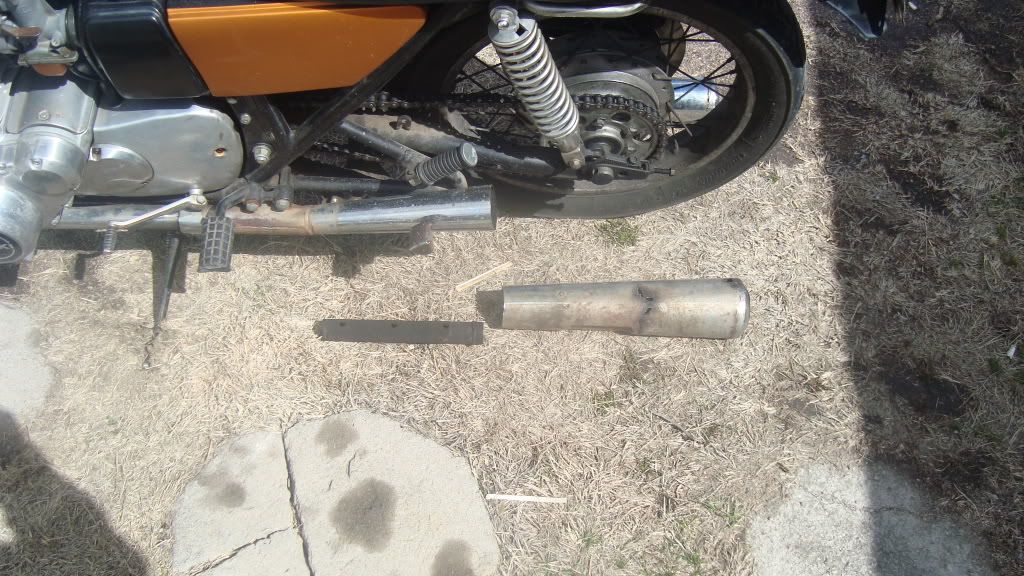
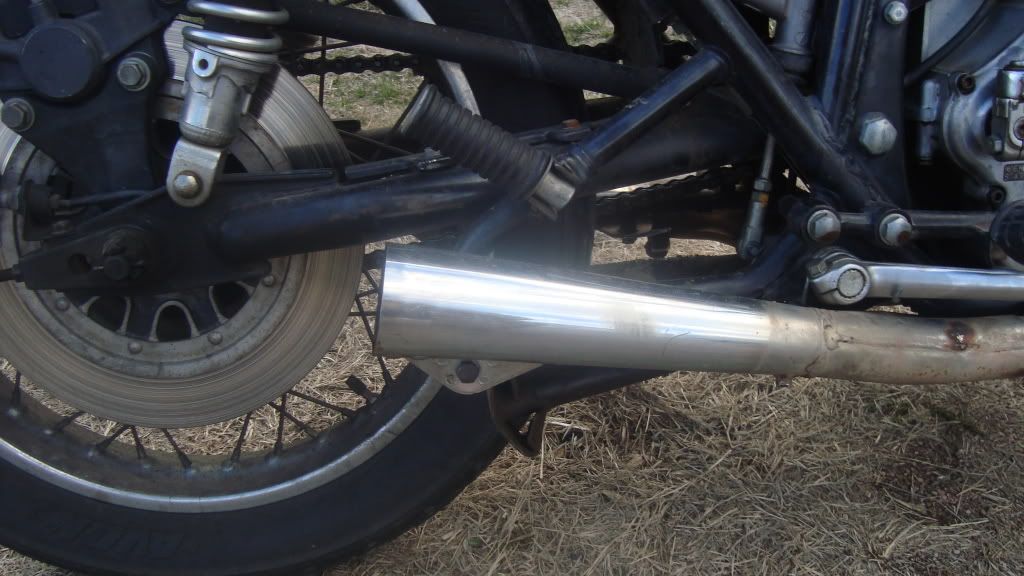
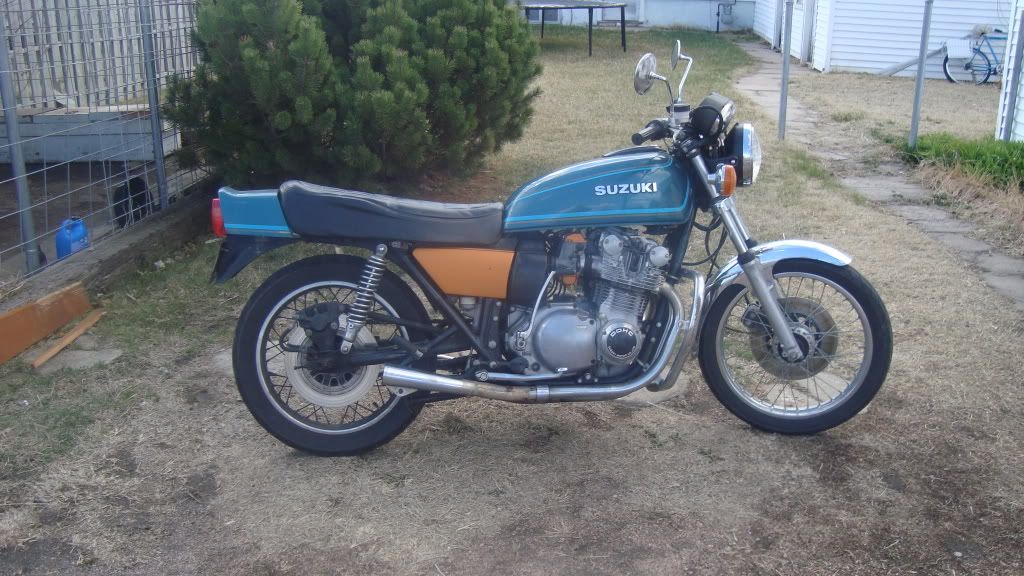
I finally am able to post the pics I said I would

what I did
DSC02526.jpg


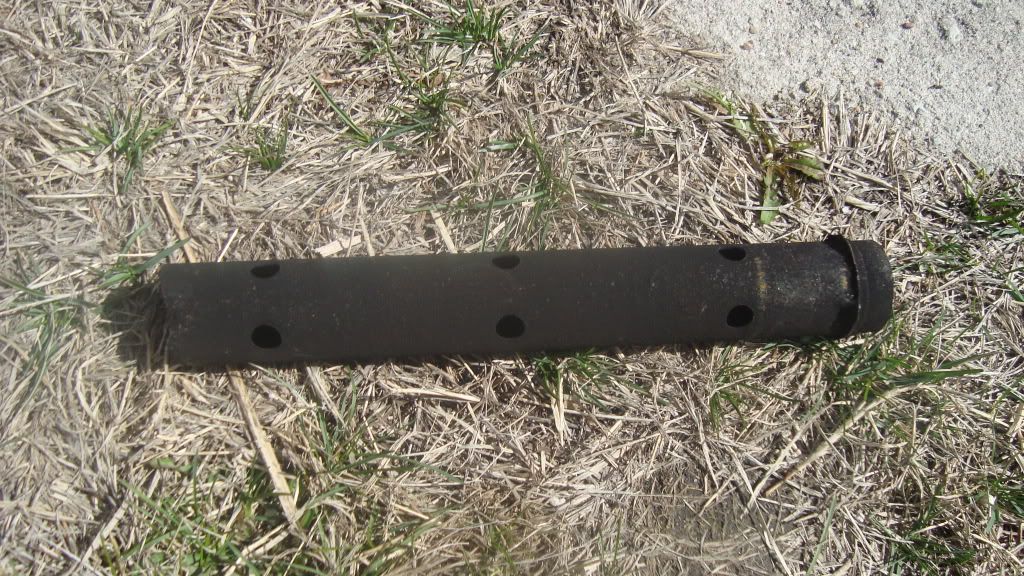
why I did it
DSC02527.jpg

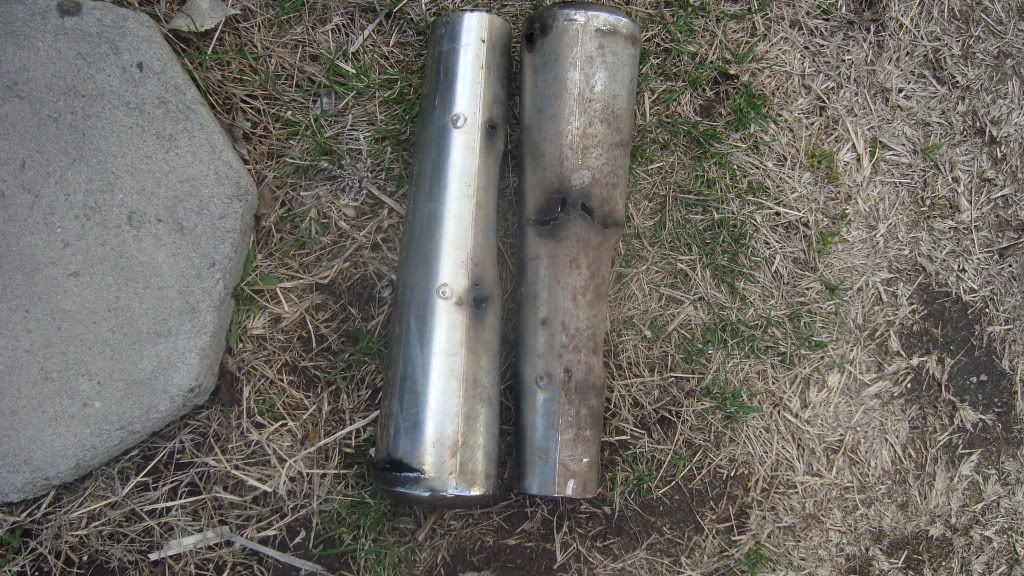
this one fell out

DSC02528.jpg

rusted through

DSC02530.jpg
 
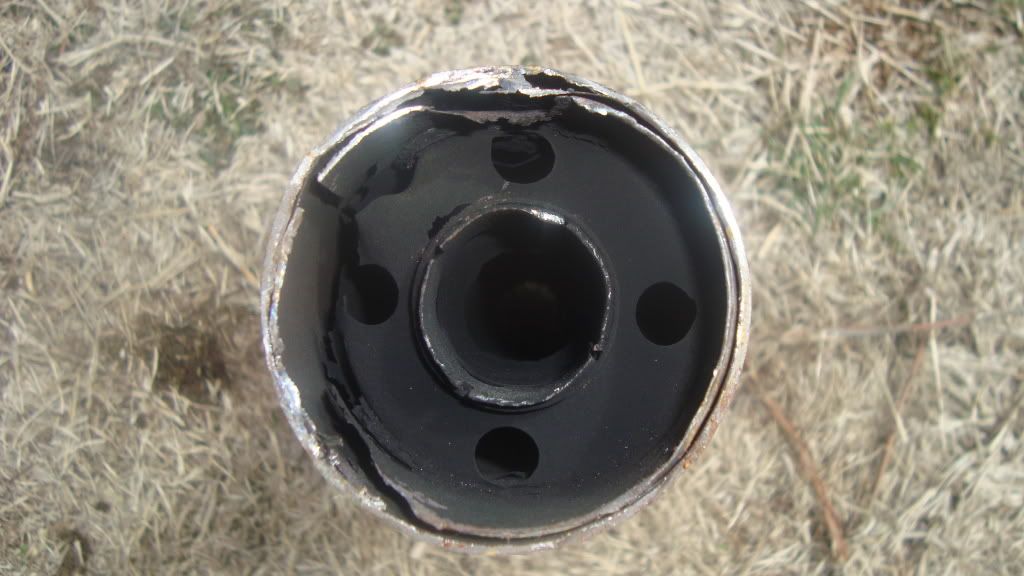
what is left looks pretty good I think, the exhaust I mean

DSC02525.jpg


DSC02524.jpg


I have done more since taking these I just havent had time to document an share like I should, and dont have time to elaborate as I just got called to work while posting this

what do you think?
 
Back
Top