• Required reading for all forum users!!!

    Welcome!
    Register to access the full functionality of the GSResources forum. Until you register and activate your account you will not have full forum access, nor will you be able to post or reply to messages.

    A note to new registrants...
    All new forum registrations must be activated via email before you have full access to the forum.

    A Special Note about Email accounts!
    DO NOT SIGN UP USING hotmail, outlook, gmx, sbcglobal, att, bellsouth or email.com. They delete our forum signup emails.

    A note to old forum members...
    I receive numerous requests from people who can no longer log in because their accounts were deleted. As mentioned in the forum FAQ, user accounts are deleted if you haven't logged in for the past 6 months. If you can't log in, then create a new forum account. If you don't get an error message, then check your email account for an activation message. If you get a message stating that the email address is already in use, then your account still exists so follow the instructions in the forum FAQ for resetting your password.

    Have you forgotten your password or have a new email address? Then read the forum FAQ for details on how to reset it.

    Any email requests for "can't log in anymore" problems or "lost my password" problems will be deleted. Read the forum FAQ and follow the instructions there - that's what we have one for...

  • Returning Visitors

    If you are a returning visitor who never received your confirmation email, then odds are your email provider is blockinig emails from our server. The only thing that can be done to get around this is you will have to try creating another forum account using an email address from another domain.

    If you are a returning visitor to the forum and can't log in using your old forum name and password but used to be able to then chances are your account is deleted. Purges of the databases are done regularly. You will have to create a new forum account and you should be all set.

Tachometer signal erratic

CincinnatiKid

Forum Mentor
Hi all. looking for any input on a weird issue.

wiring up a digital instrument cluster from KOSO. have wired a few of these into various bikes, not rocket science, but this unit on my 81 gs1100E is/was acting strange, so i sent it back for warranty. they test it and say it works fine. Basically, when I start the engine, the unit starts to freak out, display random garbage, or shut off and turn back on, etc etc... when the engine isn't running, and Key is on, the unit is stable and fine. the manufacturer can't recreate my problem with the unit on their bench or other shop bikes.

I tried hooking up another digital tach only to the bike, and the same sort of thing happens. I feed the tachometer signal information from the same place as where i tapped the KOSO gauge into. here's a video of it not working in the same way as the KOSO gauge:

i'm taking the tach signal from the Left coil's "signal wire". each coil has a 12v+ ignition wire (orange) and a signal wire coming from the spark controller unit. to my understanding, that ought to just be a pulsed 0v- ground signal.

the engine runs great, with or without a gauge installed, but neither gauge acts stable.
any ideas?
ive used this specific model gauge with satisfactory results on an 81 GS750 E last year, which is why i figured it would be easy to get this one working.
 
Not sure what kind of a signal that gauge needs, but the wire you are calling a "signal" wire will be grounded most of the time to allow current flow through the coils. When the trigger on the end of the crank signals the ignitor to fire the coils, it will open the circuit, meaning that there will momentarily be 12 volts on that wire. In fact, due to the collapsing magnetic field influencing that wire, there might be a bit more than 12 volts, but I don't know how much more.

.
 
merely suggestions but while I cant see much on that video (You dont give anybody time to look at anything-photos are better)and I don't want to look the device up to re-read the instructions for you :) .... but....FIRST you could try hooking the gauge's power supply properly instead of those long trailing test leads with tiny alligator clips snaking over each other and the engine....tap in somewhere in the headlight or move the gauge itself to very near the battery. I mean, those could be picking up a nearby radio station, let alone your engine.
I have to assume the tap to the coil's + supply is ok per the directions...

Sometimes it helps to get a common diode inline with the device's supply... a filter. ... ...if there's ac getting round the bike's rectifier or caused by some other doodad attached to the bike's system...(cheapo led COB lights can do it I've found..THEY might need the diode )... this sometimes cures a bad effect to a sensitive device. It also lowers the supply voltage a 1/2 volt but that shouldn't bother it at all.
 
fair enough on the pic/video! it was a little video i shot for the original gauge manufacturer, but figured i'd share it here because it's all i had.

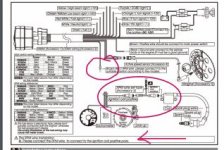
so here's the instructions for what the original KOSO gauge wants, in terms of connections.
Screen-Shot-2019-08-18-at-1-08-07-PM.png


the note @ the bottom of the instructions says the RPM wire must connect to the igniton coil positive pole... not exactly sure what that means. i wouldn't think it wants to see RPM information from the +12v supply wire, so it must be from the other (normally grounded) wire.

am I off base in thinking that the 12v+ supply wire to the coils will generally be void of any sort of meaningful RPM data?

the little unit from the video that was acting screwy had an instruction sheet that said to hook it up the same way as the KOSO unit pictured above.

RE: Gorminrider - the diode you suggest would be attached to the 12v power to the gauge? my hope with running the gauge power directly from the battery (during the test/video) was to isolate any potential "doodad" interference going to the gauge's power supply. i have 12v diodes in my electrical bag, i'll try to patch one inline and see if it changes anything.

thanks for the help! Like I mentioned, i've installed these types of gauges before, without issue, which is why this one is having me scratch my head.
 

Attachments

  • Screen Shot 2019-08-18 at 1.08.07 PM.jpg
    Screen Shot 2019-08-18 at 1.08.07 PM.jpg
    21.2 KB · Views: 0
Two things:

1) It's still not clear which wire you are connecting the tach to. I don't know for sure, but I would expect that it connects to the primary side of the ignition coils. (Definitely don't connect it to the secondary side, where the spark plugs attach to.) The wiring diagram you show for the tach seems to imply that they expect you to hook it up to a CDI/igniter box that already has a tach output wire, this is not the case on an '81 1100. Gorminrider is right about wire lengths and position being an issue, get them as short as possible and away from all other wires for testing, even if that means removing the gauge from the bracket and putting it on the ground.

2) Either your spark plug boots or spark plugs should have 5k resistors in them. If they do not, the ignition system generates a huge amount of RF interference and tends to wipe out all digital electronics close to the bike. I took the resistors out of my boots and ran my bike with non-resistor plugs once and found that I couldn't use my digital multimeters on the bike while it was running. They just displayed all nonsense all the time. Measure across the spark plug boots for 1&4 and 2&3 and you should get 10k ohms of resistance (5 per boot).
 
i'm taking the tach signal from the Left coil's "signal wire". each coil has a 12v+ ignition wire (orange) and a signal wire coming from the spark controller unit.

Sounds like you are getting electrical noise from the ignition system. I had the same problem hooking up a Trail Tech Vapor on my 82 1100E. Try using the other wire into the coil as your signal and see if that clears it up any.


Mark
 
am I off base in thinking that the 12v+ supply wire to the coils will generally be void of any sort of meaningful RPM data?
Yes, I think you are. If it helps, I have a Honda with a CDI and a tachometer setup very similar to your diagram. It definitely connects to the + supply of the coil-not the ground... On your bike,(even though these are not Capacitive Ignition) that'd be the orange/white stripe wires to the coil.
the diode you suggest would be attached to the 12v power to the gauge?
Yes.But it's really just a thing that might discover a problem elsewhere and should be fixed at the source rather than at your probably ok Tachometer.
a note on power supply-You can probably use the same wire that supplies the gauge "backlights" +. and then Black/whitestripe as ground ..Don't just use the frame anywhere on the forks because their only ground is through the tripletree bearings! Always use the provided B/W wire and also find where that wire connects to the mainframe out of the harness....sometimes it's to a screw or bolt up near near the horn... on my bikes anyways. Their suggested colour codes look wrong as far as our vintage of Suzukis.

my hope with running the gauge power directly from the battery (during the test/video) was to isolate any potential "doodad" interference going to the gauge's power supply.
No. If there's a leak from a doodad or your rectifier-(don't forget that because it'd be more important than a doodad)- it'll be system wide at the speed of light. If you do find the diode helps, look for the reason and move the diode to the doodad's supply to fix it.

I'd second Eil's point per the boots. I'd go a little further and say keep it as the manual has it...same recommended spark plug AND the suppression cap.
 
am I off base in thinking that the 12v+ supply wire to the coils will generally be void of any sort of meaningful RPM data?
Yes, I think you are. If it helps, I have a Honda with a CDI and a tachometer setup very similar to your diagram. It definitely connects to the + supply of the coil-not the ground-side...yes, the Honda has a different coil setup-in fact this tachometer looks designed for CDI which you don't actually have on your bike?? (and maybe that's the root problem!)... I'd still try O/W first. On your bike,(even though these are not Capacitive Ignition) that'd be the orange/white stripe wires to the coil.

the diode you suggest would be attached to the 12v power to the gauge?
Yes.But it's really just a thing that might discover a problem elsewhere and should be fixed at the source rather than at your probably ok Tachometer.
a note on power supply-You can probably use the same wire that supplies the gauge "backlights" +. and then Black/whitestripe as ground. Their colour codes don't suit our bikes.

note:..Don't just use anywhere on the forks as ground because their only path back to the mainframe is through the tripletree bearings! Always use the provided B/W wire and also find where that wire connects to the mainframe out of the harness....sometimes it's to a screw or bolt up near near the horn... on my bikes anyways.

my hope with running the gauge power directly from the battery (during the test/video) was to isolate any potential "doodad" interference going to the gauge's power supply.
No. If there's a leak from a doodad or your rectifier-(don't forget that because it'd be more important than a doodad)- it'll be system wide at the speed of light. If you do find the diode helps, look for the reason and move the diode to the doodad's supply to fix it.

I'd second Eil's point per the boots. I'd go a little further and say keep it as the manual has it...same recommended spark plug AND the suppression cap.
 
Last edited:
the note @ the bottom of the instructions says the RPM wire must connect to the igniton coil positive pole... not exactly sure what that means.
If that is where they say to attach the wire, why not attach it there?

You will find four wires coming out of each coil. The two going to the spark plugs are on the secondary (high voltage) side and are NOT the ones you want. Of the other two wires, there is an orange/white (orange wire with white stripe) that goes to each coil. There is another wire of a different color that is also connected. The orange/white wire goes to the battery and would be considered the positive side. The other wire goes to the points in older bikes and to the ignitor in your bike, which controls whether there is a connection to ground or not. That would be called the negative side.


i wouldn't think it wants to see RPM information from the +12v supply wire, so it must be from the other (normally grounded) wire.
I am trying not to concentrate on the bolded words, but as the grounded side is alternately connected and disconnected from ground, there will be a little bit of variation on the positive side. Did you ever notice how the headlight dims just a bit when the turn signals are flashing when the bike is at idle? Same thing. Could be that the tach is just looking for SLIGHT variations in the voltage, not 12/0/12/0 variations.
dunno.gif


.
 
I'm rereading too and I see you have the same device working on your 750 so finding the difference per the 1100E is going to be the key. And of course, with the experience with these, you are most likely right per tapping the ground from the coil rather than my interpretation of the diagram (though I'd still try the + side first as being the closest to the diagram..)

Peering at the diagram is puzzling it looks to be all about a cdi. Report back when solved !
 
lots of meat to chew on here, thank you for your collective minds!!

A) I will definitely check on the secondary ignition resistance. I intentionally spec'd non-resistor caps and plugs for this bike one year ago when it had no digital components on it, and then completely forgot about the RF noise issue during this time. certainly a suspect, and an easy one to fix. Curious, though, I use a bluetooth speaker mounted on my handlebars while i'm riding sometimes, and if there is RF interference, it doesn't bother the speaker.

B) I can also wire up a tap into the orange/white wire that connects the coils to the battery. A note on the wiring for this bike, I got it from a guy as a long forgotten project bike in the garage, and a previous owner before him had chopped the wiring harness all to bits in order to minimalize it into a track/race bike. so just about every wire on the bike is new and installed by me. Have done a few other ground up wiring harness builds on old bikes (CB350, XS650, Ironhead Sportster).

C) Peering at that diagram is definitely confusing, and the color codes are in fact worthless.

D) Over email, a technician from KOSO also suggested that it could be ACv noise coming from the charging system. I can easily make a jumper wire for my bike and remove the stator/rectifier output from the bike for a moment in order to test whether strictly DCv from the battery will solve the issue. Correct me if i am wrong, but I believe that running the engine for any prolonged period of time with the R/R output disconnected carries a risk of damage to the doodad.

D*) Would an ACv multimeter test between my R/R red output and the ground (while engine is running) reveal if the charging system is leaking ?

E) As far as grounding goes, I'm using a single point ground (learned from you good folks a few years ago), and then sending a green ground "backbone" wire out from there to all the lights etc etc that needs grounding. No sketchy frame grounds anywhere.

thanks. i just ordered some plugs, I'm gonna try to make some tests here tomorrow and the next day.
 
Last edited:
E) As far as grounding goes, I'm using a single point ground (learned from you good folks a few years ago), and then sending a green ground "backbone" wire out from there to all the lights etc etc that needs grounding. No sketchy frame grounds anywhere.

Speaking of grounding, does the speedo unit have a provision for a separate ground? Grounding my Vapor helped quite a bit with the noise problem.


Mark
 
Installing a jumper wire to disconnect the R/R produced no changes in the tachometer activity. Still erratic and goofy. I think AC leakage can be ruled out for now.

i tapped the gauge signal wire into both the orange/white wire, as well as the black wire going to the coil, and there was no difference in the tach activity. Both spazzed out and lost any meaningful display capabilities.

curiously, but maybe telling, is that when the tach signal input wire (on the gauge) was disconnected, the gauge was generally stable, showing 0rpm. When I attached a long jumper wire to tap into the coil wires, the gauge started to tweak a bit. But that’s before I even attached the other end to a coil wire. Seems like the longer lebgth of signal wire was acting like an antenna, and was seeing RF interference.

New plugs come next week. Until then, that’s my bet.
 
Solved

Solved

New plugs come next week. Until then, that’s my bet.


resistor plugs arrived in the mail yesterday, I installed them and also tested the digital tachometer, and everything works.

so for those who dont read the whole thread:

My digital tachometer/speedo unit was acting very strange, certainly not working at all. the company checked it out, said it's not malfunctioning on their bikes. the problem ended up being on my end. I had installed non-resistor type spark plugs (NGK D8EA) and also intentionally removed the resistors from my new NGK spark plug caps/boots, and did not use "suppressor" type spark plug leads. this leads to the production of RF interference from the coil/plug secondary circuit, which wasn't an issue on my vintage bike until i tried to use a digital gauge. Plugs are the easiest of the 3 to change, so I swapped them for NGK DR8EA, with the "R" indicating that the plug has a resistor inside it. after installing the new plugs, the tach works just fine.


also, as far as the wiring is concerned... the way i had initially wired it was correct, where the gauge wants to see it's RPM information from the "ground" side (black/white) of the coil leads, not the battery side. which is confusing after this whole discourse, because the instructions say to use the "positive pole" but I tried to use the battery side wire (orange/white) and the gauge read 0 RPM while the engine is running.

to see a video demonstration:
(the gauge needed calibrated, still... the RPM value shown is 1/2 of the actual engine speed)
 
Last edited:
also, as far as the wiring is concerned... the way i had initially wired it was correct, where the gauge wants to see it's RPM information from the "ground" side (black/white) of the coil leads, not the battery side. which is confusing after this whole discourse, because the instructions say to use the "positive pole" but I tried to use the battery side wire (orange/white) and the gauge read 0 RPM while the engine is running.
That’s because the voltage at the + side of the coil will be battery voltage with reference to ground, while the voltage at the ground side of the coil will also be battery voltage when the coil is “off” (aka open circuit voltage), but will be near 0 volts when the coil is “on” as most of the voltage will be consumed by the coil. The gauge will be looking for the rising and falling voltage of the ground side to determine rpm.
 
resistor plugs arrived in the mail yesterday, I installed them and also tested the digital tachometer, and everything works.

Excellent! Glad you got it all working and thanks for coming back to update the thread. (And I might add, it feels good being right once in a while!)

A lot of people underestimate the importance of those resistors. These days removing them means messing up nearby electronics in mysterious ways. As well as ticking off any ham radio operators in the neighborhood.
 
Excellent! Glad you got it all working and thanks for coming back to update the thread. (And I might add, it feels good being right once in a while!)

A lot of people underestimate the importance of those resistors. These days removing them means messing up nearby electronics in mysterious ways. As well as ticking off any ham radio operators in the neighborhood.

it's ok to be right once in a while, but its also incredibly typical to be suffering woes caused by your own hand!

and i now have respect for the purpose of the resistors, but to be honest, the Captain Chaos in me was secretly hoping to be invisibly interfering with people's car radios while passing them on the highway. A former teenage anarchist can dream.
 
Back
Top