• Required reading for all forum users!!!

    Welcome!
    Register to access the full functionality of the GSResources forum. Until you register and activate your account you will not have full forum access, nor will you be able to post or reply to messages.

    A note to new registrants...
    All new forum registrations must be activated via email before you have full access to the forum.

    A Special Note about Email accounts!
    DO NOT SIGN UP USING hotmail, outlook, gmx, sbcglobal, att, bellsouth or email.com. They delete our forum signup emails.

    A note to old forum members...
    I receive numerous requests from people who can no longer log in because their accounts were deleted. As mentioned in the forum FAQ, user accounts are deleted if you haven't logged in for the past 6 months. If you can't log in, then create a new forum account. If you don't get an error message, then check your email account for an activation message. If you get a message stating that the email address is already in use, then your account still exists so follow the instructions in the forum FAQ for resetting your password.

    Have you forgotten your password or have a new email address? Then read the forum FAQ for details on how to reset it.

    Any email requests for "can't log in anymore" problems or "lost my password" problems will be deleted. Read the forum FAQ and follow the instructions there - that's what we have one for...

  • Returning Visitors

    If you are a returning visitor who never received your confirmation email, then odds are your email provider is blockinig emails from our server. The only thing that can be done to get around this is you will have to try creating another forum account using an email address from another domain.

    If you are a returning visitor to the forum and can't log in using your old forum name and password but used to be able to then chances are your account is deleted. Purges of the databases are done regularly. You will have to create a new forum account and you should be all set.

TOOL: Test leads for electrical failure diagnosis, refined.

  • Thread starter Thread starter RedBaron
  • Start date Start date
R

RedBaron

Guest
In my time doing maintenance in this industry I've found myself doing a lot in the way of electrical failure diagnosis.

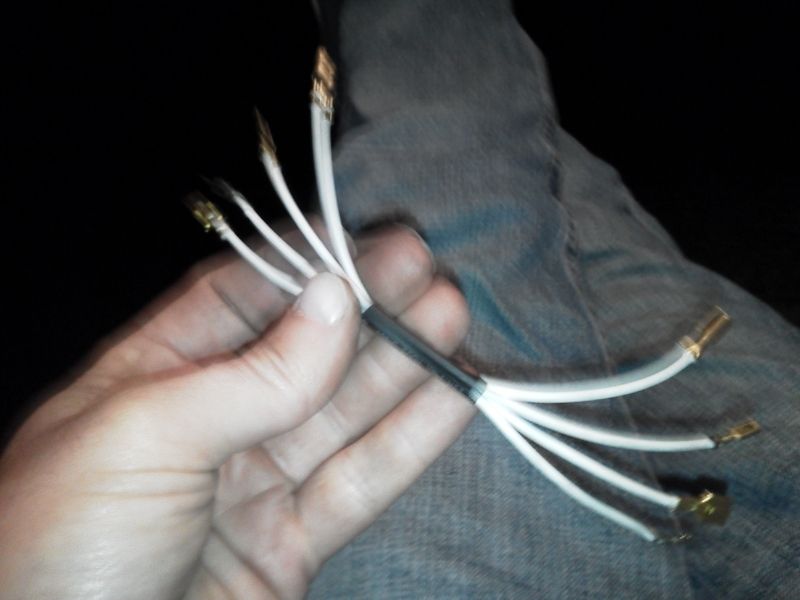
Out of all the little diagnostic tools I've had to build over the years none are used as often as my little test leads. Test leads should be in a drawer in every motorcyclist's toolbox as far as I'm concerned. I can't take credit for their invention as they're actually quite common and the idea is far older than I am. I did modify the way I was shown (single wire) to multiple wire "grab and go" assemblies that work well for me and seem to be envied by everyone I've worked with lol. Also if someone has never saw the concept at all then maybe they'll want to make some be it my way or individual wire. I don't know that any of ya'll will have use for them as I've been in the garage too long to know what a normal human being goes through day to day, but if you fix a lot of crap maybe they'll be of some help.

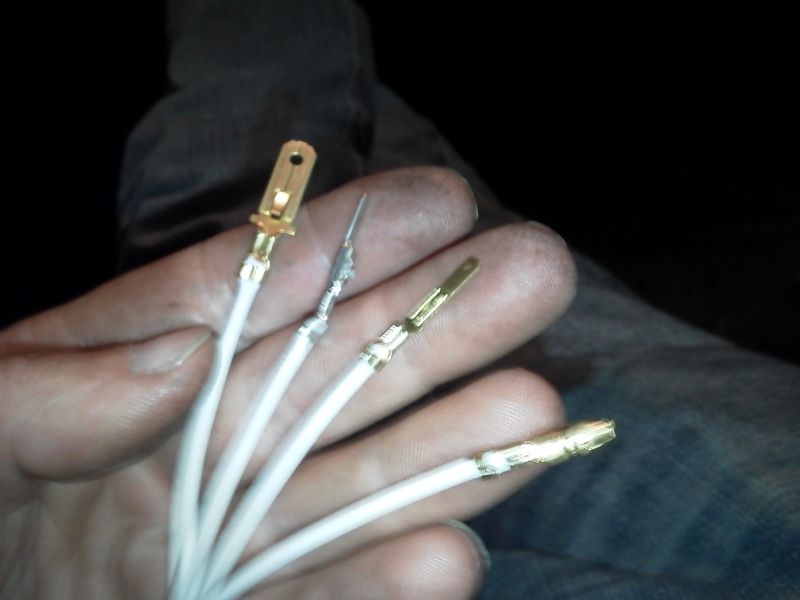
Pins are available through online retailers, Suzuki, Yamaha, and parts unlimited so they're easy to find. Standard crimping procedures apply, though without grommets (no use in this application) the waterproof connector pins' grommet clip is better bent over 1 at a time rather than using an open barrel crimper. Build each wire with a male and female that match each other on each end to aid in finding which wire you're connecting to in a test (clip to a female spade if you're plugged into a female spade). I use the bullet pins, small spade, large spade, and waterproof pins and they cover 99% of what comes through my shop. Harleys take another pin style, another reason to tell them I can't service their vehicle :-)

I find these more convenient than backprobe pins most of the time, and they're much simpler than trying to wiggle your meter's probe into a connector lol. Whenever a test comes a long, just grab a few sets of these and they should cover whatever testing you'll do. Now go make some!

Sorry for the terrible first picture.
 
Great idea, thanks. :encouragement:

I seem to do a bit more electrical work than the average 'wrench', why haven't I thought of that before? :-k

.
 
If I understand correctly, what you would do with these are,
-when take apart a set of connectors, you could connect in whichever test lead has the appropriate connector that matches the particular type of connector, and then would be easier to get a meter lead on the other end of your test lead, or maybe then jumper over to another position on the connector.

yah, that would work better than just a piece of wire with stripped ends , and even better that a piece of wire with the stripped ends solder tinned.


.
 
Last edited:
The only problem with this is that I will miss out on the occasional slip with my oh-so sharp multi-meter probe which always finds it's way into my hand. I will miss the blood and pain!

Good tech tip!
 
I'm not exactly sure what this is for. I am quite familiar with what is called a "test" breakout harness but it is not clear how this is used.

Is this inserted in series between the stator and R/R for stator testing or is it and extension to the 3 stator wires for open circuit testing.

What is the 4th wire for?

Clarification of the specific tests would be sufficient :)
 
I get a lot of use out of them, despite a whole drawer of back probe pins. I love alligator clip meter leads and these work well with those.

An example would be unplugging a stator connector, plugging one of the large spades in one hole on the connector block, another in a subsequent hole (Bullet leads like the GS are relatively uncommon these days), isolating the two from one another by bending or placing something between them and clipping the meter on to do testing.

The female pins are pretty much unnecessary as most male plug pins can be reached easy, but even then sometime's they'll make a difference. I just like it because when I have something come in like a no charge condition I can just grab my jump box (love the new little lithium jobs, http://www.amazon.com/gp/product/B00FDYYK4A/ref=oh_aui_detailpage_o03_s00?ie=UTF8&psc=1), meter, and a couple of these assemblies and avoid going back and forth to my toolbox for different probes.

It really beats having a probe in each hand trying to get a good connection in a plug dangling from a harness and trying to press a starter button with your nose (Yeah, desperate times call for desperate measures).
 
They're just to get a good connection to test from on a open connector block. The do help with jumper lead wires too. Just an extension of a meter leads more than a standalone tool. Open circuit testing primarily. It's just 4 wires with different connectors on them, so if you go to test you'll almost always have the male pin needed to plug into an open connector. I suppose a man could solder 4 ends onto one wire but seems like a lot to do.
 
Last edited:
Oh and one set of these is useless, 2 sets are a minimum to make them useful. Pics on the way.
phone is being an &%^. Have them soon.
 
Last edited:
Forgive the mess, home shop stays that way. Incorrect pin for connector but still allows open circuit testing.


With two sets you have pins to cover most open circuit tests you'll run into on a random electrical diag brought in.
 
I'm trying to think if there's anything else in my toolboxes that I take for granted. Doubt ya'll have use for a Suzuki SET adjustment thingie. I do have an old turn signal wired through a fuse, dunno if that's common. Everything else seems more atv related and less GS related.
 
I did this back in my R/C car days, but more as a universal power adapter than something to hook test leads to. Come to think of it, I don't think I owned a meter back then. If I recall correctly, I used it mainly to charge smaller batteries off my only charger. Those NiCd packs sure could take a beating. It also served as a universal gender changer and Y connector. Even back then I was smart enough to not connect a receiver (5V load) to a main battery pack (7.2V, 8.4V, and eventually 2x7.2V).

Steve, you may be shocked to hear that I never blew anything up with that. Other things, however, did get burned through or just plain set on fire. Just not by my universal adapters.
 
It just occurred to me that you could add a long pair of wires to just replace the test leads, rather than connecting via gator clips. Speaking of gator clips, it should have those too.
 
........... more as a universal power adapter .............

For troubleshooting, I guess I have always used a "universal adapter".. ah... stripped wire - jammed into a connector.

For a power cord at campground I had a "universal adapter" also.
Mr Ranger was horrified.

.
 
Back
Top