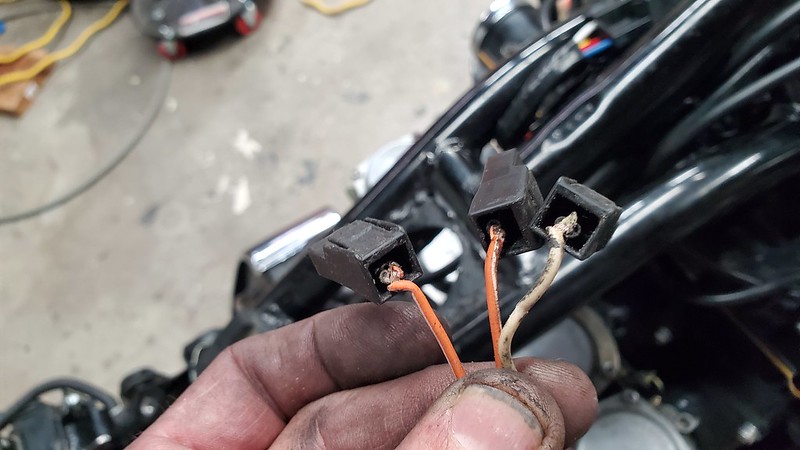
Even with everything perfect, you still get some voltage drop, and some folks install a relay anyway. There are a lot of connections along the way.
But yes, you should definitely clean, test, and replace until you have minimal voltage drop, and the bike starts and runs perfectly without a relay. And if you do install a relay, make sure you leave yourself an easy path back to stock if the relay ever fails. Maybe zip-tie a jumper or spare relay somewhere close, or have a plan for which terminals to plug together.
Anyway, to answer the question... these are the finest relays on the planet, Matsu s h i t a/Panasonic:
https://www.easternbeaver.com/Main/Elec__Products/Relays/relays.html
Eastern Beaver is a guy from the US living in Japan who sources Japanese electrical goodies and ships worldwide.
All the above said, relays are a very mature technology, and so any decent brand like Bosch or Tyco will be fine. Avoid anything with no name or a name you haven't heard of. You definitely want a sealed relay, and pay attention to how its mounted to ensure it's not exposed to a lot of vibration. You also want to make sure you get the wiring 100% correct to ensure you're not trying to trigger the relay with AC or something weird like that (yes, I've actually seen this. The poor relay buzzed fiercely for a while but didn't last long...).
I generally install an accessory relay circuit to power heated grips, phone charger, etc. and for high-amperage draw horns. But it really is best to get the wiring in good shape so you don't need a relay for the bike to run. And some folks, even on modern bikes, install a relay circuit (Eastern Beaver sells kits) for the headlights to get that last .2 volt and make the headlight just a tiny bit brighter, or to work around undersized stock headlight wiring (for example, on the V-Strom, Suzuki grounds both headlights through the same teensy-weensy wire with a teensy-weensy failure-prone connector, and it's a common problem.)