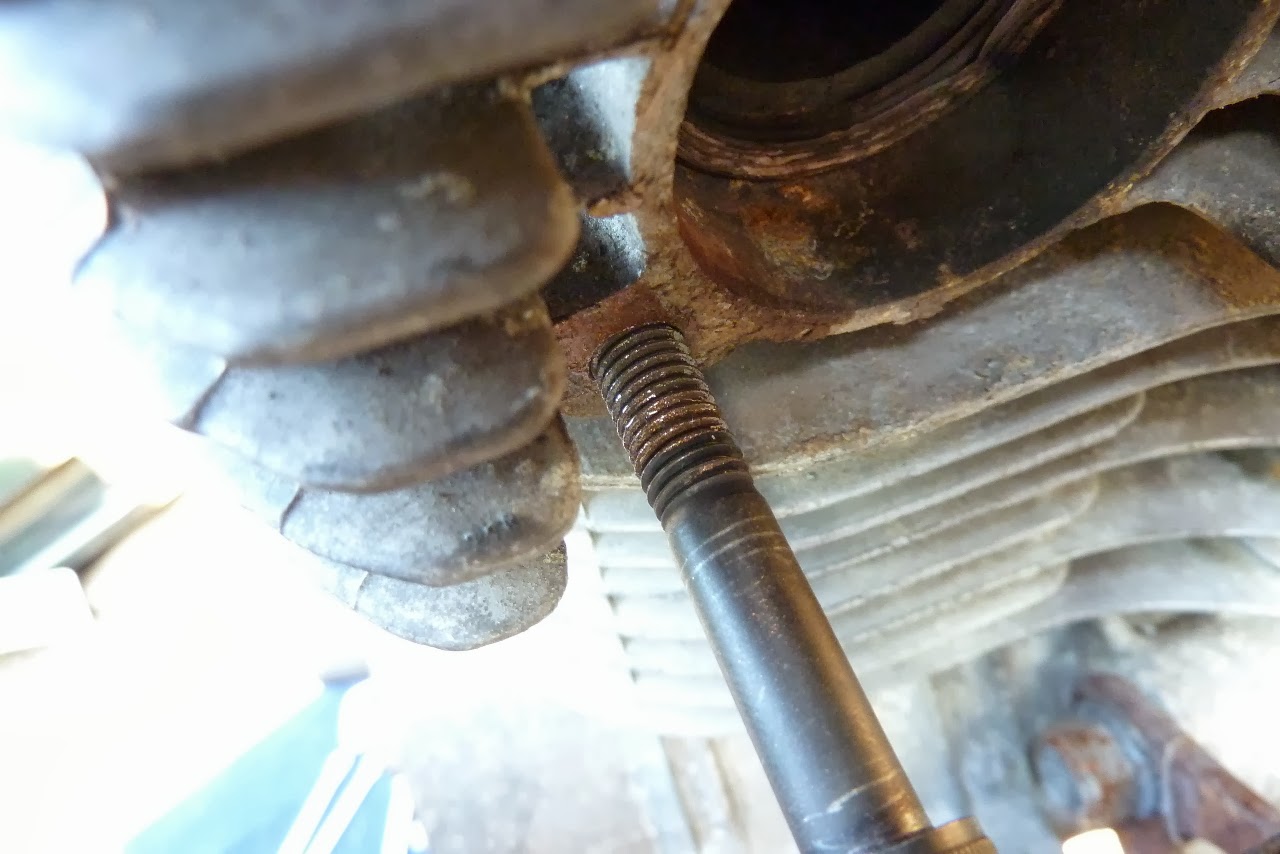
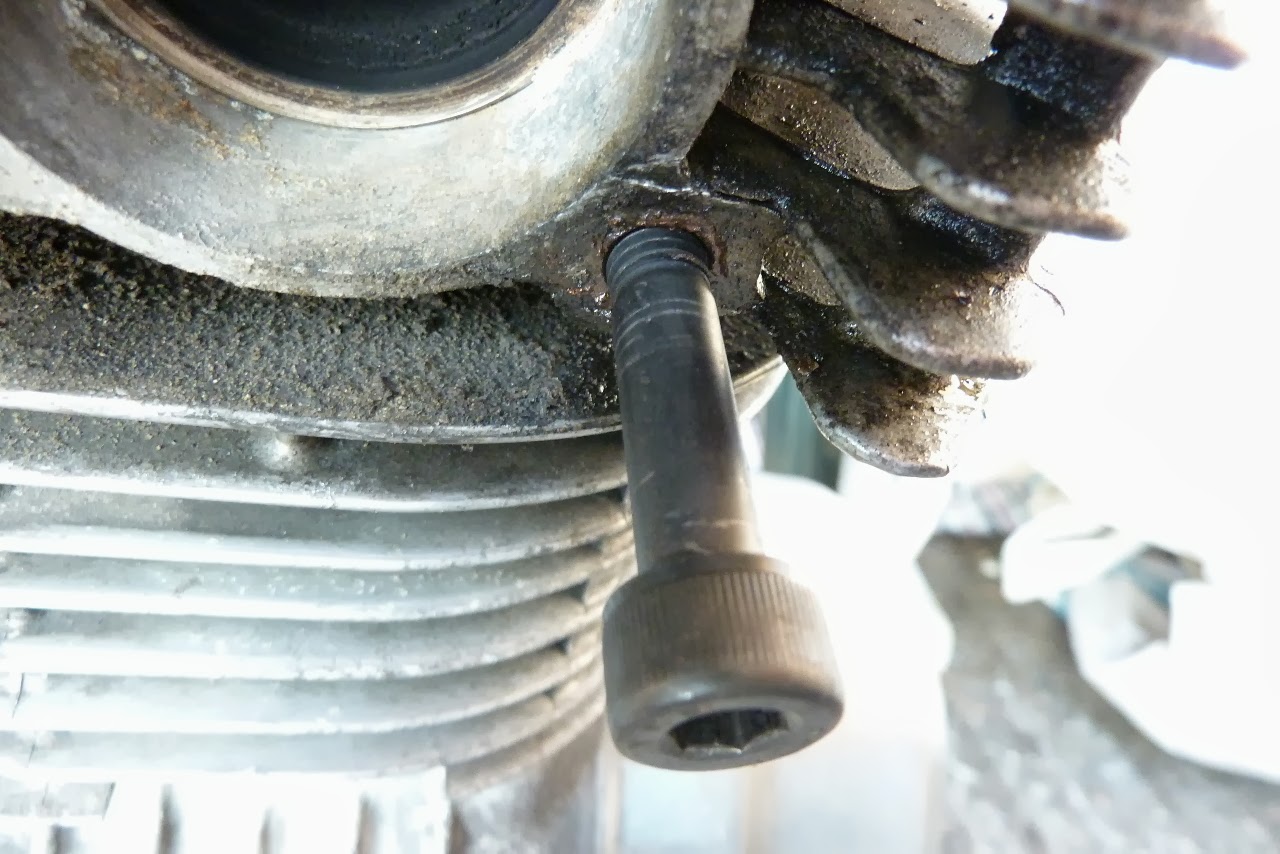
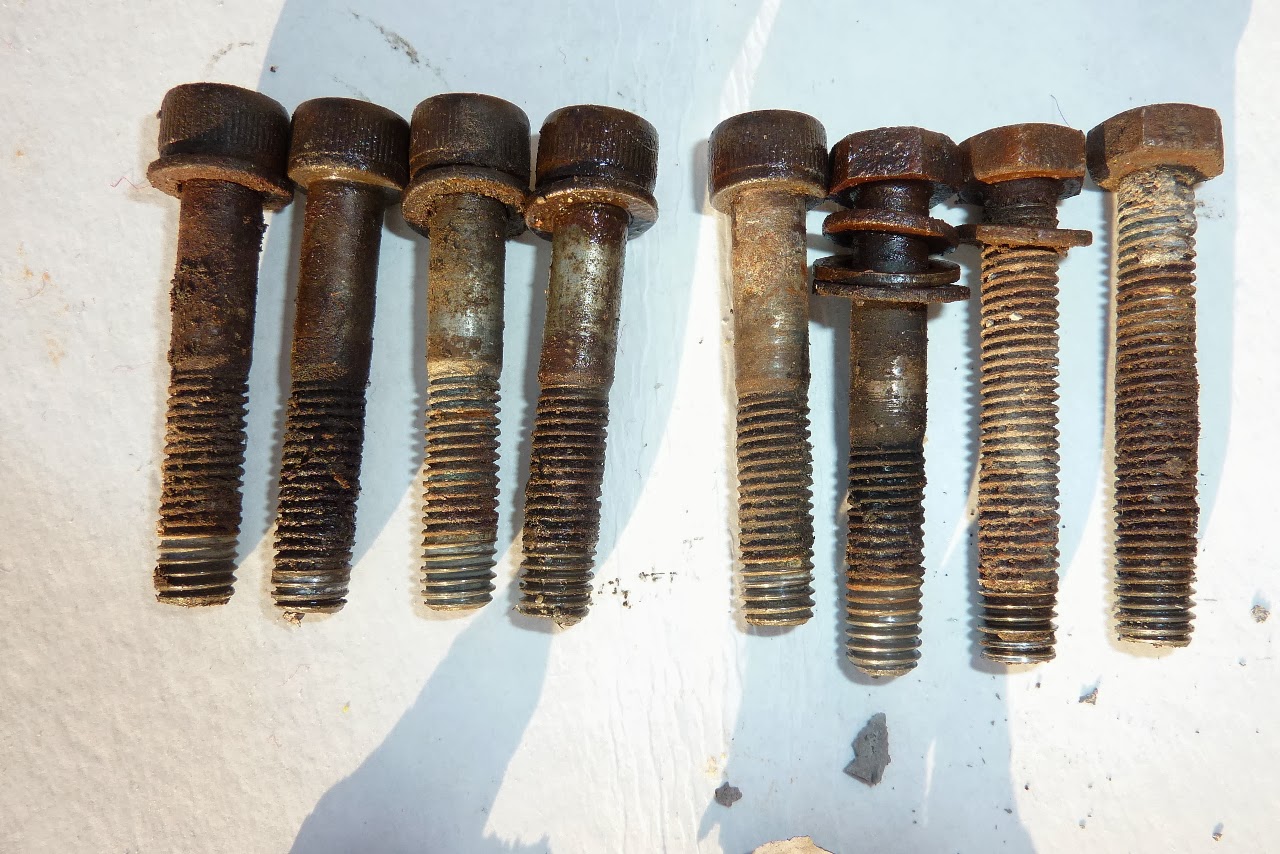
Suzuki lists the correct length bolt as 35mm but if you have the newer aluminum collars they are thicker than the older steel ones.
I ordered Suzuki OEM bolts and they didn't even reach the threads.
My finned collars are 26mm thick plus the 3-4 mm space as they do not tighten flush against the head, plus the washers, that leaves only a few thread in the head if that.
I needed to use minimum 45mm bolts to get a decent bite, can't remember if I used 45's or 50's but 55 is too long.
Check the thickness of your finned collars, then measure the depth of your holes and use a bolt that fits but doesn't bottom out.
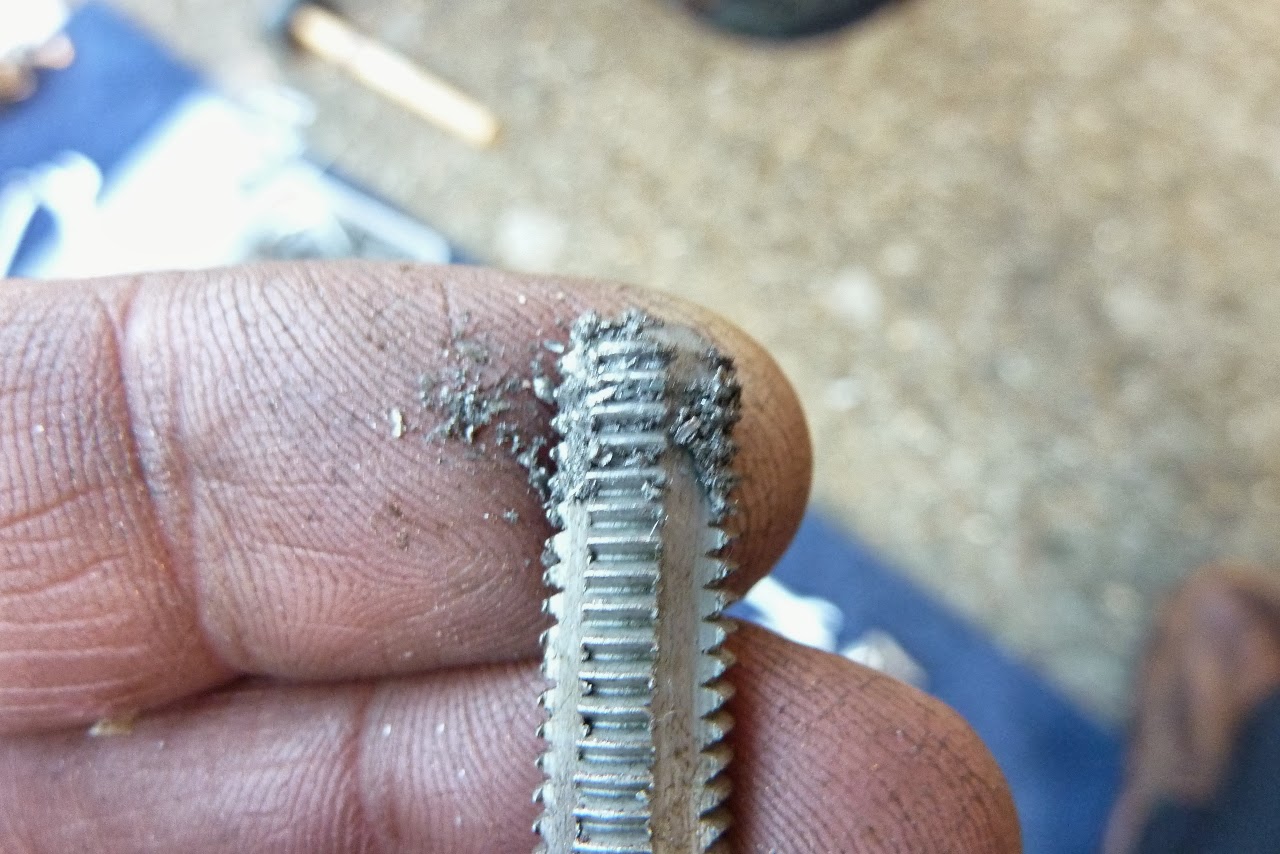
Re-taping the hole is fine, your taps look like they are taking out a little material, because you're using a but as long as the bolt is still firm and not loose in there then no worries.
Just found this, the article recommends that when tapping into aluminum you should have threads 1.5-2 times the depth of the bolt diameter, so that would be 12-16mm of threads.
Nut and tapped hole strength - How much thread engagement is needed?
If a screw / bolt fails because the threads strip, it can be hard to detect both during installation and later because the threads will still have some grip on the screw. If the bolt breaks, however, it will be completely loose, be easy to detect and remove, and usually fail during installation when additional torsional loads are present (torsional loads usually dissipate within minutes after tightening if you're wondering why we didn't take them into account before). Because of this, fasteners are designed to fail in the bolt, not the threads, so most nuts are more than adequate--just make sure you use a similar grade of nut compared to the screw.
How much thread engagement is needed in a tapped hole, then? According to "Fundamentals of Machine Component Design", 3rd addition, by Juvinall and Marshek, p. 413, if the bolt and nut are of similar material the thread stripping stength will equal the bolt tensile strength when the nut is .47 * diameter. Standard nuts are 7/8 of a diameter, for comparison.
Interestingly, more than a third of the load is held by the first thread in a nut according to
this. As the bolt tightens, its threads stretch and the nut's threads compress, which reduces force on the far threads.
The .47*dia calculation above takes this imbalance into account, but it will certainly be different for other material combinations.
This offers some formula (also found in machinery's handbook) for calculating the shear area of threads, but it's uncertain how one would apply that formula given the imbalanced thread load. The Machinery's handbook suggests at least 3 threads of engagement. We recommend 1 diameter depth for steel and 1.5-2 diameters for aluminum. The referenced formulas may at least provide a rough estimate for sheet metal, where thread engagement is limited.
Unbrako's Engineering guide has several charts showing experimental testing of various sized holes. According to their guide, formulas have performed poorly at predicting thread strength.