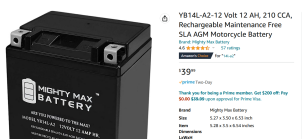
I start off with a 10 amp battery for 10 minutes, then go to a 2 amp, sometimes the 2 amp batteries can break into the cells, especially if they have any sulfate on them. I purchased a new Schumacher charger that has a high frequency setting to knock off any Sulfur it detects, it also does standard, AGM, and has a 2 amp setting.. It's all digital, kind of small, and has been the best one I've had yet. The most I can coax out of a battery now is maybe 3 years, but usually two, and I had better be riding the bike al lot. They don't make motorcycle batteries like they used to. I used to get 5 years out of a YUASA Battery, but not now. I keep them on trickle, automatic 1.8 volt chargers, but they end up steaming all the electrolyte out, and you have to add distilled water, which I'm sure deteriorates the batteries state.
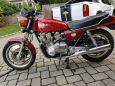
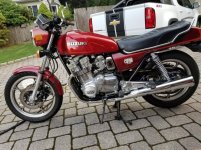
So the bike did start? IF it did, it means that the battery reading you are getting with the AGM is just a surface charge, not an indication of the amps it's able to produce. That's why I stick with conventional batteries, at least I can see the electrolyte levels, and check each cell with a hydrometer. If you bike did start with a larger source load, it means your battery is probably shot Some starters will take more current when they start to go, but Suzuki makes a really robust starter. Mine has lasted 40 years, and spins right over.
Make sure you check the ground lead from your battery, all the way down. On a lot of bikes those years, Suzuki grounded the battery to a painted spot on the engine, relying on the bolt threads to ground the battery. This caused electrolysis to occur, and you end up with a really bad ground, which wreaks havoc on the bikes charging system. If this is the case, scrap that surface down to aluminum, apply a little dielectric grease so no oxidation in any area that isn't covered with the bolt won't oxidize, and use a new bolt, and tighten it, clean the ground connector too, so it's nice and shiny., then you will have a good ground. This creates a level playing field for the electronics. The batteries sold at Walmart are made by YUASA, can you believe that!!

So the bike did start? IF it did, it means that the battery reading you are getting with the AGM is just a surface charge, not an indication of the amps it's able to produce. That's why I stick with conventional batteries, at least I can see the electrolyte levels, and check each cell with a hydrometer. If you bike did start with a larger source load, it means your battery is probably shot Some starters will take more current when they start to go, but Suzuki makes a really robust starter. Mine has lasted 40 years, and spins right over.
Make sure you check the ground lead from your battery, all the way down. On a lot of bikes those years, Suzuki grounded the battery to a painted spot on the engine, relying on the bolt threads to ground the battery. This caused electrolysis to occur, and you end up with a really bad ground, which wreaks havoc on the bikes charging system. If this is the case, scrap that surface down to aluminum, apply a little dielectric grease so no oxidation in any area that isn't covered with the bolt won't oxidize, and use a new bolt, and tighten it, clean the ground connector too, so it's nice and shiny., then you will have a good ground. This creates a level playing field for the electronics. The batteries sold at Walmart are made by YUASA, can you believe that!!