• Required reading for all forum users!!!

    Welcome!
    Register to access the full functionality of the GSResources forum. Until you register and activate your account you will not have full forum access, nor will you be able to post or reply to messages.

    A note to new registrants...
    All new forum registrations must be activated via email before you have full access to the forum.

    A Special Note about Email accounts!
    DO NOT SIGN UP USING hotmail, outlook, gmx, sbcglobal, att, bellsouth or email.com. They delete our forum signup emails.

    A note to old forum members...
    I receive numerous requests from people who can no longer log in because their accounts were deleted. As mentioned in the forum FAQ, user accounts are deleted if you haven't logged in for the past 6 months. If you can't log in, then create a new forum account. If you don't get an error message, then check your email account for an activation message. If you get a message stating that the email address is already in use, then your account still exists so follow the instructions in the forum FAQ for resetting your password.

    Have you forgotten your password or have a new email address? Then read the forum FAQ for details on how to reset it.

    Any email requests for "can't log in anymore" problems or "lost my password" problems will be deleted. Read the forum FAQ and follow the instructions there - that's what we have one for...

  • Returning Visitors

    If you are a returning visitor who never received your confirmation email, then odds are your email provider is blockinig emails from our server. The only thing that can be done to get around this is you will have to try creating another forum account using an email address from another domain.

    If you are a returning visitor to the forum and can't log in using your old forum name and password but used to be able to then chances are your account is deleted. Purges of the databases are done regularly. You will have to create a new forum account and you should be all set.

Solid State Power Box STANDARD INSTALLATION

Thanks very much, really appreciate it! You deserve great credit for all your effort put into design; development; production; testing; documentation/videos.


....you forgot website :o i guess it is not really done yet

Sorry this was much more that I originally thought.:rolleyes:


Thanks for the mention.
 
I finished assembly on 3 more units tonight and bonded the pcb to the base. Needs a couple of days to harden.

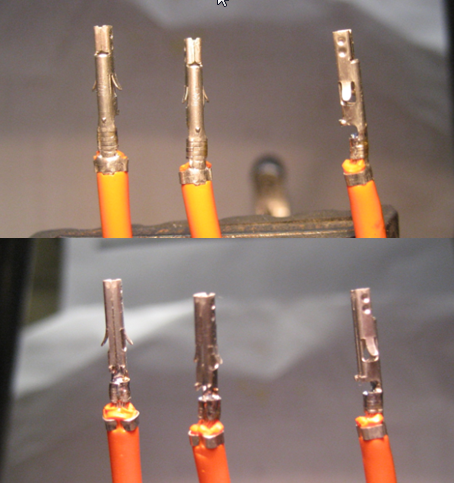
A new development on crimping pins for the 10 pin Molex. You can do an excellent job using a $27 crimper.
 
I have never used a butt splice connector; I usually strip back the insulation and intertwine the strands. I'm wondering if a splice terminal would be cleaner than the twist and solder method?

I need to place another Digikey order so if any body has any opinions chime in. The others from ebay are cheap enough and I will probably get some of those as well.

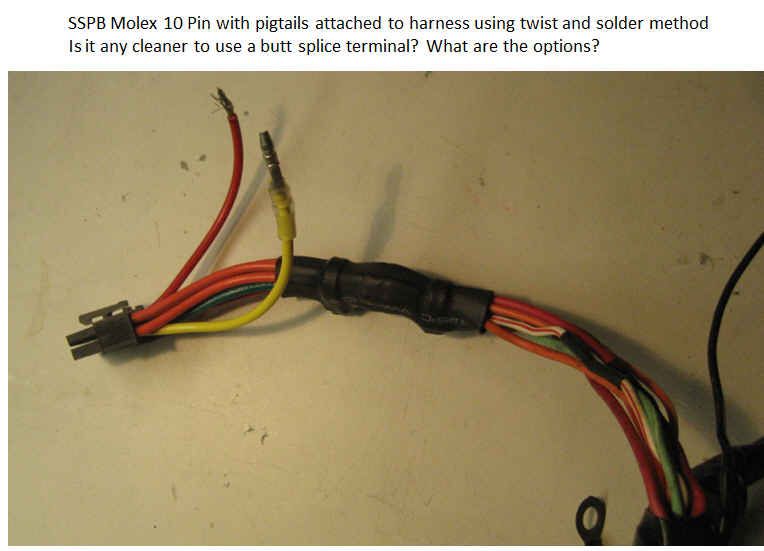
This is a picture of the spare harness with twist and solder heat shrink install.

BUTT_SPLICE1_zps24302df8.jpg


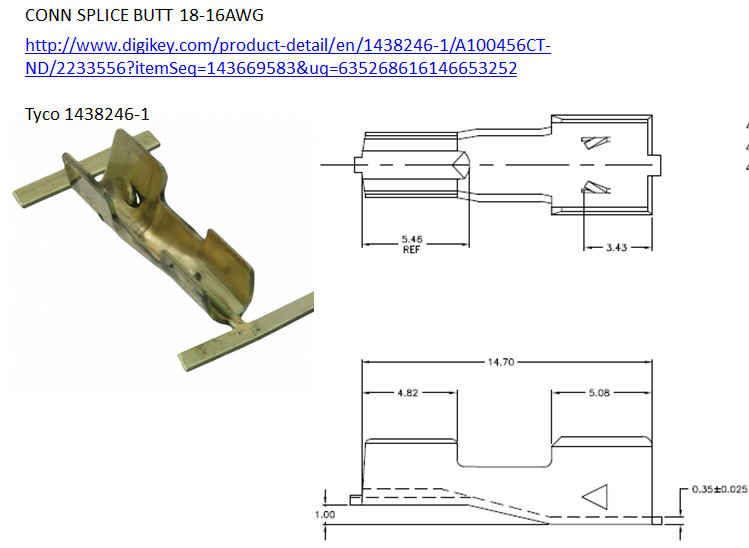
Option #1
BUTT_SPLICE2_zps997aff69.jpg


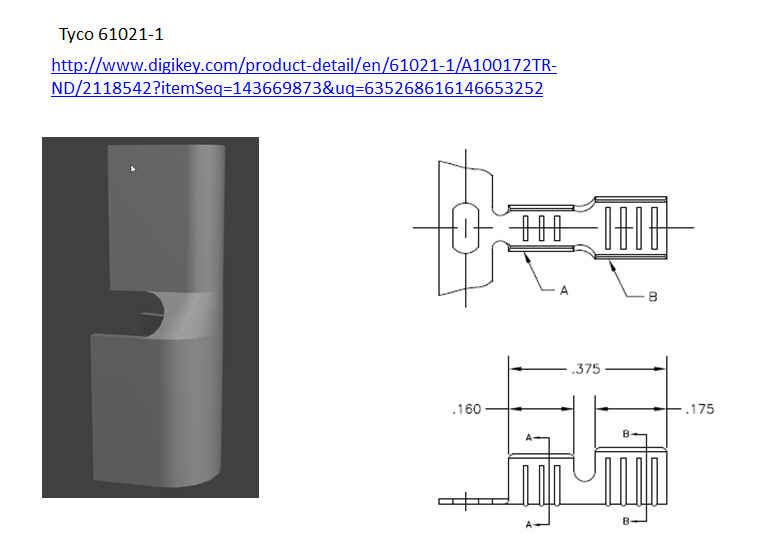
Option #2
BUTT_SPLICE3_zpsd900f026.jpg


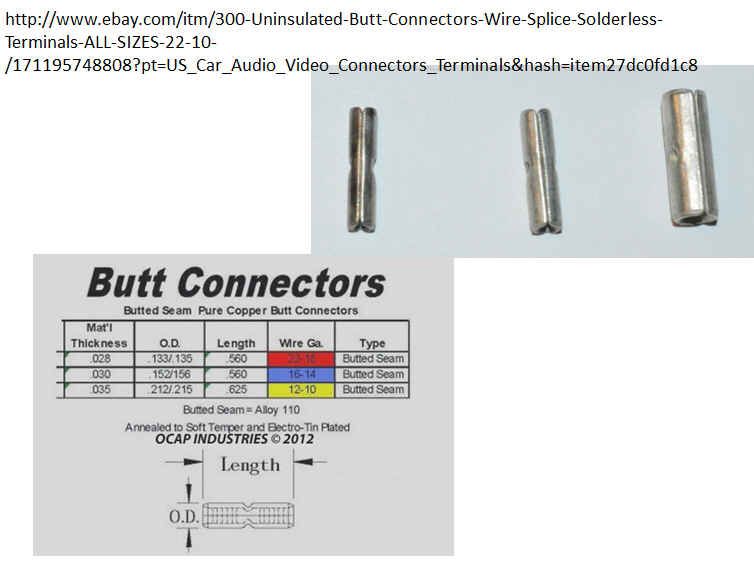
Option #3
BUTT_SPLICE4_zps25cc742b.jpg


http://www.ebay.com/itm/100-Uninsul...ideo_Connectors_Terminals&hash=item3f2089da6b
 
The option 3 type are great if you use the correct size for your wire and if you have a real crimper. The one designed for that specific connector. The Walmart crimper or smashing it with pliers not so much.
 
The option 3 type are great if you use the correct size for your wire and if you have a real crimper. The one designed for that specific connector. The Walmart crimper or smashing it with pliers not so much.

Looking to use one or the other of these.

Both available slightly cheaper on ebay or amazon.

The RTL gives the most leverage for open barrel crimps but the ETC-39 is most flexible,
 
Last edited:
First, Jim I haven't even taken my unit out of the shipping box yet. But I told you I would not install it until the spring. :D

We used to do a lot of work on vehicle harness systems. The Posi-locks were a great, reliable tool when we need to tap into or extend wires on a temporary basis. Much better then the 3M clamp into splices.

For permanent work we would do either the slice and solder with heat shrink tubing, or go with option 3 butt connectors (sometimes soldered as well) with shrink tube. The soldering decision often came depending if how large an area we could leave stiff as solder spread deep in the wire often was determined by the skill of the person working on the job. I have read that a good pro crimp was a better connection then the twist and solder and most of the newer aircraft wiring connections are now just crimped, no solder.

The decision also was based on if we wanted to reduce the bulge in the harness. I always staggered the connections to minimize the bulge, but when restoring a Mustang or Shelby I would reduce the copper wire stranding on each end by 1/3'd of the strand count, do a light twist then solder. This kept the copper width just a little over the parent wire and with good shrink wrap kept the slice hidden in a wrapped bundle. Never had an issue doing that and I've had the two Shelbys over 35 years and no issues, but the lapping was precise and when soldered did not leave an area thinner then the parent wire.

For solder I've always used Tri or Quad Eutectic solder as from my reading and experience it is the best, originally developed by Bell Labs as I understand it.
 
First, Jim I haven't even taken my unit out of the shipping box yet. But I told you I would not install it until the spring. :D

We used to do a lot of work on vehicle harness systems. The Posi-locks were a great, reliable tool when we need to tap into or extend wires on a temporary basis. Much better then the 3M clamp into splices.

For permanent work we would do either the slice and solder with heat shrink tubing, or go with option 3 butt connectors (sometimes soldered as well) with shrink tube. The soldering decision often came depending if how large an area we could leave stiff as solder spread deep in the wire often was determined by the skill of the person working on the job. I have read that a good pro crimp was a better connection then the twist and solder and most of the newer aircraft wiring connections are now just crimped, no solder.

The decision also was based on if we wanted to reduce the bulge in the harness. I always staggered the connections to minimize the bulge, but when restoring a Mustang or Shelby I would reduce the copper wire stranding on each end by 1/3'd of the strand count, do a light twist then solder. This kept the copper width just a little over the parent wire and with good shrink wrap kept the slice hidden in a wrapped bundle. Never had an issue doing that and I've had the two Shelbys over 35 years and no issues, but the lapping was precise and when soldered did not leave an area thinner then the parent wire.

For solder I've always used Tri or Quad Eutectic solder as from my reading and experience it is the best, originally developed by Bell Labs as I understand it.

Thanks Jack,
I guess there are a smorgasbord of options here. I'm mainly interested in options for people to install the SSPB Molex connector with pigtails to the end of the harness. As you know I did a video showing how to twist and solder with heat shrink. The bundle was pretty clean and not much larger than the original wire harness despite the overlapping splices. Given it is in the end of a service loop connecting to the fusebox the added bulk is really a minor consideration. I was more interested in immobilizing the soldered joints using shrink tubing. I also zip tied them which adds more bulk and is probably overkill. The 16 ga marine wire is relatively stiff especially in a 10 wire bundle with heat shrink.

So I'm guessing the butt connectors brass type butt connector #1,#2 are pretty small and end up being smaller than a twist and solder joint. The #3 option is stronger but probably a little bulkier but it also sounds like your preferred but splice solution.

Yes I'm aware of the great solder debate and yes was recently brought home when I found a soldered crimp nearly broken off of my R/R ground. It really stresses the point to not solder so much that you wick solder way into the wire strands. best to use a hot iron and only wet the ends of the strands at the open part of the crimp away from the insulation.

And if you are wondering what the point of heat shrink is on a ground lug, it is to support the insulation further to avoid unnecessary movement of wire strands. Understanding all of the pitfalls of soldering, I still like the notion that I'm permanently sealing the contact between strands and terminal end even if it is a crimped joint.

For the DIY crowd, with all the various crimpers and wire sizes and terminal ends that exists it is unlikely that a good and proper crimp will result for any combination. In this case a little solder will help as long as not overdone.

The posi-locks are being touted as a kind of semi permanent reusable connection.With some type of anti-corrosion treatment I can certainly see how it might be attractive to someone; but not nessesarily to a pureist :o
 
Jim,

Did you ever figure out something on charging back through the accessory port or is this still a No No?

Just so I know, not bothered either way as I will just leave my SAE pigtail connected to the battery if so.

By the way - I've done many thousands of miles on bikes with posi-tite & posi-tap connectors for non essentials (heated grips, relay trigger switches etc) & at this stage I think I'd trust one as a permanent connection for anything... They do waterproof ones now too which should be as good as anything out there....

:)
 
Last edited:
There is always a different way .....

You did a good job on the videos and the work in it. For the uninitiated they should have no issue after reviewing them. I was throwing some items out for others information.

My (our) experience with options 1 and 2 was the folding of the sleeve never gave a good solid crimp like the full barrel. With the full barrel even the worst of the guys still had a good connection. I also still apply a light amount of solder to a crimped connection rather then worry about an oxidation issue later on.

For the Posi-Locks we used them under the hood as well as connecting to ABS wheel sensors to acquire wheel speed. They were quite good ..... but if it was a long term test vehicle, the Posi was replaced with a soldered, wrapped joint. We just could not take the chance of bad test data. Behind a dash I've had no problem in considering them as permanent.

If I was splicing into the harness like the videos the only thing I would do differently is not use the wire ties and the overall shrink tube. I would use non-adhesive harness tape (often on eBay) and wrap the bundle with the ends tied off. It would permit the bundle to bend a little better, although it takes some skill to do that well.

But well done, Jim. Very well done.
 
Jim,

Did you ever figure out something on charging back through the accessory port or is this still a No No?

Just so I know, not bothered either way as I will just leave my SAE pigtail connected to the battery if so.

By the way - I've done many thousands of miles on bikes with posi-tite & posi-tap connectors for non essentials (heated grips, relay trigger switches etc) & at this stage I think I'd trust one as a permanent connection for anything... They do waterproof ones now too which should be as good as anything out there....

:)

Dan,
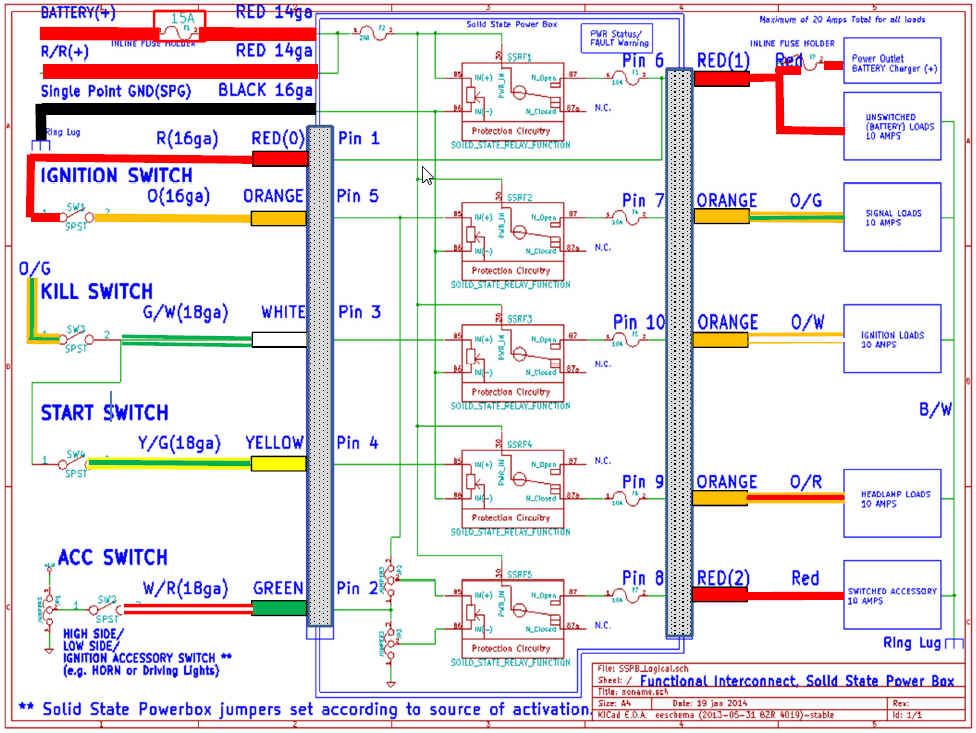
Yes you can charge back through the Pin 6 or Pin 1. They are electrically the same inside of the SSPB. That is how mine is hooked up and what is shown on the functional diagram.

The issue you are referring to is that there is a not a full 10 amp limit charging on pin 1 and 6; it is closer to 6 amps. The SSPB would handle 10 amps going out, but since I can't control the charging going in I put a reset able fuse limited to 10 amps /10 sec, or 6 amps/100 sec or 4.75 amps/1000, or 4 amps/10,000 sec etc...

Charging a battery you should not be exceeding about .25C ; for a 14 ampHr battery that is 3.5 amps; in steady state the trickle charger is closer to 1-2 amps max.

This only applies to the unswitched power pins 1 and 6. You should not try and charge from any other pin as the internal protections will not work. So either put a charger on either of these two pins or run the charger direct to the battery. For a power socket that is used to charge the battery (current going in) or charge an Iphone (current coming out) use only pins 1 or 6.

look at upper right hand corner to see charger connection.

Functional_Interconnect_zps96a0adb9.jpg


Jim
 
There is always a different way .....

You did a good job on the videos and the work in it. For the uninitiated they should have no issue after reviewing them. I was throwing some items out for others information.

My (our) experience with options 1 and 2 was the folding of the sleeve never gave a good solid crimp like the full barrel. With the full barrel even the worst of the guys still had a good connection. I also still apply a light amount of solder to a crimped connection rather then worry about an oxidation issue later on.

For the Posi-Locks we used them under the hood as well as connecting to ABS wheel sensors to acquire wheel speed. They were quite good ..... but if it was a long term test vehicle, the Posi was replaced with a soldered, wrapped joint. We just could not take the chance of bad test data. Behind a dash I've had no problem in considering them as permanent.

If I was splicing into the harness like the videos the only thing I would do differently is not use the wire ties and the overall shrink tube. I would use non-adhesive harness tape (often on eBay) and wrap the bundle with the ends tied off. It would permit the bundle to bend a little better, although it takes some skill to do that well.

But well done, Jim. Very well done.

Thanks you for the complements. I was a little tedious with it but I wanted to show a simple way to get a reasonable result.

Yea, I don't particularly like the zip ties under the heat shrink, but the heat shrink is not bad. Yes I guess the non adhesive tape would be more flexible but in the end I was trying to immobilize/support the wire attached to the solder joints and so being a little stiffer would be my choice if I was not planing to crimp.

I assume this is the stuff you are referring to?

http://www.ebay.com/itm/2-ROLLS-BLACK-NON-ADHESIVE-VINYL-WIRING-HARNESS-TAPE-/170795039364

I can see the the barrel crimps would be much stronger than the brass open barrel crimps. But I wonder if after installing 10 in a single bundle that they would not be a little less bulky and probably provide enough support as a unit especially if covered with heat shrink.

Don't know if you had a chance to look at the crimp guide?
 
Last edited:
Yes, that's an example of the tape. You can either tie off the ends or use a brush on adhesive to lock it down.

After reading the crimp guide no one should have any excuse for not doing it right. Another great job.
 
Yes, that's an example of the tape. You can either tie off the ends or use a brush on adhesive to lock it down.

After reading the crimp guide no one should have any excuse for not doing it right. Another great job.

Thanks for the comments, I put quite a bit of work into that. Not sure if you got the whole story but I also bought the proper MOLEX crimper although it is now obsolete ($65 off ebay). The inexpensive ebay crimper (also available for $27 from Amazon) is the best option above all else it would appear for these little MOLEX pins. The pins are so small that you really need jaws that come together in parallel with each other rather than the scissor action most crimper make. The updated MOLEX crimper closes the jaws end wise but in parallel. They are $235 I dont plan on buying them :o

I crimped and soldered about 150 Molex pins Tues night . They are coming out well just using the ETC-39.

  1. Jaw D and then E for the conductor
  2. Jaw C for the insulator.
  3. A little solder flowed into the crimp using a heat sink clip on the insulation crimp.

Crimps_using_ETC-39_zps6bd5e0ff.png


This is turning out to be a very versatile crimp er for the DIYer. It does not do dual crimps (for conductor and insulation together) but that is the good news. Since it is single jawed you can mix and match sizes depending upon your crimp and wire. It also has a parallelogram design that keeps the jaws parallel as they compress.

I also use it for crimping a single 14 ga and two 16 ga wires into a single 10-12 ga crimp for the Single Point Ground (SPG) harness. It takes a while to get the knack of it but you can get a good crimp when using a little solder.

http://www.amazon.com/dp/B00A2AM7X6...e=asn&creative=395105&creativeASIN=B00A2AM7X6
 
Last edited:
I installed the SSPB today and I am very happy with the results.
I had to uninstall the old coil relay mod and bring it back to stock.
While there I tidied up my connections on my Dyna 2000.
Cut off the old Red connection for the R/R and capped it off with shrink wrap.
I ended up cutting out the dingy old plug in the headlight bucket and wired in the headlight auto-off when you start the bike.
Soldered in the new plug for the SSPB which includes an extra hot and a switched hot for whatever your heart desires.
Jim also gives you an option for an ACC in the bucket when you follow his instructions. You can change how it is switched under the SSPB cover.
The bike started right up and I noticed right away how bright the headlight and panel lights are.
I checked the charging with my new series R/R ad it ran up to 14.3 and I cut off the motor there.
 
I installed the SSPB today and I am very happy with the results.
I had to uninstall the old coil relay mod and bring it back to stock.
While there I tidied up my connections on my Dyna 2000.
Cut off the old Red connection for the R/R and capped it off with shrink wrap.
I ended up cutting out the dingy old plug in the headlight bucket and wired in the headlight auto-off when you start the bike.
Soldered in the new plug for the SSPB which includes an extra hot and a switched hot for whatever your heart desires.
Jim also gives you an option for an ACC in the bucket when you follow his instructions. You can change how it is switched under the SSPB cover.
The bike started right up and I noticed right away how bright the headlight and panel lights are.
I checked the charging with my new series R/R ad it ran up to 14.3 and I cut off the motor there.

Looks good Bill, I documented those RH handlebar connections with additional suggestions here.

http://www.thegsresources.com/_forum/showthread.php?t=218780
 
This thing rocks.

This thing rocks.

I didn't know I needed this little device. But after installing it on the bike, it's really genius.

1. Gives you the popular coil relay mod built in.
2. Gives you a headlight cut out on start.
3. Replaces the old technology fuse box.
4. Provides protection for the whole wiring harness.

I have to admit it took me a while to understand the GS wiring harness, and it took me a while to understand the modifications that come with the SSPB. But in the end, it's good stuff. And if you find out more about posplayr, you learn that you're putting Military grade, Skunk Works design technology into your little 80's scooter. It's very cool.

For me, I installed the SSPB at the same time as I installed a Bandit instrument cluster, GSXR handlebar controls, Series R/R, and new starter relay. I also deleted the TSCU (Turn signal control unit) and the CPCU (check panel control unit) so I had a lot of things going on.

I was learning as I was going, and expecting to make some mistakes. The SSPB gave me the confidence that it would protect the harness if I made a big mistake. It was also nice to see that little green light. I listened to the alarm in your instructional video, so I was waiting for it as I turned the key. Jim even suggested that I purposely create a short on the bike to see first hand how it works. I have to admit, I've blown dozens of fuses either making mistakes, testing something out, or trying to push a circuit too far. Having the ability to reset, and even a warning that you're doing something wrong is very handy to the DIY guy messing around.

Once I get my harness all taped up and installed I'll post up some pictures of all the glory.

-Kevin
 
Back
Top