• Required reading for all forum users!!!

    Welcome!
    Register to access the full functionality of the GSResources forum. Until you register and activate your account you will not have full forum access, nor will you be able to post or reply to messages.

    A note to new registrants...
    All new forum registrations must be activated via email before you have full access to the forum.

    A Special Note about Email accounts!
    DO NOT SIGN UP USING hotmail, outlook, gmx, sbcglobal, att, bellsouth or email.com. They delete our forum signup emails.

    A note to old forum members...
    I receive numerous requests from people who can no longer log in because their accounts were deleted. As mentioned in the forum FAQ, user accounts are deleted if you haven't logged in for the past 6 months. If you can't log in, then create a new forum account. If you don't get an error message, then check your email account for an activation message. If you get a message stating that the email address is already in use, then your account still exists so follow the instructions in the forum FAQ for resetting your password.

    Have you forgotten your password or have a new email address? Then read the forum FAQ for details on how to reset it.

    Any email requests for "can't log in anymore" problems or "lost my password" problems will be deleted. Read the forum FAQ and follow the instructions there - that's what we have one for...

  • Returning Visitors

    If you are a returning visitor who never received your confirmation email, then odds are your email provider is blockinig emails from our server. The only thing that can be done to get around this is you will have to try creating another forum account using an email address from another domain.

    If you are a returning visitor to the forum and can't log in using your old forum name and password but used to be able to then chances are your account is deleted. Purges of the databases are done regularly. You will have to create a new forum account and you should be all set.

Stater and Reg/Rect problems on 82 GS650Ez

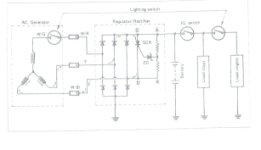
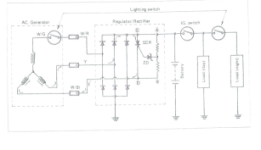
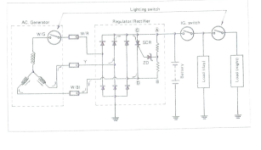
AND here's the R/R diagram for Suzuki twins and maybe more- a single scr...(from the manual)
Click image for larger version  Name:	Closeup-SuzukiRR-ShopManual-250-300.png Views:	0 Size:	29.4 KB ID:	1707407 ..maybe, quite a lot of work for one scr...?

Anyone can goto a motorcycle forum and check out the "hotspot" of complaints to figure out the weak points of whatever old bike they're considering, IF you ignore "carburetors" that is :) By (my) metric, Early '80s Suzuki charging systems are troublesome. As to why, the theories abound...people do various fixes and if it works, they swear by it. That's the internet for ya.
 

Attachments

  • Closeup-SuzukiRR-ShopManual-250-300.png
    Closeup-SuzukiRR-ShopManual-250-300.png
    29.4 KB · Views: 0
  • Closeup-SuzukiRR-ShopManual-250-300.png
    Closeup-SuzukiRR-ShopManual-250-300.png
    29.4 KB · Views: 0
,the Suzuki Stator coils(mine anyways) is bathed in oil, so overheating is not an issue. Do you know how to take 4 diodes and convert A/C to pulsating DC? See picture below.
...well, no, not exactly "bathed in oil"-it's just a drip from the shaft to keep it lubricated. "Cooling" ,I think not, but it likely contributes to the crust and discolouration that's seen on Suzuki stators....
 
Very good posts Gorminrider. The problem with the Suzuki GS750ES and 1150ES, which shared many components, were as I described. i don't know what was going on in Suzuki's development departments, but they must have been fighting each other. The fact that any 3 legged stator can hook up to and Regulator/Rectifier that accepts 3 legs, and has a plus and minus output demonstrates how easy the fix van be. I chose the Yamaha XS1100 as we were a Suzuki/Yamaha dealership, and were not having problems with the Yamaha's. I also made sure to state it was my experience, that includes the Northeastern U.S. Suzuki Representative, and using my own instrumentation to actually see the wave forms in the O'Scope. You're right on the money about the heat, mine go really hot too. I purchased a stock one, and that ran really hot. That's when I decided to go outside the box, I just got tired of melting wires, and didn't want to spring another $100+ for the stator. I've had great luck with my set up. All my stator wires are exactly the same color, they all look exactly the same. That being said, I think any three legged stator from that era can use a R/R from any of them that accept 3 legs, and output DC +/-.. I have passed this on and helped many people do this mod and had no complaints.

I have a Kawasaki ZZR1200 that seems to have none or these problems. I actually can find nothing wrong with this bike. I got it last year , it's a 2004, with only 4385 original miles on it. I paid $2400 bucks for it. Easiest valves of the shim style, to adjust, you just slide the rocker arm to the side and replace the shim, no special tools..

Good luck to all, may whatever you come up with serve you well. I still wish I purchased the pair of, I think, 1984 GS1150's that I could have had both for $2K. They are worth so much more now. :)
 
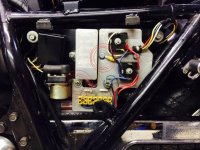
Here's something you will like,suzukian...it's what was on one of member trevor's bike when he bought it...homemade with just the bridges you were mentionioning...I was sad he immediately took it off...:) gotta love the "voltage divider"? on the scr


Click image for larger version  Name:	HomeMadeRegulator_trevorBike.jpg Views:	0 Size:	70.2 KB ID:	1707413
 
Last edited:
That's someone who wants to go riding, and does what he needs to accomplish his goal!! That is impressive. I'm a technician not an engineer, so when I see people put stuff like this together, I just think "Brilliant!". ;)
 
I defer to you guy's greater electrical knowledge about R/R's, but regardless, that doesn't change the problem of excess power being shunted back to the stator, and cooking it. That's the REAL problem with the system, not how the regulation is performed.
 
My bad on the alternator name, it's "ElectroSports", it was a very long time ago. ( Link = http://www.bikerperformance.com/elec...87-p11360.html )

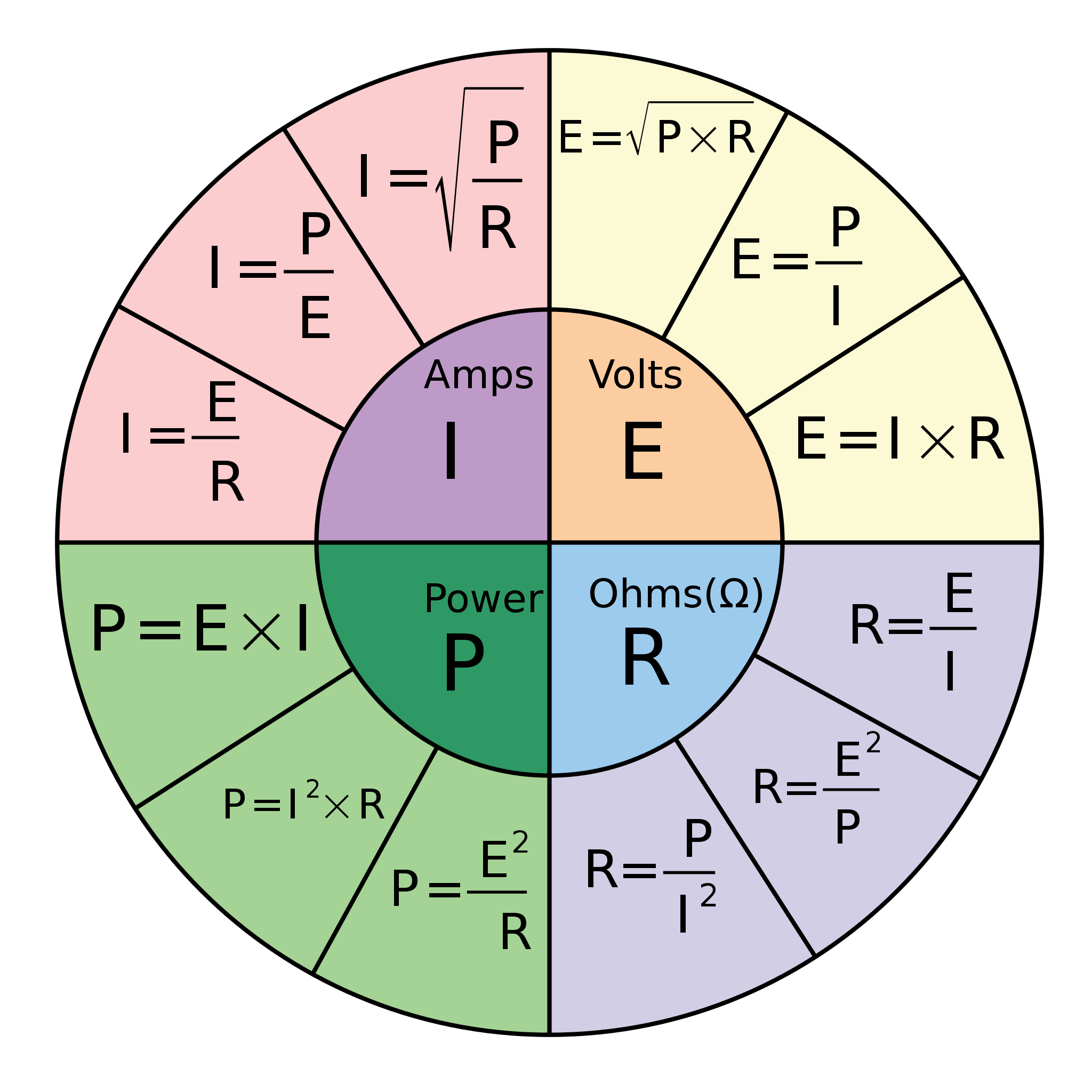
My source was the factory Service Representative, who told me when I worked at a Suzuki Dealership, and my Techtronix 100 Mhz O'scope. This fact is so well known, and no, the generator does not produce too much electricity (voltage, and Generators produce amps!), (Ohm's Law, E/IxR, P/IxE) a lot of this is because it's not a generator, it's an Alternator. My "ElectroSports" alternator produces 20% more voltage than stock. That's why a motorcycle cannot charge a dead battery, Older cars (as in my 1973 MG Midget) has a huge generator and you can bump start it, go for a 100 mile ride, and have a full battery, of course, being an MG, going for a 100 mile ride is an accomplishment in itself!

I fix circuit boards for anything down to component level. I am one of the few in the area that does that. I won't go over my credentials with you. Not necessary. Use the info or don't. That's up top you. All Rectified, only one leg Regulated, a horrid design. Some of you guys are going through way too much trouble, as most modern R/R's will work on anything with 3 legs, and turn it into DC, Geez, you could make you own Wheatstone Bridge with a heat sink and bang one of these out with a DC to DC converter attached. Just buy a used on off of EBAY for a big bore machine, and you won't have any problems. They're cheap,the Suzuki Stator coils(mine anyways) is bathed in oil, so overheating is not an issue. Do you know how to take 4 diodes and convert A/C to pulsating DC? See picture below.

I am a State of Connecticut Certified Electronic Technician with a V1 license. I won't say "expert" as there is always more to learn, but from T.V.'s, to audio systems. designing speakers, and installing $100,000 dollar Garmin Radio Stacks in aircraft, and trouble shooting those kind of units, I've done quite a bit.

Motorcycles like a GS do not have an alternator, they have a permanent magnet generator. Alternators vary the generating field to control how much power is produced, a permanent magnet generator produces power with every rotation regardless of load. You can't shut it off, that's why a SERIES R/R is best, because it can shut off the returned current being sent back to the stator, cooking it.
 
Last edited:
Motorcycles like a GS do not have an alternator, they have a permanent magnet generator. Alternators vary the generating field to control how much power is produced, a permanent magnet generator produces power with every rotation regardless of load. You can't shut it off, that's why an R/R is needed, and why a SERIES R/R is best, because it can shut off the returned current being sent back to the stator, cooking it.

Errrr. NO
Generators output DC current. (not really but close enough for us)
Alternators output AC or alternating current, hence "alternators". Alternators need a rectifier to convert AC to DC to charge the battery. Generators don't... MY GS has a rectifier.
An alternator that is regulated by changing the field voltage is called a "field regulated alternator". An alternator with a permanent magnet rotor is called a "permanent magnet alternator" or a "shunt regulated alternator'.
With a permanent magnet alternator the current will increase as the rotor RPM goes up, so they're usually designed to just charge the battery at idle (about 13v), but at redlne the thing will put out enough current to boil the battery (about 15v)... so to deal with this excess current the regulator will "shunt" this excess to ground .
The OEM regulator uses Zenor or Schotkky diodes in parallel to shunt this current
A Shindengen HA or FA regulator uses Mosfets transistors in series to shunt this current.
Mosfets switch much faster than diodes and make a lot less heat. Any regulator you put on a GS will be a "shunt" regulator (if you want it to work). "Series" describes where the switching in the regulator takes place.
 
Errrr. NO
Generators output DC current. (not really but close enough for us)
Alternators output AC or alternating current, hence "alternators". Alternators need a rectifier to convert AC to DC to charge the battery. Generators don't... MY GS has a rectifier.
An alternator that is regulated by changing the field voltage is called a "field regulated alternator". An alternator with a permanent magnet rotor is called a "permanent magnet alternator" or a "shunt regulated alternator'.
With a permanent magnet alternator the current will increase as the rotor RPM goes up, so they're usually designed to just charge the battery at idle (about 13v), but at redlne the thing will put out enough current to boil the battery (about 15v)... so to deal with this excess current the regulator will "shunt" this excess to ground .
The OEM regulator uses Zenor or Schotkky diodes in parallel to shunt this current
A Shindengen HA or FA regulator uses Mosfets transistors in series to shunt this current.
Mosfets switch much faster than diodes and make a lot less heat. Any regulator you put on a GS will be a "shunt" regulator (if you want it to work). "Series" describes where the switching in the regulator takes place.

In the factory service manual, Suzuki describes the stator/rotor as the "AC generator". I'm not an electrical expert, if the proper terminology is different, my apology. Most people think of an "alternator" as used on a car, which uses a field coil.

A Series R/R shuts off return current to the stator, whereas a shunt R/R send it on through. That's why a Series R/R saves the stator. There have been guys here with a current clamp on meter who showed the current doesn't go back to the stator with a SH775, regardless of RPM. That's the whole point here.
 
Last edited:
I've heard recently that a car style alternator is basically the stator and r/r under one cover. I can live with that. (I haven't touched a soldering iron in half a century.)
 
Motorcycles, as stated in the above post, as like automotive alternators, but the regulation and rectification is not done within the same unit. Some (if not all) car units use a field wire to generate the magnetism, while motorcycles have magnets built into the stator. Car Alternators have a field wire to generate an electric field in lieu of permanent magnets, which is why they are so much cheaper to produce. The spinning on both creates an AC current, where in a car, it's all within one unit, and belt driven, and on a motorcycle, divided into two components, stator and Voltage Reg/Rect in a separate component..

Understanding "Ohm's Law" negates the Voltage/Amperage issue, they are part of the same thing, Voltage being potential, and Amps being the actual flow of electrons. Understanding Ohm's Law really helps in understanding the sometimes weird terms that are used.

Excess Voltage is not what destroys these systems, it is a poorly designed Regulator/Rectifier unit. My Electrosport Coil produces 20% more Voltage than the stock one, and combined with the Yamaha XS1100 Reg/Rectifier I use, has functioned beautifully for my '83 GS750ES (which I have owned since new).

Ohm's Law
 
Nobody ever said excess voltage causes the Suzuki charging system problems (other than when a R/R fails,) it's excess POWER. Remember, ohms law. It's not the voltage that kills stators, it's the current.

Did you read the link about how more than 11% of GSR members bikes suffered a stator failure after installing a Honda R/R? That's because shunt R/R's cause the stator to fail.

We all know that the Suzuki R/R's were too small to deal with the power, which resulted in a ton of heat and subsequent failure. Installing any decent R/R will solve that problem.

What you have never explained is why so many stator failures? Please explain how one shunt R/R is better than another in regard to saving the stator. I've already explained that ALL shunt R/R's kill stators, but feel free to explain why I'm wrong.

Oh, and BTW, with a high power stator and a shunt type R/R, don't be surprised if your stator burns up. All the extra power from the stator does nothing other than create more heat when it's shunted back to the stator by the R/R. The bike doesn't need the power, especially when the stock AC generator already makes more power than the bike can use.
 
Last edited:
Power, in electronics, is "Heat"= Watts, remember 100 Watt bulbs? I'm not going in circles with this anymore. The chart above is accurate, how a person interprets it, well, that's on them. If you use the OEM R/R on my Suzuki, it's crappy design will burn out your charging system. Thanks.
 
Power, in electronics, is "Heat"= Watts, remember 100 Watt bulbs? I'm not going in circles with this anymore. The chart above is accurate, how a person interprets it, well, that's on them. If you use the OEM R/R on my Suzuki, it's crappy design will burn out your charging system. Thanks.

No disrespect, but you might want to educate yourself more on GS charging systems and the faults they have. Our (now departed) electrical guru Posplayr posted endlessly about the virtues of series type R/R's, and how they save the stator from burning up. You might want to search on his name, and then check key terms like "stator", R/R, compufire, stuff like that. It will be enlightening for you. This link will get you started...

https://www.thegsresources.com/_foru...or#post1630965

Edit: in Posplayr's profile he has some nice graphs about the GS charging system. One in particular shows that a high tech FET shunt R/R returns 3x more power to the stator (where it's converted t heat) compared to a Series R/R. He also has a photo of one of your Electrosport stators, which burned up while using a shunt R/R.
 
Last edited:
I found a more easily understood comparison of a Series R/R to a Shunt R/R

With a permanent magnet AC generator (alternator) any time the rotor is spinning, power will be generated and sent to the R/R. A high power stator will generate more heat than a low power stator, for obvious reasons.

With a shunt R/R, the power from the generator/alternator, is on at all times, thus heat is always being generated.
With a series R/R, when the bikes power demands are reached, the R/R will disconnect the stator from the system, thus turning it off, and keeping it cooler.
 
None of my posts refer to what you go on endlessly about. Ass I wrote earlier in the thread, what I did I did to my bike, and to many others with great success. I didn't use O.E.M. parts, so nothing you post relates to me. Address someone else. Funny how you say the system generates too much power, but then denigrate a work around. You acknowledge in one half of your brain, and dismiss with the other half. I won't be responding to you anymore. I just want to be courteous. You can have the last word. I'll have the last..........
 
...A Series R/R shuts off return current to the stator, whereas a shunt R/R send it on through. That's why a Series R/R saves the stator. There have been guys here with a current clamp on meter who showed the current doesn't go back to the stator with a SH775, regardless of RPM. That's the whole point here.

That's not how electricity works. You can't "return" current to the stator.
If you were to put a AC amp clamp on one of the stator wires, it would show the presence of AC energy, but AC doesn't have a direction, only potential.
In DC power the electrons travel from the negative TO the positive
 
This is a summary of the collective wisdom of the GSR, learned over a decade or more of accumulated study, and PROVEN in actual usage by the majority of members here.

Failures in the GS charging system:

- Stator failures from overheat damage (extremely common)
- R/R failures from overheat damage (common, but not as common as stator failures)
- Wire harness damage, in the "stator loop" and at connection points between the harness and the stator. Also at ground points (ground point failures are very common, harness melt down not so much)

Faults within the GS charging system:

- Poor grounding on several models
- R/Rs that are very small and can't dissipate the required heat while shunting excess power
- The stator loop, up to the hand control, adds a lot of extra wiring into the harness, which can overheat as resistance from age, particularly in the connectors, increases, resulting in the melt down of the harness.
- Stators that put out more power than the bike can consume

Fixes for the charging system:

- Rewire the charging system. The three stator wires should feed directly into the R/R, the power output should go to the original place in the harness, feeding the bike directly, and the R/R ground can either go directly to the negative post of the battery, or to a single point ground system (if you set up such on your bike.)
- Get a SERIES type R/R. This eliminates both failure of the original R/R, and stator failure. Reason being, a SERIES type R/R shuts off the stator, so to speak, when the bike's power demands are satisfied. This keeps the stator cooler than when using a SHUNT type R/R.
 
Last edited:
I've heard recently that a car style alternator is basically the stator and r/r under one cover. I can live with that. (I haven't touched a soldering iron in half a century.)

Rob, yes... on newer alternators, there's actually a little solid state unit inside them that regulates by controlling the magnetic field of the rotor. This then controls the stator's output...

Motorcycles usually? (my Yamaha 650 had a car-type alternator ) have permanent magnet rotors so they can't control the field and have to regulate the whole stator output by "dumping it" (shunt) or "stopping it" (series)
 
I found a more easily understood comparison of a Series R/R to a Shunt R/R

With a permanent magnet AC generator (alternator) any time the rotor is spinning, power will be generated and sent to the R/R. A high power stator will generate more heat than a low power stator, for obvious reasons.

With a shunt R/R, the power from the generator/alternator, is on at all times, thus heat is always being generated.
With a series R/R, when the bikes power demands are reached, the R/R will disconnect the stator from the system, thus turning it off, and keeping it cooler.

Yes this suits most people. And Shindegnen makes a good product whichever type you prefer *....The actual physics going on is much more complicated...and I have a lot of stuff I could spew but won't.

Still, one cogent question I repeatedly ask is -what is the actual saving in heat? What IS this "evil overage" in "wasted power" everyone gets so excited about? IF it exists. Personally, I can't calculate it (simplistically) to make a lot of difference to the coating on the windings or in comparison to the engine beside it....

another question would be exactly how do the original systems fail? and why? There are suzukis of the era with original owners here that go quite awhile without issues. How much is maintenance(low,bad,disconnected batteries,switches etc) , bad factory practise (crummy varnish on windings degraded by oil,age and heat) poor design of regulators,(I incline to this) etc.


(* I prefer an R/R of a motorcycle over an R/R from a snowmobile)
 
Last edited:
Back
Top