FC, here is how I see it, regardless if the notches are perfectly lined up or not, many folks here have said thiers don't either, and regardless if the tooth on the sprocket points to the first or back link on the chain, it really does not matter, what matters is that the two cams, in relation to the crankshaft are in phase, i.e the intake and exhaust valves open in sync with the rotation of the crankshaft.
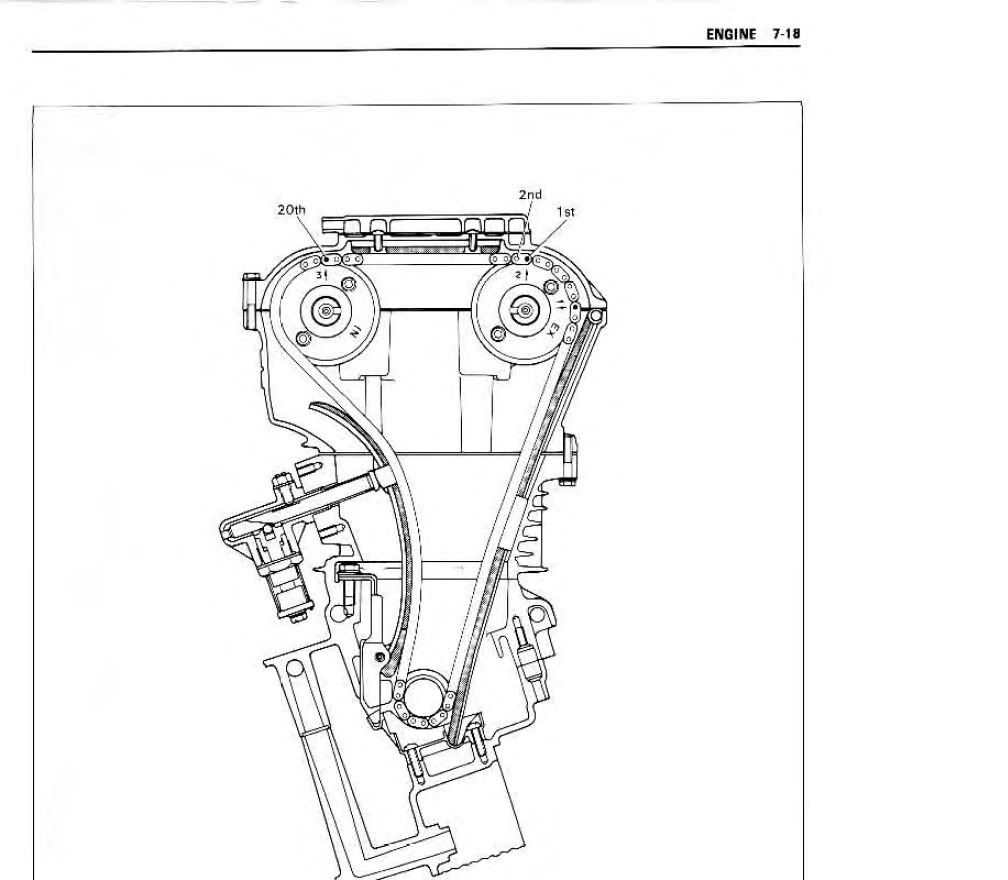
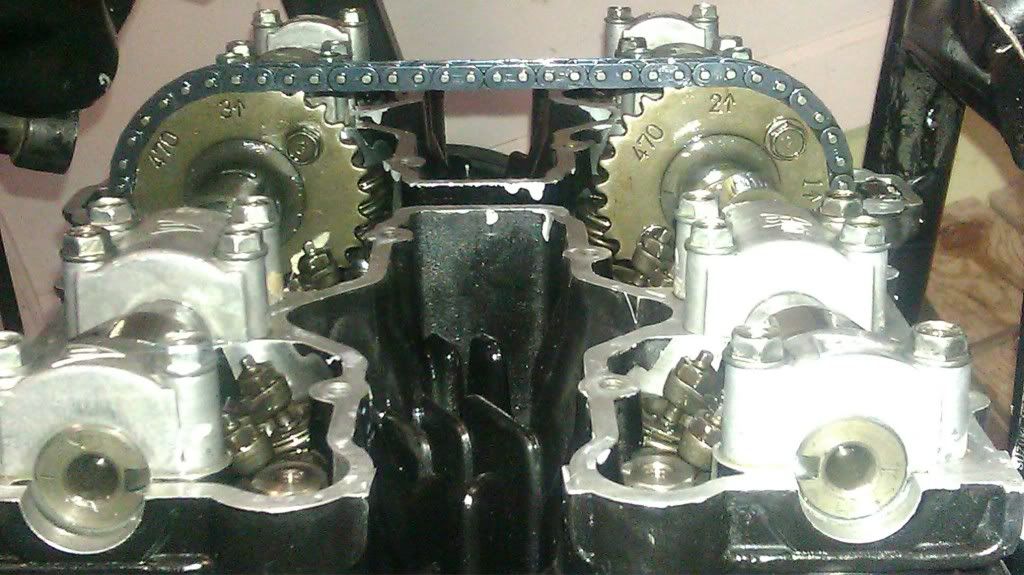
The timing marks are there to aid you in lining the camshafts up to achieve this syncronisation, so if your crankshaft mark is correct, and your marks 1, 2 and 3 on the canshafts are correct, then the whole bang shoot is in phase and is timed as it should be, over and out, no question about it, discussion closed. That is, crank on TDC, firing on cylinder number one, the number 1 mark on the sprockets parralel to the head and pointing at the gasket surface of the valve cover, numbers 2 and 3 pointing 90 degrees perpendicular and straight up with 20 pins between them, including the pins over the marks.
If this is achieved, the timing is set, no matter what anyone tells you, if your bike will still not start, you have other issues.
There may be some reason that the above setup cannot be achieved, despite all efforts, then we need to find the source of the problem.
Streched chain has been mentioned, possibly, incoeerect sprockets or marks have been mentioned, possibly.
Although highly unlikely, what about a twisted crank, i.e, although the timing mark points to TDC the pistons are not really where the mark says, due to the crank being twisted?
With all due respect, and please don't take this the wrong way, from what I have seen you have to deal with so far, that engine is a little more than suspect, that poor engine has been thrashed and abused no end, with liitle regard to its well being, I would take nothing for granted, check for yourself every step of the way.
Ok, so how does this help? What I am saying is, you need to manually confirm that everything is as it should be, regardless what the marks tell you, lets get started
Firstly, with the engine on the T mark on the ignition plate, the orientation of the crank should be with pistons 1 & 4 at TDC, with number 1 firing and about to start its power stroke, (you remember your theory of the Otto cycle right? Suck, Squash, Bang, Blow, or intake, compression, power and exhaust strokes, in that order), so remove the plugs, if they are not out already, put a thin dowl stick or screw driver into number 1 plug hole, as you rotate the crank, in the direction the motor runs, you will feel the piston coming up to TDC as it pushes the stick out the hole, now check as it reaches the very top of its travel, where it can rise no more that the timing mark is indeed on the T mark, showing TDC, this will confirm that all is well at the bottom end, if it 180 degrees out turn it one more revolution, repeating the procedure.
Good, lets assume all checks out, piston is at the top, mark is on T.
Next we need to check that number 1 is indeed firing and at the top of its compression stroke about to begin the power stroke.
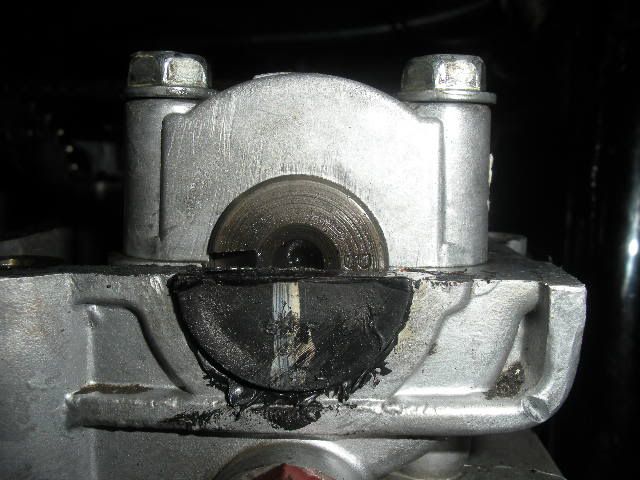
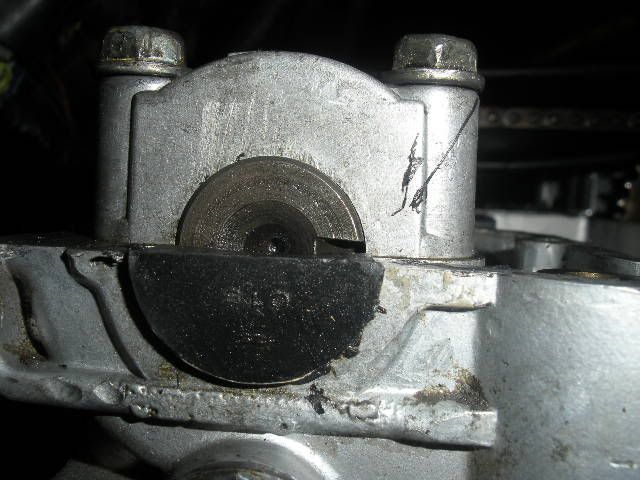
Now have a look at the cams and what you should see is the valves for number 1 cylinder should both be closed and on the heel of the cam, with the exhaust valve next to open, if you had to keep turning the motor.
This confirms that number 1 is about to fire, push the piston down and then expel the exhaust gas, number 4 cylinders valves should be "rocking", in other words, the intake valves should be closed but just coming
onto the lobe of the cam to start opening, and the exhaust valves should also be closed, just coming
off the lobe of the cam, telling you that the number 4 has just completed its exhaust stroke and is about to start its intake stroke on the way down.
If this is the case, and all checks out, you can now time your cams, align the marks as required and bolt it up, make sure to turn the motor through two full revolutions by hand to ensure everything clears and no valves touch pistons.
Remember, it is VITALLY important that you take up the slack in the chain from the front of the motor, over the exhaust cam, the tensioner will remove the slack from the back, otherwise you will align everything and as the slack goes around, the settings will change, when you get back around, your cams will be out.
If you find it impossible to get the 1,2 and 3 marks where they need to be, in all probability you have a grossly streched chain and you need to replace.
Cam timing is really very simple and can be done with no marks, in fact the racing guys ignore the marks, as mass production means they are not very accurate, and time with a dial gauge, hense "degreeing" but the marks are accurate enough for street use.
But I have seen cam timing drive grown men to drink, and is unfairly considered some dark art, purely because people can not visualise where the engine is in its cycle and where the various components should be at that time, that boring theory is good for something after all.

I hope this helps and gives you a little insight as to how the components work together, follow the steps and you should be done, let us know how it goes.




 . I am open to suggestions!
 .
. .
.

 .
.