• Required reading for all forum users!!!

    Welcome!
    Register to access the full functionality of the GSResources forum. Until you register and activate your account you will not have full forum access, nor will you be able to post or reply to messages.

    A note to new registrants...
    All new forum registrations must be activated via email before you have full access to the forum.

    A Special Note about Email accounts!
    DO NOT SIGN UP USING hotmail, outlook, gmx, sbcglobal, att, bellsouth or email.com. They delete our forum signup emails.

    A note to old forum members...
    I receive numerous requests from people who can no longer log in because their accounts were deleted. As mentioned in the forum FAQ, user accounts are deleted if you haven't logged in for the past 6 months. If you can't log in, then create a new forum account. If you don't get an error message, then check your email account for an activation message. If you get a message stating that the email address is already in use, then your account still exists so follow the instructions in the forum FAQ for resetting your password.

    Have you forgotten your password or have a new email address? Then read the forum FAQ for details on how to reset it.

    Any email requests for "can't log in anymore" problems or "lost my password" problems will be deleted. Read the forum FAQ and follow the instructions there - that's what we have one for...

  • Returning Visitors

    If you are a returning visitor who never received your confirmation email, then odds are your email provider is blockinig emails from our server. The only thing that can be done to get around this is you will have to try creating another forum account using an email address from another domain.

    If you are a returning visitor to the forum and can't log in using your old forum name and password but used to be able to then chances are your account is deleted. Purges of the databases are done regularly. You will have to create a new forum account and you should be all set.

Front brake pad replacements

Alexander

Forum Apprentice
Hello everyone!
I replaced the old front pads of the GS1000G with a compatible but Carbon Ceramic one.
I replaced the entire cylinder of the oil pump, purge everything.
The braking is long and the lever almost reaches the bottom, I don't like it!.
Even the rear wheel doesn't actually brake well.
I will try to go back to classic pads, hoping they are thicker to recover the brake lever and
brake better when cold.
Has anyone managed to get a decent brake out of this little beast?
Best​
 
The old GS brakes will never be like the newer more modern brakes but work perfectly fine as designed. Thicker pads have nothing to do with lever pull. I'd guess you've still got a tiny bit of air somewhere in the system.
 
Brake pad thickness would not make your brakes squishy, as the piston moves further out as the pad wears anyway. Must be air in your lines somewhere still. Bleed them again. Sometimes holding the brake lever overnight with a zip tie or similar will help the air bubbles move up to the reservoir.

Changing pad material can sometimes damage the rotor if it was not intended for that material.

Stainless steel braided brake lines are a great improvement. If you have original lines, it's time to change them.
 
If you have no air bubbles in the brake lines/calipers, another source of long lever travel is sticking caliper piston seals. The caliper piston has to be able to slip through the seal to take up the wear at the pads. This is why you have to push the piston in when you fit new pads.

When you pull on the level (or push in the pedal) the piston moves to push the pads into the disc. And the seal which has some grip on the piston deforms rather than letting the piston slip through. When you release pressure this deformation relaxes pulling the piston back in like a return spring and stops the pads from dragging in the disc. as the pads wear the piston travel overcomes the friction between the seal and piston and the piston slips through to self-adjust for pad wear.

If the friction is too great (due to dirt or corrosion or the seal being 'dry') between the seal and piston the piston doesn't slip past the seal, the excessive clearance at the caliper is never taken up and lever travel remains excessive and no amount of brake bleeding will fix it .

The solution is to unmount the caliper and work the piston back and forth using pressure from the level and a g-clamp or other suitable tool to push it back which will unstick the seal and allow the caliper to self-adjust under normal use.

It took me years of frustration and liters of brake fluid to work this out.
 
Brake pad thickness would not make your brakes squishy, as the piston moves further out as the pad wears anyway. Must be air in your lines somewhere still. Bleed them again. Sometimes holding the brake lever overnight with a zip tie or similar will help the air bubbles move up to the reservoir.

Changing pad material can sometimes damage the rotor if it was not intended for that material.

Stainless steel braided brake lines are a great improvement. If you have original lines, it's time to change them.

in fact I want to go back to the normal pads,
unfortunately the original ones are no longer available.

Yes I still have to insist on the air, I will try your method, is it possible that a bubble
makes the lever move halfway through the stroke, - it almost hits the fingers - without losing any pressure?
I noticed that the piston does not return quickly to the stop.
Maybe I mounted the gasket incorrectly...​
 
If you have no air bubbles in the brake lines/calipers, another source of long lever travel is sticking caliper piston seals. The caliper piston has to be able to slip through the seal to take up the wear at the pads. This is why you have to push the piston in when you fit new pads.

When you pull on the level (or push in the pedal) the piston moves to push the pads into the disc. And the seal which has some grip on the piston deforms rather than letting the piston slip through. When you release pressure this deformation relaxes pulling the piston back in like a return spring and stops the pads from dragging in the disc. as the pads wear the piston travel overcomes the friction between the seal and piston and the piston slips through to self-adjust for pad wear.

If the friction is too great (due to dirt or corrosion or the seal being 'dry') between the seal and piston the piston doesn't slip past the seal, the excessive clearance at the caliper is never taken up and lever travel remains excessive and no amount of brake bleeding will fix it .

The solution is to unmount the caliper and work the piston back and forth using pressure from the level and a g-clamp or other suitable tool to push it back which will unstick the seal and allow the caliper to self-adjust under normal use.

It took me years of frustration and liters of brake fluid to work this out.

Great!!! I think that's exactly the problem I found.
The piston with the gaskets were replaced, after cleaning the pump and without adding
grease to the seat, maybe it's the gasket that isn't working properly.
The pads and gaskets have traveled maybe 1000 mi​
 
Try pumping up the lever, to build pressure, then tie back the lever in the actuated position for 12 hours or so. This often moves the piston closer to the disc, and firms up the lever. Another thing, if you are still using the original rubber brake lines, time to replace them.
 
Try pumping up the lever, to build pressure, then tie back the lever in the actuated position for 12 hours or so. This often moves the piston closer to the disc, and firms up the lever. Another thing, if you are still using the original rubber brake lines, time to replace them.

thanks, i will follow your advice before replacing everything
 
with the change of organic EBC pads, the braking and the play of the lever seem to have improved but not yet perfect,
surely with the braided hoses it could improve even more, but maybe I want to expect too much from this braking system
 
Thanks for the info.
Updating everything is definitely a solution.

DId you do a full rebuild of the calipers? Aka pop the piston out, polish it if not damaged, replace piston seal with a new one, new dust boot, using a pick and scotch bright to make sure there is no corrosion in the seal groove or in the caliper bore? Rebuild the master cylinder with new seals and again though cleaning.

All that will go a long way to help braking.

These old bikes used a non-synthetic fluid that loves to get chunky over the years. This crude will get everywhere in a brake system.

Pull it all apart clean it, give it new seals and internals, verify the bores of the MC and caliper aren't scored and use some 100% synthetic fluid and you should have improved braking.
 
DId you do a full rebuild of the calipers? Aka pop the piston out, polish it if not damaged, replace piston seal with a new one, new dust boot, using a pick and scotch bright to make sure there is no corrosion in the seal groove or in the caliper bore? Rebuild the master cylinder with new seals and again though cleaning.

All that will go a long way to help braking.

These old bikes used a non-synthetic fluid that loves to get chunky over the years. This crude will get everywhere in a brake system.

Pull it all apart clean it, give it new seals and internals, verify the bores of the MC and caliper aren't scored and use some 100% synthetic fluid and you should have improved braking.

Thanks for your advice, I cleaned and replaced everything, there were some corrosion spots on the piston, I passed a bit of 1000 grit paper but I didn't give it too much importance, the damage wasn't important, the pump had a lot of grains but he was eliminated, cleaned and new gaskets.

I'll have to review everything and I don't think the original pipe, still decent, can affect it in this way, obviously braided and renewing would be better.

I also put a rubber band, as suggested, for a night and it improved initially then worsened.
The braking at the end is there but not as I would like.
At the first action of the lever it comes close to the fingers on the throttle grip, after the second action it improves significantly
but still remains halfway through the stroke, I often keep two fingers on the lever and I would like to eliminate this gap.
I purge it is free of air.
Tried the pistons and noticed that they go back in easily with the hands, maybe too much...
I think I have restored underestimated the goodness of the components and this is the result!​
 
Dismantled the whole system, cleaned the pump again, it is not in good condition, but it seems impossible to find, perhaps the one from the 550 could be adapted. Seals and spring already replaced a few months ago. The oil has small black streaks, certainly material that comes from the original pipes, I should replace them even if externally they do not show cracks or particular signs.
I have not dismantled the already overhauled calipers. Oil and several bleeds but unfortunately the lever continues to have too much movement almost at the end of run.
The first pumping is the worst, then it improves slightly. In the end I adopted a homemade solution, with a simple 1mm washer I recovered a lot on the lever and now it has improved considerably. Sooner or later I should replace everything, but I do not want to change the system model.​
 

Attachments

  • photo65412.jpg
    photo65412.jpg
    60 KB · Views: 0
Bleed your breaks, you have air in the lines.

V

Hi, I've bled at least 10 times and the last 5 without seeing a small bubble. Maybe it stops in other areas and not on the calipers?
I think it doesn't stay under pressure and it takes air from somewhere. It's just the first pump that the lever goes down too much, then it gets better
 
Last edited:
Euro-market GS1000G with the 1980-onwards calipers?
Don't make the mistake of using too small a master cylinder with them, it will work great on the second pump, but there's too much lost motion with these calipers to make them safe with a small master cylinder.
Use a 5/8" bore m.c. with adjustable lever span. I use Honda Deauville m/cs on mine and they match the calipers fine, with Carbon Lorraine pads that are excellent.
 
Euro-market GS1000G with the 1980-onwards calipers?
Don't make the mistake of using too small a master cylinder with them, it will work great on the second pump, but there's too much lost motion with these calipers to make them safe with a small master cylinder.
Use a 5/8" bore m.c. with adjustable lever span. I use Honda Deauville m/cs on mine and they match the calipers fine, with Carbon Lorraine pads that are excellent.

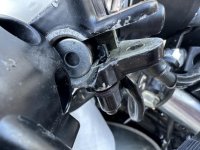
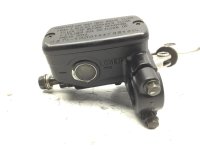
thanks for the advice, it should be this one, but I see the lateral tube attachment instead of the front one and I need to understand if the tube arrives without impediments,
another thing to check is the stop switch.
 

Attachments

  • 9_IMG_4959.JPG.jpg
    9_IMG_4959.JPG.jpg
    72.5 KB · Views: 0
Back
Top