So many, many things wrong in this thread.

... I start up my 850L and let it run for about 20-30 minutes and then I turned the petcock to shut off the fuel and 15 minutes later its still running.
Why on God's green earth would you let it run for 20-30 minutes, "turn off the gas" and let it run for another 15 minutes?
Hopefully you at least had a fan blowing on the engine?
If not, it might not matter if the carbs gum up.
... Isn't that the position across from reserve?
Not sure if
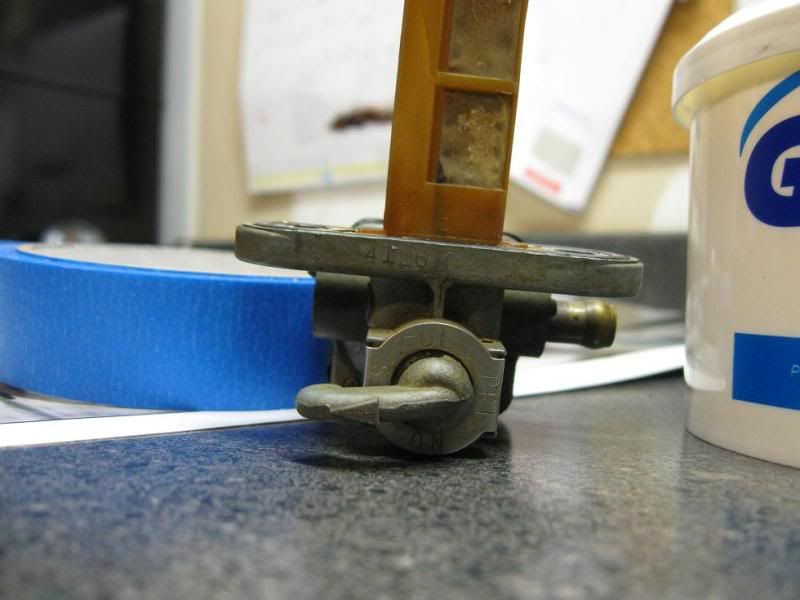
your petcock has markings that you can read, but those that
do are labeled: RES, ON, PRI.
To turn the petcock OFF, you simply stop the engine, the lack of vacuum applied to the petcock will turn it OFF.
I would think you would set it to the Prime position to run it out of gas..

Not sure why you would do that, it will "run out of gas" quicker if you simply left it in the ON position. RES and PRI both draw off the bottom of the tank, meaning it will have to burn through another gallon or so of gas before it quits.
Cant ya just disconect the vacume line, then the fuel line and let it run out?
If you are going to disconnect the vacuum line, why bother with the fuel line?
When you turn off the vacuum, it will also turn off the fuel, assuming the petcock is working correctly.
In the mean time, #2 cylinder is going to run rather lean, unless you plug the vacuum hose.
Ok let me explain it this way. I am wanting to shut the gas off so I don't have to worry about the gas settling in the jets and the bowls of the carbs so that it doesn't gum up during the winter. Am I wrong with this assumption? ... Do I need to even worry about the carbs gumming up? I do use a stabilizer in every tank of gas.
If you are using a stabilizer, there is no need to drain
anything.
If, however, you insist on draining the carbs, by all means, leave the gas tank FULL. Simply stop the engine, reach under each carb and loosen the drain plug.
Just keep in mind that in this drained condition, only the fuel in the bowls is drained, there is still going to be just a little gas in the small passages in the carb bodies.
Overall, your best bet for storing your bike is to run it a bit to warm up the oil, but NOT for 45 minutes. Change the oil and filter. Add stabilizer to a partial tank of fuel (I use double the recommended dose), ride to the gas station to fill the tank. This will also circulate the fresh oil throughout the system. Park the bike where it will sit for the winter. While it is cooling, put it on the centerstand, block the front of the bike to get the front tire off the cement. Wash and wax all the body panels, polish/wax the chrome (hopefully the exhaust has cooled by now). Connect a battery tender to monitor the battery, cover the bike with a light breathable cloth after kissing it good-night. Don't fire it up just to hear it run, no matter how sweet it sounds. Actually, don't fire it up unless you will RIDE it for about half an hour or so.
Using this method, I have had no problems with any of my machines that I ever botherd to set up for the season. In fact, I just moved my snow blower to the garage for easy access. It has not been run since late March/early April. One pull on the rope is all it took to get it started. Your bike will start as easily in the spring.
.



 . Just kidding


