• Required reading for all forum users!!!

    Welcome!
    Register to access the full functionality of the GSResources forum. Until you register and activate your account you will not have full forum access, nor will you be able to post or reply to messages.

    A note to new registrants...
    All new forum registrations must be activated via email before you have full access to the forum.

    A Special Note about Email accounts!
    DO NOT SIGN UP USING hotmail, outlook, gmx, sbcglobal, att, bellsouth or email.com. They delete our forum signup emails.

    A note to old forum members...
    I receive numerous requests from people who can no longer log in because their accounts were deleted. As mentioned in the forum FAQ, user accounts are deleted if you haven't logged in for the past 6 months. If you can't log in, then create a new forum account. If you don't get an error message, then check your email account for an activation message. If you get a message stating that the email address is already in use, then your account still exists so follow the instructions in the forum FAQ for resetting your password.

    Have you forgotten your password or have a new email address? Then read the forum FAQ for details on how to reset it.

    Any email requests for "can't log in anymore" problems or "lost my password" problems will be deleted. Read the forum FAQ and follow the instructions there - that's what we have one for...

  • Returning Visitors

    If you are a returning visitor who never received your confirmation email, then odds are your email provider is blockinig emails from our server. The only thing that can be done to get around this is you will have to try creating another forum account using an email address from another domain.

    If you are a returning visitor to the forum and can't log in using your old forum name and password but used to be able to then chances are your account is deleted. Purges of the databases are done regularly. You will have to create a new forum account and you should be all set.

Fine tuning an 850

  • Thread starter Thread starter Guest
  • Start date Start date
Hey Don, life gets tedious , don't it?

If you're running a 650 crank in your 550 cases, why can't you use the electronic ignition components made for that setup? You should have minimal tuning challenges this way.

If you do choose to persevere with the points and weights, use a fine tipped felt pen to mark the edge of your backing plate at a point adjacent on the ali housing. I use the crankcase joint seam as my reference. Now just back off the static timing as much as it takes to prevent pinging. You may run out of adjustment on the backing plate and need to extend the slots to achieve the desired timing position. Once you've found this point, use the pen to mark the housing. You now have a distance that you can calculate and convert into degrees of crank rotation, or you can use a degree wheel to confirm the exact figure. The figure isn't important, but finding the correct static advance is.

At present, you are starting too advanced and continuing that way as the revs increase. The 550 weights will be lighter than would be required for the slower acceleration of the 650 crank. So you need to add some weight or fit stronger springs.

I would save yourself some agro and fit up a 650 electronic unit if its available.
One benefit is that you get a more accurate advance curve, up to 3500 rpm instead of the 2500 rpm with the 550 centrifugal advance system. As an example, the Boyer Bransden system I run on my 850 isn't fully advanced until around 4500 rpm.;)

Hey, it's decision time mate.

Ian, I am running a standard 550 bottom end in this motor. The 550 and 650 (673cc) have the same stroke. The 650E has the same roller bottom end and crank as the 550, whereas the 650G has a different crank with slipper/shell bearings - but still the same stroke. The two 650 engines are essentially totally different motors. Not many parts will swap from the bottom end/crankcases on these models. Although the top ends are the same - pistons, cylinders, head, cams, etc.

As I still am running the 550 crank will the advance curve of the current set-up be OK (bob weights & springs) as opposed to your suggestion that this set-up would advance too quickly for the slower accelerating 650 crank? The only real difference is the quench type combustion chambers with different burn characteristics = different ign timing.

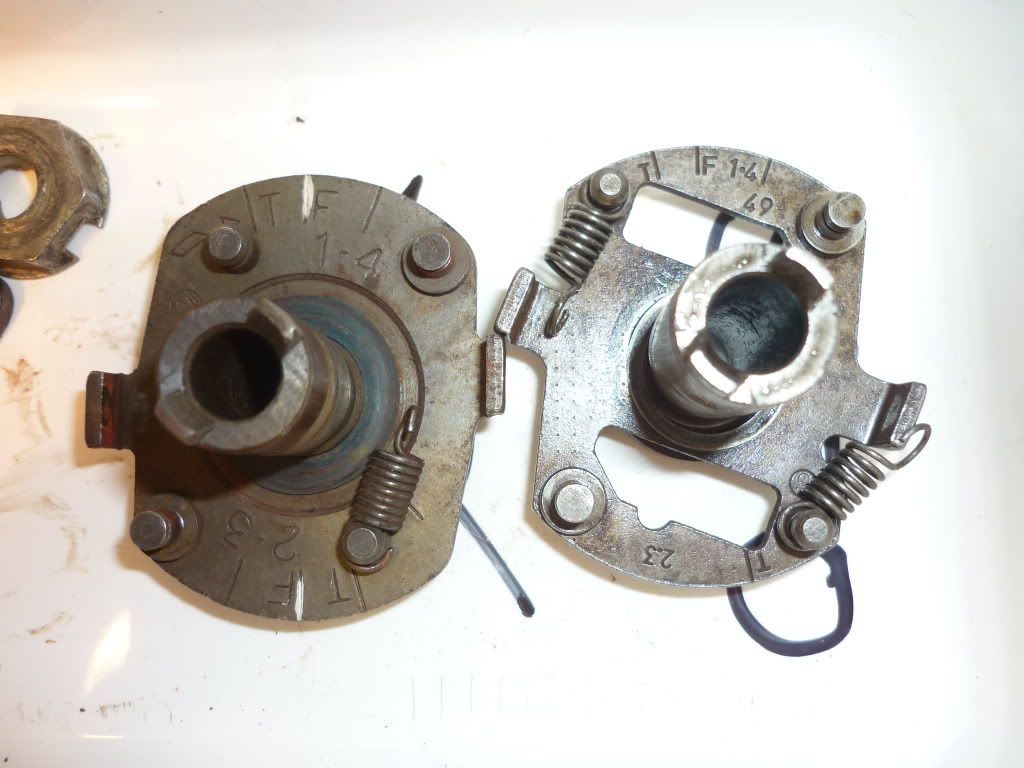
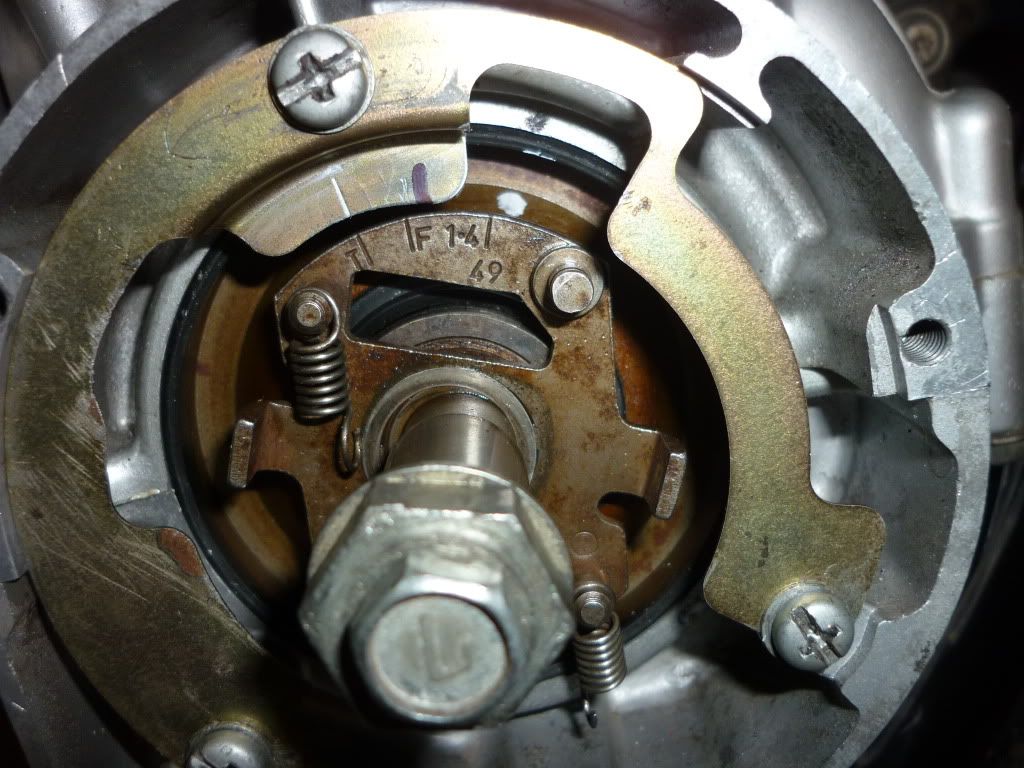
I do have the advance/retard unit off a 650G as pictured below. I also have the plate that bolts in place of my points plate with the two electronic modules (triggering device) as well with it's wiring. But I do not have the black box/igniter.

Would I be better off with a DYNA electronic system? But I would still be using the same advance/retard unit wouldn't I? If so which DYNA set-up would I need? Does the DYNA have a black box or are all the components under the points cover?

Is it correct to turn the points base plate clockwise to retard the ignition timing?

Ian is the advance curve on your Boyer system done mechanically or electronically?
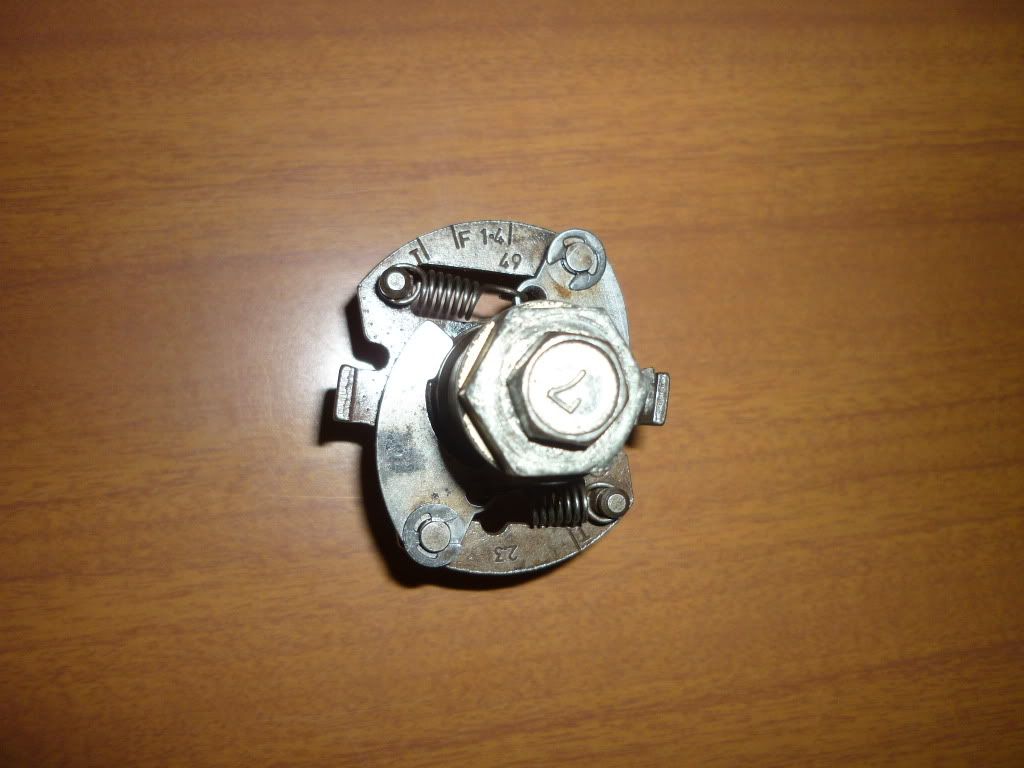
P1020773.jpg


Thanks
 
Last edited:
Ian, I am running a standard 550 bottom end in this motor. The 550 and 650 (673cc) have the same stroke. The 650E has the same roller bottom end and crank as the 550, whereas the 650G has a different crank with slipper/shell bearings - but still the same stroke. The two 650 engines are essentially totally different motors. Not many parts will swap from the bottom end/crankcases on these models. Although the top ends are the same - pistons, cylinders, head, cams, etc.

As I still am running the 550 crank will the advance curve of the current set-up be OK (bob weights & springs) as opposed to your suggestion that this set-up would advance too quickly for the slower accelerating 650 crank? The only real difference is the quench type combustion chambers with different burn characteristics = different ign timing.

I do have the advance/retard unit off a 650G as pictured below. I also have the plate that bolts in place of my points plate with the two electronic modules (triggering device) as well with it's wiring. But I do not have the black box/igniter.

Would I be better off with a DYNA electronic system? But I would still be using the same advance/retard unit wouldn't I? If so which DYNA set-up would I need? Does the DYNA have a black box or are all the components under the points cover?

Is it correct to turn the points base plate clockwise to retard the ignition timing?

Ian is the advance curve on your Boyer system done mechanically or electronically?

P1020773.jpg


Thanks

Don, sorry I didn't realise that you got your extra capacity from bore increase alone. So, you are still running the 550 crank and rods, but 650 pistons, cylinders, head and cams.

If your compression ratio figure is correct, it appears that the combustion chamber design requires less static advance but more total advance for the stock 650 configuration.

To remedy your detonation, you still need to retard your static position by rotating the backing plate in the same direction as the rotor turns (clockwise). Try this and road test again. If you find that the mid range punch is lacking, you will need to modify the centrifugal advance mechanism, or fit the 650G advance unit. Do you know the stock ignition timing specs for the 650G? I'm picking that the mechanical advance will throw out further than the 550 unit to gain the 40 degs total advance required for stock engines.

You would need to invest in a Dyna 2000 electronic unit to plot your own advance curve. The BB units are factory set, but are electronically advanced.

I suggest you retard what you've got first to get some feed back.;)
 
Don, sorry I didn't realise that you got your extra capacity from bore increase alone. So, you are still running the 550 crank and rods, but 650 pistons, cylinders, head and cams.

Yes, correct in every aspect.

If your compression ratio figure is correct, it appears that the combustion chamber design requires less static advance but more total advance for the stock 650 configuration.
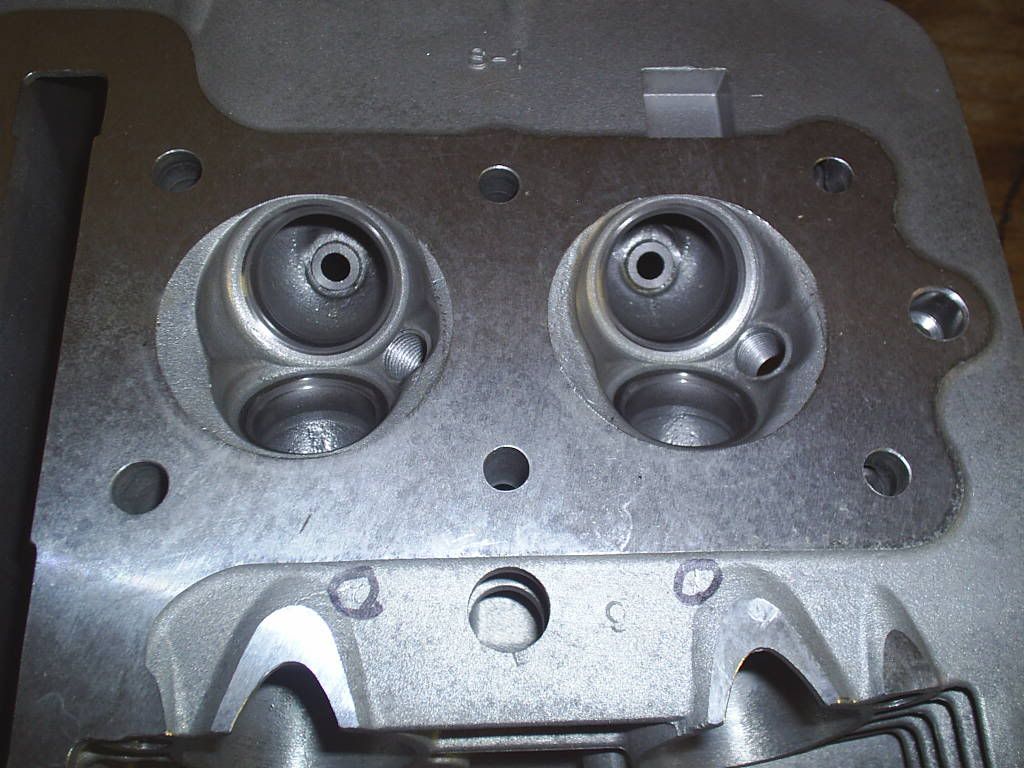
Picture below shows the shape of the combustion chambers, chamber is much smaller than the bore size and the head surface overlaps the piston flat circumference that surrounds the dome. This is the quench part of the head and piston and the reason I made my own base gasket to achieve the correct clearance between the head and piston land to achieve the best quench effect possible.

17TwoCombustionChambersRHSide.jpg


To remedy your detonation, you still need to retard your static position by rotating the backing plate in the same direction as the rotor turns (clockwise). Try this and road test again. If you find that the mid range punch is lacking, you will need to modify the centrifugal advance mechanism, or fit the 650G advance unit.
The motor has really fantastic mid range punch at the present time, so it would be a shame to lose that, but I might need to go for a compromise if need be.


Do you know the stock ignition timing specs for the 650G? I'm picking that the mechanical advance will throw out further than the 550 unit to gain the 40 degs total advance required for stock engines.
The 650G and 650E timing specs are exactly the same (10 initial & 40 total), but the advance/retard units on them are a different part number. So don't know what going on there.

I will need to check out if I can fit the points cam from the 550 to the 650G unit and if I can then that should work ok as far as the correct advance goes. Also another option is to bend the stops outwards on the 550 unit so the bob weights can throw out further giving more advance. The bob weights on both units look the same and I would assume the same weight. Do you think 40 degrees is a lot of advance at wide open throttle.

I suggest you retard what you've got first to get some feed back.;)
I will do this and see what results I can come up with over the weekend probably. And report back.

Thanks again.
 
Last edited:
Picture below shows the shape of the combustion chambers, chamber is much smaller than the bore size and the head surface overlaps the piston flat circumference that surrounds the dome. This is the quench part of the head and piston and the reason I made my own base gasket to achieve the correct clearance between the head and piston land to achieve the best quench effect possible.

Don, IMO that's an ugly chamber design. Suzuki seem to have stepped backwards when they designed the 650E. They also reverted back to plain bearing bottom ends.

40 deg total advance is huge. I have only ever seen that much advance on another poorly designed engine that the Poms (English) used as a rally engine back in the 70's. That was the Hillman Avenger piloted by Andrew Cowan. It ran 42 deg, was quite competitive but not too reliable.

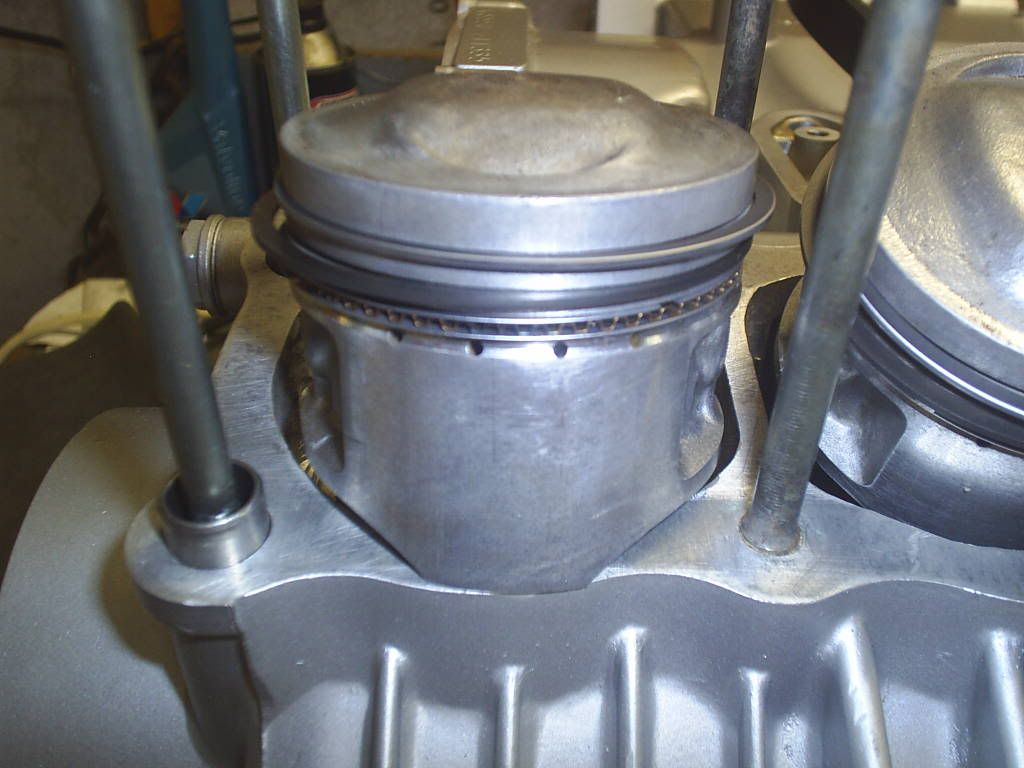
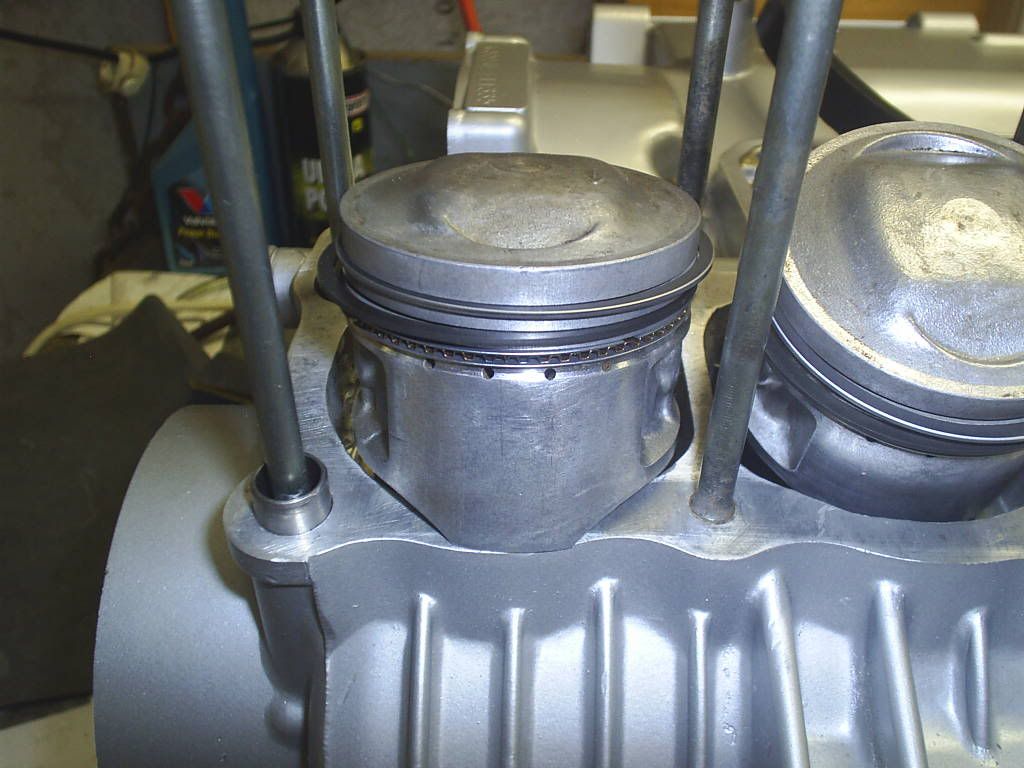
Excessive amounts of spark advance are needed to combat inefficient burn off rates. Does the piston dome match the combustion chamber shape? If not and you have tightened the squish band area too much, this could be contributing towards detonation too.

I wouldn't grind off the stops on the 550 advance assy. If you can fit up the 650G one and still run the points, I'd take that option first.

Good luck with your trials this weekend.
 
OK. Thanks Ian. I think I have all the info I need to proceed . Thanks again.

S3010019.jpg


S3010020.jpg


.
 
Last edited:
Suzuki seem to have stepped backwards when they designed the 650E. They also reverted back to plain bearing bottom ends.

The plain bearing bottom end was only on the 650G, the 650E retained the roller bottom end the same as my 550 crank.

I wouldn't grind off the stops on the 550 advance assy.

I did not plan to grind the stops off, just bend them out a bit so the bob weights can throw out a bit further for more advance at high revs.
 
I did not plan to grind the stops off, just bend them out a bit so the bob weights can throw out a bit further for more advance at high revs.

Yeah, that's an option if you're careful not to overdo it. You'll get an idea of how much extra throw you're likely to need by studying the 650G assy.

Hey Psy, sorry we hijacked your post some!:o
 
Yeah, that's an option if you're careful not to overdo it. You'll get an idea of how much extra throw you're likely to need by studying the 650G assy.

Hey Psy, sorry we hijacked your post some!:o

+1 from me too Ivor
 
Last edited:
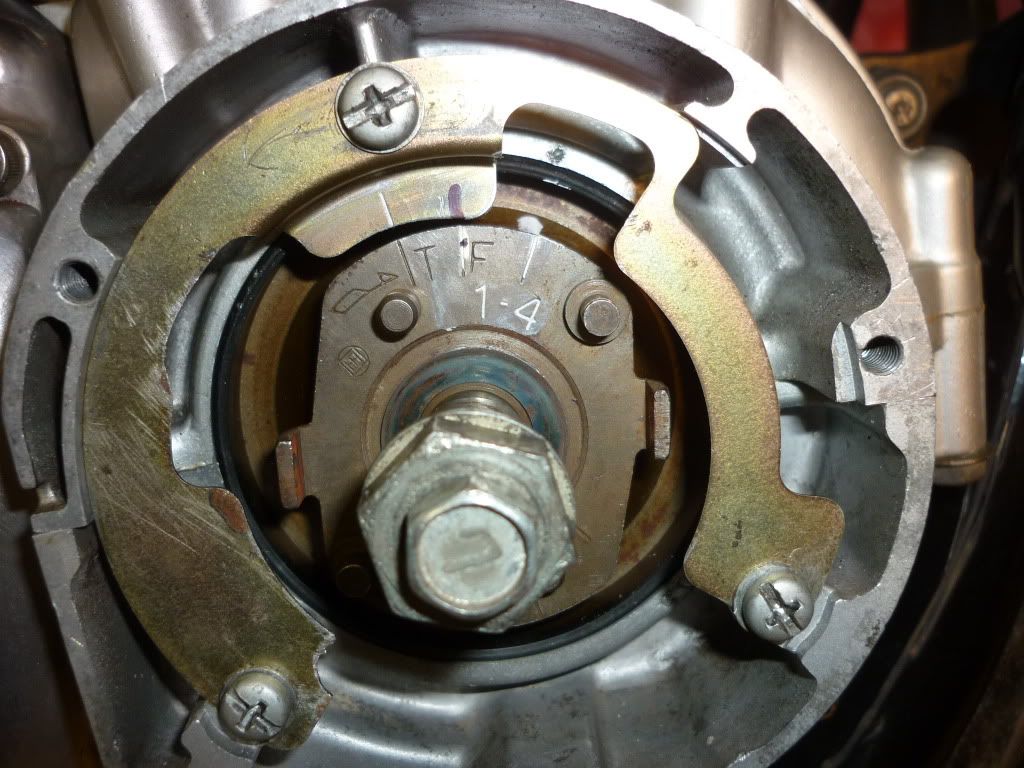
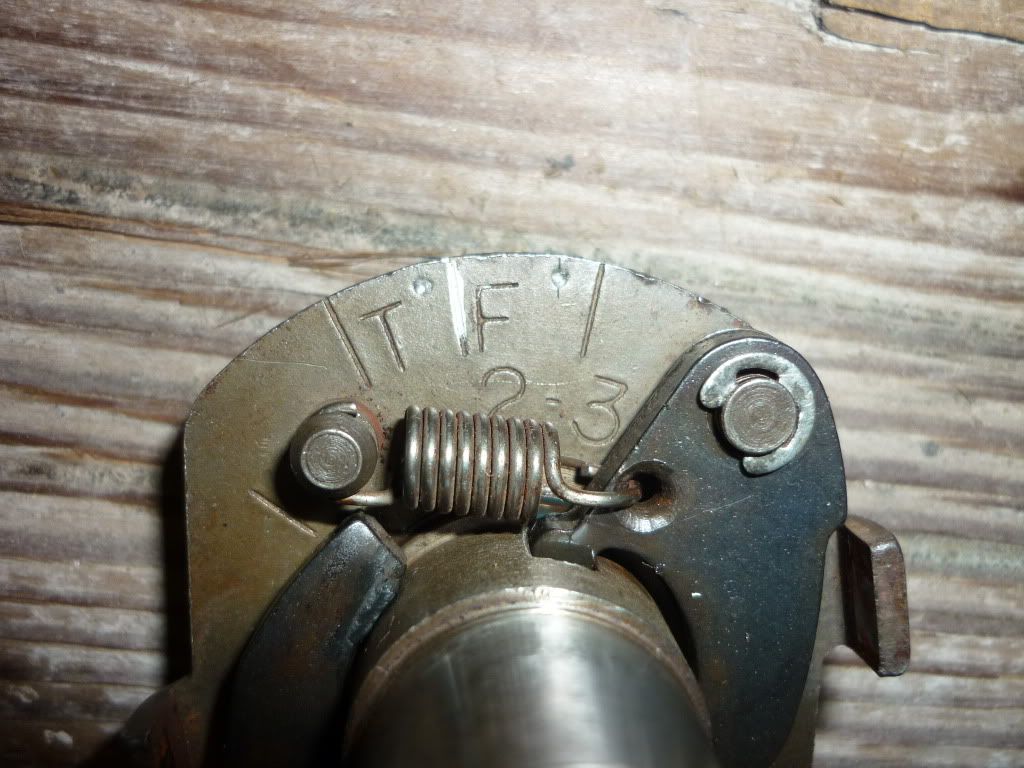
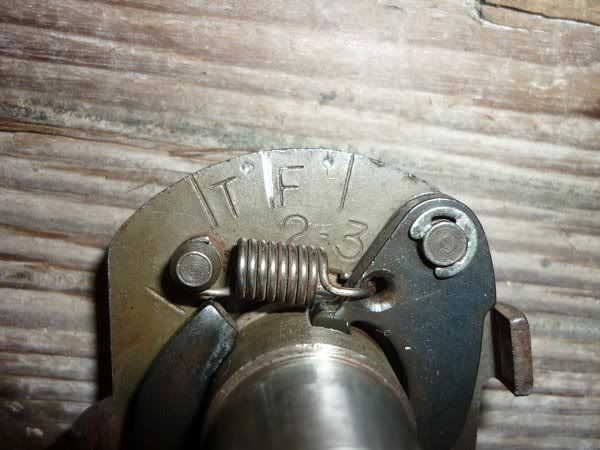
I have done a comparison of the two advance/retard units after removing the 550 one from my motor. As can be seen in the next picture the F mark on the 650 unit is closer to the T mark than on the 550 unit which is what we expected to find as the 650 unit is 10[FONT=&quot]? BTDC and the 550 unit is 17[/FONT][FONT=&quot]? BTDC.

P1020788.jpg


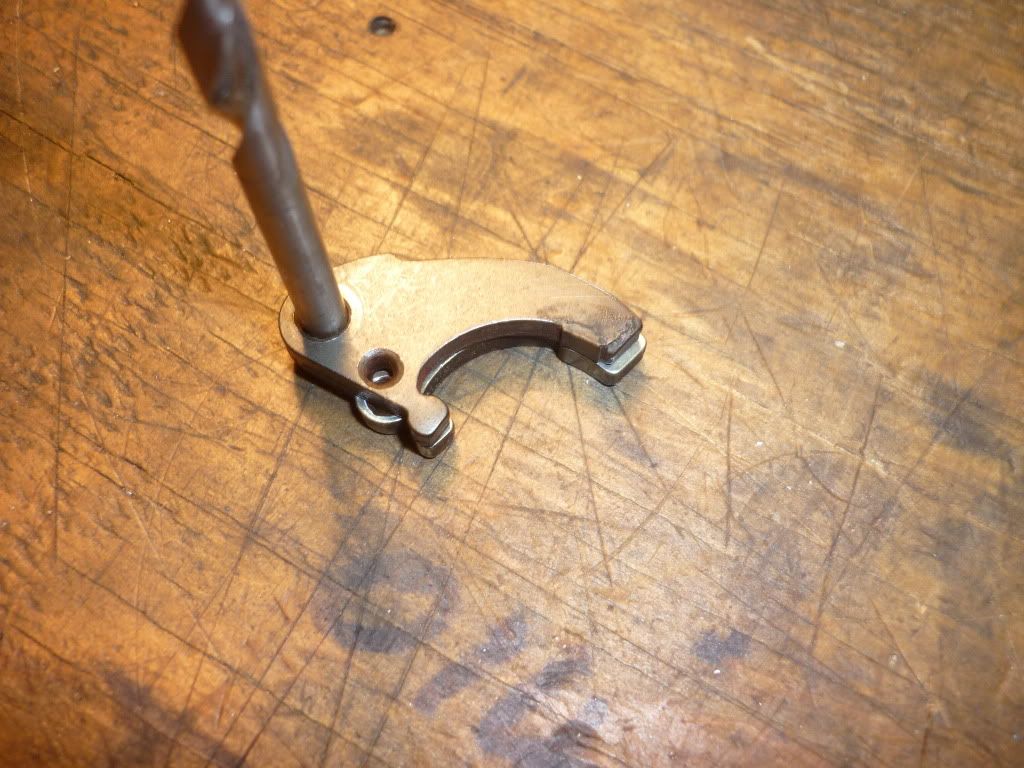
I also found that although the 650 bob weights would not fit into the 550 cam portion of the unit which was a good fit onto the 650 shaft. The two bob weights were a different shape and had the holes drilled in different places.

The 650 bob weights had very limited movement and would not advance the cam as necessary to operate the timing correctly.

When the 550 bob weights were fitted to the 550 cam on the 650 unit because the spring holes in the plates were out by 2mm which meant the springs had to be stretch an extra 2mm and by the feel of it I didn't think the centrifugal force would be enough to throw the bob weights out against the extra pressure of the springs.

P1020829.jpg


In the picture below can be seen the timing for the standard 550 advance unit. The F mark lines up with the black index mark and it can be seen where the full advance mark is in relation to the white paint mark.

P1020846.jpg


This next picture shows the difference in timing with the 650 advance unit in place. There is less initial advance at idle. The odd thing is there is less total advance as well, but this 650 unit setup is supposed to give a full 40[/FONT][FONT=&quot]? advance above 1650 rpm whereas the 550 unit only gives 37[/FONT][FONT=&quot]? above 1500 rpm. So one would think the 650 total advance figure should be further away from the T (tdc) mark, but in fact the total advance for the 650 unit is closer to the T mark. Can anyone explain?

P1020849.jpg


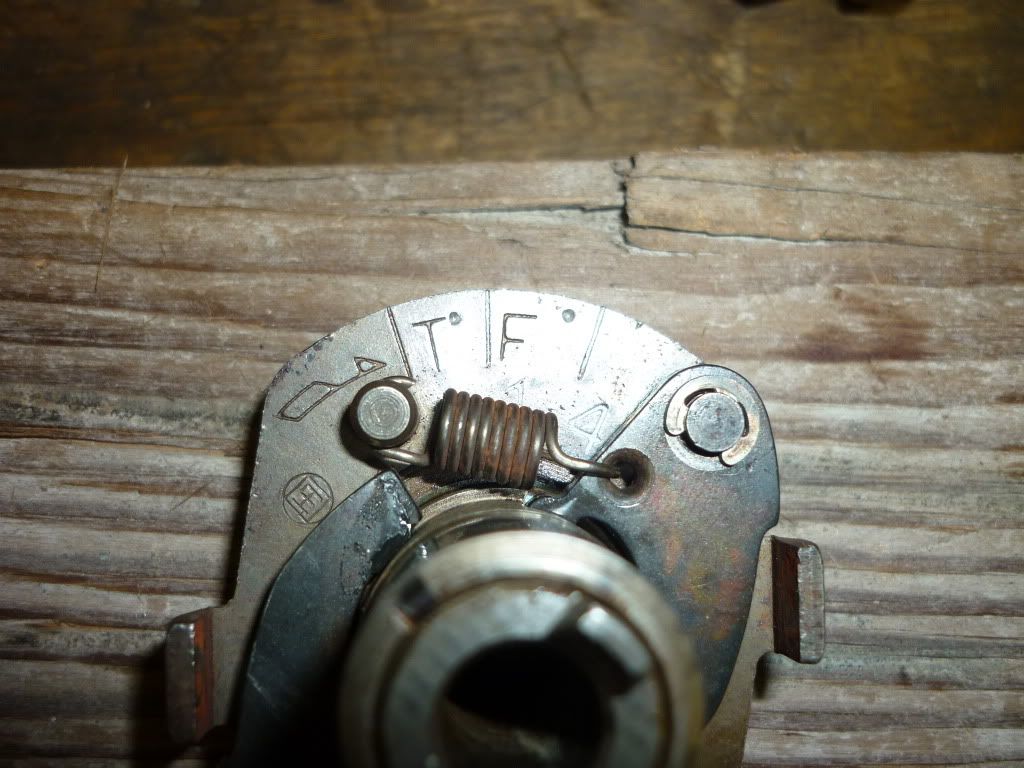
Also the cam that came off the 550 unit is about 5 or 6mm shorter than the part that came off the 650 unit and this caused other problems which I will not go into here. So I decided to dispense with the 650 unit and refit the 550 unit with all of it's original parts, springs, bob weights, etc. So I had to transfer the timing marks from the 650 unit to the 550 unit as will be seen by the centre punch marks on the unit in the pics below.

P1020866.jpg


P1020870.jpg


All I need to do now is dress up the points a bit. Refit the 550 advance/retard unit to the motor. Time the motor to the new timing marks on the 550 unit and after startup check it with a timing light as well as if the total advance timing mark is advancing under revs as it should. And then hopefully the pinging will be gone and I will have no flat spots when accelerating through the gears, especially in 6th out of corners.
[/FONT]
 
Last edited:
Don, I think you will be on the money this time. But, the new specs may require you to set the engine slightly retarded of the 550 static mark. Just try it there first, and if it still pings, retard it some, until it stops pinging. You may even find it can be advanced some! Good luck.
 
So one would think the 650 total advance figure should be further away from the T (tdc) mark, but in fact the totao advance for the 650 unit is closer to the T mark. Can anyone explain?

Looking at the pics it would seem that the distance between the two advance marks is smaller for the 550 than for the 650 mechanism. And that should be so as the 550 has an advance difference of 20deg total wheras 650 has 30deg difference. No?
 
Thanks for the replies guys.

I am still puzzled by the timing marks on the 550 and 650 advance/retard units. Could someone explain or is it just that the Japanese mind sees things differently from us westerners.

I have transferred the timing marks from the 650 unit to the 550 unit by centre punching the new timing marks. In the picture below it will be seen that the new idle timing mark is closer to the T (tdc) mark than the original 550 timing mark and that is how it should be according to my understanding. Because the original 550 idle timing was at 17 deg and the 650 timing at 10 deg. So 10 is closer to tdc than 17. Right.

But when it comes to total advance the 550 was at 37 deg and the 650 at 40 deg. So looking at the picture below the 650 mark to my way of thinking should be on the RH side of the original 550 total advance mark not on the left and closer to tdc than the 550 mark is. it looks to me that the 650 centre punch mark for total advance is at around 34 deg.

m_P1020870.jpg


Do you get what I mean? Am I understood? If so what do you think and can you explain it to me?

BTW I have transferred the timing marks from the 650 unit to the 550 unit extremely accurately so I know they are correct.
 
I have transferred the timing marks from the 650 unit to the 550 unit by centre punching the new timing marks. In the picture below it will be seen that the new idle timing mark is closer to the T (tdc) mark than the original 550 timing mark and that is how it should be according to my understanding. Because the original 550 idle timing was at 17 deg and the 650 timing at 10 deg. So 10 is closer to tdc than 17. Right.

But when it comes to total advance the 550 was at 37 deg and the 650 at 40 deg. So looking at the picture below the 650 mark to my way of thinking should be on the RH side of the original 550 total advance mark not on the left and closer to tdc than the 550 mark is. it looks to me that the 650 centre punch mark for total advance is at around 34 deg.

Don there's an anomaly here. I have just checked my spare 850 advance unit. It is visually identical to the 650G unit in your pic, except there's no 49 stamped on it. Also my springs are lighter than yours. I know that the 850 unit is all in at 37 deg, just like your 550 is supposed to be.

You need to be accurate when transferring those marks. The 650 plate assy has a smaller arc. This can be seen when checking the gap and the alignment of the TDC lines.

After thinking about it further, you are trying to replicate the advance rate of the electronic unit by a weights and spring combo, which will be extremely difficult, if not impossible to achieve.

You shouldn't compare the 650G and 55OE advances, because they both advance faster initially than the 650E and then continue for a shorter duration up to 2500 rpm. You need a mechanical setup that advances only 10 deg by 1650 rpm and then another 30 deg by 3500 rpm.

You've got yourself a nice 650 engine, so I would save yourself some agro, bite the bullet and set up the stock electronic unit. Or, you could go with a Dyna S, if they make one suitable for the 650E. Decisions, decisions!
 
Ian I measured the distance across both of the units from the arc on one side to the arc on the other side and there is only 1mm difference, so for all intents and purposes they are the same size with the same arc. I am having trouble finding a Dyna S for the 650 motor, I will keep searching and see what I can find. I have the signal generator on the backing plate with the two modules, and the rotor that fits on the end of the crankshaft so all I am missing is the igniter (black box) for the standard 650 setup. I will see if I can find one of them.

Thanks again.
 
I have timed the ign statically and the idle is fairly rough to say the least. Don't know why that would be. It idles better at 17 deg btdc than the recommended 10 deg that it is at now. I will have a ride when it warms up a bit and see what it is like on the road. Then I will probably set the timing back midway between the original timing mark (17 deg) and the present mark (10 deg), just enough to get the ping out of the motor.
 
I have timed the ign statically and the idle is fairly rough to say the least. Don't know why that would be. It idles better at 17 deg btdc than the recommended 10 deg that it is at now. I will have a ride when it warms up a bit and see what it is like on the road. Then I will probably set the timing back midway between the original timing mark (17 deg) and the present mark (10 deg), just enough to get the ping out of the motor.

Try that intermediate setting Don. But if it still runs better at 17 deg, you could try a stronger spring on one set of weights. Most advance units used to have a light and heavy spring combo. The heavier spring was delayed until the light one had partially advanced the weights. Advance would slow down until enough centrifugal force was generated to overcome the heavier spring and then advance would continue. You may have to experiment with this type of advance to achieve a good result.
 
Try that intermediate setting Don. But if it still runs better at 17 deg, you could try a stronger spring on one set of weights. Most advance units used to have a light and heavy spring combo. The heavier spring was delayed until the light one had partially advanced the weights. Advance would slow down until enough centrifugal force was generated to overcome the heavier spring and then advance would continue. You may have to experiment with this type of advance to achieve a good result.

Thanks Ian, will do.
 
Well last night I re-marked the timing marks and threw my old (30yrs) timing light on it. I was not able to see the timing mark at idle because I did not let the paint dry before I did the test (so you can guess what happened) sometimes it pays to be patient. But I was able to see the total advance mark move from it's position back to line up with the stationary timing mark on the backing plate and I was getting full advance with no problem when the engine was reved past 2000rpm.

I ordered a new timing light today as the one I have has an orange light emitting from it and it's not easy to see the timing marks unless it is almost completely dark (shed lights off). Also it's a headache trying to connect up the timing light in the old fashioned way of putting one lead on the spark plug and the the other one into the spark plug cap especially when they are designed for car plugs and leads with the screw on spark plug caps. The new one which clips onto the spark plug lead should be much easier to use.

I also bit the bullet and ordered the new Dyna "S" DS3-1 ecletronic ignition for my motor. Hope I can get away with using my standard coils -- cheaper that way.
 
Well last night I re-marked the timing marks and threw my old (30yrs) timing light on it. I was not able to see the timing mark at idle because I did not let the paint dry before I did the test (so you can guess what happened) sometimes it pays to be patient. But I was able to see the total advance mark move from it's position back to line up with the stationary timing mark on the backing plate and I was getting full advance with no problem when the engine was reved past 2000rpm.

I ordered a new timing light today as the one I have has an orange light emitting from it and it's not easy to see the timing marks unless it is almost completely dark (shed lights off). Also it's a headache trying to connect up the timing light in the old fashioned way of putting one lead on the spark plug and the the other one into the spark plug cap especially when they are designed for car plugs and leads with the screw on spark plug caps. The new one which clips onto the spark plug lead should be much easier to use.

I also bit the bullet and ordered the new Dyna "S" DS3-1 ecletronic ignition for my motor. Hope I can get away with using my standard coils -- cheaper that way.

The Dyna S should make tuning easier. Good luck with the coils. The later model timing lights are easy to use too.
 
Back
Top