• Required reading for all forum users!!!

    Welcome!
    Register to access the full functionality of the GSResources forum. Until you register and activate your account you will not have full forum access, nor will you be able to post or reply to messages.

    A note to new registrants...
    All new forum registrations must be activated via email before you have full access to the forum.

    A Special Note about Email accounts!
    DO NOT SIGN UP USING hotmail, outlook, gmx, sbcglobal, att, bellsouth or email.com. They delete our forum signup emails.

    A note to old forum members...
    I receive numerous requests from people who can no longer log in because their accounts were deleted. As mentioned in the forum FAQ, user accounts are deleted if you haven't logged in for the past 6 months. If you can't log in, then create a new forum account. If you don't get an error message, then check your email account for an activation message. If you get a message stating that the email address is already in use, then your account still exists so follow the instructions in the forum FAQ for resetting your password.

    Have you forgotten your password or have a new email address? Then read the forum FAQ for details on how to reset it.

    Any email requests for "can't log in anymore" problems or "lost my password" problems will be deleted. Read the forum FAQ and follow the instructions there - that's what we have one for...

  • Returning Visitors

    If you are a returning visitor who never received your confirmation email, then odds are your email provider is blockinig emails from our server. The only thing that can be done to get around this is you will have to try creating another forum account using an email address from another domain.

    If you are a returning visitor to the forum and can't log in using your old forum name and password but used to be able to then chances are your account is deleted. Purges of the databases are done regularly. You will have to create a new forum account and you should be all set.

1980 GS850GLT Road-worthiness Project

eil

Forum Sage
Hi All,

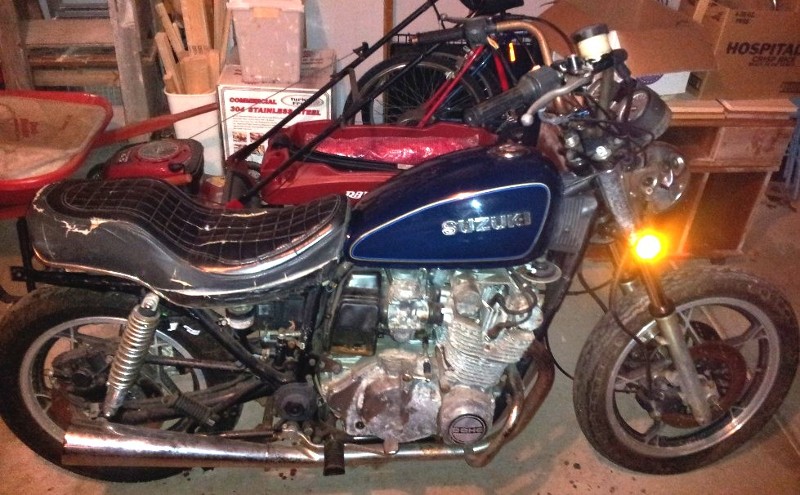
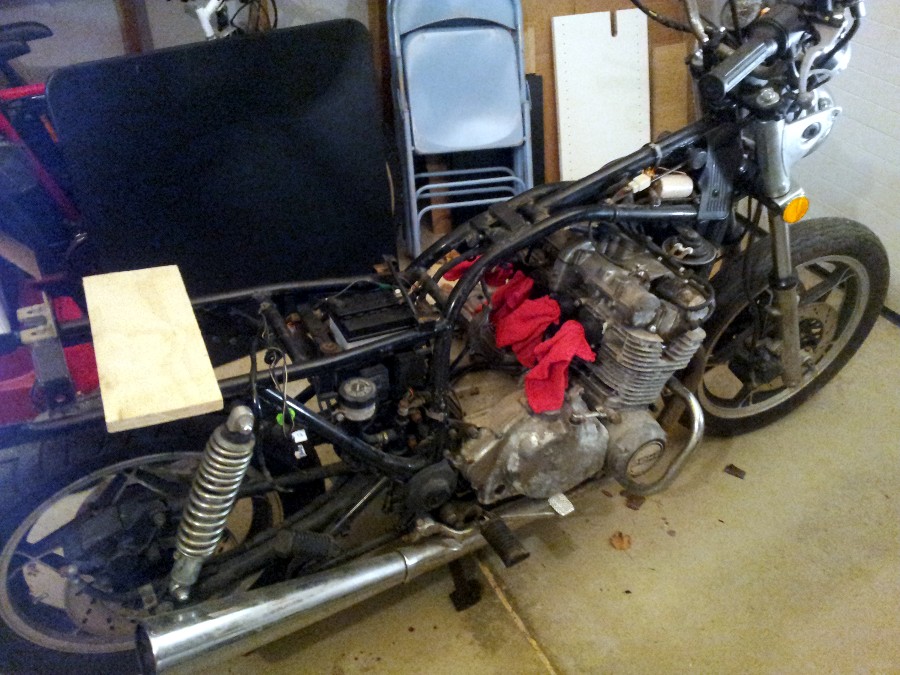
So I spoke a bit about myself over in the GS Owners forum, but this thread is more about the bike and my plans for it. In short, I'm looking to bring it back to road-worthiness. This will not be a restoration for two reasons: 1) I'm not much into cruisers, and 2) There is no pristine part on it, so restoring it to something I'd be proud to show off would be really, really expensive. That said, everything I've seen so far makes me believe it could be perfectly ridable by spring.

The previous owner took off the tank, lights, fenders, and side covers with the intent of turning it into a chopper but then lost interest. He had it since 2001 and says it was running a year ago. (But the more I check things out, the more I don't believe him. Details on that some other time.)

It looks about like you'd expect a 33 year-old motocycle to look. All of the parts appear to be stock, but almost everything that's metal on it has rusted or corroded to some degree or another. The aluminum parts are well-weathered with patchy oxidation, the seat is cracked everywhere. I think it might have either spent quite a few years outside, or by the sea-side, or both. The front brakes don't work at all. The connector on the back of the tachometer is broken, so the tach cable won't stay in. (I'll either try to find a new tach, or fabricate a really ghetto bracket to hold it on.)

But there are some bright spots as well. All of the parts are there (including side covers and airbox covers) and except as noted above, nothing is obviously damaged, broken, or bent. It has a brand-new tire on the back. The engine is not seized. The inside of the gas tank is completely rust-free. The speedo only claims to have seen 17640 miles. So, not too shabby, I think.

Thus begins the start of my winter project and first motorcycle semi-restoration. I've already familiarized myself with BassCliff's excellent archive of resources and have not one but TWO repair manuals in the mail. I'll be eternally grateful for any advice dispensed. This forum has a reputation 'round the 'net for being very friendly and helpful.

Here's the short list of todo items:

  • New battery
  • Clean air filter and inspect airbox
  • Clean carbs
  • Check/gap spark plugs
  • Fix fuel line (new hose)
  • Change crankcase oil and filter
    • Inspect clutch and clutch plates (possily new springs)
  • Change gear/drive oil
  • Check compression
  • Valve lash adjustment
  • New front tire
  • Rebuild front master cylinder and reservoir
  • Inspect front calipers and brake pads (need new bleeder screws)
  • Flush, fill, and bleed front and rear brakes (and inspect pads, new bleeder screws)
  • Fix tach cable (or replace tach)
  • Lube/inspect clutch cable
  • Lube/inspect throttle cable
  • New handlebars (mini ape-hangers not doing it for me)
  • Buy or rig up new battery strap
  • Reattach:
    • Mirrors
    • Headlight
    • Front and rear turn signals
    • Fenders
    • Airbox covers and side covers
    • Rear seat bar thing (may leave it off, we'll see)
Hope it won't be a long winter. (But if it is, I'm clearly ready to kill some time.) My first step is to buy a new battery, charge it up, and see if I can't get the thing to crank over. See you in a little while.


Thanks,
Charles


glt-profile.jpg
 
Last edited:
Your GS850GLT Project

Your GS850GLT Project

I enjoyed reading your story based on the title...it caught my attention because I just picked up a "T" with the same intention as you.

Fortunately for me, the previous owner replaced/repaired the clutch and rebuilt the carbs but didn't want to continue with this project. Long story short, I have a 1982 GS750TZ that is in operating order for less than $500. It just needs to be put back together for Inspection/Registration.

I had to order 2 parts: Inlet/Airbox hoses and front turn signals. Pictures are on my profile but I will do an intro soon.

This site seems very helpful and I appreciate that considering the types of bike forums out there. Good luck with your restoration. I'll be looking out for updates.


Ed
 
Last edited:
Oh, I saw your other post first. You're already on top of most of the things I mentioned there. You're off to a good start!
 
Welcome, eil.

Nice story, nice bike.

I would like to comment on some of your points, I will do them in blue print.

Hi All,

So I spoke a bit about myself over in the GS Owners forum, but this thread is more about the bike and my plans for it. In short, I'm looking to bring it back to road-worthiness. This will not be a restoration for two reasons: 1) I'm not much into cruisers, and 2) There is no pristine part on it, so restoring it to something I'd be proud to show off would be really, really expensive. That said, everything I've seen so far makes me believe it could be perfectly ridable by spring.
Sounds like a decent plan.

The previous owner took off the tank, lights, fenders, and side covers with the intent of turning it into a chopper but then lost interest. He had it since 2001 and says it was running a year ago. (But the more I check things out, the more I don't believe him. Details on that some other time.)
Unless you know him personally, any "previous owner" is NOT to be believed.

It looks about like you'd expect a 33 year-old motocycle to look. All of the parts appear to be stock, but almost everything that's metal on it has rusted or corroded to some degree or another. The aluminum parts are well-weathered with patchy oxidation, the 'oxidation' might be the clear coat peeling off, too the seat is cracked everywhere. replacement seat covers are available, if the style of seat suits you. Any other alternative will have to be custom-made. I think it might have either spent quite a few years outside, or by the sea-side, or both. The front brakes don't work at all. The connector on the back of the tachometer is broken, so the tach cable won't stay in. (I'll either try to find a new tach, or fabricate a really ghetto bracket to hold it on.)

But there are some bright spots as well. All of the parts are there (including side covers and airbox covers) and except as noted above, nothing is obviously damaged, broken, or bent. It has a brand-new tire on the back. Until you verify the date code, please consider that as "unused", not "brand-new". It is possible to have a tire with the molding tips on it, but the tire is several years old. The engine is not seized. The inside of the gas tank is completely rust-free. The speedo only claims to have seen 17640 miles. So, not too shabby for $250, I think.

Thus begins the start of my winter project and first motorcycle semi-restoration. I've already familiarized myself with BassCliff's excellent archive of resources and have not one but TWO repair manuals in the mail. I happen to have THREE manuals for mine: factory, Clymer and Haynes. I prefer them in that order. I'll be eternally grateful for any advice dispensed. This forum has a reputation 'round the 'net for being very friendly and helpful. Generally speaking, that is true. However, we have had a few individuals join that were throwing around some wild claims, but were not willing to back them up. They were hassled a bit for that, have not seen much of them since.

Here's the short list of todo items:

  • New battery an AGM style battery is recommended, but not necessary
  • Clean air filter and inspect airbox also be sure to check the sealing of the covers on the sides and the filter to the bracket
  • Clean carbs click HERE to see the best carb cleaning tutorial
  • Check/gap spark plugs just as easy to start with fresh ones. NGK B8ES work best
  • Fix fuel line (new hose) new OEM line looks expensive (about $15), but you get about six feet and it works best
  • Change crankcase oil and filter many sources for filters, many of us prefer Rotella diesel oil: regular 15w-40 or synthetic 5w-40
    • Inspect clutch and clutch plates (possily new springs) if you get new springs get STOCK ones, not "heavy-duty"
  • Change gear/drive oil regular 'hypoid' gear oil from auto parts store works fine
  • Check compression
  • Valve lash adjustment great tutorial on BassCliff's site, check my sig for spreadsheet information
  • New front tire don't forget ... you might need a new rear tire, too. Read the date codes.
  • Rebuild front master cylinder and reservoir Use Suzuki parts for best results.
  • Inspect front calipers and brake pads (need new bleeder screws) you will likely need to clean behind the pistons and replace the seals here, too
  • Flush, fill, and bleed front and rear brakes (and inspect pads, new bleeder screws) use DOT3 or DOT4 fluid
  • Fix tach cable (or replace tach)
  • Lube/inspect clutch cable might be best to just get a new cable
  • Lube/inspect throttle cable might be best to just get a new cable
  • New handlebars (mini ape-hangers not doing it for me)
  • Buy or rig up new battery strap get a new one, they are cheap
  • Reattach:
    • Mirrors
    • Headlight
    • Front and rear turn signals
    • Fenders
    • Airbox covers and side covers
    • Rear seat bar thing (may leave it off, we'll see)
Hope it won't be a long winter. (But if it is, I'm clearly ready to kill some time.) My first step is to buy a new battery, charge it up, and see if I can't get the thing to crank over. See you in a little while.
Thanks,
Charles

May I also suggest that you add your location to your profile? One of us might be close enough to lend you a hand, if necessary.

Also, it helps to have your bike in your signature, that way you won't have to remember to mention it every time you ask a question about it.

.
 
Hi Steve,

Good point on the rear tire. I'll check that out. It looks like it's in really good shape, though. (Kinda looks like a sportbike tire, to be honest.)

Yes, I know not to believe the previous owner. I can tell the bike has not seen much maintenance since he's owned it. Hasn't seen the wet side of a garden hose either.

Thanks!
Charles
 
New battery: first results

New battery: first results

Before I bought it, I knew that the engine on the bike was not seized because I could put it in 5th gear and (slowly!) walk the bike to turn the engine over. However, it came from the seller without a battery. So today I stopped by Sams Club to pick up a new one. Charged it up, dropped it in the bike, hooked up the terminals.

Before continuing, I should mention that I verified that the crankcase has sufficient oil in it. In fact, the oil looks pretty clean. (But I'm still going to change it--and the filter--once the bike is running.)

So I turned on the ignition and the dashboard lit up. A good sign! Flipped the kill switch, pressed the starter button, and... nothing. I spent the next few minutes troubleshooting things with my multimeter before I faintly remember that some bikes need to have the clutch pulled in to start them. So I give that a whirl and turned right over! (I can see all of you sitting there shaking your heads... :))

Of course it doesn't start since the fuel line is disconnected. And if there's anything in the carbs at all, it's all old and nasty at this point. That means the next step is: fresh gas!

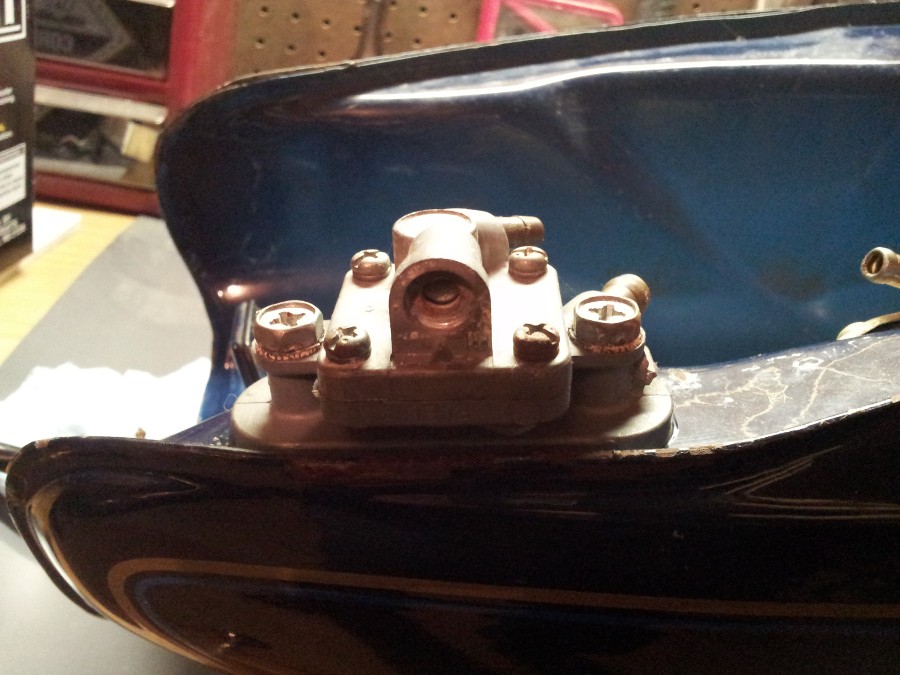
I drained the old gas (brown!) from the tank by removing the petcock. There was only about a cup or two left and it wouldn't come out of the tank through the petcock or by turning the tank upside-down and trying to drain it out through the fuel cap.


petcock1.jpg


(Caption for the picture above: this is the first petcock I'd heard of without a lever. In fact until I read the service manual, I thought this one was broken!)

While the petcock was out, I disassembled it. The diaphragm needed a tiny bit of coaxing to get out but once loose, no problem. Everything seemed to be in good order so I put it back together, mounted it on the tank, and put in some fresh gas. I connected the fuel line and the vacuum line from the carbs. I removed the float bowl drain screws to drain out the old gas, but they were all dry except for one which had a few drops of gunky gas.

I put the drain screws back in and cranked it over. And over. And over. And over. I only cranked the engine for 5 seconds at a time (with about a 10-30 second break in between) but after about 20 minutes of this, the bike still wasn't starting. Not a surprising result, but slightly disappointing. I think it was close, though, because not long after I started cranking, I heard one cylinder firing, then two, and then three but it never got to all four. Which proved the point that the carbs still need to be cleaned.

Next steps are to remove the air box and inspect it (the air filter is verifiably filthy), then remove and clean the carbs. I already have a set of o-rings and such on order. (Thanks, Robert from cycleorings.com!) I'll try to have better (or at least more) photos next time.
 
1980 was the only year that had the leverless petcock, and that's not the only oddity about it. Even on prime, it requires a vacuum pulse to open the valve and get fuel flowing. If it can only hold vacuum momentarily, you can only fill the bowls by a lot of cranking, or an external vacuum source. Also, in that condition, it will eventually starve the bike for fuel at highway speed.

This is reported with some regularity here (and I know it from bitter personal experience). It's a possible explanation why you couldn't get the bike started (if everything else happens to be in working order).

Rebuild kits are not generally recommended for GS petcocks, and the kit doesn't even address this possible problem.
 
1980 was the only year that had the leverless petcock, and that's not the only oddity about it. Even on prime, it requires a vacuum pulse to open the valve and get fuel flowing.

Hmm, okay. I didn't mention it above, but I did try to bench-test the petcock by connecting a (clean!) hose to the vacuum nipple and trying to suck the air out of it. It worked, but I couldn't tell any difference in behavior between the normal (horizontal) and prime (vertical) positions.

So in prime mode, the petcock is supposed to be able to hold the vacuum? While in its normal mode there's some air "leakage" to relieve the vacuum and close the diaphragm when the engine stops, do I have that right?

If it can only hold vacuum momentarily, you can only fill the bowls by a lot of cranking, or an external vacuum source.

The PO installed a clear inline screen filter between the petcock and carbs, which was actually helpful because I could watch gas flowing into the carbs while the engine was cranking. I'm reasonably certain the float bowls were getting enough fuel because a lot drained out of them when I took off the carbs. (Next post!)

Also, in that condition, it will eventually starve the bike for fuel at highway speed. This is reported with some regularity here (and I know it from bitter personal experience). It's a possible explanation why you couldn't get the bike started (if everything else happens to be in working order).

Intuition says that the carbs are probably filthy. I was planning to clean them all along, this was just a test to see if I'd get super lucky and get to hear the bike run by just putting gas and a new battery in.

Rebuild kits are not generally recommended for GS petcocks, and the kit doesn't even address this possible problem.

Understood. From what I recall tearing it apart, there's nothing to be serviced on this petcock except for a solitary diaphragm and I believe mine is good. I didn't see a way to get at the rest of it, so if there's an air leak in the upper part I may have to buy a new petcock at some point.

I really appreciate the advice!
 
airbox inspection

airbox inspection

Tonight, I set about removing the airbox and carburetors.

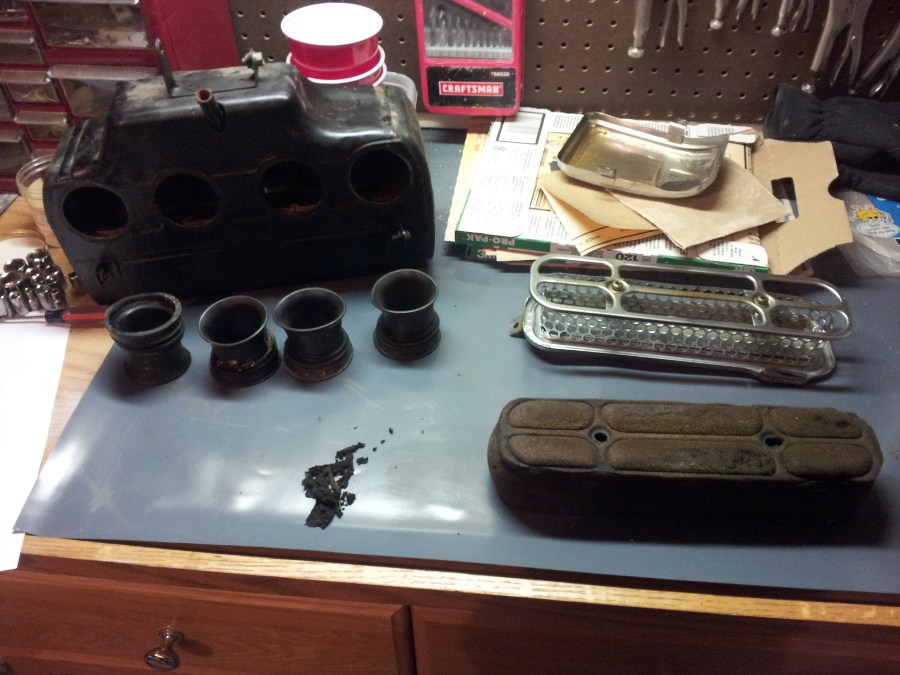
The airbox was in worse condition than I originally thought. I knew the air filter needed to be cleaned (or changed), but I wasn't expecting some of what I found.

The first big surprise was that after removing the boots, I was turning the box over to look around inside and flakes of rust fell out of the holes. Gah! Shake it around, more flakes fall out. This stuff might have (and perhaps already has) gone into the carbs and possibly the engine. Had I known that was going on, I wouldn't have been cranking it for a half hour yesterday. Lesson learned: next old bike I work on, I will definitely inspect the airbox and carbs before trying to start it.

airbox1.jpg

That pile of stuff on the lower left isn't rust, it's part of the air filter gasket. But the rust pile from shaking the air box was about that size.

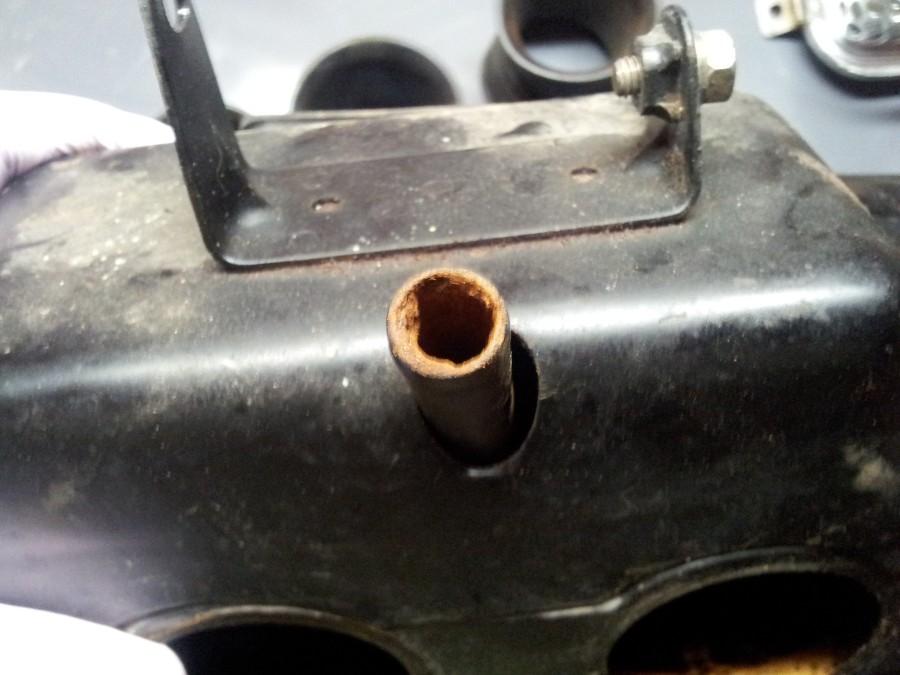
The rust seems to be coming from the top of the airbox, from the hose running to the top of the valve cover (sorry, haven't memorized all the proper terminology yet). So all of it is behind a metal plate that I can't remove. The inside of the top tube on the airbox is pretty well rusted too. At a guess, I'd say condensation frequently built up in this area. Why only here, and nowhere else in the airbox, I can't say.

airbox2.jpg

This is after a bit of scraping with a small screwdriver.

I'm not totally sure what to do about this. The rest of the airbox looks to be in good shape (except the filter element, which I'll touch on in a moment). My options seem to be:

1) Clean out the tube with some kind of small plastic or thin-bristle metal brush and then squirt carb cleaner or something into it to get as many of the rust flakes out as I can. Follow up with some kind of oil to try to keep it from rusting much further. Main drawback: No guarantee the rusting won't continue or that more flakes won't come loose later.

2) Buy a new airbox. Haven't priced this out yet, but I assume they're not cheap and I'm on a bit of a budget. (Used ones may have the same problem?)

3) Switch to pod-style air filters. Not a big fan of these and I'm not totally sure I want to mess with all the rejetting and fine tuning. But it would guarantee that no more rust flakes could enter the engine from a dodgy airbox.

The other big problem: the air filter element is shot. I can dig out pieces of it effortlessly with my fingernail. More distressingly, it appears to be completely saturated with some kind of red oil.

airbox3.jpg

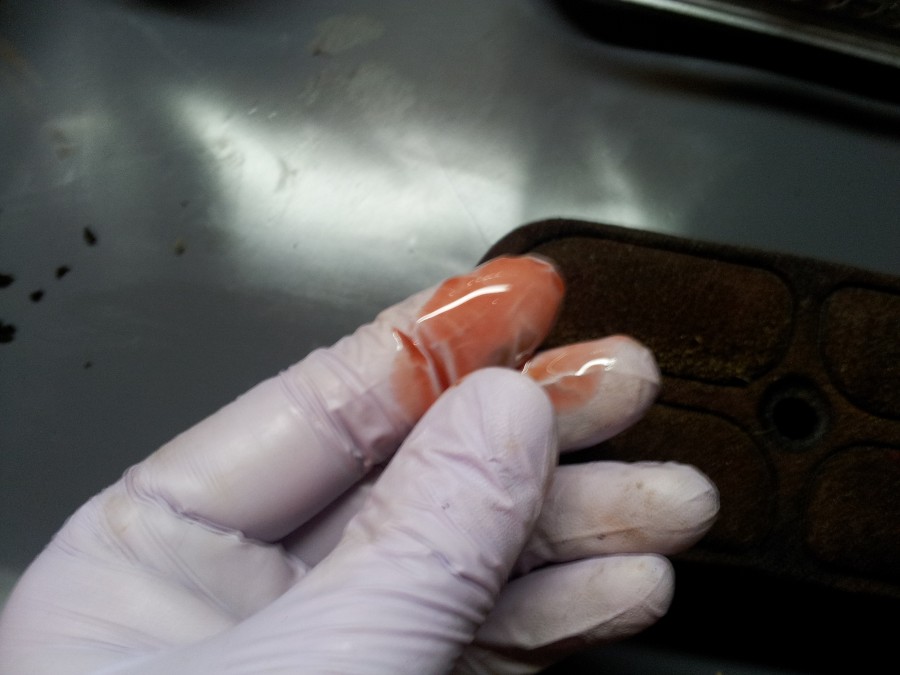
After a light pinch. Feels like motor oil, but is red like automobile transmission fluid? Weird.

I don't know how it could have got like this, since there's no sign of it elsewhere in the airbox. My best guess is that the previous owner dunked it in oil, let it drip for a second or two, and then reinstalled it. The PO didn't strike me as a genius, but in our conversations, he seemed more knowledgeable than this.

The "weatherstripping" is also in quite poor shape, but that was to be expected. It's next on my todo list.

The airbox boots could stand to be replaced. They are soft like rubber on the top and hard like plastic on the bottom. Judgement call: I think they will work for a _little_ while longer but they are definitely on the TODO list, especially if they seem to be leaking once I get the bike running.

Didn't do anything more to the carbs than remove them from the bike. They were really difficult to pull off. I ended up shooting some silicone spray lube around the boots and letting it soak for a minute. Some (ahem) gentle upward pressure and they popped right off.

Next steps:

- Try to find a new air filter element
- Clean out the airbox as best I can
- Wait for new o-rings to arrive
- Clean carbs

airbox4.jpg
 
Your're off to a good start.:) Please check the newbie mistake thread linked in my signature so you can look out for some common pitfalls.
 
...
So in prime mode, the petcock is supposed to be able to hold the vacuum? While in its normal mode there's some air "leakage" to relieve the vacuum and close the diaphragm when the engine stops, do I have that right?
...

Correct. On a new petcock, you pull a vacuum, the diaphragm thunks into the open position and you don't get any more air out of it. On the run position, you have to keep sucking. A bad unit will be somewhere in between when on prime.
 
New OEM air filters come pre-oiled. UNI filters come dry.

New air boxes are NLA. Another used one is probably in the same condition as yours, or worse. Both my shafties were clogged with rust like yours. This passage is the crankcase vent, so it probably sees steam along with corrosive combustion gasses that blow by even in a healthy engine. Anyhow, I made up some tools from some stiff wire and dug all the rust I could out of mine. Then I shot some anti-rust paint into it. I don't remember what the paint was exactly.
 
Partial carb and front brake inspection

Partial carb and front brake inspection

Had the day off from work today, but I ended up spending most of it getting the house in shape for the holidays. (My wife has a big family and we host a lot of the gatherings now the we have a house big enough for it.)

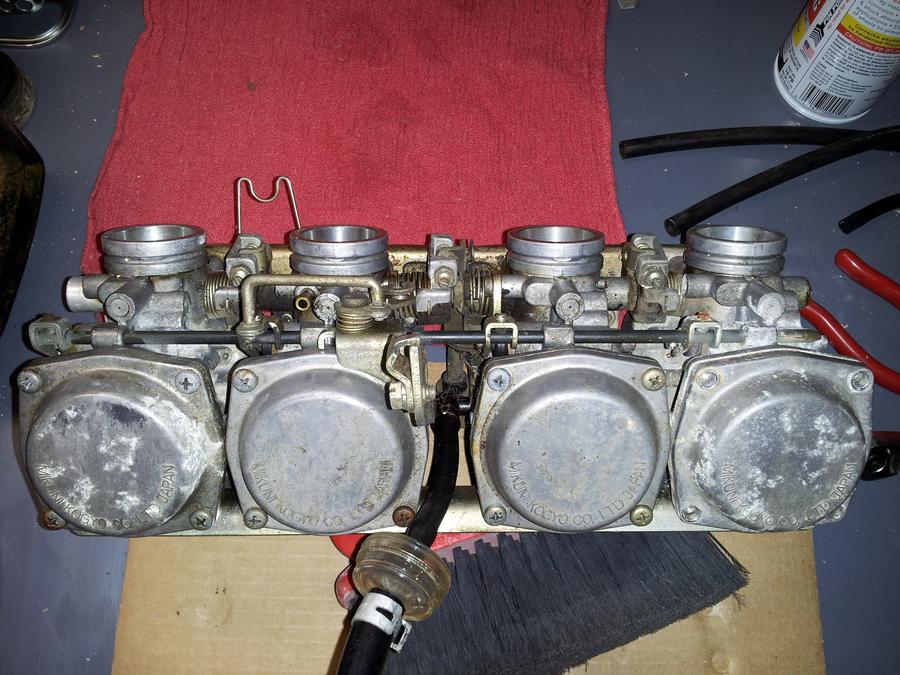
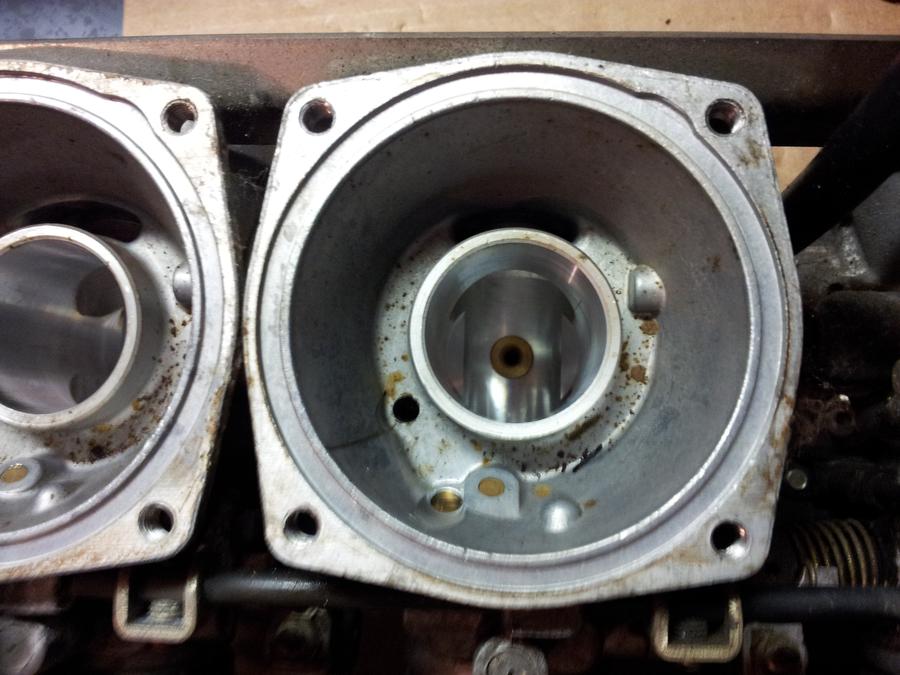
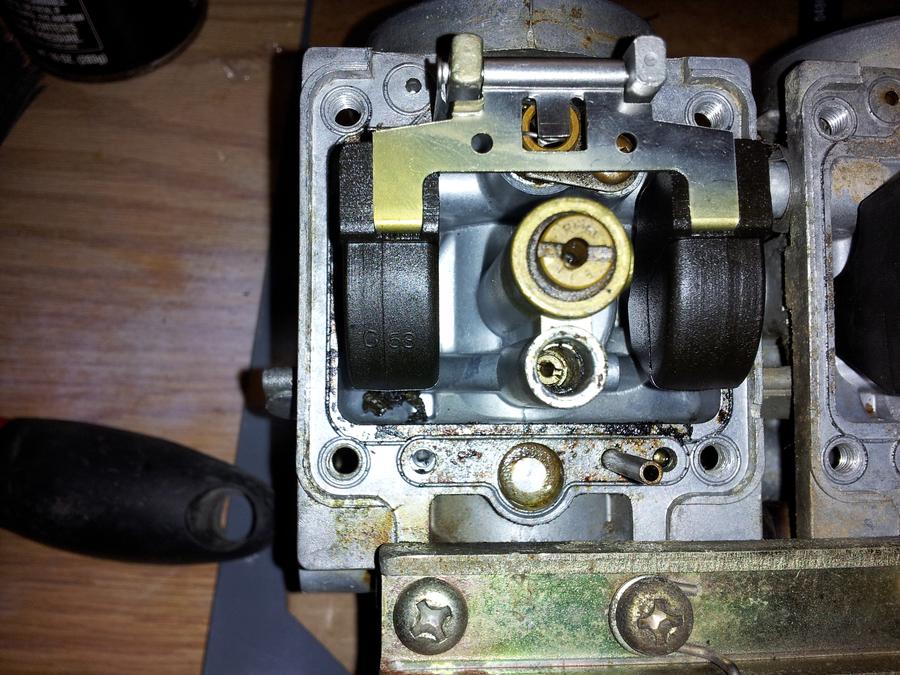
But I got to putter in the garage a bit anyway. I wanted to take the diaphragm covers and float bowls off the carbs to see how all that looked. Not going to remove all the tiny bits until the full rebuild until the o-ring set arrives. (I just ordered a few days ago, so I wasn't expecting them yet anyway.) I don't have any JIS drivers, so I'm trying the "shave a mm or two off a phillips bit" method and it's been working absolutely great so far.

20121221_172510.jpg


20121221_172834.jpg


20121221_175625.jpg


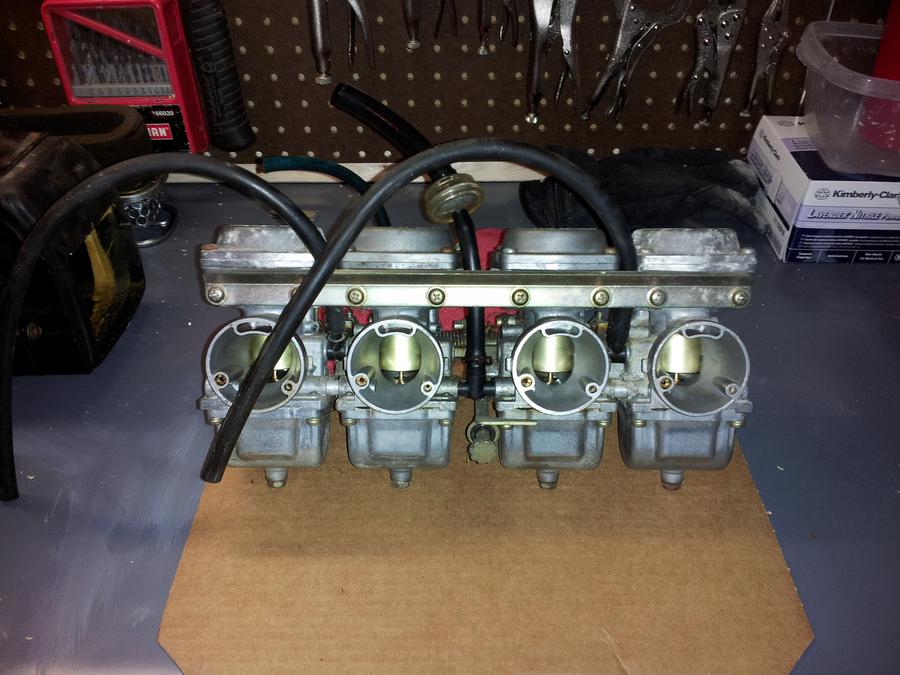
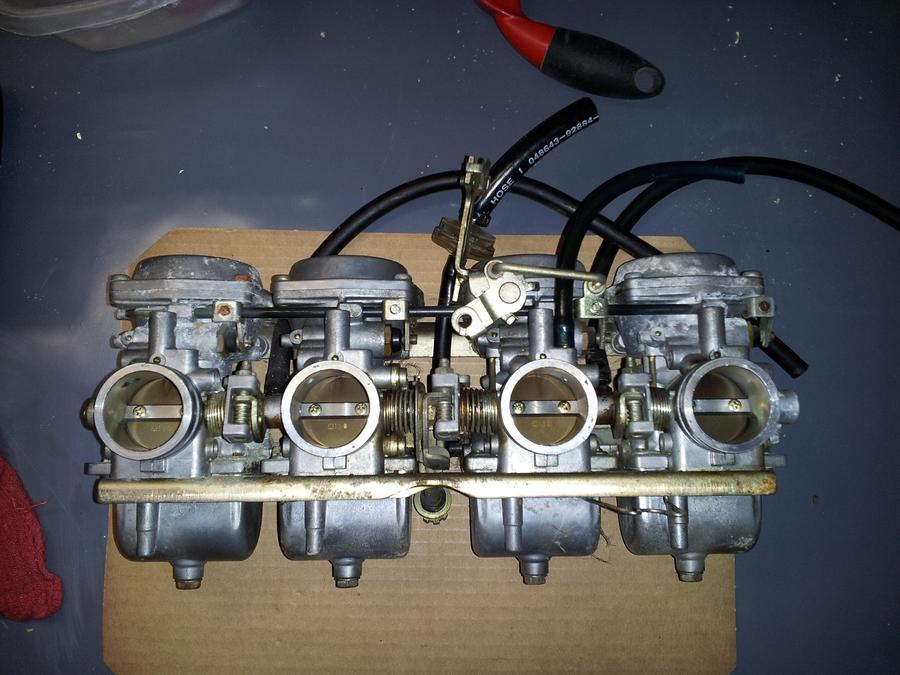
First I took some pics just so I had a good reference later for which hoses/brackets went where. The fuel line was stubborn and wouldn't come off so I just left it there. By the way, that inline filter was an addition by the PO. I added that thick piece of fuel line above the filter with a temporary zip tie to make sure it stayed put and didn't pop off and spill fuel everywhere during my earlier cranking test. I've since replaced it with a real hose clamp.

I'm not planning to ungang these for now unless there's a little passage or something blocked that requires me to soak the whole shebang. Also, this thing was home to many spiders in years past.

Slides 1 and 4 were a little sticky a few days ago when I took the carbs off. Now that it's colder, they're way sticky. And 2 & 3 aren't too smooth now either. Hoping the carb cleaner will loosen them up a bit. Diaphragms all look good, thankfully.

20121221_181743.jpg


My fears confirmed: There's rust in them thar carbs from the airbox. That'll have to be cleaned out.

20121221_184531.jpg


Float bowls 2-4 look pretty good, actually, aside from some sediment. But #1 not as much. Crud in the bowl, some varnish, even looks like something crawled in there and died. (Though it very well could just be a clump of gunk that congealed together or something.)

20121221_191306.jpg


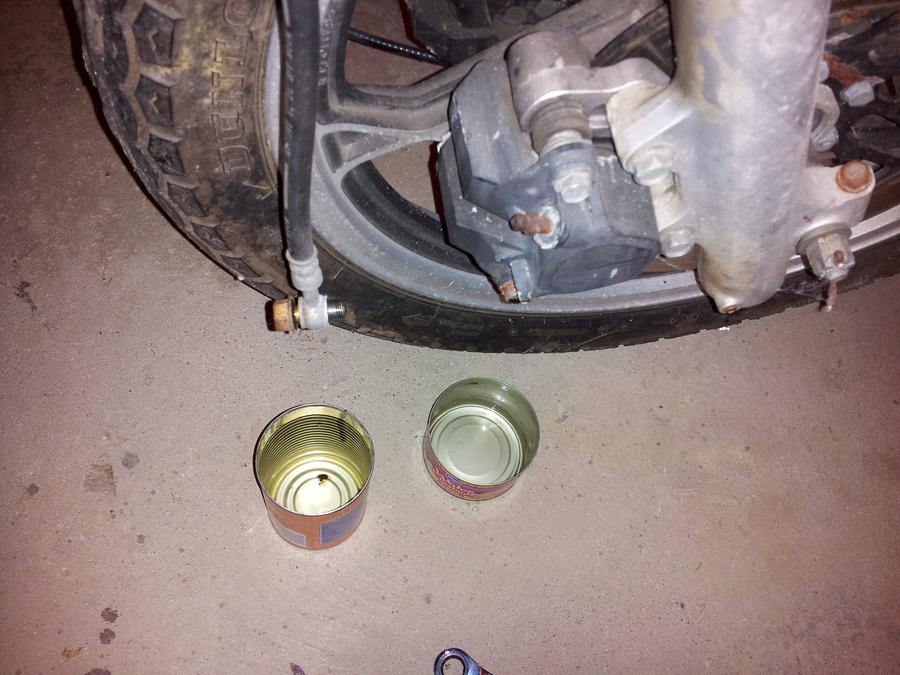
So that's as far as I'll go with the carbs for now. Since I know the front brakes are shot, I removed the master cylinder and reservoir from the handlebar. Had the intention of draining the brake lines but that was completely unnecessary...

20121221_191320.jpg


There's nothing in them anyway! (And yes, I do plan to do something about those stock brake lines.)

20121221_191514.jpg


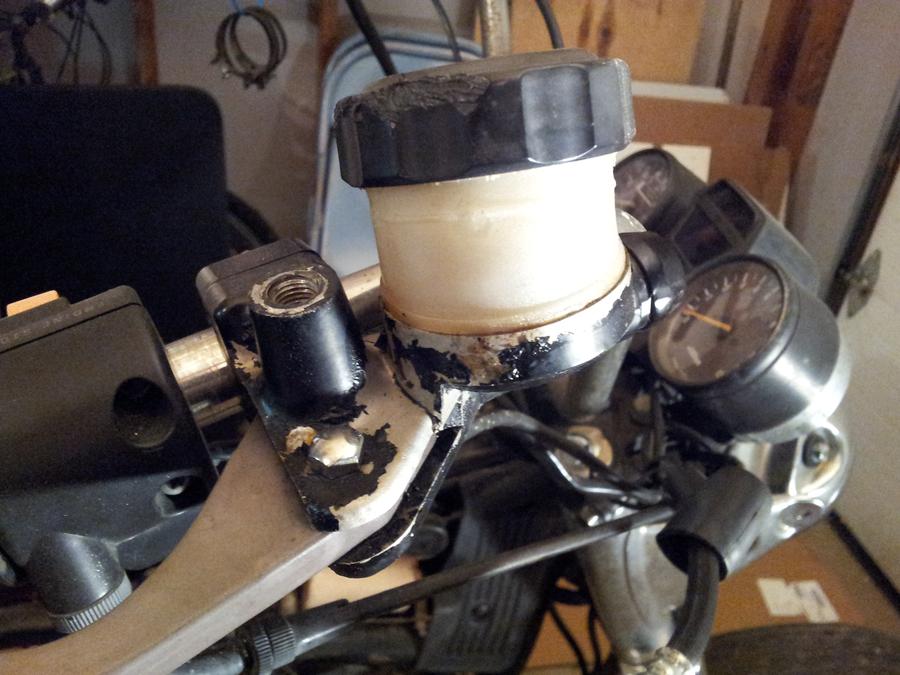
The reservoir is clearly leaky around the base, although I don't see any cracks inside, so I assume a seal underneath is shot. The paint on the whole assembly is pretty much toast.

20121221_201926.jpg


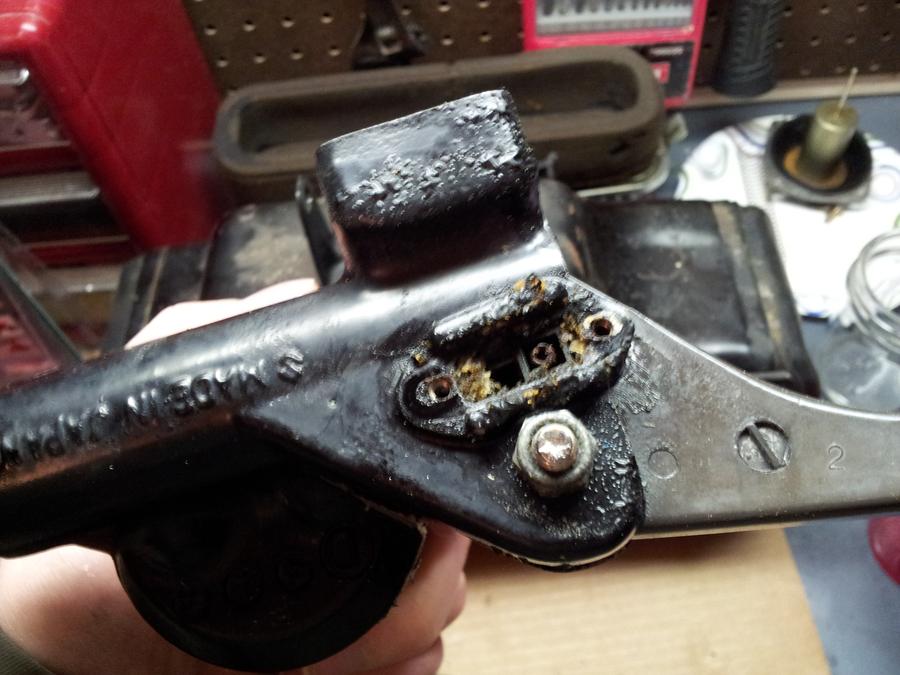
The brake light switch is _completely_ gunked up. There's a little spring in there that has gotten so rusty that it just crumbled apart when I tried to handle it. Hope I can get new bits for this without buying the whole assembly.

20121221_203953.jpg


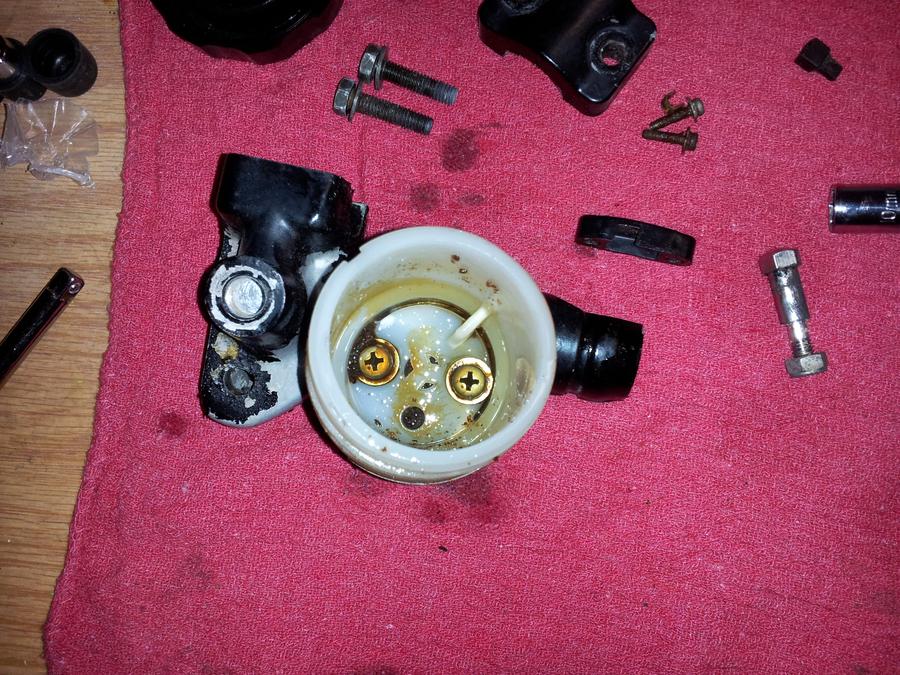
Dumped out the little bit of fluid left in the reservoir to find that it was pretty nasty in there too. I tried removing those two screws and yanking off the reservoir (via both pulling and twisting), but it wouldn't budge. And on plastic that old, I wasn't about to start smacking it around. Need to check the repair manuals and fiche about the right way to get this thing off.

I did want to rebuild this one, but I'm also wondering if I'd be better off buying a new master cylinder/reservoir. Would I need to buy one specific to this model of bike or will just about any do? What about brake lever compatibility?
 
To properly clean those carbs you MUST separate them and then follow the procedures outlined in Nessism's Carb Rebuild Guide found on Basscliff's site (http://members.dslextreme.com/users/bikecliff). Failing that you'll be doing this again later since every passage you can't see won't be cleaned.

Otherwise looks like a typical PO job. Get rid of the fuel filter - you don't need it. You can get a piston and cup set for the master cylinder just pay real close attention to the bore when you yank that piston out. It's usually pretty difficult as some are stuck in there so really soak it good first. You'll need a set of circlip pliers as there's one clip in there that's hard to see.

Good luck...this will be fun.
 
I making a little progress here and there over the holiday break. Managed to sneak out to the garage in between various groups of relatives visiting. And some of my parts arrived! Woo!

20121227_214520.jpg


Cleaned out the airbox as well as I could. Since it doesn't open up, and my hands are only so big, I can only get it somewhat clean inside. Three different hardware stores and I couldn't find a wire brush small enough to clean the rusted crankcase breather tube. Instead, I rolled up some sandpaper and went at it for awhile. It's not perfect, but it looks a lot better now. I have to remember to squirt some paint in there to help keep the rust at bay. This will unfortunately be a semi-regular maintenance item. Made more annoying by the fact that there's no way at all to clean the rest of the area in the top of the airbox. If I were restoring a bike with this airbox, I'd seriously look into seeing what it would take to fab one of these up in plastic. (Vacuum formed or 3D printed?)

20121227_214618.jpg


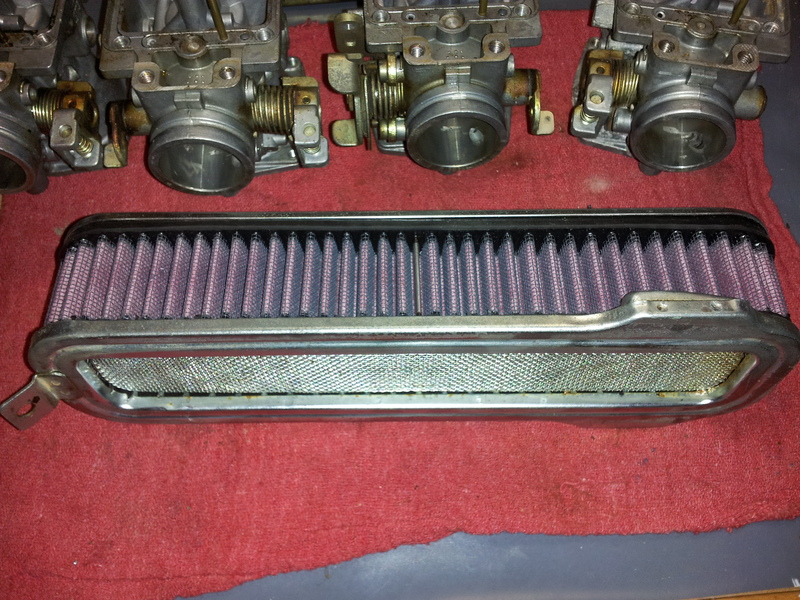
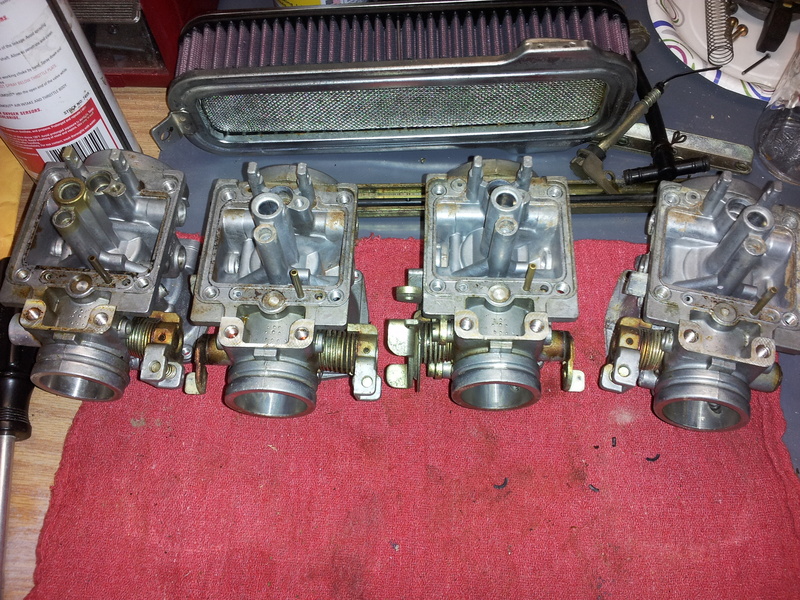
New K&N air filter oiled up and ready to go. Fits perfectly in the filter cage. I'm going to apply the weather stripping to this rather than the air box because I can't clean the air box well enough inside to get adhesive to stick to it. This will be a ton easier.

20121227_214648.jpg


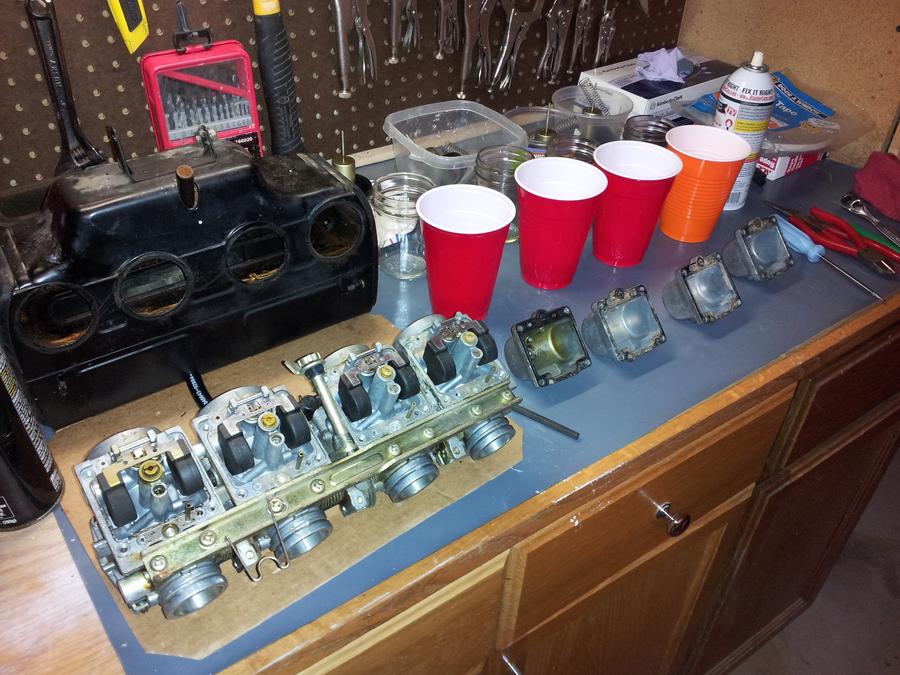
Carbs disassembled and ready for cleaning. Remains of an old o-ring can be seen. I did decide to ungang the carbs for cleaning after all. The main reason was because I couldn't see a good way to remove the float pins without risk of breaking them otherwise. One of the brackets came off without too much fuss, but the other one (with the larger screws) was a total PITA. All eight screws were seized in. I had to use my new impact driver for the first time and I was scared poopless that I was going to break something by whacking them with a hammer. All the screws eventually came out okay. I should replace them with stainless steel hex-head screws but I'm not sure A) If I'll be able to make it to the hardware store before the carbs are put back together and B) that the hardware store will even have the right ones in stock.

20121227_214700.jpg


Carb gubbins. Didn't take a post-cleaning picture, but these are all cleaned up now and ready to go back in the carbs. The consistent theme here is that the #1 carb was utterly filthy while 2-4 were not a far cry from brand-new. I almost wonder if PO replaced #1 at some point and didn't bother to clean it out first?

20121228_192629.jpg


Holy Moses, you call that an o-ring?! While I had the carbs off, I thought it would be best to remove the intake boots and change out the o-rings since I had the replacement parts anyway. (And because everyone on the forum lists this as a must-do item.) So now I have new o-rings and new stainless-steel screws (with anti-seize!) installed.

Next steps:

- Finish up airbox
- Re-assemble carbs
- Check spark plugs
- Fire this puppy up! I'm dying to hear it run...
 
Next steps:

- Finish up airbox
- Re-assemble carbs
- Check spark plugs
- Fire this puppy up! I'm dying to hear it run...
Aren't you forgetting something rather important? :-k
Here's the short list of todo items:

  • New battery
  • Clean air filter and inspect airbox
  • Clean carbs
  • Check/gap spark plugs
  • Fix fuel line (new hose)
  • Change crankcase oil and filter
    • Inspect clutch and clutch plates (possily new springs)
  • Change gear/drive oil
  • Check compression
  • Valve lash adjustment
  • New front tire
  • Rebuild front master cylinder and reservoir
  • Inspect front calipers and brake pads (need new bleeder screws)
  • Flush, fill, and bleed front and rear brakes (and inspect pads, new bleeder screws)
  • Fix tach cable (or replace tach)
  • Lube/inspect clutch cable
  • Lube/inspect throttle cable
  • New handlebars (mini ape-hangers not doing it for me)
  • Buy or rig up new battery strap
  • Reattach:
    • Mirrors
    • Headlight
    • Front and rear turn signals
    • Fenders
    • Airbox covers and side covers
    • Rear seat bar thing (may leave it off, we'll see)
Haven't seen your request for a spreadsheet, either.
icon_shrug.gif


.
 
Steve: Yes, I should have clarified that I'm doing this in two phases:

Phase I: Get it to run
Phase II: Get it to run well

I'm still in Phase I. ;) Valve clearance is definitely still on the agenda, but I have yet to order the valve cover gasket and a few tools that I'll need. (And I was specifically waiting until after the new year for that purchase.) Your spreadsheet, does it require Microsoft Excel?

Cowboy: I swung by the local ACE today but it's small and in the city, so their selection isn't all that great. (I need to find one a little ways out in the country where their patronage is mainly farmers. Those ACE stores sell every nut, bolt, and doo-dad under the sun.) I was able to find regular metric bolts (not stainless, but I used anti-seize...) for the lower rail. I did get the stainless bolts for the intake boots from Robert.

Anywho, I managed to get the carbs all put back together and bench synced today so tomorrow all I have to do is put everything back on the bike (sans seat, I guess), check the plugs, and see if she'll come to life.
 
Last edited:
Back
Top