• Required reading for all forum users!!!

    Welcome!
    Register to access the full functionality of the GSResources forum. Until you register and activate your account you will not have full forum access, nor will you be able to post or reply to messages.

    A note to new registrants...
    All new forum registrations must be activated via email before you have full access to the forum.

    A Special Note about Email accounts!
    DO NOT SIGN UP USING hotmail, outlook, gmx, sbcglobal, att, bellsouth or email.com. They delete our forum signup emails.

    A note to old forum members...
    I receive numerous requests from people who can no longer log in because their accounts were deleted. As mentioned in the forum FAQ, user accounts are deleted if you haven't logged in for the past 6 months. If you can't log in, then create a new forum account. If you don't get an error message, then check your email account for an activation message. If you get a message stating that the email address is already in use, then your account still exists so follow the instructions in the forum FAQ for resetting your password.

    Have you forgotten your password or have a new email address? Then read the forum FAQ for details on how to reset it.

    Any email requests for "can't log in anymore" problems or "lost my password" problems will be deleted. Read the forum FAQ and follow the instructions there - that's what we have one for...

  • Returning Visitors

    If you are a returning visitor who never received your confirmation email, then odds are your email provider is blockinig emails from our server. The only thing that can be done to get around this is you will have to try creating another forum account using an email address from another domain.

    If you are a returning visitor to the forum and can't log in using your old forum name and password but used to be able to then chances are your account is deleted. Purges of the databases are done regularly. You will have to create a new forum account and you should be all set.

"Must have" tools for self maintenace

  • Thread starter Thread starter DrImodium
  • Start date Start date
D

DrImodium

Guest
What are some of the "Must have" tools for the DIY wrencher when it comes to maintaining our beloved bikes? A brief description of why xxxxx tool is a "must have" would also help.
 
A good set of metric six point sockets. Off the top of my head, 8, 10, 12, 14, and 17 are the most common sizes on import bikes.
1/4" drive torque wrench for properly torquing the smaller fasteners. $10-20 at HF.
Impact screwdriver for the philips fasteners that some manufacturers (especially Suzuki) loves to use.
Feeler gauges for valve adjustments.
A cable lubing tool can come in handy.
Voltmeter for troubleshooting electrical issues. $5 or so for a basic one on sale.

There are plenty more, but those are a few of the basic ones that are jumping out at me at the moment.
 
Funny you should ask. There was a thread just a couple of weeks ago that answered your question.

DRILL PRESS: A tall upright machine useful for suddenly snatching flat
metal bar stock out of your hands so that it smacks you in the chest and
flings your soda across the room, splattering it against that freshly-stained
heirloom piece you were drying.

WIRE WHEEL: Cleans paint off bolts and then throws them somewhere under
the workbench with the speed of light. Also removes fingerprints and
hard-earned guitar callouses from fingers in about the time it takes you to say,
'Yeouw....'

ELECTRIC HAND DRILL: Normally used for spinning pop rivets in their
holes until you die of old age, or for perforating something behind and beyond
the original intended target object.

SKIL SAW: A portable cutting tool used to make studs too short.

PLIERS: Used to round off bolt heads. Sometimes used in the creation of
blood-blisters.

BELT SANDER: An electric sanding tool commonly used to convert minor
touch-up jobs into major refinishing jobs. Caution: Avoid using for manicures.

HACKSAW: One of a family of cutting tools built for frustration enhancement.
It transforms human energy into a crooked, unpredictable motion, and the
more you attempt to influence its course, the more dismal your
future becomes.

VISE-GRIPS: Generally used after pliers to completely round off bolt
heads. If nothing else is available, they can also be used to transfer
intense welding heat to the palm of your hand.

WELDING GLOVES: Heavy duty leather gloves used to prolong the
conduction of intense welding heat to the palm of your hand.

OXYACETYLENE TORCH: Used almost entirely for lighting various flammable
objects in your shop on fire. Also handy for igniting the grease inside
the wheel hub you want the bearing race out of.

WHITWORTH SOCKETS: Once used for working on older British cars and
motorcycles, they are now used mainly for impersonating that 9/16 or
1/2 socket you've been searching for the last 45 minutes.

TABLE SAW: A large stationary power tool commonly used to launch wood
projectiles for testing wall integrity.

HYDRAULIC FLOOR JACK: Used for lowering an automobile to the ground
after you have installed your new brake shoes, trapping the jack handle
firmly under the bumper.

EIGHT-FOOT LONG YELLOW PINE 4X4: Used for levering an automobile upward
off of a trapped hydraulic jack handle.

TWEEZERS: A tool for removing wood splinters and wire wheel wires.

E-Z OUT BOLT AND STUD EXTRACTOR: A tool ten times harder than any known
drill bit that snaps neatly off in bolt holes thereby ending any possible future use.

RADIAL ARM SAW: A large stationary power saw primarily used by most
shops to scare neophytes into choosing another line of work.

TWO-TON ENGINE HOIST: A tool for testing the maximum tensile strength
of everything you forgot to disconnect.

CRAFTSMAN 1/2 x 24-INCH SCREWDRIVER: A very large pry bar that
inexplicably has an accurately machined screwdriver tip on the end opposite the
handle.

AVIATION METAL SNIPS: See hacksaw.

TROUBLE LIGHT: The home mechanic's own tanning booth. Sometimes called
a drop light, it is a good source of vitamin D, 'the sunshine vitamin,'
which is not otherwise found under cars at night. Health benefits aside, its
main purpose is to consume 40- watt light bulbs at about the same rate that
105mm howitzer shells might be used during, say, the first few hours of the
Battle of the Bulge. More often dark than light, its name is somewhat
misleading. The accessory socket within the base, has been permanently rendered
useless, unless requiring a source of 117vac power to shock the mechanic
senseless.

PHILLIPS SCREWDRIVER: Normally used to stab the vacuum seals under
lids, opening old-style paper-and-tin oil cans and splashing oil on your
shirt; but can also be used, as the name implies, to strip out Phillips screw
heads.

STRAIGHT SCREWDRIVER: A tool for opening paint cans. Sometimes used to
convert common slotted screws into non-removable screws.

AIR COMPRESSOR: A machine that takes energy produced in a coal-burning
power plant 200 miles away and transforms it into compressed air that travels
by hose to a Chicago Pneumatic impact gun that grips rusty bolts which
were last over tightened 40 years ago by someone at VW, and instantly rounds
off their heads. Also used to quickly snap off lug nuts.

PRY BAR: A tool used to crumple the metal surrounding that clip or
bracket you needed to remove in order to replace a 50 cent part.

HOSE CUTTER: A tool used to make hoses too short.

HAMMER: Originally employed as a weapon of war, the hammer nowadays is
used as a kind of divining rod to locate the most expensive parts adjacent to
the object we are trying to hit.

MECHANIC'S KNIFE: Used to open and slice through the contents of
cardboard cartons delivered to your front door; works particularly well on
contents such as seats, vinyl records, liquids in plastic bottles, collector
magazines, refund checks, and rubber or plastic parts. Especially
useful for slicing work clothes, but only while in use. It is also useful for
removing large chunks of human flesh from the user's hands.
 
Air compressor, even if it is just a small one! Also, a floor jack is handy. Ray.
Yep, both of those get a lot of use. Especially now that my main ride doesn't have a center stand, the floor jack is perfect for chain maintenance.
 
Never underestimate the value of a good flashlight. I have a small hand-crank dynamo charged one in my kit.

While you are at it, add in a 4" extension for the sockets, and toss in a small baggie of common bolts and nuts, rounded out with a few copper washers and an extra oil filter cover o-ring just in case.
 
A inner clutch hub holder when no rattlegun/air compresser available...

GS100014-01-2007002.jpg


A t-socket for the dampner rod on forks.

100_1755.jpg


And a good 3/4hp grinder/polisher for all those shiny bits.....

Picture.jpg
 
Last edited:
- Electronic calipers ($15) - for measuring your valve shims once the numbers have worn off, measuring bolts, and a slew of other things I can't think of
- Good pair of long and short needle nose pliers - the uses are endless
- good selection of phillips heads that will work on your 1/4 ratchet - imperative to have the exact phillips head to avoid stripping
- stainless steel allen head screws (buy a kit from ebay for your bike) - once you have stripped enough phillips you'll understand why you need this
- can on the best rust remover/bolt extractor spray (the biggest can you can find)
- jar of never seize or something similar for when you put the above mentioned bolt back in
- can of electrical connector cleaner - must have for cleaning your harness/connectors
- tube if dielectric grease - for the same above mentioned job
- can of metal polish - got to keep her shinny (I use mothers myself)
- steel wool, 0, 00, 0000 grades - great for shinnin' things
- wet sand sand paper, 400, 600, 1000, 2000 - If you really have some aluminum that needs cleaning up
 
I'd add in a set of vacuum gauges and the adapters if you want to synch carbs yourself. some oxygen tubing for medical use is great too. you can put it on the end of brake bleeder valves while doing brakes to keep that damaging fluid off your precious painted items, and channel it where you want.
 
some oxygen tubing for medical use is great too. you can put it on the end of brake bleeder valves while doing brakes to keep that damaging fluid off your precious painted items, and channel it where you want.

you mean not all over your tire? lol


I didn't see anyone mention boxed end wrenches or
bearing grease
several cotter pins to replace the ones on your axles, etc
PB Blaster (or comparable)
spare light bulbs, headlight, blinkers, dash indicators
disposable rags
pumice and/or hand brush for cleanup after
safety glasses, hearing protection
flashlight/drop light
magnet with extending handle
a clean table
sharpie, plastic bags or trays or jars to keep parts labeled and organized
oil pan
dead blow hammer
 
Funny I have just about every thing mentioned except the radial arm saw
 
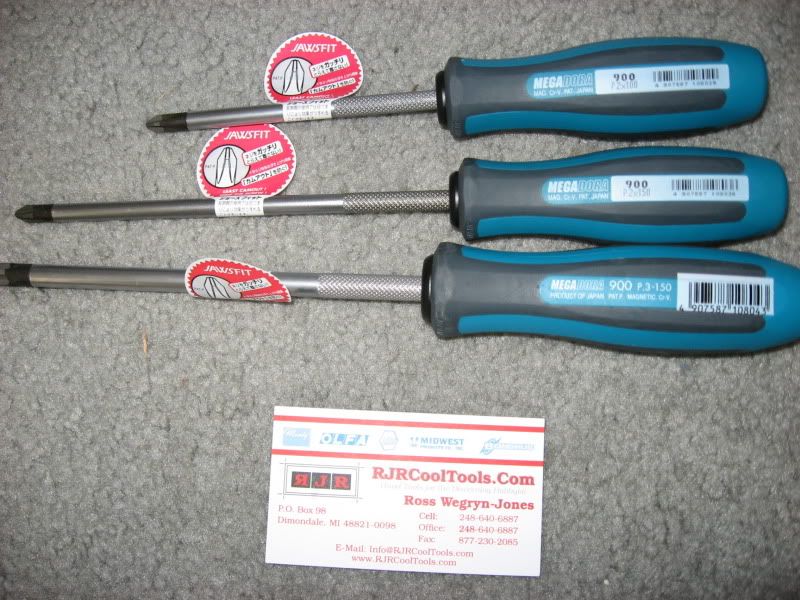
One of my better purchases was some JIS screwdrivers. Well worth the money.

IMG_1711.jpg
 
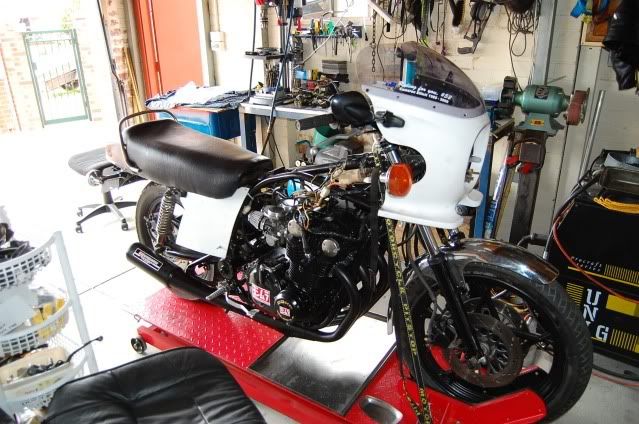
Hydraulic M/C work table or an elecric one, so no cardboard or other bending is required and you enjoy the workplace.
DSC_5181.jpg
 

And modified to meet your specific bikes oil change. I have the spill proof pan with the drain in the middle. That way I dont have to go fishing for the drain plug or acorn nuts and washers. Its low enough to fit under the bike on its center stand. It also has a spout on it which makes it easy to pour the used oil back into the gallon jug. Go-jo hand cleaner and rags help too.

I like to change my oil when the bike is hot so a pair of gloves is a must when reaching between the hot exhaust pipes.
 
Tools I love to use are my "T" Handled allen set, and 3/8" drive allen wrenches.

A gasket scraper is nice, but maybe not needed.

I need to buy some JIS screw drivers, but really I prefer to have allens for most everything.
 
Back
Top