• Required reading for all forum users!!!

    Welcome!
    Register to access the full functionality of the GSResources forum. Until you register and activate your account you will not have full forum access, nor will you be able to post or reply to messages.

    A note to new registrants...
    All new forum registrations must be activated via email before you have full access to the forum.

    A Special Note about Email accounts!
    DO NOT SIGN UP USING hotmail, outlook, gmx, sbcglobal, att, bellsouth or email.com. They delete our forum signup emails.

    A note to old forum members...
    I receive numerous requests from people who can no longer log in because their accounts were deleted. As mentioned in the forum FAQ, user accounts are deleted if you haven't logged in for the past 6 months. If you can't log in, then create a new forum account. If you don't get an error message, then check your email account for an activation message. If you get a message stating that the email address is already in use, then your account still exists so follow the instructions in the forum FAQ for resetting your password.

    Have you forgotten your password or have a new email address? Then read the forum FAQ for details on how to reset it.

    Any email requests for "can't log in anymore" problems or "lost my password" problems will be deleted. Read the forum FAQ and follow the instructions there - that's what we have one for...

  • Returning Visitors

    If you are a returning visitor who never received your confirmation email, then odds are your email provider is blockinig emails from our server. The only thing that can be done to get around this is you will have to try creating another forum account using an email address from another domain.

    If you are a returning visitor to the forum and can't log in using your old forum name and password but used to be able to then chances are your account is deleted. Purges of the databases are done regularly. You will have to create a new forum account and you should be all set.

Motorcycle Camping Advice

cowboyup3371

Forum Guru
Past Site Supporter
Although winter has technically not released its grip on us just yet, it is supposed to start getting warmer this week and Spring will be here soon. With it comes ideas and much pre-planning of certain trips. In my case, I learned a couple of weeks ago that my 30 year HS reunion will be on August 3rd in or around Silverdale WA (just north of Bremerton and west of Seattle). Although I could save a little bit of money and and a whole lot of time by flying out there, I really want to ride out. A co-worker of mine in Topeka offered for me to stay with him one night but I am also looking to reduce my hotel bill even more so by bringing a tent with me. I intend on using the Bandit for a lot of different reasons but one of which is the hard luggage. I know my top case will fit my current sleeping bag just fine but I don't think the 3-person dome tent I have will fit properly right now (more testing to come) and may buy what amounts to an old pup tent.

For those that do a lot of camping, what advice can you offer for me? Once I get out west I know I can plan on camping in the national forest without a big hassle. But for elsewhere, should I stay more with the KOA type sites? I don't intend to bring any cooking gear as I can eat before stopping and after starting off but will bring some fire starting materials as long as the weather conditions permit it.

My currently thought of route with possible camp sites in Colorado, Idaho, and near Mt Rushmore (will make this a small sightseeing trip too):

Reunion trip by Scott Baker, on Flickr
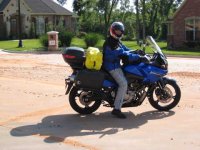
 
I found that a dry bag strapped across the passenger seat was the easiest way to pack the camping gear.
off-2-alaska.jpg

That's me headed out to Alaska. Because of the wide range of temperatures I had a lot of clothes, so the luggage was full without the camping gear. The yellow thing is a dry bag from Walmart, that's where the tent, bag, mattress and other misc gear went.

in your case, if the tent is the only thing that won't fit in the luggage I'd just strap it across the seat and be done with it.

State parks are usually good options, a bit of googling will give you lots of possibilities.
 
Agreed -- you can fit a lot of crap in a dry bag across the seat. But make sure you separate your tent from your bedding and clothes. Even if it doesn't rain, your tent will be damp most mornings.

Campgrounds have gotten to be stoopit money expensive; it's not uncommon to spend $30 or more, even in a state park, because all their spots are set up with full RV hookups. Plus entry fees. So if you just want a place to sleep, you're not all that much money away from a cheap motel along the lines of the Rosemount.

That said, sometimes it's worth a few bucks to stay somewhere safe with clean showers. When Tim R. did his big trip a few years back, he stayed at a lot of KOA campgrounds.

With some research you can find cheap or free camping, especially if you can do without running water. And of course, BLM land out west.
 
My tent gets carried the same as Rich, strapped across the passenger seat. If I fold the tent up with the bottom on the outside then it can get wet without getting too much moisture on the inside part when it's set up.

As to places to camp, I've been using this site for years with excellent results. www.freecampsites.net

Keep in mind that you'll want to bring some water along with you for drinking and cooking even if you're using public campgrounds, most of the free sites don't have any and the ones that do are often poor quality. Good enough for washing and maybe some coffee but not something you want to drink straight up.
 
When you are figuring out how much you are going to save by camping, be sure to figure in how much more TIME you are going to spend setting up camp and taking it down the next morning. That is time away from riding, so figure on not riding as many miles per day. That will mean more days on the road, another camping fee, etc. Overall, by the time you factor in the comfort of a real bed in a motel, your total expenditure might come close to being a wash.

We used to camp all the time, but we were also going overboard with it. We were pulling a trailer, carrying our tent, sleeping bags, mattresses, stove, food, etc., etc., yes, ALL the "stuff" that we felt was necessary. Because we had it, we used it, but it REALLY cut into the fun of riding a motorcycle on some of the more "interesting" roads.

For our trip last year, we were planning on motels all the way. Partly because we did not want to take the extra room for the camping stuff (and also because we don't currently have any camping "stuff" :oops:), but mainly for the convenience of checking into a motel to a comfortable bed.

.
 
On camping and time vs money...
To me, the critical thing is, do you enjoy camping, or are you just trying to save money? Lower end hotel rooms are cheap enough that I'm not going to bother with camping unless it's someplace that I'm going to enjoy being at.
Another factor is how much time do you spend on the bike even under ideal circumstances? If you're a 400-450 mile a day guy, then the hour lost each morning and evening is probably no big deal. If you're pushing to do 600-700 a day, then it matters.
Also, summertime camping in the midwest can be miserable if you catch a hot stretch. It doesn't cool off much when the sun goes down. Out west, at higher elevations, it's not so much of a problem.
 
I'd say, save the motorcycle camping trip for another time with a reasonable distance and destination.
Just fly out for your class reunion.
PS: Cheap motels sometimes feature bedbugs.
 
I camped every day going coast to coast and back on my GS - about 6 weeks. My biggest recommendation is to buy a Rand MacNally road atlas. We didn't have smart phones or internet access and literally used this atlas everyday to pick both roads and campgrounds, not including days where we stopped in cities we had friends in. Seriously, I can't recommend it enough. It marks out scenic routes and has little tent icons where there are state run campgrounds. It also marks out the national forests for finding free camping.

Tents are big and take time to put up/take down. Do some research on camping hammocks. Mine has a bug net and I would bungee a blue tarp over it (and the bike) on nights I thought it might rain. Takes less than 5 minutes to put up/take down which makes a big difference when you're trying to get up and get on the road bright and early.

Personally, I'd stay away from the KOA campsites. In my experience driving by them, you get a square lot of sand, little privacy or scenery, and they're often more expensive than a state run site.

As for food prep, we overpacked for this. It takes a lot of time both setting up/breaking down as well as finding and making runs/stopping at grocery stores. My routine is generally to wake up, eat a cliff bar and get on the road for an hour or so and then stop for coffee and a light meal like some fruit or oatmeal. I did bring one of those old style Esbit stoves and oatmeal packs which make a quick breakfast.

Last thing - August in Montana can be cold at night.
 
Like others said, I'd research the actual costs of hotels along the way. You might find that the hotels are worth the extra cost when you consider tent set up and take down several times, safety, being able to shower if you like and having a TV to see weather reports ahead. Maybe a compromise of 50/50 hotels and camping? I'd consider getting a smaller 1 person tent. Easier to set up and carry. Also, if any of your trip takes you near a National Park, you can buy an annual pass for $80. It allows free entrance at any National Park or Monument and many other places. Gives you another option where to camp. State Parks, in general, are the most expensive camping option. Bring a good sized container for fresh water each day. I hope your ride is safe and full of great memories!:)
 
I sort of know what mileage I'll do ... if you have a route planned, you can use satellite maps to scope it out and see if it's the area you want to wake up in...

for instance; hammocks with insect screen are ok, but they need trees. I treeplanted from a hammock for two months-it worked great, but I take a tent myself now. Do take a warmer sleeping bag than you think you'll need. Mountains,desert,prairie can get really cold at night.
 
Last edited:
PS: critters...guerilla camping, no food in your tent or bike in bear country...(they can knock the bike over) less so, raccoons and mice. In the prairie,ground squirrels can be pretty bold if anything tasty is left on the ground- some of them even like a bar of soap!
 
I sort of know what mileage I'll do ... if you have a route planned, you can use satellite maps to scope it out and see if it's the area you want to wake up in...

for instance; hammocks with insect screen are ok, but they need trees. I treeplanted from a hammock for two months-it worked great, but I take a tent myself now. Do take a warmer sleeping bag than you think you'll need. Mountains,desert,prairie can get really cold at night.

I've used a nylon mummy bag with a synthetic filling for years. It's rated down 30 degrees, which is not much for winter and to warm most days in California. I carry a light nylon camo blanket left over from the Viet Nam era that I know as a "Poncho Liner". This I use inside my bag when it's too warm for the bag closed up or when it too cold for the bag alone. I also carry a "fleece type liner" I bought at Walmart years ago. If it really gets cold, I stuff the bag inside the liner and it does the trick with all three layers. The material on this liner is a synthetic like the light fleece jackets. The liner is zipped on two sides like a sleeping bag. This is an adaptable layered approach to sleeping gear. I also have a gore-tex compression stuff sack for the sleeping bag.

The size and bulk of all the gear is surprising. Try packing early to see what room you need , have and don't have. On a multi day trip, as you may know, your gear sort of explodes and changes where it goes and how it is placed on the bike. Developing a system of fastening and placement helps. Light nylon stuff sacks help for containment and identifcation.
 
Last edited:
I carry a light nylon camo blanket left over from the Viet Nam era that I know as a "Poncho Liner"
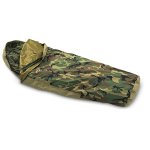
huh Layering up is a good thought for sure. Tentless,is tempting too if it just a way to get some sleep til first light.-that reminds me.. I bet a "bivouac sack" is much improved in these days of Gortex... and for the occasional roadside sleep it might be just the thing! (if there's a bug screen and wear
earplugs so the their whining doesnt keep you awake.) They're a little pricey compared to a thrift store tent though.

bivouacsack.jpg
 
Last edited:
If you're into camping, do it. Except for less than a hand full I've motorcycle camped on virtually all my trips over the last 50 years, I hate motels/hotels with a passion. They never seem to be where I want to be. That being said if you've got a good sleeping bag, thermorest and tent the rest for motorcycle camping doesn't really matter that much with a bit of planning. Most of the gear I have is what I've backpacked/canoed with over the years and is pretty decent stuff. The main thing is get into a routine that does not waste a lot of time, especially if you've got miles to cover. The guys travel with if I'm not by myself are also in tune with this we can do a lot of high mileage days in row if needed. Anyway, the big time waster is on any trip be it camping or hoteling it is meals. As I figure there are a lot better places and ways to spend your time than sitting in restaurants waiting to be served. I always pack a small stove and the daily routine actually starts the night before with a shower, the bike fully fueled and checked over. In the morning coffee, fruit, juice, muffin, etc in camp and that can be done while you pack up camp. We can be out of camp in less than an hour and ready to put on some miles and not worry about food. Noonish to early afternoon we'll stop for a break, fuel again, kick the tires, etc and have a restaurant meal for lunch. That will be our big meal for the day. Then ride or putter all afternoon and after we figure where to camp we'll go to a local grocery store like Safeway or equivalent and hit up the deli area for some takeout, some fruit, muffins and beverage choice for the evening, make sure the tanks are full and head to camp. Been doing this for a lot of years and it works whether with others or you're doing a solo trip. Just make sure you keep some granola/powerbars and can of something in case you don't find supper.

As for campsites, in order of preference are state parks first, then regional parks, municipal parks and far down the list are KOA's (crowded, noisy, expensive) and private sites. We've seen some pretty good private sites but they are a great unknown unless you've been there before or they have been referred to you. Just rough camping is iffy at best if you don't know the area although we've found some great spots over the years. If you end up somewhere late and you've haven't found anything just talk to some locals, you might be surprised where they'll let you camp.

This is my long trip setup which would let me travel almost indefinitely. Including spare parts, tools, camping/cook gear, a bit of food and clothing for a week (then laundry) the total weight is about 80lb. Camp gear on the rack, clothing in the large duffel bag, heavy items like, tools, spares, camp kitchen stuff in the saddlebags and the daily odds and sods in the tank bag. Longest trip in this configuration many years ago was a 10,000 mile X-Canada trip, so it does work.


Suzuki ready for trip. by soates50, on Flickr
 
One other thing to keep in mind. :-k

All the "savings" of camping only work if you already have the equipment. If you have to buy the tent, sleeping bag, pad, etc., it just makes the camping option all that more expensive. Probably approaching (or even exceeding) the cost of moteling.
dunno.gif


.
 
Well Scott, you know that you have been this far before so the only thing I can add is this. It's the end of July, 1st of August and that is why they call this area I live in "fly over country".

Pretty hot and humid crossing the boring states of Illinois, Iowa, Nebraska, most of Wyoming and then there is the boredom of the state of Kansas as well as Eastern Colorado.

Not trying to be a downer here but just a dose of reality.

My suggestion would be to fly out and rent a m/c for some good site seeing in the states that have good sites to see. Oh yeah, and good luck to you whatever you decide to do. When I was your age I would have done the same thing you are planning.
 
Looking again at your trip map, the other thing to note is that you'll be travelling more miles than many of the periods for certain maintenance. Make sure you plan out when and where you'll do these in advance. Things like tires, tubes, chains/sprockets can be a tough thing to find in a town you're not familiar with when you don't want to be stopped somewhere for more than a day.

We had tires shipped to a friend's in California and I ordered a new chain and sprocket set to a dealership in Portland, OR when I noticed mine were wearing out on my GS750. My friend on his GS550 waited on the chain and sprockets until it was almost too late and then we had to spend three days around Sturgis trying to find a chain that would fit after deeming his was unsafe to ride on. Taking into consideration the cost of the two extra days of camping, food, beer - putting it off a week or two before to try and save some $$ wasn't worth it.
 
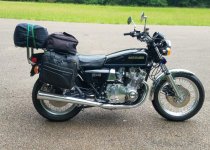
Here is my touring package. The right saddle bag has a cooler, oil outer pocket has my daily log book, maps. The left bag has tools, parts and polishing towels and spray wax. Hey, you got to look good on the road. The pack on the passenger seat is my clothes. The pack on the rear rack is my riding gear, cold weather jacket, shoes and boots. I didn't do any camping, just hotel. This setup was good for 21 days and 6,000 miles. 👍
 

Attachments

  • 20170612_110439.jpg
    20170612_110439.jpg
    96.6 KB · Views: 0
Back
Top